
Five months down. Time does fly fast. How is your 2023? I hope that the year has been kind to everyone. Otherwise, I hope that the remaining seven months will be filled with nothing but good news and happiness. I hope that you will all be healthy, in body, mind, and spirit. But before I can bid May goodbye, I am sharing my book haul for the month. At the start of the year, I resolved to read more and buy less. I guess I can tick this resolution off already as a failure although I must say that I was (nearly) able to hold myself from buying even more books in May. The number of books I bought is equal to the books I read. Moreover, I just realized that except for one book, all books I bought were not originally published in English. Without more ado, here are the books I obtained during the month. Happy reading!

Title: South of the Border, Westi of the Sun
Author: Haruki Murakami
Translator (from Japanese): Philip Gabriel
Publisher: The Harvill Press
Publishing Date: 2000 (1992)
No. of Pages: 187
Synopsis: Childhood sweetheart, long ago separated, meet again and innocent love re-awakens as desire, unquenchable and destructive.
Growing up in the suburbs in post-war Japan, it seemed to Hajime that everyone but him had brothers and sisters. His sole companion was Shimamoto, also an only child. Together they spent long afternoons listening to her father’s record collection. But when his family moved away, the two lost touch. Now Hajime is in his thirties. After a decade of drifting he has found happiness with his loving wife and two daughters, and success running a jazz bar. Then Shimamoto reappears. She is beautiful, intense, enveloped in mystery. Hajime is catapulted into the past, putting at risk all he has in the present.

Title: Kafka on the Shore
Author: Haruki Murakami
Translator (from Japanese): Philip Gabriel
Publisher: The Harvill PressHanover Square Press
Publishing Date: 2005 (2002)
No. of Pages: 505
Synopsis: “A stunning work of art that bears no comparisons,” the New York Observer wrote of Haruki Murakami’s masterpiece, The Wind-up Bird Chronicles. In its playful stretching of the limits of the real world, his magnificent new novel, Kafka on the Shore, is every bit as bewitching and ambitious.
The story follows the fortunes of two remarkable characters. Kafka Tamura runs away from home at fifteen, under the shadow of his father’s dark prophecy. The ageing Nakata, tracker of lost cats, who never recovered from a bizarre childhood accident, finds his pleasantly simplified life suddenly turned upside down. Their parallel odysses – as mysterious to them as they are to the reader – are enriched throughout by vivid accomplices and mesmerising dramas. Cats converse with people; fish tumble in storms from the sky; a ghostlike pimp deploys a Hegel-spouting girl of the night; a forest harbours soldiers apparently un-aged since WWII. There is a savage killing, but the identity of both victim and killer is a riddle.
Murakami’s new novel is at once a classic tale of quest, but it is also a bold exploration of mythic and contemporary taboos, of patricide, of mother-love, of sister-love. Above all it is an entertainment of a very high order.
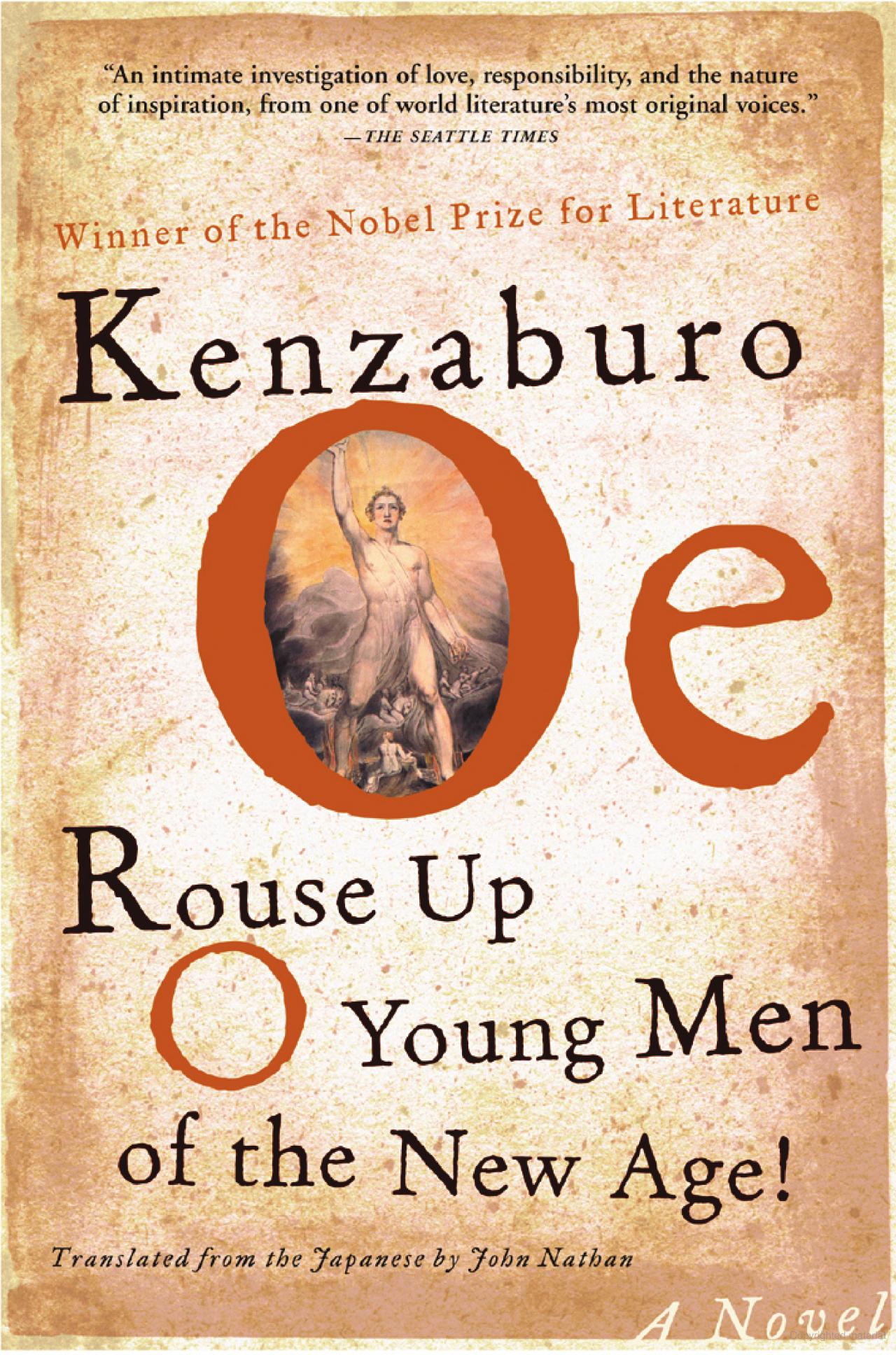
Title: Rouse Up O Young Men of the New Age!
Author: Kenzaburō Ōe
Translator (from Japanese): John Nathan
Publisher: Grove Press
Publishing Date: 2002 (1986)
No. of Pages: 250
Synopsis: Rouse Up O Young Men of the New Age! is a virtuoso novel from one of today’s finest authors. K is a famous writer living in Tokyo with his wife and three children, one of whom is mentally disabled. This child Eeyore, has been doing disturbing things – behaving aggressively, asserting that he’s dead, even brandishing a knife at his mother – and K, given to retreat from reality into abstraction, looks for answers in his life-long love of William Blake’s poetry. As K struggles to understand his family and his place in it, he must also reevaluate his relationship with his own father and the duty of artists and writers in society. A remarkable portrait of the inexpressible bond between a father and his damaged son, Rouse Up O Young Men of the New Age! is the work of an unparalleled writer at his sparkling best.
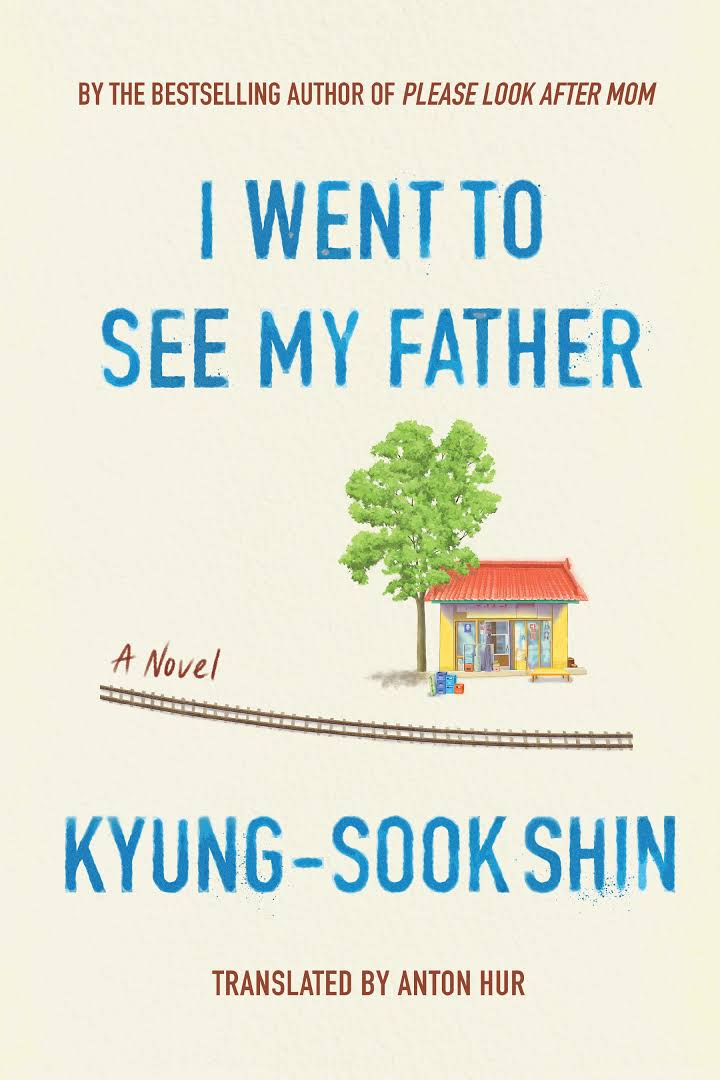
Title: I Went to See My Father
Author: Kyung-Sook Shin
Translator (from Korean): Anton Hur
Publisher: Astra House
Publishing Date: 2023 (2021)
No. of Pages: 283
Synopsis: Two years after losing her daughter in a tragic accident, Hon finally returns to her home in the countryside to take care of her father. At first, her father appears withdrawn and fragile, an aging man, awkward but kind around his own daughter. Then, after stumbling upon a chest of letters, Hon discovers the truth of her father’s past and reconstructs her family history.
Consumed with her own grief, Hon has been blind to her father’s vulnerability and her family’s fragility. Unraveling secret after secret, Hon grows closer to her father, who proves to be more complex than she ever gave him credit for. After living through one of the most tumultuous times in Korean history, her father’s life spiraled after the civil war. Now, after years of emotional isolation, Hon learns the whole truth, from her father’s affair and involvement in a religious sect, to the dynamic lives of her siblings, to her family’s financial hardships.
What Hon uncovers about her father builds toward her understanding of the great scope of his sacrifice and heroism, and of his generation. More than just the portrait of a single man, I Wen to See My Father opens a window on humankind, family, loss, and war.

Title: Violets
Author: Kung-Sook Shin
Translator (from Korean): Anton Hur
Publisher: The Feminist Press
Publishing Date: 2022 (2021)
No. of Pages: 212
Synopsis: San is twenty-two and alone when she happens upon a job at a flower shop in Seoul’s bustling city center. Haunted by childhood rejection, she stumbles through life – painfully vulnerable stifled, and unsure. She barely registers to others, especially by the ruthless standards of 1990s South Korea.
Over the course of one hazy, volatile summer, San meets a curious cast of characters: the nonspeaking shop owner, a brash coworker, kind farmers, and aggressive customers. Fueled by a quiet desperation to jump-start her life, she plunges headfirst into obsession with a passing magazine photographer.
In Violets, best-selling author Kyung-Sook Shin explores misogyny, erasure, and repressed desire, as San desperately searches for both autonomy and attachment in the unforgiving reality of contemporary Korean society.
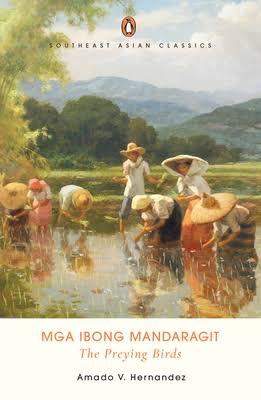
Title: The Preying Birds
Author: Amado V. Hernandez
Translator (from Tagalog): Danton Remoto
Publisher: Penguin Classics
Publishing Date: 2022 (1969)
No. of Pages: 434
Synopsis: A novel that continues the flaming social realism in the novels of the Philippine national hero, Dr. Jose Rizal.
Mando Plaridel is the lead character in this novel of social realism. His character combines the qualities found in Simoun and Ibarra, the two lead characters in national hero Jose Rizal’s novels: Noli Me Tangere and El Filibusterismo. Simoun is the passive character in Rizal’s novels while Ibarra is the active propagandist who wakes up the people from their centuries-old sleep under Spanish colonialism.
Mando starts out as Andoy, a houseboy in the house of the powerful Montero family. He works hard and gets himself a good education. After the war, society begins to know him as the brave editor of the Kampilan newspaper. He later becomes involved in the problems of the farmers with the abusive Monteros.
Told from an omniscient point of view, Hernandez is able to enter the consciousness of the wealthy characters. He shows how the ruling classes – the politicians, landowners, judges, deputies and bishops – only protect their own interests, that is why they do not want to change the status quo.
Dr. Sabio is the progressive president of a university founded by Mando, who used the treasure thrown into the sea at the end of Rizal’s second novel to help improve society. The money is used to fund Freedom University and set up Kampilan, the brave newspaper. The novel points to the cooperative system of land ownership as the way out for the landless poor. It implies that change can only begin when the eyes of society have been finally opened.

Title: The Architect’s Apprentice
Author: Elif Shafak
Publisher: Penguin Books
Publishing Date: 2016 (2014)
No. of Pages: 419
Synopsis: Turkey’s preeminent female writer here spins an epic tale set at the height of the Ottoman Empire and teeming with secrets, intrigue, and romance. Jajan, a twelve-year-old Indian boy, arrives in Istanbul breaking a magnificent gift for the sultan: a white elephant named Chota. Jahan becomes Chota’s trainer, and his life changes the day he encounters the sultan’s beguiling daughter, Princess Mihriman. A palace education leads him to Mimar Sinan, the empire’s chief architect, who takes Jahan under his arm as they construct (with Chota’s help) some of the most splendid buildings in history. Yet even as they build Sinan’s triumphant masterpieces – the Suleimaniye and Selimiye mosques – dangerous undercurrents begin to emerge, with rivals and enemies on all sides.
A memorable story of artistic freedom and the clash between science nd ignorance, Shafak’s novel brims with vibrant characters, compelling adventure, and the lavish backdrop of the Ottoman court, where love and loyalty are no match for raw power.

Title: Embers
Author: Andrés Neuman
Translator (from Hungarian): Carol Brown Janeway
Publisher: Penguin Books
Publishing Date: 2003 (1942)
No. of Pages: 249
Synopsis: As darkness settlers on a forgotten castle at the foot of the Carpathian mountains, two men sit down to a final dinner together. They have not seen one another in forty-one years. At their last meeting, in the company of a beautiful woman, an unspoken act of betrayal left all three lives shattered – and each of them alone. Tonight, as wine stirs the blood, it is time to talk of old passions and that last, fateful meeting.
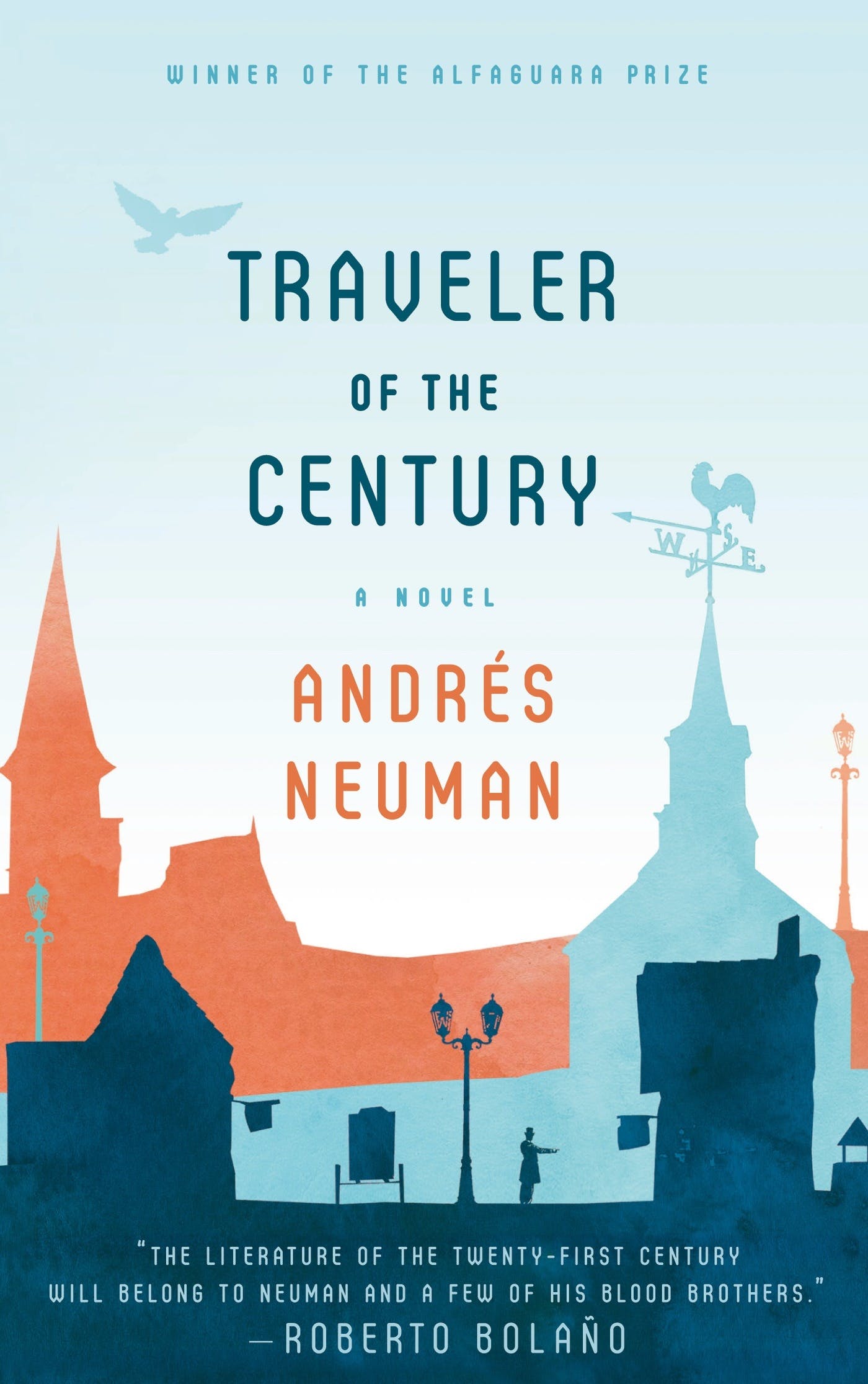
Title: Traveler of the Century
Author: Andrés Neuman
Translators (from Spanish): Nick Caistor, Lorenza Garcia
Publisher: Farrar, Straus, and Giroux
Publishing Date: 2012 (2009)
No. of Pages: 564
Synopsis: Searching for an inn, the enigmatic traveler Hans stops in a small city on the border between Saxony and Prussia. There, he meets an organ-grinder in the market square and immediately finds himself enmeshed in an intense debate – on identity and what it is that defines us – from which he cannot break free.
Indefinitely stuck in Wandernburg until his debate with the organ-grinder is concluded, he begins to meet the various characters who populate the town, including a young freethinker named Sophie. Though she is engaged to be married, Sophie and Hans embark on a relationship that defies mores about female sexuality and what can and cannot be said about it.
Traveler of the Century overflows with discussions about philosophy, history, literature, love, and translation. It is a book that looks to the past in order to have us reconsider the conflicts of our present. The winner of Spain’s prestigious Alfaguara Prize and the National Critics Prize, Traveler of the Century marks the English-language debut of Andrés Neuman, a writer described by Roberto Bolaño as being “touched by grace.”
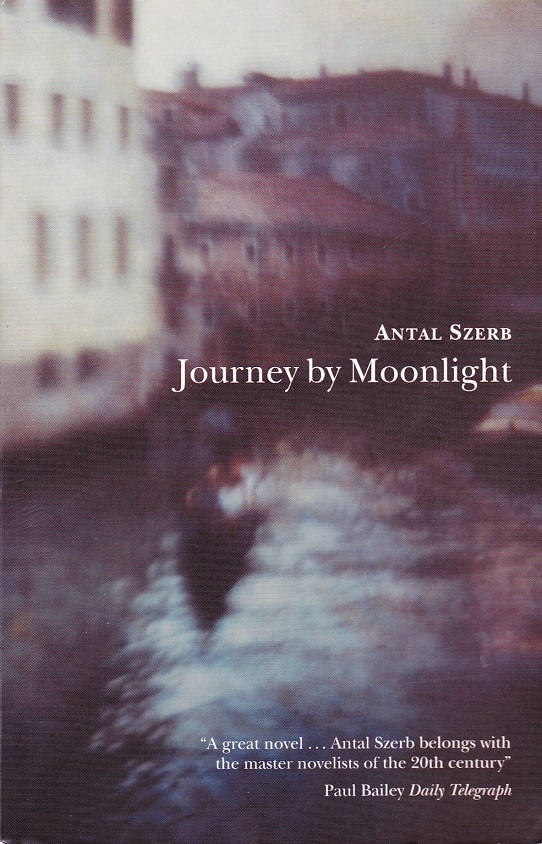
Title: Journey by Moonlight
Author: Antal Szerb
Translator (from Hungarian): Len Rix
Publisher: Pushkin Press
Publishing Date: 2002 (1937)
No. of Pages: 236
Synopsis: A major classic of 1930s literature, Antal Szerb’s Journey by Moonlight (Utas és Holdvilág) is the fantastically moving and darkly funny story of a bourgeois businessman torn between duty and desire.
‘On the train, everything seemed fine. The trouble began in Venice …’
Mihály has dreamt of Italy all his life. When he finally travels there on his honeymoon with wife Erszi, he soon abandon her in order to find himself, haunted by old friends from his turbulent teenage days: beautiful, kind Tamas, brash and wicked Janos, and the sexless yet unforgettable Eva. Journeying from Venice to Ravenna, Florence and Rome, Mihály loses himself in Venetian back alleys and in the Tuscan and Umbrian countryside, driven by an irresistible desire to resurrect his lost youth among Hungary’s Bright Young Things, and knowing that he must soon decide whether to return to the ambiguous promise of a placid adult life, or allow himself to be seduced into a life of scandalous adventure.
Journey by Moonlight (Utas és Holdvilág) is an undoubted masterpiece of Modernist literature, a darkly comic novel cut through by sex and death, which traces the effects of a socially and sexually claustrophobic world on the life of one man.
Translated from the Hungarian by the renowned and award-winning Len Rix, Antal Szerb’s Journey by Moonlight (first published as Utas és Holdvilág in Hungary in 1937) is the consummate European novel of the inter-war period. (Source: Goodreads)

Title: A Book of Memories
Author: Péter Nádas
Translators (from Hungarian): Ivan Sanders, Imre Goldstein
Publisher: Picador
Publishing Date: 1997 (1986)
No. of Pages: 706
Synopsis: First published in Hungary in 1986, Péter Nádas’s A Book of Memories is a modern classic, a multilayered narrative that tells three parallel stories of love and betrayal. The first takes place in East Berlin in the 1970s and features an unnamed Hungarian writer ensnared in a love triangle with a young German and a famous aging actress. The second composed by the writer, is the story of a late-nineteenth-century German aesthete whose experiences mirror his own. And the third voice is that of a friend from the writer’s childhood, who brings his own unexpected bearing to the story. Compared by critics to Proust, Mann, and Joyce, this sensuous tour de force is “unquestionably a masterpiece” (The New Republic)

Title: Panorama
Author: Dušan Šarotar
Translator (from Slovene): Rawley Grau
Publisher: Peter Owen Publishers
Publishing Date: 2016 (2014)
No. of Pages: 206
Synopsis: Deftly blending fiction, history, and journalism, Dušan Šarotar takes the reader on a deeply reflective yet kaleidoscopic journey from northern to southern Europe. In a manner reminiscent of W.G. Sebald, he supplements his engrossing narrative with photographs , which help to blur the lines between fiction and journalism. The writer’s experience of landscape is bound up in a [ersona yet elusive search for self-discovery, as he and a diverse group of international fellow travellers relate in their distinctive and memorable voices their unique stories and common quest for somewhere they might call home.
 The Pine-Scented Chronicles
💜
LikeLike