Literary Classic With a Modern Twist
Without a doubt, there are literary masterpieces that have profound and lasting impacts. They appeal to readers across generations on different levels. The passage of time has not dulled their luminous influence and their popularity. They transcended time and even borders as they remain fundamental and seminal parts of literary discussions in the contemporary era, whether in the classroom, literary circles, or book clubs. These works have become household names. They are windows to a world that might have been buried by time, but was never forgotten and was immortalized by words. Some of these works are also amongst the most critically studied, and some are used as barometers for contemporary works. Their influences and impacts are everywhere. There is a reason they are called literary classics.
These seminal literary works have also inspired modern writers, some even using them as a mantle upon which they wove their own works. It comes as no surprise to find elements of literary classics in contemporary works of literature. The works of Jane Austen, for instance, are integrated into several modern works. Her six novels were used for a literary project called The Austen Project. It is an undertaking by HarperCollins involving established authors rewriting Austen’s novels to situate the literary classics in modern times. There was also, of course, the parody of her individual works. Sense and Sensibility, for instance, was used in a mashup novel by Ben H. Winters, Sense and Sensibility and Sea Monsters. Her most popular work, Pride and Prejudice, has also inspired several novels, such as Helen Fielding’s 1996 novel Bridget Jones’s Diary.
Jane Austen’s oeuvre is definitely one of the most beloved, both by readers and writers alike. Another beloved writer whose influence reverberates into the contemporary is Charles Dickens, widely acknowledged as the greatest novelist of the Victorian era. His novel A Tale of Two Cities, with over 200 million copies sold, is one of the bestselling books of all time. His novella, A Christmas Carol, is one of the most popular titles out there; it is also one of the most filmed. Through his works, he has breathed into life some of the most memorable literary characters, such as Pip in Great Expectations, Oliver Twist, and David Copperfield. With his legacy, it comes as no surprise that Dickens’s works, like Austen’s, have become the inspiration of many writers.
“A kid is a terrible thing to be, in charge of nothing. If you get past that and grown, it’s easiest to forget about the misery and pretend you knew all along what you were doing. Assuming you’ve ended up someplace you’re proud to be. And if not, easier to forget the whole thing, period. So this is going to be option three, not proud, not forgetting. Not easy.”
~ Barbara Kingsolver, Demon Copperhead
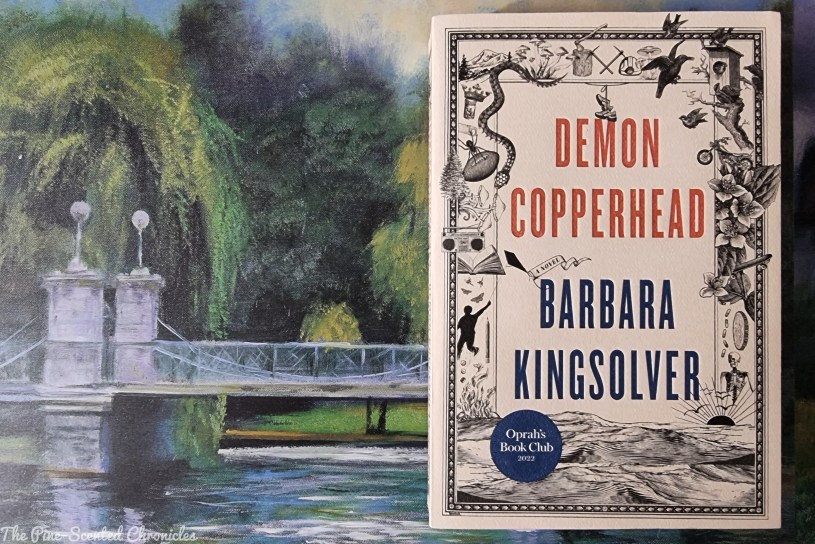
Across the Atlantic, in the United States, one of the most recent writers inspired by one of his works is Barbara Kingsolver, one of the most prominent names in modern American literature. She has an extensive oeuvre that spans essays, novels, short stories, poetry collections, and nonfiction books. Her works have earned her several accolades. In 2022, she released her latest novel, Demon Coppearhead. Kingsolver’s latest work took direct inspiration from Dickens’ David Copperfield (1850), one of the English writer’s most celebrated works. David Copperfield is also widely regarded as Dickens’s most personal work. This is quite a tall task, even for a writer of Kingsolver’s caliber. But as she has proven over the course of her career, she is not one to buckle down to challenges.
At the heart of Kingsolver’s latest novel was the eponymous Demon Copperhead. He was born Damon Fields in a trailer in Lee County, Virginia, in the 1980s to a teenage mother. Even before his birth, life had already handed Damon some of its darkest cards. His father passed away before his birth. His mother, on the other hand, got through her pregnancy assisted by drugs and alcohol. During his birth, Damon’s mother passed out due to her substance abuse. Thankfully, their neighbor, the elderly Mrs. Peggot, was there to assist her. Growing up, amphetamines and Vicodin were familiar objects in their household, rather trailer-hold. Because of his mother’s addiction – she was also clueless about how to raise a child – Damon spent most of his childhood in the Peggot household, where he befriended the Peggot’s grandson, Maggot.
Damon soon earned the moniker Demon because of his disposition. The Copperhead, on the other hand, was due to his hair color. At a young age, he was conscious of his station in life: “I was a lowlife born in the mobile home, so that’s like the Eagle Scout of trailer trash.” The destitution of his household was very pronounced, even in the deprived neighborhood they were in. Demon’s mother, nevertheless, tried to reform herself and was on the way to becoming sober. Their life, however, was threatened by the entry of Murrell Stone, or Stoner, whom Demon’s mother married. Stoner was tyrannical and humiliated Demon and his mother. He also barred Demon from seeing Maggot.
Stoner’s abusiveness drove Demon’s mother back to addiction, which ended in unfortunate circumstances. Barely into his teens, Demon was orphaned. Soon enough, he found himself integrated into the foster system. What ensued was a roller-coaster ride with the child services system. It started with the McCobbs, a family of six who projected themselves as wealthy. They were not, and they only took in Demon in order to cash in on foster security cheques. Meanwhile, Demon was deprived of the most common amenities, forced to sleep in the laundry room, and was barely fed. Hunger made him take leftovers from school lunch trays. On top of this, Demon was unkempt from the McCobb’s lack of care for him. These created a chasm between him and his peers. Not to be done, he was forced to work in order to contribute to the household income.
“The way he looked. Eyes raised up, body tethered by one long thread to the big stormy sky, the whole of him up there with his words, talking to whoever was listening. I’ve not seen a sight to match it. No bones of his had ever been shoved in a feed bag. The man was a giant.”
~ Barbara Kingsolver, Demon Copperhead
Freed from the crutches of the McCobbs, Demon found the reprieve he was waiting for in the form of the celebrated high school football coach, Coach Winfield. His wife passed away from cancer, and he was raising his daughter, Agnes; Agnes was a tomboy and went by the name Angus. Under the careful guidance of Coach Winfield, Demon rose above obscurity and became a star player for their football team. At a point when he felt hopeless, this foray into high school football ushered in a spell of glory. The outcast became the main character. However, his newfound popularity also attracted forces that he tried to avoid. He started using drugs recreationally, which developed into a full-blown addiction when his brush with glory was cut short by injury. It was short-lived. It was anticlimactic.
To say that this novel is eventful is an understatement. From his own perspective, we follow Demon as he navigates the complexities of life. We read about his own encounters with substance abuse and domestic abuse. There was also a weighty indictment of the pharmaceutical industry, particularly its role in the opioid crisis. The novel was also a scathing commentary on the foster care system. It was rife with corruption, and the lack of stern and tight supervision made it vulnerable to abuse. The system has failed in the disposal of its duties, leaving many of its wards in the hands of foster parents who abuse them and only see the pecuniary advantage they can gain from them. Beyond the shortcomings of the child-welfare system, the novel underscored the maladies of the American education and healthcare systems.
The overriding theme of the novel, however, was destitution, a reality often obscured by the proverbial American dream of glitz and glamor. In this aspect, the novel transformed into a social commentary, an element that Dickens’ works were also known for. Kingsolver, for her part, also established a reputation for her social activism, some of which was woven into the tapestry of her works. Demon’s community was a microcosm of the poverty that pervaded modern American society. The Appalachian region is rich in coal and logs but still, the locals live in poverty. They have been called different names, such as rednecks and hillbillies. The novel exposed how these communities were caught in the crutches of political and socioeconomic power structures. In Lee County, the local spirit was depleted by the coal and tobacco industries.
Through Demon’s story, we read how the locals, the rednecks, and the hillbillies seize the narrative and thus subvert these stereotypes. There is a silver lining as hope sprang eternal. Being embraced by this environment can adversely impact one’s self-esteem. Sure enough, Demon, at times, was hopeless. The poverty that surrounded him blurred his vision, and it felt like, with the cards dealt by life to him, there was no getting out of these dire straits. He felt like he was worthless, a hick. But in this account, he is wrong. He possesses a fighting spirit that has allowed him to survive all of these misfortunes. This spirit was burning brightly within him. He was not the worthless individual he thought he was.
“Honestly, I would call us the juice economy. Or I guess used to be, up until everybody started getting wrecked on the newer product. We did not save our juice, we would give it to each and all we meet, because we’re going to need some of that back before long, along with the free advice and power tools. Covered dishes for a funeral, porch music for a wedding, extra hands for getting the tobacco in. Just talking about it made me homesick for the life of unlocked doors that Chartrain called Not the Real World.”
~ Barbara Kingsolver, Demon Copperhead
What kept Demon sane all throughout was his endearing humor; otherwise, the story would have inevitably been driven to a melodrama. Demon loomed above the story, and his cynical voice ably propelled the story. He was also one of the novel’s main achievements. He used these experiences as a springboard for his own wisdom, his understanding of life, and the importance of establishing connections with the people around him. It also forced him to mature faster than his peers. He maintained a veneer of self-protection, but this belied his yearning for love and the well of compassion he possessed. In a novel where dark subjects permeate, one can find tender moments and bouts of hilarity.
All throughout the story, the qualities of Dickens’s novel were present. His presence was indelible in the modern retelling. We meet a young character who has the odds stacked against him. He stands no chance against these odds, and yet he manages to flourish. We read about an abusive stepfather, a dead father, a weak, infantile mother, and a mostly crew of outsiders who provide minimal help. Social commentaries were rife, and the characters were reminiscent of Dickens’s creations. Despite these parallels, Demon Copperhead managed to stand out on its own and not be a mere carbon copy. It is also not necessary to have read the literary classic to appreciate Kingsolver’s latest novel. Like other retellings, Kingsolver situated the modern classic in the context of the present. It does not always work; in the case of Kingsolver, it did.
Along with Hernan Diaz’s Trust, Demon Copperhead was declared the winner of the prestigious Pulitzer Prize for Fiction in 2023. Kingsolver’s latest creation has also been earning praise from literary pundits and readers alike, and for good reasons. Demon Copperhead may have been inspired by a literary classic, but it was uniquely its own, particularly in its fierce examination of contemporary social concerns, such as the shortcomings of the child welfare, healthcare, and education systems, the growing concern about opioid addiction, capitalism, and systemic destitution. The novel, however, does not reduce itself to a mere indictment of modern American society. Demon Coppearhead was, at its heart, a tender and heartwarming coming-of-age story of a resilient young man who managed to rise above the odds dealt to him by the Fates.
“That November it was still a shiny new thing. OxyContin, God’s gift for the laid-off deep-hole man with his back and neck bones grinding like bags of gravel. For the bent-over lady pulling double shifts at Dollar General with her shot knees and ADHD grandkids to raise by herself. For every football player with some of this or that torn up, and the whole world riding on his getting back in the game. This was our deliverance. The tree was shaken and yes, we did eat of the apple.”
~ Barbara Kingsolver, Demon Copperhead
Ratings
96%
Characters (30%) – 29%
Plot (30%) – 27%
Writing (25%) – 25%
Overall Impact (15%) – 15%
Commencing my 2023 reading journey was Barbara Kingsolver’s latest novel, Demon Copperhead. Demon Copperhead – I kept mistaking it as Copperfield! – was my third novel by Kingsolver, and quite honestly, I wasn’t really keen on reading the book when I learned about its release. Then the book started making noise, even being listed by numerous literary publications as one of the best books of 2022. This was enough to convince me to give Kingsolver’s latest work a chance. After all, it has been three years since I read one of her novels. Upon reading the blurb, it finally hit me, the connection that I failed to make when I first encountered the book. Demon Copperhead drew inspiration from Charles Dickens’s David Copperfield, which happens to be one of my all-time favorite reads. This made me expect more from the book, and thankfully, Kingsolver did not fail me. It was a great way to open up my 2023 reading journey.
Book Specs
Author: Barbara Kingsolver
Publisher: Harper Books
Publishing Date: 2022
Number of Pages: 546
Genre: Bildungsroman, Literary
Synopsis
Demon Copperhead is the story of a boy born to a teenage single mother, with no assets beyond his dead father’s good looks and copper-colored hair, a caustic wit, and a fierce talent for survival. In a plot that never pauses for breath, relayed in his own unsparing voice, Demon braves the modern perils of foster care, child labor, addiction, disastrous loves, and crushing losses. Through all of it, he reckons with his own invisibility in a popular culture where even the superheroes have abandoned rural people in favor of cities.
Many generations ago, Charles Dickens wrote David Copperfield from his experience as a survivor of institutional poverty and its damages to children in his society. Those problems have yet to be solved in ours. In transposing his epic novel to her own place and time, Kingsolver has enlisted his anger and compassion, and above all, his faith in the transformative power of a good story. Demon Copperhead speaks for a generation of lost boys, and for all those born into beautiful, cursed places they can’t imagine leaving behind.
About the Author
To know more about Barbara Kingsolver, click here.
 The Pine-Scented Chronicles
Thank you – an excellent review. I am yet to read it.
LikeLike