
Happy midweek everyone! Wow. We are already halfway through the week. We are also nearly midway through the year. How has the year been going for you so far? I hope that the year has been kind to everyone. If not, I hope you will experience a reversal of fortune in the coming months. More importantly, I hope everyone is happy and healthy, in body, mind, and spirit.
As it is midweek, it is time for a fresh WWW Wednesday update, my first this year. WWW Wednesday is a bookish meme originally hosted by SAM@TAKING ON A WORLD OF WORDS. The mechanics for WWW Wednesday are quite simple, you just have to answer three questions:
- What are you currently reading?
- What have you finished reading?
- What will you read next?

What are you currently reading?
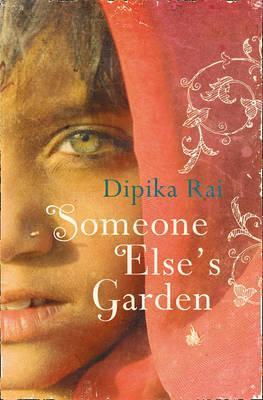
My foray into Asian literature – after spending two months immersing myself in the works of Japanese writers – continues with Dipika Rai’s Someone Else’s Garden, one of the books I bought during the first edition of the Big Bad Wolf Sale in Manila back in early 2018. Yes, it took me five years to finally read this book; I added it to my 2023 Beat the Backlist Challenge just in case. This makes it the seventh book from the aforementioned reading challenge. Without design, it is my third consecutive work of Indian literature. Like Chinese literature, Indian literature is one of the major world literature that I realized I have underexplored so far.
I have just learned that Someone Else’s Garden was Rai’s debut novel. The story captured the landscape of Indian society where women were treated as mere commodities. The main character’s mother uttered during her wedding day: “Because Mamta is someone else’s garden, a female burden to rid of.” Mamta was the eldest daughter of a family with seven children. Marrying girls at the of eight is uncommon but a sad reality. The story was filled with several poignant but heartbreaking moments. The novel has a lush tapestry as it grappled with several subjects such as the generational gap, the traditional way of life contrasted by the inevitable modernization, abject poverty, and the differences between city and village life. I am nearly done with the story and I can’t help but root for Mamta.
What have you finished reading?

My three-book journey across India started with Deepti Kapoor’s sophomore novel, Age of Vice. She made a resounding literary debut back in 2015 with the publication of A Bad Character. Anyway, I have not heard of her until earlier this year when I was searching for books to include in my 2023 Books I Look Forward To List. Age of Vice was a title that I kept encountering on similar lists, prompting me to add it to my own. Thankfully, I was able to obtain a copy of the book, and six months into the year, I have finally ticked off one of the ten books on my own most anticipated lists.
Age of Vice did not provide the readers a preamble as the story immediately delved into the world that Kapoor was attempting to portray: the Indian underworld. The opening sequence involved a car crash where a young woman died while the inebriated driver survived. The driver was Ajay who we learn worked for the Wadia family. As the story moved forward, we learn about how Ajay, as a young boy from rural Uttar Pradesh made his way into the big city and work for the infamous Wadia family. He worked under the tutelage of Sunny Wadia, the son of Bunty, a prominent gang leader. There are several layers to the novel. Kapoor’s India is one of abject poverty but its landscape was slowly being transformed, thanks to idealistic young men like Sunny. We also read about sons attempting to break the cycle of violence that often preceded their name. It is a little predictable but it was still a riveting read nevertheless.

When I started reading Shirshendu Mukhopadhyay’s The Aunt Who Wouldn’t Die, I thought I was making a breakthrough. I thought I was reading my first novel from Bangladesh. Sure, Mukhopadhyay was born in modern-day Bangladesh but he identifies as an Indian national. I have a saving grace though: The Aunt Who Wouldn’t Die is my first novel originally written in Bengali. There are just so many languages within Indian literature I am kinda overwhelmed. Apart from Hindi and Bengali, I have works originally written in Tamil, Kannada, and Malayalam. A journey across Indian literature is surely going to be a treat.
Anyway, The Aunt Who Wouldn’t Die is like Someone Else’s Garden. Both books captured the state and the plights of women in modern Indian society. The former charged the story of Somlata who, at the start of the novel, recently got married to one of the sons of the once-influential Mitra family. Contributing to the decline of the Mitra family fortune were the laziness and decadent lifestyle of the Mitra men. When Aunt Pishima passed away, she handed over surreptitiously to Somlata a small fortune that would have greatly helped reverse the family’s decline. However, Pishima resented her family. A third voice eventually emerged, Boshon who we learn is Somlata’s daughter. Through these three women, Mukhopadhyay captured the changing landscape of women in modern India. It was an eccentric and short read, one that I hoped was longer. Humor belied the weight of sardonic remarks woven into the story.
What will you read next?



From India, my literary journey will take me to its neighboring Pakistan, with Mohsin Hamid’s The Reluctant Fundamentalist. This will be my first novel by Hamid. I have been encountering the book in must-read lists, including the 1,001 Books You Must Read Before You Die List. The book was also shortlisted for the 2007 Booker Prize. This is on top of a slew of accolades across the world. From Pakistan, I will be moving further west with French-Iranian author Négar Djavadi’s Disoriental. Disoriental was originally written in French and, from what I understand, provides an evocative portrait of contemporary Iranian history and politics. I am also lining up Tahmima Anam’s The Good Muslim which will officially be my first novel by a Bangladeshi writer.
That’s it for this week’s WWW Wednesday. I hope you are all doing great. Happy reading and always stay safe! Happy Wednesday again!
 The Pine-Scented Chronicles