It’s the second day of the week! It’s also time for a Top 5 Tuesday update. Top 5 Tuesdays was initially created by Shanah @ the Bionic Bookworm but is now currently being hosted by Meeghan @ Meeghan Reads.
This week’s topic: Top 5 books of 2023… so far
It is quite a challenge singling out one book to call my favorite this year. After all, I have read over sixty books. There was a lot that left a deep impression on me. Nevertheless, here are some of my best reads this year, so far.


Ulysses by James Joyce
I am kicking off this list with one of the books that have been on my reading list for the longest time and for the wrong reasons as well. Back in 2017, James Joyce’s Ulysses was part of my 2017 Top 20 Reading List. I did start reading the book but gave up midway through as the story was barely making sense. I, however, resolved to read it once I have gained more perspective as a reader. This opportunity came when I was nearing my 1,000th read. It was a risk but I made the book occupy this important part of my reading journey. I am glad I reserved it because, despite my apprehensions, Ulysses ended up becoming a book that I loved. Sure, there were still the concerns I encountered during my first reading – the book was an unabridged version by the way – but this time around, the story made a lot more sense. I started appreciating the complexity of the structure and the main character as well. But yes, I agree. Ulysses is definitely not a book for everyone.

No Longer Human by Osamu Dazai
With two of the first six months of the year dedicated to the works of Japanese literature, it comes as no surprise that this list is riddled with works of Japanese writers. Kicking it off is Osamu Dazai and his novel, No Longer Human. In his Japan, No Longer Human is one of the all-time bestselling books, and for a good reason. This book was also my first novel by Dazai who has recently been gaining international recognition recently. He is also one of the masters of the popular Japanese literary movement, the I novel. His mastery of the genre was palpable in No Longer Human which was a scathing probe into the depths of the human spirit.

Demon Copperhead by Barbara Kingsolver
The third book on this list is a literary work that has recently been collecting accolades left and write. I commenced my 2023 reading journey with Barbara Kingsolver’s Demon Copperhead. Interestingly, I didn’t plan on reading the book but I eventually relented because of positive reviews of the book. I am glad I relented because it was a riveting literary masterpiece that drew inspiration from one of my all-time literary favorites, Charles Dikens’ David Copperfield. Kingsolver’s interpretation, however, was a scathing examination of modern American society, with emphasis on the systematic poverty that gripped the American countryside.

I Am A Cat by Natsume Sōseki
The second work by a Japanese writer featured on this list. For the longest time, Natsume Sōseki’s I Am A Cat is a book that I yearned to read. The first time I encountered it while browsing through the bookstore catalog, I knew I just had to read it. There are just books that have such a strong pull. However, it took some time before I got to read the book because I was hoping to find a hardbound copy. Alas, the opportunity never came so I had to settle with what was available. Thankfully, the book did not disappoint; I think this was a catalyst for the recent rise of feline books in Japanese literature. I Am A Cat is a social commentary that probed the attitude of late Meiji era Japan. The book was uneven – the book was originally published in serialized form – but Sōseki’s writing and storytelling came through in the novel.
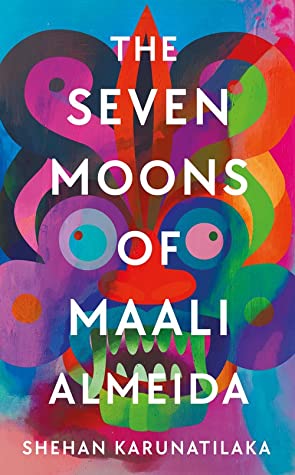
The Seven Moons of Maali Almeida by Shehan Karunatilaka
When the longlist for the 2022 Booker Prize was announced, one of the books that immediately grabbed my attention was Shehan Karunatilaka’s The Seven Moons of Maali Almeida. Somehow, it looked out of place; imagine my surprise when the book was announced winner. This, nevertheless, further piqued my interest in the book. Thankfully, I was able to obtain a copy of the book earlier this year. Once I had it in hand, I didn’t hesitate to read it. The novel, set in Sri Lanka, started off on a rather strange note as we meet the titular Maali Almeida entering the space between heaven and earth. He was given seven moons to complete tasks he was not able to complete when he was alive. What unfolded was one of the darkest phases in contemporary Sri Lankan history.

The Old Capital by Yasunari Kawabata
Nobel Laureate in Literature Yasunari Kawabata was one of the reasons why my interest in Japanese literature grew. His works are deceptively thin but this slender appearance belies stories and messages that pack a punch. This was also the case for The Old Capital, one of the three books cited by the Swedish Academy when it awarded Kawabata the Nobel Prize in Literature. To be honest, the book had quite an unfair advantage over the other books. I recently visited Kyoto, the city at the heart of the novel. Before the capital was transferred to Tokyo, Kyoto held the distinction of being Imperial Japan’s capital for nearly a millennium. The story, however, does not dive into history but rather, it captured the story of some of the members of the community. Personally, what made the novel flourish are the details of Kyoto that came alive. Festivals, temples, and streets came alive with Kawabata’s writing.

Victory City by Salman Rushdie
When the news of a new work by Salman Rushdie to be released in 2023 reached my timeline, I was up in anticipation. This was also a very welcome announcement, especially after the stabbing incident that shocked the literary world. Thankfully, I didn’t have to wait for a copy of his latest novel, Victory City. Honestly, I wasn’t expecting the story encapsulated in Victory City. It was different from his previous two works, The Golde House and Quichotte. But I am glad for this because the novel felt like a return to form, apart from it being a homecoming of some sort. I greatly enjoyed the book which is also my tenth novel by Rushdie. The level of research poured into writing the novel was also astounding. Rushdie’s status as one of the contemporary’s premier storytellers is undeniable. Victory City is the triumph of storytelling.
The book’s message was perfectly captured in the book’s closing lines: “I, Pampa Kampana, am the author of this book. I have lived to see an empire rise and fall. How are they remembered now, these kings, these queens? They exist now only in words. While they lived, they were victors, or vanquished, or both. Now they are neither. Words are the only victors. What they did, or thought, or felt, no longer exists. Only these words describing those things remain. They will be remembered in the way I have chosen to remember them. Their deeds will only be known in the way they have been set down. They will mean what I wish them to mean. I myself am nothing now. All that remains is this city of words. Words are the only victors.”
 The Pine-Scented Chronicles