
Happy midweek everyone! Wow. We are already halfway through the week. We are also nearly midway through the year. How has the year been going for you so far? I hope that the year has been kind to everyone. If not, I hope you will experience a reversal of fortune in the coming months. More importantly, I hope everyone is happy and healthy, in body, mind, and spirit.
With the midweek comes a fresh WWW Wednesday update, my first this year. WWW Wednesday is a bookish meme originally hosted by SAM@TAKING ON A WORLD OF WORDS. The mechanics for WWW Wednesday are quite simple, you just have to answer three questions:
- What are you currently reading?
- What have you finished reading?
- What will you read next?

What are you currently reading?

June is about to draw to a close but my foray into Asian literature is still in full swing; July will be an extension of my June Asian literature month. Earlier today, I completed Perumal Murugan’s The Story of a Goat, the first novel I read originally written in Tamil. It is also the fifth novel I read this year written by an Indian writer; three of these were originally written in English while the other one was originally written in Bengali, also my first. I am now back in East Asia after spending some time in South and Southeast Asia. Violets is my second novel by Korean writer Kyung-Sook Shin, after her locally bestselling novel, Please Look After Mom. Violets earned my interest after it was promoted by its translator, Anton Hur, an International Booker Prize-shortlisted translator who I also follow on Twitter. I just started the novel but I can feel like it has parallels with Please Look After Mom. Should I not finish reading it by Friday, I will be sharing more of my impressions in this week’s First Impression Friday update.
What have you finished reading?

The past week is perhaps one of my most productive as I managed to finish five novels; this is mainly because most of these novels were short. It started with a three-book journey across Southeast Asia. The first of these three books was Dương Thu Hương’s The Zenith, a book I acquired during the 2018 Big Bad Wolf Sale in Manila. Speaking of which, Big Bad Wolf Sale is back in business, at least the physical book fair. I just came from there and I will be sharing more of this on a separate post.
Interestingly, while I read some works of Vietnamese writers, The Zenith is the first one that was originally written in Vietnam. And because it has been five years since I acquired the book, I made it part of my 2023 Beat the Backlist Challenge. One of the things that immediately captured my attention was the book’s length. At over 500 pages, it is rather long although the premise seemed simple. It is a fictional account of the death of Hồ Chí Minh, a Vietnamese revolutionary and statesman, in a remote mountain outpost where he was incarcerated. With the story examining the lives and thoughts of other Vietnamese leaders in the 1950s and 1960s, the novel underlined the age-old adage, “It is lonely at the top.” Getting to the heart of the book’s message, however, can be challenging. The story had the tendency to meander. Although it was atmospheric and richly descriptive, the paragraphs run longer than necessary. These were exacerbated by the shifting storyline and time frame. It was ambitious but it was under this ambition that the story crumbled.

My foray into Southeast Asian literature continues; even though I am from this region, my exploration of its literature is glaringly lacking. From Vietnam, my next read transported me to the world’s largest archipelago, Indonesia. Eka Kurniawan’s Man Tiger is my second by the esteemed Indonesian writer. Reading the book also cuts my streak of seven new-to-me writers which started after Han Kang’s Greek Lessons. Kurniawan first gained my interest with his magical realist debut novel, Beauty is a Wound. The novel astounded me so I also had lofty expectations of Man Tiger.
Set in an Indonesian coastal village, Man Tiger opened with the murder of Anwar Sadat, a respected local man who was also a serial lecher. The suspect was Margio, the boyfriend of Anwar’s youngest daughter, Maharani. When confronted about the murder, Margio said calmly that “It wasn’t me. There is a tiger inside my body.” This admission, or nonadmission rather unsettled everyone. The story then flashed back to Margio’s past. When he was younger, Margio’s imagination was cultivated by his grandfather who told him about the female tiger. Like Kurniawan’s debut novel, folklore, and the local scene formed a seminal part of the novel. Beyond the mystery, the story soared with how Kurniawan skillfully captured rural Indonesia and its plight. While Beauty is a Wound was more complex and ambitious, I find Man Tiger more controlled and had fewer exaggerations. It was still as riveting as its predecessor.

My three-book journey across Southeast Asia culminated with a book closer to home. To make up for the lack of Philippine literature last year, I resolved to read at least two this year. To make sure I accomplish this, I listed two works of Filipino writers in my 2023 Top 23 Reading List. Ramon L. Muzones’ Marcosatubig was the second of these two books. Originally written in Hiligaynon, Marcosatubig is the first work of Philippine literature I read that was not written in Spanish or English.
The titular Marcosatubig is the capital of the powerful Sulu and Maguindanaw Sultanate. From the descriptions in the story, I surmise it is located in present-day Zamboanga City. Datu Parang, the son of the sitting sultan, was placed into exile by the council of datus after he violated an important rule; Datu Parang married a Christian woman with whom he eventually had a son named Salagunting. Salagunting was sucked into the sea by a huge scallop, believed to be dead. Meanwhile, his father died in a battle while his grandfather was poisoned by Datu Mohamed. With no heir in sight, this paved the way for Datu Mohamed’s ascension into the Sultanate. But lo and behold, Salagunting was still alive and was raised by King Balintataw of the sea. When Salagunting was of age, he was confronted with his destiny which he must fulfill. Will he be able to liberate Marcosatubig from the evil and greed that has proliferated? The mix of folklore and historical contexts made this novel riveting. The downside, however, lay in how women were portrayed. While they were powerful, they were still subservient to the designs of men.
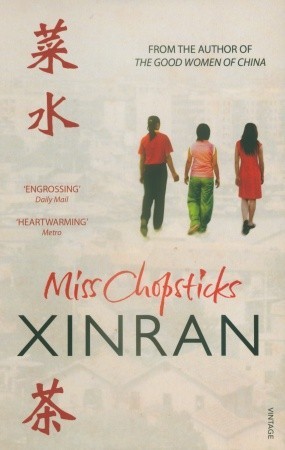
From Southeast Asia, I traveled back to East Asia with the second novel by a Chinese writer this year. Xinran’s Miss Chopsticks was one of the random purchases I made last year when I realized how much I am lagging behind in Chinese literature compared to say, Japanese literature. Interestingly, Miss Chopsticks is just the fourth novel I read that was originally written in Chinese.
The first thing about the book that grabbed my attention was its title Apparently, daughters were labeled as Chopsticks while sons were roof beams; chopsticks because women were seen as the weaker sex. The story started in the Chinese province of Anhui where the three daughters of a peasant family were tasked to move to the city to earn money; their two oldest sisters were already married while the fourth born-daughter was blind and deaf. Daughters Three, Five, and Six, with the help of Uncle Two, then made their way to Nanjing where they were got employed by different but equally kind employers. There is not much action in the novel but the bond between the sisters was heartwarming to read. This was in direct contrast to the heartbreaking way they were seen by society; a couple books back, in India, daughters were seen as someone else’s garden, basically burdens. Reading the book, I thought that it was set in the 1970s or perhaps the 1980s. But no, it was set in the 1990s so it was even more upsetting, reading about how women were treated in contemporary China.

From China, my next read transported me to India with Perumal Murugan’s The Story of a Goat. As I mentioned in the first question, this is the fifth novel written by an Indian writer that I read. It is also the first work of Tamil literature I read. I have been looking forward to reading a novel by Murugan after his latest translated novel, Pyre was longlisted for the International Booker Prize. It didn’t make the shortlist but it was enough to pique my interest in Murugan’s oeuvre; I previously purchased two of his works despite having no iota about who he was.
The Story of a Goat is literally the story of a goat. The story is set in rural southern India where a mystic man gifted a rare black goat to an aged farmer on his way to his farm. The kid was feeble and her condition wasn’t great, hence, she was given away. The farmer’s wife nursed her back to health and she was even named Poonachi, also the book’s Tamil title. It wasn’t a great start for Poonachi and soon she would learn about the ugly realities of life. Poonachi soon developed into an allegory for mankind’s struggle for survival. Despite this, Murugan managed to make the story feel light. There were moments of joy and humor. Murugan was also resplendent in how he captured local politics and the intricacies of Indian farming life. Yes, there are inevitable events but Purugan provided the readers with a riveting story, brief but sweet and even tender in some parts.
What will you read next?
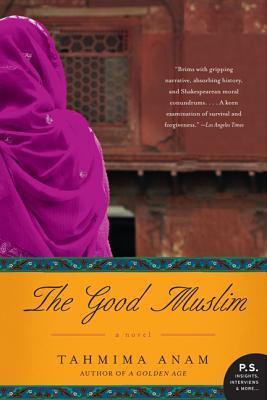


From South Korea, I am considering traveling to Bangladesh. Tahmima Anam’s The Good Muslim will officially be my first novel by a Bangladeshi writer if I do get to read it. I am also lining up David Grossman’s A Horse Walks Into A Bar. This will be the first novel originally written in Hebrew that I will read. So, another first. Nadia Hashimi’s A House Without Windows, however, will not be my first by the Afghan American writer. However, it has been over five years since I read The Pearl That Broke Its Shell, the first novel by Hashimi I read.
That’s it for this week’s WWW Wednesday. I hope you are all doing great. Happy reading and always stay safe! Happy Wednesday again!
 The Pine-Scented Chronicles
Hello, thank you for your blog post. I appreciate your positive and uplifting message. You have a very cheerful and optimistic attitude, and I admire that.
The year has been challenging, but I believe in God for a turnaround. I have been working on some personal and professional goals, and I have been making some progress.
Thank you again for your blog post.
LikeLike
Well- don’t know one of them
Finished- Something Wonderful
Currently- In The Lives of Puppets
Usually, it is only two W’s I always know
LikeLiked by 1 person