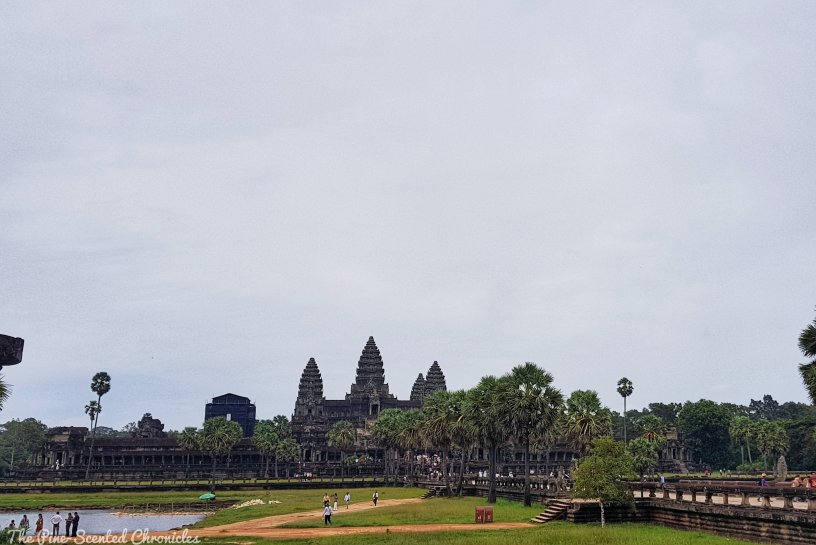
Just like that, we are already six months through 2023. How time flies fast. Before we know it, we will be preparing for a new year. Anyway, how has the year been so far? I hope that it is brimming with good news and positive vibes. I hope that your year is filled with blessings and new learning. I hope that it is riddled with adventures. If the year has gone awry, I hope that the second half will smile on you. I hope that you will experience a reversal of fortune. I hope that the remainder of the year will be kind to everyone. I hope that it will be filled with great news and blessings. More importantly, I hope everyone is and will be healthy, in body, mind, and spirit.
But before I can leave June behind, let me look back to how it has been, reading-wise. After two months of reading the works of Japanese writers, I commenced a literary journey across the rest of the Asian continent. Compared to my forays into Japanese literature, my venture into Asian literature is quite limited. Apart from Japan, the only major Asian literature I have read at least 15 works of is Indian literature; Indian literature has breached 20 books this year, making it my fourth most-read literature, behind American, British, and Japanese. Chinese literature, another major world literature, is lagging behind. Heck, even my very own Philippine literature is barely in my top ten most-read literature. To redress this, I have once again decided to host an extensive journey across Asia. Before I lose it in a swirl of words, here is a peek into how my May reading journey shaped up. Happy reading!
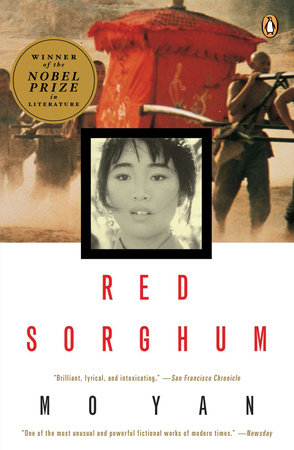
Red Sorghum by Mo Yan
I commenced my literary journey across the rest of Asia with Nobel Laureate in Literature Mo Yan’s Red Sorghum; Mo Yan, which literally translates to “don’t speak”, is the pseudonym of Guan Moye. Interestingly, this is just the third book I read originally written in Chinese, all of which I read this decade. Red Sorghum was originally published in serial form in various magazines in 1986 before it was published as a single volume a year later. Set between the 1920s and the 1970s, the novel chronicled the story of three generations of the Shandong family. The family initially made their fortune as sorghum winemakers. As the story progressed, and with the changes that were seizing China, the family slowly turned into resistance soldiers during the Second Shino-Japanese War. Their trials and tribulations were conveyed by a single narrator. The book was brimming with violence. Bloodshed, death, and disputes between gangs and political rivals were prevalent. I surmise this is the reason why the sorghum the family distilled is red. It turned red after absorbing the blood of those who perished. The novel was also rich with details of local myth and superstition. Red Sorghum was dark with graphic elements but it was still a riveting work.
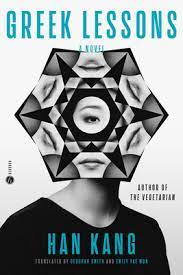
Greek Lessons by Han Kang
I extend my stay in East Asia with South Korean writer Han Kang’s latest translated novel, Greek Lessons. Listed by Time Magazine as one of the best books this year, so far, Greek Lessons is my fourth novel by the highly-esteemed writer, making her my most-read Korean writer. Originally published in 2011, Greek Lessons followed two distinct threads. The first thread followed the story of an unnamed man who related his story in his own voice. Returning from Germany to his native Seoul, he started teaching Greek lessons at a private academy. In one of his classes, he crossed paths with the novel’s second main character, an unnamed woman. As the story unfolds, we learn about the losses both characters have incurred. She lost her mother, the custody of her son to her former husband, and her voice; she loses her voice when she experiences deep trauma. Meanwhile, the male character started losing his eyesight, a hereditary condition. The beauty in Kang’s prose and writing lies in her ability to push her readers’ imagination. Through her works, she implores readers to probe deeper, to reevaluate their own perceptions and understanding. This was a quality palpable in Greek Lessons.

State of War by Ninotchka Rosca
As mentioned in the introduction, Philippine literature is a part of the literary world that I have rarely indulged in. I did resolve to read at least one work per year since 2017 but I failed last year. I am redressing the situation with Ninotchka Rosca’s State of War, just the tenth work of Philippine literature I read, further underlining how underexplored this part of the literary world is. This is the reason why State of War is part of my 2023 Top 23 Reading List. While the novel was composed following the 1986 People Power, the book resonates with the Philippines’ current political and social atmosphere. The novel’s driving action was a festival (the Ati-Atihan) which was attended by the novel’s three main characters: Eliza Hansen, Adrian Banyaga, and Anna Villaverde. Rosca then painted their backstories. It was through their stories that the history of the Philippines was captured. We read about the Spanish era, the dawn of the American era, and even the Japanese era. The novel’s most scathing writing, however, was reserved for the Marcos regime. The book was not an easy read even though the writing was lyrical and descriptive. With historical revisionism becoming prevalent, books like State of War remind readers never to forget about history. It was a good read, even an imperative one for Filipino readers.

Age of Vice by Deepti Kapoor
From the Philippines, my literary journey took me to South Asia. Deepti Kapoor’s sophomore novel, Age of Vice was a book that I came across while searching for books to include in my 2023 Books I Look Forward To List. Kapoor immediately jumped into action; she did not provide a preamble as the story immediately delved into the world the novel was portraying: the Indian underworld. The opening sequence involved a car crash where a young woman died while the inebriated driver survived. The luxury car was owned by the scions to one of Uttar Pradesh’s most prominent gang families while the driver Ajay worked for the Wadia family, another equally prominent name in the Indian underworld. The novel then painted the story of Ajay and his journey to becoming the personal detail of Sunny Wadia, the son of Bunty, a prominent gang leader. Age of Vice is multilayered. Poverty riddled Kapoor’s India but its landscape was slowly being transformed by idealistic young men like Sunny. We also read about sons attempting to break the cycle of violence that preceded their name. While it was predictable, it was nevertheless a riveting read.

The Aunt Who Wouldn’t Die by Shirshendu Mukhopadhyay
When I started reading Shirshendu Mukhopadhyay’s The Aunt Who Wouldn’t Die, I thought I was finally reading my first Bangladeshi novel. Sure, Mukhopadhyay was born in modern-day Bangladesh but he identifies as Indian. Nevertheless, The Aunt Who Wouldn’t Die is my first novel originally written in Bengali. The Aunt Who Wouldn’t Die captured the state and the plights of women in modern Indian society. Mukhopadhyay’s novel charted the story of Somlata who, at the start of the novel, recently got married to one of the sons of the once-influential Mitra family. The Mitra’s fortune was in decline and this decline was largely due to the laziness and decadent lifestyle of the Mitra men. When Aunt Pishima passed away, she surreptitiously handed over to Somlata a small fortune. This would have greatly helped alleviate the family’s current plight. However, Pishima resented her family. A third voice eventually emerged, Boshon who we learn is Somlata’s daughter. It was through the story of these three women that Mukhopadhyay captured the changing landscape of women in modern India. It was an eccentric but short read, riddled with sardonic remarks.
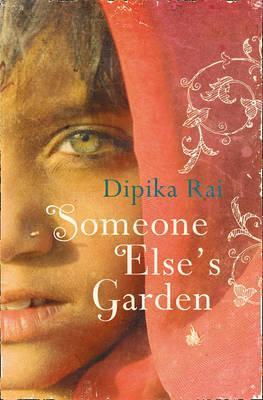
Someone Else’s Garden by Dipika Rai
In a way, Dipika Rai’s Someone Else’s Garden shares similarities with The Aunt Who Wouldn’t Die. Both captured how women are treated in modern Indian society. At the heart of Rai’s debut novel was Mamta, the eldest daughter of seven children born to Lata Bai. Her younger sister was already married off. While Mamta is just twenty, she is already considered old. In rural India, the older a woman gets, the more challenging it is for her to be married off. As such, Mamta’s father was constantly complaining about being stuck with “someone else’s garden“, a metaphor for young women who are considered a “burden to be rid of”. Mamta eventually married an abusive man known to have brought about his first wife’s death. Mamta was about to have the same fate but she managed to escape to the big city. This was a huge risk as women who run away from their husbands are ostracized by the community and their families. It was in the city that Mamta took control of her destiny. The book captured the dichotomies between village and city life, with the former representing traditions and the latter representing development. There was a lot to unpack in the seemingly straightforward story. Sadly, Mamta is just one of many young brides treated as “someone else’s garden” by their families.

The Reluctant Fundamentalist by Mohsin Hamid
I extended my stay in South Asia with me to Pakistani writer Mohsin Hamid’s The Reluctant Fundamentalist. Shortlisted for the Booker Prize, the book is a familiar presence in must-read lists, including the 1,001 Books You Must Read Before You Die. Interestingly, I was reluctant to read the book but I managed to get over my apprehensions. Hamid’s most popular novel takes the readers to the streets of Lahore where a Pakistani man named Changez offered to help a nervous American visitor. They headed to a tea shop where Changez assuaged the visitor’s fears. He then shared his story, particularly his years living in the United States. Changez attended Princeton University where he excelled and completed a degree in finance. Post-university, he met Erica, an aspiring writer, during a journey to Greece. The two hit it off and life was good for Changez. Then September 11 happened. Changez admitted that he was pleased by the attacks. We then read about the initial response of America, such as the discrimination toward ordinary Pakistanis. To show solidarity with his countrymen, Changez grew a beard but a eureka moment resulted in a plummeting self-esteem. He left his lucrative job and returned to Lahore where he met the American visitor. Overall, it was a quick but insightful read.

Disoriental by Négar Djavadi
From Pakistan, my literary journey took me to Iran with Négar Djavadi’s Disoriental which was originally published in French in 2016 as Désorientale. Djavadi and her family moved to France following the Iranian Revolution of the 1980s. Djavadi’s debut novel was a literary sensation in France, earning Djavadi several accolades. The story was narrated by Kimiâ Sadr and came in the form of a flashback. Kimiâ first painted an evocative picture of her family’s provenance, starting with her paternal grandmother Nour who was born in Iran’s northern Mazandaran province. Her father, Darius was the fourth of six brothers. Darius married Sara and the couple had three daughters. Weighing heavy on Kimiâ’s parent’s shoulders was the burden of society wanting a male child. The novel is a family saga but t is also an evocative painting of Iran’s contemporary history. Kimiâ’s parents were political activists, thus, setting them apart. With pandemonium inevitable during the Iranian revolution of the 1980s, Darius fled to Paris, with his wife and daughters eventually smuggled out of Iran. The other layers of Disoriental included Kimiâ’s recognition of her sexuality. Disoriental is a riveting read, recommended for readers who barely have an iota about Iran and its recent history.

The Zenith by Dương Thu Hương
From South Asia, I pivoted back to Southeast Asia. This started with Vietnamese writer Dương Thu Hương’s The Zenith, a book I acquired during the 2018 Big Bad Wolf Sale in Manila. While I read some works of Vietnamese writers, The Zenith is the first one that was originally written in Vietnam and is also part of my 2023 Beat the Backlist Challenge. One of the things that immediately captured my attention was the book’s length. Divided into five parts, the novel was a sympathetic fictional account of the death of Hồ Chí Minh, a Vietnamese revolutionary and statesman, in a remote mountain outpost where he was incarcerated. It is an ambitious understanding that also examined the lives and thoughts of other Vietnamese leaders in the 1950s and 1960s. The story of Hồ also underlined the age-old adage, “It is lonely at the top.” The Zenith, however, is no easy read. With the story’s perspective and time frame alternating, the story tended to meander. Nevertheless, it was atmospheric and richly descriptive but the paragraphs run longer than necessary. It was ambitious but it was under this ambition that the story crumbled. On a positive note, the book gave faces and voices to the beneficiaries and the victims of Vietnamese communism.

Man Tiger by Eka Kurniawan
Even though I am Southeast Asian, my exploration of its literature is glaringly lacking. From Vietnam, my next read transported me to the world’s largest archipelago, Indonesia. Eka Kurniawan’s Man Tiger is my second by the esteemed writer. It was in the earlier parts of the pandemic that I first encountered Kurniawan. He gained my interest with his magical realist debut novel, Beauty is a Wound. The novel astounded me so I also had lofty expectations of Man Tiger. Set in an Indonesian coastal village, the main action in Man Tiger was set into motion by a murder. Anwar Sadat, a respected local man who was also a serial lecher, was found dead and the suspect was Margio, the boyfriend of Anwar’s youngest daughter, Maharani. When confronted about the murder, Margio said calmly that “It wasn’t me. There is a tiger inside my body.” From the present, the story traveled back to the past. When he was younger, Margio’s imagination was cultivated by his grandfather who told him about the female tiger. Folklore and the local scene were seminal parts of the novel; Kurniawan’s adept depiction of rural Indonesia’s plight was one of the novel’s main achievements. While Beauty is a Wound was more complex and ambitious, I find Man Tiger more controlled and had fewer exaggerations. It was still as compelling a read as its predecessor.

Marcosatubig by Ramon L. Muzones
My three-book journey across Southeast Asia culminated with a book from home. To make sure I read at least three works of Filipino writers, I listed two works in my 2023 Top 23 Reading List. Ramon L. Muzones’ Marcosatubig was the second of these two books. Originally written in Hiligaynon, Marcosatubig is the first work of Philippine literature I read that was not written in either Spanish or English. The titular Marcosatubig is the capital of the powerful Sulu and Maguindanaw Sultanate. When the story commenced, Datu Parang, the heir apparent to the sultanate, was placed into exile by the council of datus after he violated an important rule; he married a Christian woman. The couple had a son named Salagunting who was sucked into the sea by a huge scallop. Datu Parang died in a battle while Salagunting’s grandfather was poisoned by Datu Mohamed, the novel’s main antagonist. With no heir in sight, Datu Mohamed’s ascension into the Sultanate was paved. Lo and behold, Salagunting was still alive and was raised by King Balintataw. When Salagunting was of age, he was confronted with his destiny which he must fulfill. The novel is a critical look into the Philippines’ long colonial history, propped with folklore and magic. The downside, however, lay in how women were portrayed. They were powerful but they were still subservient to the designs of men.
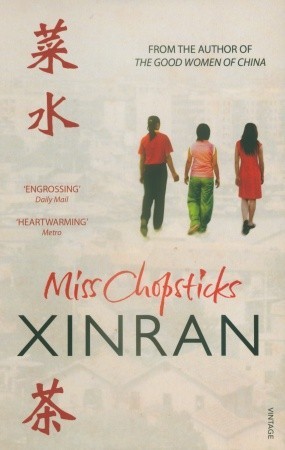
Miss Chopstick by Xinran
Xinran’s Miss Chopsticks is the second novel by a Chinese writer I read this year. It was one of the random purchases I made last year when I realized how much I am lagging behind in Chinese literature. The first thing about the book that grabbed my attention was its title Apparently, In Chin, daughters were labeled as Chopsticks while sons were roof beams; chopsticks because women were seen as the weaker sex. The story started in the Chinese province of Anhui where the three daughters of a peasant family moved to the city to earn money; their two oldest sisters were already married while the fourth born-daughter was blind and deaf. Daughters Three, Five, and Six, with the help of Uncle Two, traveled to Nanjing where they were employed by different but equally kind employers. There is not much action in the novel but the bond between the sisters was heartwarming to read. This was in direct contrast to the heartbreaking way women were seen by society. Reading the book, I thought that it was set in the 1970s or perhaps the 1980s. But no, it was set in the 1990s so it was even more appalling how women were still treated in contemporary China.

The Story of a Goat by Perumal Murugan
Like in the case of Chinese literature, I also made random purchases of works of Indian literature. Among these titles was Perumal Murugan’s The Story of a Goat, the first work of Tamil literature I read. I have been looking forward to reading a novel by Murugan after his latest translated novel, Pyre was longlisted for the International Booker Prize. The Story of a Goat is literally the story of a goat; the Tamil title is Poonachi, the name of the goat at the heart of the story. Set in rural southern India, an aged farmer on his way to his farm was gifted by a mystic man with a rare black goat. However, the kid was feeble and was physically unwell, hence, she was given away. The farmer’s wife, nevertheless, was able to nurse her back to health. As Poonachi grew healthy, she also learned about the ugly realities of life. In a way, Poonachi was an allegory for mankind’s struggle for survival. Despite this, Murugan managed to make the story feel light with moments of joy and humor. Murugan also did a resplendent job in capturing local politics and the intricacies of Indian farming life. Yes, there are inevitable events but Purugan regaled the readers with a brief but sweet story; it was even tender in some parts.

Violets by Kyung-Sook Shin
Last year, South Korean writer Kyung-Sook Shin’s latest translated novel, Violets, captured my fancy. It was to its advantage that I follow the book’s translator, Anton Hur, on Twitter; Hur was an International Booker Prize shortlisted translator. If my memory serves me right, it was in 2016 when I first encountered Shin; her novel, Please Look After Mom was ubiquitous. I really wasn’t a fan of it but I am still willing to explore Shin’s works. Over five years later, I am reading my second Shin novel. Set in 1970s South Korea, the novel charted the story of San, a young woman from the Korean countryside; her family was outcasted by the community because of their nonconformance to the community’s expectations. San then moved to Seoul where she worked in a salon before moving to work at a flower shop where she befriended Su-ae, the shopowner’s niece; they also became roommates. Female isolation was one of the novel’s main themes and it was evocatively captured by Shin’s writing. San’s detachment from society was disrupted by the appearance of a male photographer. He awakened in her a longing. But things were not meant to be. Violets is a short but atmospheric read.
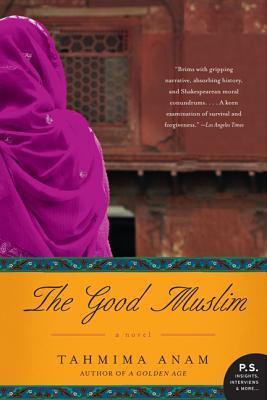
The Good Muslim by Tahmima Anam
My wish to finally read a work by a Bangladeshi writer finally came true. Capping my most productive reading month ever is Tahmima Anam’s The Good Muslim. When I purchased the book,, I barely had any iota about what the book was about nor have I heard of Anam previously. But hey, I am a literary adventurer. Anam’s sophomore novel, The Good Muslim commenced in 1984 and charted the story of Maya Haque, a Bangladeshi doctor who returned to her family home in Dhaka after spending a decade in north Bangladesh. Along with Maya’s story, the novel also charted the story of Sohail, her brother. The siblings captured the changes that were taking place in Bangladesh following its successful war of independence. Maya was a representation of progressive ideals. She was also a social activist. Meanwhile, Sohail, following the conclusion of the revolution, has become increasingly radicalized by his religious views. He has become conservative and was a charismatic religious leader. Sohail’s views reflected the vision of General Hussain Muhammad Ershad for Bangladesh. The President and dictator of Bangladesh, Ershad promoted Islam over secularism. My first Bangladeshi novel is a treat, with its intersection of politics, history, and religious zealotry.
Reading Challenge Recaps
- My 2023 Top 23 Reading List: 9/23
- 2023 Beat The Backlist: 8/20; 65/60
- 2023 Books I Look Forward To List: 1/10
- Goodreads 2023 Reading Challenge: 67/90*
- 1,001 Books You Must Read Before You Die: 9/20
- New Books Challenge: 2/15
- Translated Literature: 32/40
*I updated my Goodreads target from 70 to 90 as I am quite ahead of my original target.
Book Reviews Published in June
- Book Review # 437: The Day Lasts More than a Hundred Years
- Book Review # 438: Fury
- Book Review # 439: South of the Border, West of the Sun
- Book Review # 440: Demon Copperhead
- Book Review # 441: Greek Lessons
- Book Review # 442: Age of Vice
- Book Review # 443: How High We Go in the Dark
- Book Review # 444: The Idiot
- Book Review # 445: The Virgin Suicides
In terms of writing book reviews, June has equaled May as my most productive writing month this year, so far. I was able to finish nine book reviews. In the process, I completed all pending book reviews from my foray into Asian literature last August 2022 while, at the same time, started on my pending book reviews from my September 2022 American Literature Month. I was able to publish reviews of three books from this journey but I still have a lot to complete. On a positive note, I was able to reduce to less than twenty my pending 202 book review.s. Yay for that. July is going to be a very hectic month at the office because of the quarter and semestral reporting. Nevertheless, I am still hoping to complete as many book reviews as I can. As always, I will be taking it one step at a time.
For July, I will be continuing my foray into Asian Literature. I still have quite a long list of books I want to read. I am about to start my first novel written by an Israeli writer, David Grossman’s A Horse Walks Into A Bar. This will also be my first novel originally written in Hebrew. I am also lining up Cheon Myeong-kwan’s 2023 International Booker Prize-shortlisted novel, Whale. I am also looking at reading more works by Filipino and Chinese, even Indian writers before the month ends. Nobel Laureate in Literature Orhan Pamuk will also be part of this journey. There are too many good books but too little time. Nevertheless, there is so much to look forward to this month.
How about you fellow reader? How is your own reading journey going? I hope you enjoyed the books you have read. For now, have a great day. As always, do keep safe, and happy reading everyone!
 The Pine-Scented Chronicles
Great lost Carl, we’re heading to Pakistan in a couple of weeks and I was long for a book to read while we’re there, but I’m not sure Reluctant Fundamentalist is quite what I’m looking for. Do you have other Pakistan novels that you lo e? Thanks Maggie
LikeLike