
Happy midweek everyone! Wow. We are already halfway through the week. We are also nearly midway through the year. How has the year been going for you so far? I hope that the year has been kind to everyone. If not, I hope you will experience a reversal of fortune in the coming months. More importantly, I hope everyone is happy and healthy, in body, mind, and spirit.
With the midweek comes a fresh WWW Wednesday update, my first this year. WWW Wednesday is a bookish meme originally hosted by SAM@TAKING ON A WORLD OF WORDS. The mechanics for WWW Wednesday are quite simple, you just have to answer three questions:
- What are you currently reading?
- What have you finished reading?
- What will you read next?

What are you currently reading?

It has been a month since I commenced a literary journey across Asia. June was brimming with interesting reads from the different parts of the world’s largest continent. However, its vastness also means that a lot of it remains unexplored. With this, I have decided to extend my foray into Asian literature this July. My journey has now taken me to the Middle East region with Bilge Karasu’s The Garden of the Departed Cats. It was through an online bookseller that I first encountered the Turkish writer and his novel. Originally published in 1979 as Göçmüş Kediler Bahçesi, the novel – at least where the structure is concerned – is reminiscent of Milan Kundera’s The Book of Laughter and Forgetting. This similarity is also the reason why I was rather apprehensive about reading the book. Rather than a straightforward story, the novel is comprised of fragments, hence, it felt more like a collection of short stories. Animals are ubiquitous in the story. I am still trying to connect the dots but I must say that Karasu is a very riveting storyteller.
What have you finished reading?

After a very productive reading week, the previous week has been rather slow. From five books the previous week, I was able to complete only three books. It is still a decent number all things considered. The first of these two books is Kyung-Sook Shin’s Violets. I first encountered Shin about six years ago. Her novel Please Look After Mom was everywhere. This blurb was the reason why I read the book. Honestly, I was a little underwhelmed by the book. This, however, is not going to preclude me from reading her other works.
The opportunity to read another Shin novel came last year when I learned about the release of the English translation of Violets; I learned about it through Anton Hur, its translator who I follow on Twitter. Hur is a celebrity in his own right, with two of his translations longlisted for the International Booker Prize. Set in 1970s South Korea, the novel charted the story of San, a young woman from the Korean countryside; her family was outcasted by the community because of their nonconformance to the community’s expectations. When she became a young adult, San moved to Seoul where she worked in a salon before moving to work at a flower shop where she befriended Su-ae, the shopowner’s niece; they also became roommates. Female isolation was one of the novel’s main themes and it was evocatively captured by Shin’s writing. San’s detachment from society was disrupted by the appearance of a male photographer. He awakened in her a longing. But things were not meant to be. Violets was a short but atmospheric read.
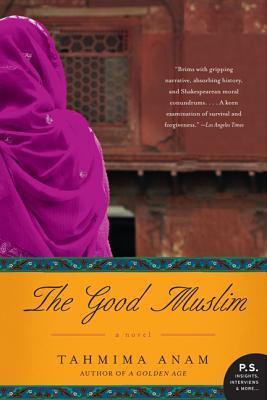
From South Korea, my reading journey took me to Bangladesh. My wish to finally read a work by a Bangladeshi writer finally came true. Capping my June reading month – the most prolific ever, in terms of books read – is Tahmima Anam’s The Good Muslim. When I purchased the book, I barely had any iota about what the book was about nor have I heard of Anam previously. But hey, I am a literary adventurer.
Anam’s sophomore novel, The Good Muslim commenced in 1984, over a decade after the conclusion of the Bangladeshi Civil War. At the heart of the story was Maya Haque, a Bangladeshi doctor who returned to her family home in Dhaka after spending a decade in north Bangladesh. The novel also charted the story of Sohail, her brother. Through the siblings, Anam captured the changes that were taking place in Bangladesh following its successful war of independence. Maya was a representation of progressive ideals. She was also a social activist. Meanwhile, Sohail, following the conclusion of the revolution, has become increasingly radicalized by his religious views. He has become conservative and was a charismatic religious leader. Sohail’s views reflected the vision of General Hussain Muhammad Ershad for Bangladesh. The President and dictator of Bangladesh, Ershad promoted Islam over secularism. My first Bangladeshi novel is a treat, with its intersection of politics, history, and religious zealotry.

From Bangladesh, I moved further west, now to Israel. David Grossman’s A Horse Walks Into A Bar is my first novel by an Israeli writer. It is also the first novel I read that was originally written in Hebrew. Prior to the 2020s, I have never heard of Grossman. Had it not been for the International Booker Prize longlist, I would have not come across the Israel writer. So, a new writer whose oeuvre I want to explore and a new book I can’t wait to check out.
Speaking of the International Booker Prize, A Horse Walks Into A Bar won the prestigious literary prize in 2017. The novel was related through the point-of-view of Avishai Lazar. A retired district court judge, he was invited out of the blue by Dovaleh Greenstein to attend his stand-up routine in a bar in the Israeli coastal town of Netanya. Greenstein and Lazar were once childhood friends but they have not spoken to each other in nearly four decades. Lazar was taken aback by the abrupt invitation but he nevertheless accepted it. In the majority of the story, we read about Greenstein performing his stand-up comedy routine. However, it was no comedy as much as a degradation of one’s self. Through his jokes, Greenstein was dismantling himself, progressively opening himself up to the scrutiny of his audience. The longer his skit went, the stranger it got. It was a sad story but there were glimmers of hope.
What will you read next?



 The Pine-Scented Chronicles
Finished- Something Wonderful
Currently- In The Lives of Puppets
Next- ????? (meaning still haven’t decided)
LikeLike