
Hello, readers! Welcome to another #5OnMyTBR update. The rule is relatively simple. I have to pick five books from my to-be-read pile that fit the week’s theme.
This week’s theme: In Translation

5OnMyTBR is a bookish meme hosted by E. @ Local Bee Hunter’s Nook where you chose five books from your to-be-read pile that fit that week’s theme. If you’d like more info, head over to the announcement post!

Title: Death in Venice
Author: Thomas Mann
Original Language: German
Translator: Stanley Appelbaum
Publisher: Dover Publications, Inc.
Publishing Date: 1995
No. of Pages: 62
Synopsis:
One of the most famous literary works of the twentieth century, the novella “Death in Venice” embodies themes that preoccupied Thomas Mann (1875-1955) in much of his work: the duality of art and life, the presence of death and disintegration in the midst of existence, the connection between love and suffering and the conflict between the artist and his inner self. Mann’s handling of these concerns in this story of a middle-aged German writer, torn by his passion for a Polish youth he met on a holiday in Venice, resulted in a work of great psychological intensity and tragic power.
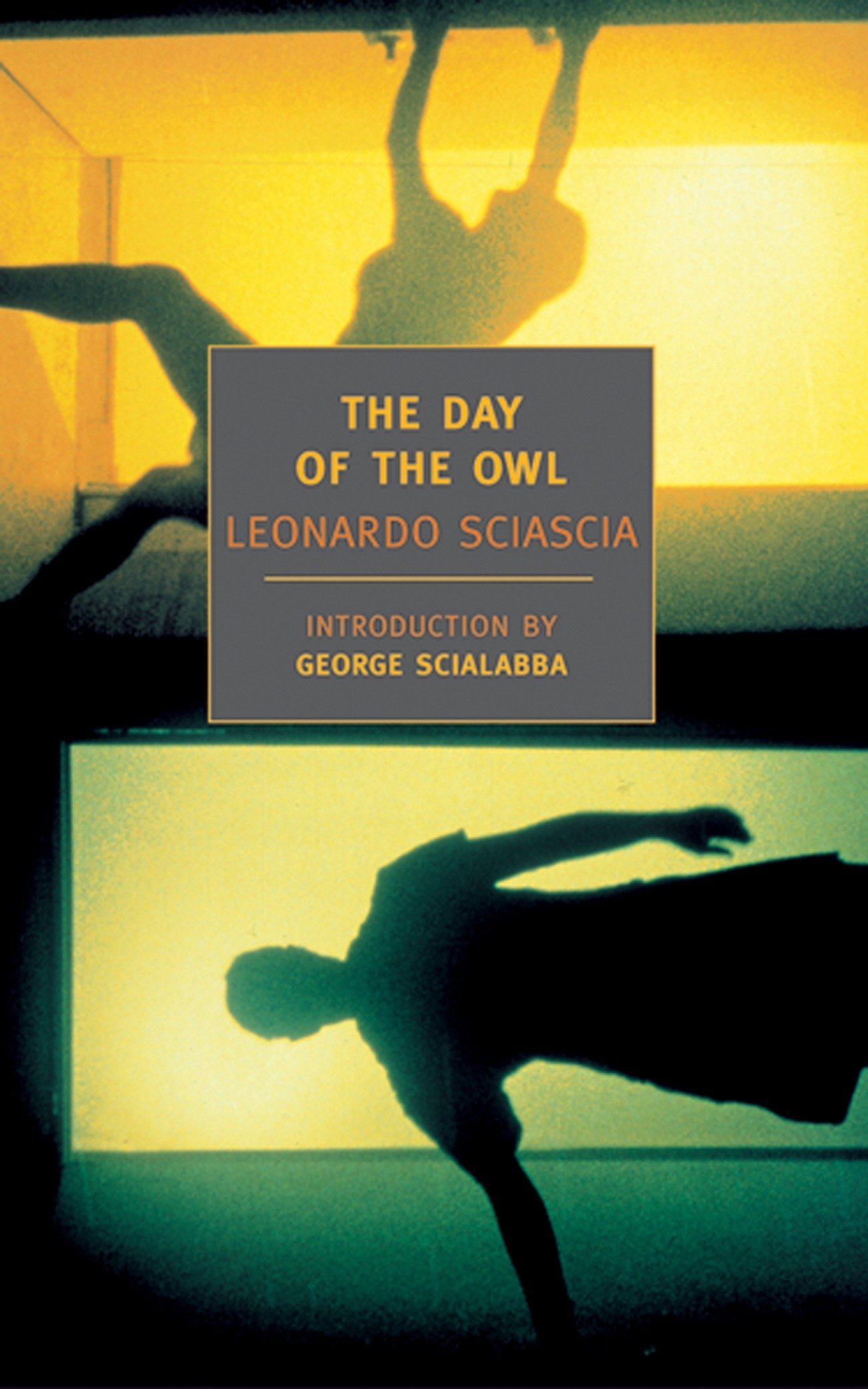
Title: The Day of the Owl
Author: Leonardo Sciascia
Original Language: Italian
Translator: Archibald Colquhoun and Arthur Oliver
Publisher: The New York Review of Books
Publishing Date: 2003
No. of Pages: 120
Synopsis:
A man is shot dead as he runs to catch the bus in the piazza of a small Sicilian town. Captain Bellodi, the detective on the case, is new to his job and determined to prove himself. Bellodi suspects the Mafia, and his suspicions grow when he finds himself against an apparently unbreachable wall of silence. A surprise turn puts him on the track of a series of nasty crimes. But all the while Bellodi’s investigation is being carefully monitored by a host of observers, near and far. They share a single concern: to keep the truth from coming out.
This short, beautifully paced novel is a mesmerizing description of the Mafia at work.
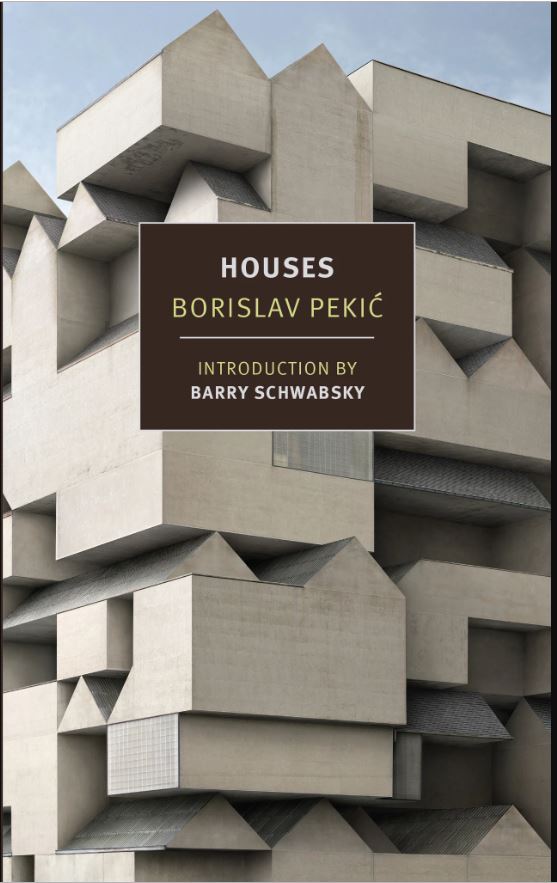
Title: Houses
Author: Borislav Pekic
Original Language: Serbo-Croatian
Translator: Bernard Johnson
Publisher: New York Review of Books
Publishing Date: 2016
No. of Pages: 212
Synopsis:
Building can be seen as a master metaphor for modernity, which some great irresistible force, be it Fascism or Communism or capitalism, is always busy rebuilding, and Houses is a book about a man, Arsenie Negovan, who has devoted his life and his dreams to building.
Bon vivant, Francophile, visionary, Negovan spent the first half of his life building houses he loved and even named – Juliana, Christina, Agatha – while making his hometown of Belgrade into a modern city to be proud of. The second half of his life, after World War II and the Nazi occupation, he has spent in one of those houses, looked after by his wife and a nurse, in hiding. Houses is set on the final day of his life, when Negovan at last ventures forth to see the world as it is.
Negovan is one of the great characters in modern fiction, a man of substance and deluded fantasist, a beguiling visionary and a monster of selfishness, a charmer no matter what. And perhaps he is right to fear that home is only an illusion in our world, or that only in illusion there is home.

Title: The Invention of Morel
Author: Adolfo Bioy Casares
Original Language: Spanish
Translator: Ruth L.C. Simms
Publisher: New York Review of Books
Publishing Date: 2003
No. of Pages: 103
Synopsis:
Jorge Luis Borges declared The Invention of Morel a masterpiece of plotting, comparable to The Turn of the Screw. This fantastic exploration of virtual realities also bears comparison with the sharpest work of Philip K. Dick. It is both a story of suspense and a bizarre romance, in which every detail is at once crystal clear and deeply mysterious.
Jorge Luis Borges declared The Invention of Morel a masterpiece of plotting, comparable to The Turn of the Screw. This fantastic exploration of virtual realities also bears comparison with the sharpest work of Philip K. Dick. It is both a story of suspense and a bizarre romance, in which every detail is at once crystal clear and deeply mysterious.

Title: The Communist
Author: Guido Morselli
Original Language: Italian
Translator: Frederika Randall
Publisher: New York Review of Books
Publishing Date: 2017
No. of Pages: 316
Synopsis:
Walter Ferranini has been born and bred a man of the left. His father was a worker and an anarchist; Walter himself is a Communist. In the 1930s, he left Mussolini’s Italy to fight Franco in Spain. After Franco’s victory, he left Spain for exile in the United States. With the end of the war, he returned to Italy to work as a labor organizer and to build a new revolutionary order. Now, in the late 1950s, Walter is a deputy in the Italian parliament.
He is not happy about it. Parliamentary proceedings are too boring for words: the Communist Party seems to be filling up with ward heelers, timeservers, and profiteers. For Walter, the political has always taken precedence over the personal, but now there seems to be no refuge for him anywhere. The puritanical party disapproves of his relationship with Nuccia, a tender, quizzical, deeply intelligent editor who is separated but not divorced, while Walter is worried about his health, haunted by his past, and increasingly troubled by knotty questions of both theory and practice. Walter is, always has been, and always will be a Communist, he has no doubt about that, and yet something has changed. Communism no longer explains the life he is living, the future he hoped for, or, perhaps most troubling of all, the life he has led.

Title: Sentimental Education
Author: Gustave Flaubert
Original Language: French
Translator: Adrianne Took
Publisher: Wordsworth Classics of World Literature
Publishing Date: 2003
No. of Pages: 448
Synopsis:
Sentimental Education has been described both as the first modern novel and as a novel to end all novels. Weaving a poignant love story into his account of the 1848 revolution, Flaubert shows a society in the grip of stereotypes, on every level. There is something farcical in his depiction of characters who aspire to act but are dogged by cliche at every turn. To a greater extent even than Madame Bovary, Sentimental Education is an indictment of modern consumerism, contrasting the hollowness of material achievement with the lasting beauty of the ideal. Flaubert’s study of success and failure offers us a terrible sadness in a terrible beauty, yet is one of the world’s great comic masterpieces.
 The Pine-Scented Chronicles