
Happy midweek everyone! Wow. We are already halfway through the week. We are also nearly midway through the year. How has the year been going for you so far? I hope that the year has been kind to everyone. If not, I hope you will experience a reversal of fortune in the coming months. More importantly, I hope everyone is happy and healthy, in body, mind, and spirit.
With the midweek comes a fresh WWW Wednesday update, my first this year. WWW Wednesday is a bookish meme hosted originally by SAM@TAKING ON A WORLD OF WORDS. The mechanics for WWW Wednesday are quite simple, you just have to answer three questions:
- What are you currently reading?
- What have you finished reading?
- What will you read next?

What are you currently reading?

Unlike Japanese literature, my exploration of Asian literature (except Japanese literature) is measly in comparison. Reducing the gap has been my goal for hosting Asian literature months last June and this July. This literary journey has taken me all over the continent, from East Asia to South Asia. Currently, I am in the Middle East region with Amos Oz’s Judas. It was through the Big Bad Wolf Manila sale that I first came across the Israeli writer and his novel. This makes Judas just my second novel written by an Israeli writer and also the second one originally written in Hebrew. One of the first things about the book that immediately caught my attention was its title. Like, who doesn’t know about Judas Iscariot? Sure enough, Judas was referenced in the book. Undertones of religious discourses were juxtaposed with political overtones; these are subjects explored by Oz through the novel’s main character, Shmuel Ash. I am a few pages away from finishing the book and I can’t wait to see how it fully unfurls.
What have you finished reading?

I have been slowing down in the past two weeks. After a very productive reading week three weeks ago, the previous two weeks have been rather slow. From five books to three books now down to two books. Two in the span of a week, on the bright side, is still a good number all things considered. The first of these two books was Bilge Karasu’s The Garden of the Departed Cats. It was through an online bookseller that I first encountered the Turkish writer and his novel. Karasu joins Nobel Laureate in Literature Orhan Pamuk, Elif Shafak, and Elif Batuman as the only Turkish writers whose work/s I read.
Originally published in 1979 as Göçmüş Kediler Bahçesi, the novel – at least where the structure is concerned – is reminiscent of Milan Kundera’s The Book of Laughter and Forgetting. Rather than a straightforward narrative, Karasu’s novel is fragmented, comprised of twelve interconnected stories. This similarity is also the reason why I was rather apprehensive about reading the book. These stories share similar elements, such as journeys. Animals are also ubiquitous in the story as the book explored the distinctions between humans and animals. Through these journeys, Karasu explored a plethora of subjects such as the search for truth, death and loss, and our human yearning for the out-of-reach. Connecting the dots can be a bit of a challenge but I must say that Karasu is a very riveting storyteller and his language is lyrical and beautiful.

From Turkey, my reading journey took me to Afghanistan. It cannot be denied that our impression of Afghanistan is linked to the Taliban and its infamous leader. But through the works of writers such as Khaled Hosseini, I came to know of an Afghanistan that is miles away from the images painted by the media. Another writer who made me see a different Afghanistan was Nadia Hashimi. A House Without Windows is the second novel by Hashimi I read; I read my first one, The Pearl That Broke Its Shell, around five years ago.
In a way, both Hashimi novels I have read share parallels. At the heart of these stories are Afghanistani women. The story commenced with a horrific act. A small Afghan community was shocked by the news of a death. Kamal, a father of four, was found murdered. At the crime scene was a hatchet and his wife, Zeba. Zeba, still in shock, was covered in blood. It didn’t take much for the police to conclude the case. Hashimi then paints an evocative picture of how justice is served in Afghanistan. As Yusuf, Zeba’s lawyer, probed, it was revealed that no proper procedure was performed. Zeba was immediately judged guilty. Moreover, Zeba was a woman, and being a woman in this part of the world can be a curse. A House Without Windows captured how women are treated in Afghanistan. There were, however, slivers of hope as change was also shaping the community and how it views justice.
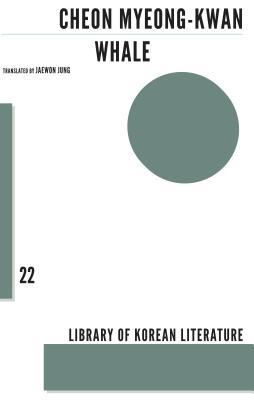
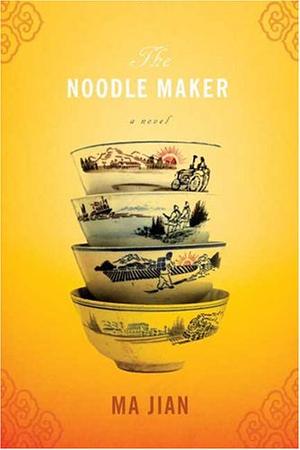
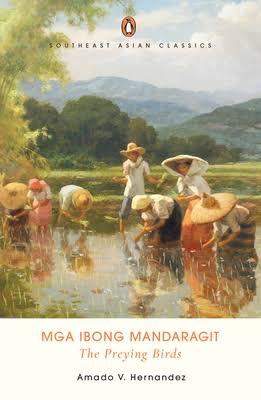
What will you read next?
 The Pine-Scented Chronicles