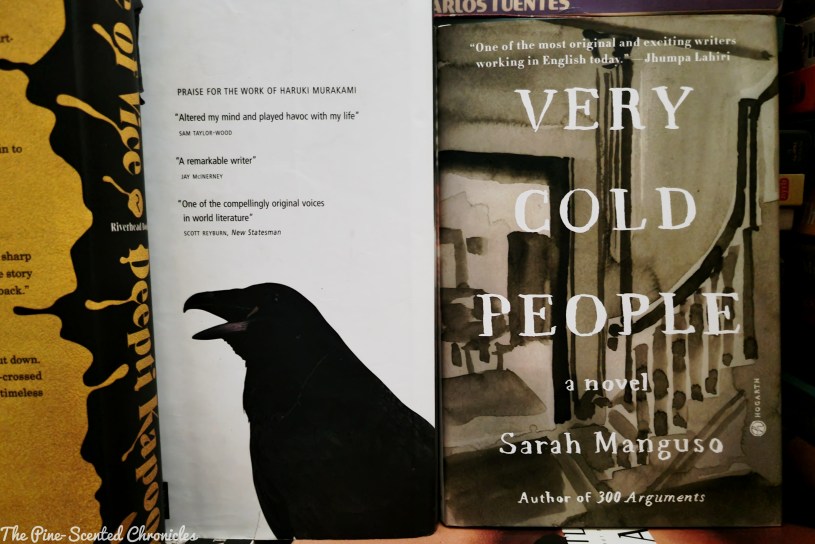
Growing Up in A Frigid Environment
In the world of literature, it is not uncommon for writers to hop from one genre to another. Some writers started and established their careers in one form of literature, say, poetry, before pushing their boundaries and tipping their toes into other forms of writing. The opposite also holds true. History is jotted with several prominent examples of writers shifting from one literary form to another; among them are Sylvia Plath, Rainer Maria Rilke, Vladimir Nabokov, Gertrude Stein, and Vikram Seth. Some would take it up a notch further by writing other forms such as essays, travelogues, and children’s stories. The transitions are fluid, with the beauty of writing across these disciplines flourishing. It is not difficult to find a writer who has dipped his or her toes into various forms of writing.
This is a phenomenon that persists in the contemporary. A recent example is Ocean Vuong. Vuong first made a mark as a poet, with his works appearing in various prestigious publications and journals, such as Poetry, The Nation, The Rumpus, Boston Review, The New Yorker, and The New York Times. He published his first book, Night Sky with Exit Wounds, a volume of his poems, in 2016. It was critically acclaimed. Three years later, he published his debut novel, On Earth We’re Briefly Gorgeous, which, like his first book, was warmly received by readers and literary pundits alike. This transition only demonstrates the vast, diverse, and flexible nature of writing. The possibilities are infinite. Talent also goes a long way. If you got it in spades, there is nothing holding you back from going beyond what you think you can achieve.
Enter Sarah Manguso. She built a credible and resounding writer’s vita around her works of poetry. She published two volumes of poetry, Siste Viator (2006) and The Captain Lands in Paradise (2002), which gained her several accolades. Some of her poems were even featured in several volumes of The Best American Poetry series. But it was not only poetry that she was known for. She also ventured into writing works of nonfiction, such as 300 Arguments. Published in 2017, it was named by several publications as one of the best books of the year. Her memoir, The Two Kinds of Decay, published in 2008, was shortlisted for the Wellcome Book Prize and longlisted for the Royal Society Winton Prize.
“A cat’s eyes were green; her eyes were green; what color were my eyes? If they were green, too, then the teller might congratulate my mother on having guessed right. She had no idea that a normal person would find it insane for a mother to ask her only child what color her eyes were. But I sensed that she was also trying to see what it would be like to be that unattached to me. She was practicing, to see what it would be like to hurt me, a lot, to show how much she loved me. She had to be careful. If anyone found out that she loved me, we’d both be in trouble.”
~ Sarah Manguso, Very Cold People
Stepping out of her comfort zone was nothing new for Manguso. While a majority of her works were nonfiction, she also ventured into fiction. In 2007, she published her story collection, Hard to Admit and Harder to Escape. She would keep on writing short stories which appeared in prestigious publications such as Harper’s, the New York Times Magazine, and The Paris Review. Manguso However, the idea of writing a novel eluded her. That was until over a decade after the publication of her first story collection. In 2022, Manguso took her foray into prose a step further by publishing her long-awaited and highly anticipated first novel, Very Cold People.
Set in the 1980s, Manguso’s debut novel transported the readers to the fictional town of Waitsfield on the outskirts of Boston, in the author’s home state of Massachusetts. The novel’s main character and primary voice was Ruthie whose voice narrated the story. Ruthie was the only daughter of a household with mixed heritage. Her mother was Jewish and was a stay-at-home mom. Meanwhile, her father was of Italian heritage and was working as an accountant. Her story came in the form of a flashback as she tried to make sense of her her past. The earlier pages of the novel take the form of a child’s memory. It takes the form of a growing and emerging understanding of her surrounding.
While nothing of consequence happened in the novel’s first half, what slowly emerged was the profile of Waitsfield. Through Ruthie’s unflinching gaze, a vivid portrait of Waitsfield was painted. It was called home by some of the country’s most illustrious and wealthiest families. It was dotted with antique and stately mansions built and occupied by names such as Cabots, Lowells, and Emersons. They have since long abandoned their old homes: “The oldest houses in Waitsfield were older than the town and bore plaques to mark their age. Generations of families had been born and died in them, and the town’s six graveyards were populated mostly by children. Over the centuries the slate stones had eroded and sunk in the dirt, and they looked like gray, crooked teeth inscribed with little lambs and angels.”
It didn’t escape Ruthie that her childhood was not ideal. Hers was not a rosy childhood. Her home, if you could call it that, was bereft of any warmth. Both her parents were emotionally distant from her. Ruthie had a disdain for her parents that reverberated throughout the story; she even referred to them as liars in the novel’s opening paragraph. Ruthie was particularly incisive and even scathing of her observations of her mother and her actions; at times, it was rife with cynicism. Her mother was a narcissist wallowing in her depression. She lived with pretensions, even imitating a Brahmin accent. To top it all off, Ruthie’s mother has a main character syndrome who had delusions of grandeur; as Ruthie would describe it, she thinks she is the “protagonist of everything.”
“In all of my earliest memories I am alone in my crib. I have no memories of being held. But I do remember closing my eyes in absolute pleasure while my mother stroked my head. Did she do it more than once? I asked her to do it again, all the time, and she always said no. What unwanted touch did it recall for her?”
~ Sarah Manguso, Very Cold People
The titular Very Cold People then takes a different definition. On the surface, it was an adjective that aptly described the denizens of New England: the wealthy residents with their Mayflower ancestors. Ruthie’s childhood was suffused with frigidity, blanketed by the coldness of her parents, their neighbors, and even their underheated house. The family was not exactly poor but they go on a weekly trip to the local dump to scavenge from things they can still use. Social class was a subject that permeated the story. Their station in life was a far cry from the town’s most affluent denizens. On the bright side, the family was still better off than the town’s poorest families who occupied a block of apartment projects. However, the family is dogged by the constant calls from creditors. To save money, the family kept the heat low during the cold season.
All over Waitsfield, different forms of coldness were present, from the snow to the white houses with their paints chipping away. In Ruth’s words, “The background of my life was white and angry, with violent weather“. This austere but frigid world that Ruthie grew up in was also bereft of any form of kindness. So unused was Ruthie to even the simplest forms of kindness that she nearly teared up when a friend’s father helps her fix a tangled bike chain. The simplest things are overwhelming. To escape this coldness that blanketed her, Ruthie found a company in books about orphans and runaways. At school, she excelled academically, yet another form of escapism. Albeit reserved, Ruthie managed to gain friends.
But as many would attest, the environment we grew up in will eventually manifest in the way we behave. In Ruthie’s case, the indelible damage of her loveless childhood on her self-esteem became more apparent when she entered her teenage years. She buckles down when she encounters someone better than her. There was a sense of resignation to the ugly reality that she deserved the bullying and ostracism that she received from these individuals she deemed were better than her. Entering high school opened a new and different world for Ruthie, a world that she never imagined existed in her sleepy hometown. This brand of sleepiness, however, was deceptive as it cloaked the darker realities that permeate the town.
High school exposed her to a world where it was commonplace for men, particularly those with power, to take advantage of women and girls. This essentially destroyed the image of the 1980s American feminine identity built on material objects such as Barbie dolls, Girl Scout sashes and insignia, barrettes, and nail polishes. Beauty was replaced by an ecosystem where sexual abuse was prevalent, from inappropriate touches by male coaches to snide remarks from strangers to outright rape by fathers to their daughters. Ruthie was living in a world where the worst things that can happen to children are the actions of adults who, in an ideal world, were tasked to look after their welfare, including policemen. Positive adult influences in Waitsfield were far and few in between.
“Weak men who fall into positions of power are dying to give it up to anyone who will take it. The poor player would throw the ball to someone on the other team just to be rid of the worry of what to do with it, of the dread that he would have to be a man of action for a moment.”
~ Sarah Manguso, Very Cold People
Worse is that these abuses and exploitations never get reported. They are often hushed down lest they incite further scandals. Interestingly, perhaps deliberately, the word abuse was never directly used by Ruthie. It was a stroke of brilliance. There was an omission, symbolically, and its impact reverberated throughout the story. Abuses are often ignored and deflected, creating more concerns, creating trauma. Even when these are repressed, victims keep it with them, making it their identity. As these traumas are hushed down in small suburban towns, the young ones dream of and yearn of escaping. With these secrets swirling around her, Ruthie can’t help but feel sorry for her wealthier classmates who had to endure these abuses.
There was no semblance of plot in Manguso’s debut novel. Regardless, Very Cold People managed to flourish because of its unflinching gaze into the forms of hypocrisy and maladies that existed in suburban towns. The language was spare and taut but Manguso managed to paint a vivid portrait of the traumas and dysfunctionalities that permeate small towns. Manguso’s lush background in poetry adapted well into prose; it made for a compulsive story. While it was bereft of any forms of aplomb, the writing was lyrical. This elegant prose, however, did not deflect the message of the novel nor did it undermine the emotional impact of Ruthie’s story. Very Cold People is an insightful but distinct coming-of-age story, an eye-opening account of horrors that, unfortunately, continue to hound the present.
“Their slowness seemed deliberate, as if they were dancing. Their skirts brushed slowly against their knees as they swayed. It wasn’t so much that they looked different; they just looked as if they knew they were being watched.”
~ Sarah Manguso, Very Cold People
Book Specs
Author: Sarah Manguso
Publisher: Hogarth
Publishing Date: 2022
Number of Pages: 191
Genre: Literary, Coming-of-age
Synopsis
For Ruthie, the frozen town of Waitsfield, Massachusetts, is all she has ever known.
Once home to the country’s oldest and most illustrious families – the Cabots, the Lowells: the “first, best people” – by the tail end of the twentieth century, it is an unforgiving place awash with secrets.
Forged from this frigid landscape, and descended not from Boston Brahmins but from Italian and Jewish immigrants, Ruthie has been dogged by feelings of inadequacy her whole life. Hers is no picturesque New England childhood but one of swap meets and factory seconds and powdered milk. Shame blankets her like the thick snow that regularly buries nearly everything in Waitsfield.
As she grows older, Ruthie slowly learns how the town’s prim facade conceals a deeper, darker history, and how silence often masks a legacy of harm – from the violence that runs down her family line to the horrors endured by her high school friends, each suffering a fate worse than the last. For Ruthie, Waitsfield is a place to be survived, and a girl like her will be lucky to get out alive.
In her eagerly anticipated debut novel, Sarah Manguso has written, with characteristic precision, a masterwork on growing up in – and out of – the suffocating constraints of a very old, and very cold, small town. At once an ungilded portrait of girlhood at the crossroads of history and social class as well as a vital confrontation with an all-American whiteness where the ice of emotional restraint meets the embers of smoldering rage, Very Cold People is a haunted jewel of a novel from one of our most virtuosic literary writers.
About the Author
Sarah Manguso was born in 1974 in suburban Boston, Massachusetts where she was also raised. She earned her Bachelor of Arts at Harvard University. She received her post-graduate degree, Master of Fine Arts, from the celebrated Iowa Writers’ Workshop.
Manguso’s literary career commenced in 2002 with the publication of her first volume of poetry, The Captain Lands in Paradise. Four years later, she published a second volume of poetry, Siste Viator. In 2007, she ventured into prose with the publication of Hard to Admit and Harder to Escape, a collection of short stories. A memoir, The Two Kinds of Decay, was next published in 2008. It was named an Editors’ Choice title by the New York Times Sunday Book Review and a 2008 Best Nonfiction Book of the Year by the San Francisco Chronicle. The memoir was the story of a string of nonfiction books: The Guardians: An Elegy (2012), Ongoingness: The End of a Diary (2015), and 300 Arguments (2017).
In 2022, her first novel, Very Cold People was published. It was longlisted for the Wingate Literary Prize, the PEN/Jean Stein Book Award, and the Mark Twain American Voice in Literature Award. It was also named one of the best books of the year by the Guardian, the Los Angeles Times, NPR, and the New Yorker. A new novel, Liars, is set to be released in 2024. Manguso’s poems have been featured in several volumes of The Best American Poetry. Her works of poetry and prose have also appeared in prestigious publications such as Harper’s, the New York Times Magazine, and The Paris Review. For her works, Manguso received several honors such as the Rome Prize from the American Academy of Arts and Letters, a Hodder Fellowship from Princeton University, and a fellowship from the John Simon Guggenheim Memorial Foundation.
Apart from writing, Manguso has taught at the Pratt Institute, Columbia University, and the New School. A dual citizen of the United States and Ireland, she is currently living in Los Angeles, where she teaches in the low-residency MFA program at Antioch University.
 The Pine-Scented Chronicles
🩶
LikeLike