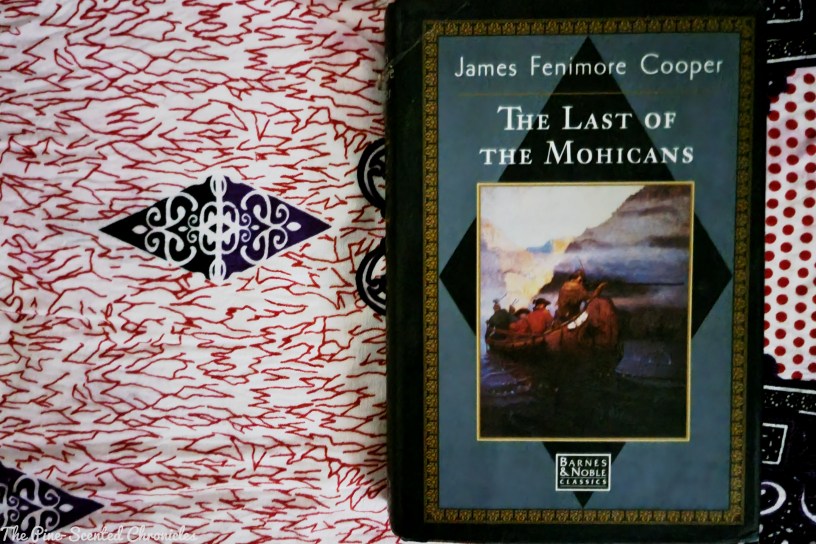
A Pioneer of American Literature
In the vast ambit of world literature, American literature is one of the most prominent. Its accessibility also contributed to its prevalence. However, compared to other world literature, American literature is relatively young. The oral literature that originated from various Native American tribes has existed for decades and even preceded the arrival of European colonists. The arrival of the European colonists, particularly the British, in the 17th century. It was also this indelible connection with the European colonists that would be critical in molding the landscape of contemporary American literature. It comes as no surprise that the earlier forms of American literature revolved around colonial literature and were also written by English writers.
It was a little while later after that the American novel started to flourish. Among the pioneer of the modern American novel was James Fenimore Cooper. Cooper was born on September 15, 1789, in Burlington New Jersey but his family moved to a primitive settlement at the source of the Susquehanna River in upstate New York when he was barely a year old. Growing up in this growing frontier town, now Cooperstown, New York, helped shape the landscape of Cooper’s eventual literary career. His renowned Leatherstocking Tales is a pentalogy published between 1823 and 1841. The pentalogy captured the life among Indians and white pioneers on the New York State frontier.
The first novel in the pentalogy, The Pioneers, is considered the first truly original American novel. However, its sequel, The Last of the Mohicans: A Narrative of 1757, would be the most renowned of the five books. It would also be the most globally recognized of Cooper’s entire oeuvre, the one that transcended time. Originally published in two volumes in 1826, The Last of the Mohicans was set in the wild forest frontier surrounding Lake George, New York. The year was 1757 and the area was besieged by war; it was the North American theater of the Seven Year’s War when Great Britain and France fought for control over North America. The French forces allied with several Native American tribes, hence, the name of the war.
“I am no scholar, and I care not who knows it; but judging from what I have seen, at deer chases and squirrel hunts, of the sparks below, I should think a rifle in the hands of their grandfathers was not so dangerous as a hickory bow and a good flint-head might be, if drawn with Indian judgment, and sent by an Indian eye”
~ James Fenimore Cooper, The Last of the Mohicans
In the novel’s opening sequence, the British forces stationed at Fort Edward learned that the French forces were slowly inching towards Fort William Henry. Meanwhile, the two daughters of Lieutenant Colonel Munro, Cora, and Alice, planned to travel to Fort William Henry where their father was in charge. The sisters were escorted by Major Duncan Heyward and David Gamut, a singing teacher. To guide them through the treacherous wilderness of the frontier, the party enlisted the assistance of Magua, a native scout who was a member of the Huron tribe. Magua knew of a shortcut but his shortcut led the party roaming all over the wilderness sans the accompaniment of the British militia.
It was during one of these unguided journeys that the party came across Nathaniel “Natty” Bumppo who was also referred to as Hawkeye. Hawkeye was already introduced in The Pioneers (1823) as an aging man but in The Last of the Mohicans, he was in his middle age. Hawkeye was also a scout working for the British army. However, was not scouting in solitude. Joining him were two Delaware Native American companions, Chingachgook and his son, Uncas. The father and son pair was the last two remaining members of the Mohican tribe. The two parties then decided to merge and travel as a single unit, with Magua still leading the pack.
Soon enough, it dawned on Hawkeye that Magua was leading the group to a trap; there was no shortcut. This was affirmed by Heyward who already had his suspicions even before the two groups met. Learning that his real identity – he was a scout for the French – has been unveiled, Magua managed to escape. However, he later on returned with reinforcements coming from his tribe. Hawkeye was a step ahead of Magua as he was able to find a safe location for his group. Unfortunately, they were besieged once their location was revealed. They were clearly outnumbered. With their limited ammunition slowly dwindling down, it was a matter of time before they will all be killed.
In a moment of clarity, Hawkeye realized that the British party will make valuable captives. Hawkeye and his Mohican friends escaped after making a promise that they will come back for the captives. Negotiations were made. Heyward tried to convert Magua to the British side but the Mague resoundingly refused to be converted. Magua eventually revealed the reason for his actions. He was seeking revenge against the Munro sisters’ father. Magua blamed Colonel Munro for turning him into an alcoholic with whiskey which, in turn, resulted in Magua being temporarily banished by his tribe. He also suffered further humiliations under the hands of Colonel Munro. Will the captives be able to make it out of this dire strait?
“The novice in the military art flew from point to point, retarding his own preparations by the excess of his violent and somewhat distempered zeal; while the more practiced veteran made his arrangements with a deliberation that scorned every appearance of haste.”
~ James Fenimore Cooper, The Last of the Mohicans
The Last of the Mohicans is anything but uneventful. Cooper grabs the reader’s attention from the onset by laying out a landscape fraught with adventure. He provided a novel brimming with actions driven by lush historical contexts. These historical contexts made for a compelling read. Through the adventures and misadventures of Hawkeye and the bevy of characters, Cooper captured a plethora of themes. We read about characters who have an unquenchable desire for vengeance. There were also undertones of romance. There was a kidnapping and even cruel captures. There were also several chases. On the peripheries, the tumult of the war reverberated all throughout the story.
But the novel does not reduce itself to a mere frontier adventure and war story. Cooper underscored the relations between the Europeans and Indians. He iterated how the Europeans’ arrival changed the lives of the Native Americans. As the European superpowers – the French, the British, the Spanish, and the Dutch – were wrestling for control and dominance over the “newly discovered” continent, the Native American tribes are caught in the crossfire. Left with no other recourse, these tribes were forced to forge alliances with the newcomers. These alliances somehow were meant to ensure the continuity of their own existence. We now know what happened to them as Native Americans are mostly found in reservations across the modern American nation.
The Last of the Mohicans extensively explored racial divides. The novel explored the nature and dynamics of interracial love and friendship. While the relationship between the white men and Native Americans started on the wrong foot, good relationships can still be built between the two groups. After all, friendship can transcend races and colors, as demonstrated in the deep and longtime friendship between Hawkeye, a white man, and Chingachgook, a Mohican Indian. Such kinds of friendship allow individuals to overcome adversities.
The novel also underlined how friends from different backgrounds can also become family. When Chingachgook disappeared midway through the story, Hawkeye took on the role of a father to Uncas. He helped mold his character. While Cooper had a favorable view of interracial friendships, he was not too keen on interracial romance, as shown in the novel. A near-forced marriage was met with refusal. Another budding interracial romance was also nipped in the bud, with tragic consequences. There was also a suggestion that a white character was attracted to Native Americans because of her mother’s mixed heritage; her mother was part black. Elsewhere, there were discourses on religion.
“Nothing but vast wisdom and onlimited power should dare sweep men off in multitudes,’ he added; ‘for it is only the one that can know the necessity of the judgement; and what is there short of the other, that can replace the creatures of the Lord?”
~ James Fenimore Cooper, The Last of cthe Mohicans
One of the novel’s achievements was Cooper’s evocative painting of the American Frontier. Its raw beauty came alive with Cooper’s vivid and lush descriptions. He painted the unspoiled beauty of the wilderness. Underneath this foliage wrapped up in an enigma are infinite possibilities. There are opportunities for freedom but such comes with high risks. Unfortunately, this beauty is constantly under threat from different corners. The virginal beauty has been slowly laid to waste by human influences and development. Cooper captured how this unspoiled beauty is disappearing, further symbolized by the two Mohicans who carried with them the last hopes of their tribe. With exponential growth and development, this is a reality that persists in the contemporary.
The novel was also populated with an eclectic set of characters. Hawkeye loomed above the story. He was a man caught at the intersection of two worlds which are on the way to a collision course. However, and perhaps ironically, Hawkeye never belonged to either world. He was the quintessence of a strong independent man. This veneer of isolation, nevertheless, allowed him to move across these worlds with ease. Hawkeye was capably supported by his two Mohican friends. Chingachgook was stoic and wise while Uncas was equally noble. Cora was strong and courageous in troubling times. Her half-sister, Alice, meanwhile, was beautiful but unprepared in the face of adversity. Alice was the embodiment of the 18th-century woman.
The novel’s wonderful elements were woven together by Cooper’s richly descriptive prose. It is this quality of his writing that painted a lush tapestry. However, Cooper also had the compunction for describing every inanimate object to the most minute details. There were also several lengthy dialogues. They were unnecessary and did not move the story forward. With the characters often drawn to explaining things at the most inopportune times, Cooper did more telling rather than showing. At any given point in the story, Cooper was compelled to provide contexts or explanations even when none was required. This made the story drag longer than it should have.
For all its flaws, it cannot be denied that The Last of the Mohicans is an important literary work that largely influenced how Native Americans and this portion of American history are viewed. The book’s title has also become a popular contemporary phrase representing the last survivor of a noble race. It painted a vivid picture of the frontier while exploring seminal subjects such as interracial romance and friendship, religion, morality, violence, and racial divides. It is also a timeless story about the unspoiled beauty of nature and how it has been adversely affected by destructive human influences. Over time, it has become the hallmark of the American novel.
“Your young white, who gathers his learning from books and can measure what he knows by the page, may conceit that his knowledge, like his legs, outruns that of his fathers’, but, where experience is the master, the scholar is made to know the value of years, and respects them accordingly.”
~ James Fenimore Cooper, The Last of cthe Mohicans
Book Specs
Author: James Fenimore Cooper
Publisher: Barnes & Noble Classics
Publishing Date: 1993 (1826)
Number of Pages: 423
Genre: Historical
Synopsis
It is 1757. The English and French are engaged in a savage, bloody war for control of the North American continent. Making tenuous, shifting alliances with various Indian tribes, the two European powers struggle to gain the upper hand on unfamiliar, forested battlegrounds.
Caught in the middle is Hawkeye, a white scout who was raised among the Indians. Not fully belonging to either world, Hawkeye has learned to respect the best of both civilizations. But with war swirling around him, Hawkeye must finally struggle to save his own life and those of a small band of colonists.
Fighting by his side are Hawkeye’s Mohican friends, Chingachgook and the young Uncas. The three risk their lives to save a British commander’s daughters – the dark-haired courageous Cora and the fair, fragile Alice. Their chief adversary is the renegade Huron warrior Maguo, whose attraction to Cora and hatred for whites make him a vengeful, insidious enemy.
Written in 1826, The Last of the Mohicans was one of the first great novels of American literature and James Fenimore Cooper’s greatest triumph. The book established the American frontier as a setting for thrilling adventures and introduced, in Hawkeye, the prototype of the rugged frontier hero.
About the Author
James Fenimore Cooper was born on September 15, 1789, in Burlington, New Jersey, U.S.A. to Elizabeth Fenimore, a member of a respectable New Jersey Quaker family, William, the founder of a frontier settlement at the source of the Susquehanna River (now Cooperstown, New York). James was a year old when his father moved his family to this settlement. His father also served as a Federalist congressman during the administrations of George Washington and John Adams.
Cooper received a private education at Albany. In 1803, he attended Yale University. At Yale, Cooper was the best Latin scholar of his class. However, he was expelled in his junior year because of a prank. He then joined the Navy when he was 17. By 1811, he obtained the rank of midshipman in the fledgling United States Navy, conferred upon him by an officer’s warrant signed by Thomas Jefferson. His father’s death in 1809 left Cooper financially independent. In 1811 he married Susan De Lancy and resigned from the Navy.
Cooper’s earliest writing was Precaution (1820), an imitation of Jane Austen’s novels of English gentry manners. It was published anonymously with moderate success. His second novel, The Spy (1821), met more success and even brought Cooper global recognition. His next work The Pioneers (1823) was the first of the renowned Leatherstocking Tales. The Last of the Mohicans (1826), the second book in the pentalogy, was Cooper’s most popular work. The book was succeeded by The Prairie (1827), The Pathfinder (1840), and his youth in The Deerslayer (1841). His other works include The Pilot (1823), The Red Rover (1827), and The Sea Lions (1849). Cooper’s prolific literary career also produced several biographies, short stories, travelogues, and other nonfiction works.
Cooper passed away on September 14, 1851, the day before his 62nd birthday.
 The Pine-Scented Chronicles