
We are already two-quarters done with the year. How time flies. Who’d have thought that we are already in the final stretch of the year? However, four months is still quite a long time to pursue passions or complete projects that we have started. We are left with 150 days to fill up with great memories. I hope that the remaining months of the year will be kind to everyone. I hope that it will be riddled with adventures and growth. I hope that you will start reaping the benefits of everything you worked hard for during the year. I hope that the remainder of the year will be filled with great news and blessings. More importantly, I hope everyone is and will be healthy, in body, mind, and spirit.
The transition to the -ber months also marked the start of the Filipino Christmas season. Some households will already be propped up for the holiday season. Yes, the Philippine Christmas season starts in September. Even Mariah Carey, whose song All I Want for Christmas dominates the airwaves during the season, acknowledged this. It was already noted that the streams for her song increased during the first day of the month. But before I can wave August – the feared ghost month – goodbye, let me look back at the month that was, at least where reading is concerned.
Following two months of venturing across the Asian continent – except Japan of course – I decided to pivot toward the African continent to explore the best of its literature. The last time I hosted an African Literature Month was in early 2021. I did read works of African literature every now and then in the interim but I felt like the time was right to host another African literature month. Admittedly, my foray into this part of the literary world is rather limited. There are still parts of the continent that I have not explored. Unfortunately, my August African Literature Month barely addressed that as I explored the territories that I am already familiar with. This, however, is not discouraging me from expanding my exploration of African literature. It was still an insightful literary journey. Here is a peek into how my August reading journey shaped up. Happy reading!

Palace of Desire by Naguib Mahfouz
I opened my foray into African literature the same way I closed my foray into Asian literature: with the work of a Nobel Laureate in Literature. This is aligned with my goal of reading more works by Nobel Laureates in Literature. Commencing my journey across African literature was Naguib Mahfouz’s Palace of Desire, the second book in his magnum opus, The Cairo Trilogy. The book was set a couple of years after the events of Palace Walk, the first book in the trilogy. The family at the heart of the trilogy moved on from the tragic death of Fahmy, the most promising of Ahmad Abd al-Jawad’s three sons. The patriarch returned to his old ways while his wife, Amina, was slowly wielding authority over the household. The heart of the story, however, was Kamal, the youngest of the couple’s children. He planned to pursue a degree in teaching at the Teachers Training College, disappointing his father but Kamal was not swayed by unfavorable opinions. Kamal saw a degree in teaching as a springboard for other intellectual pursuits. Like Palace Walk, the story juxtaposed against the changes sweeping Egypt. Political undertones, however, were more peripheral as the book focused on the family. It was a good book although not as impressive as the first book in the trilogy.

Sugar Street by Naguib Mahfouz
I wasn’t originally planning on reading Sugar Street, the final book in The Cairo Trilogy; Palacce of Desire is part of my 2023 Beat the Backlist Challenge but Sugar Street is not. However, I have long been looking forward to completing the trilogy for the longest time so I decided to read Sugar Street. The novel is still set in the Egyptian capital but now the story advanced to 1935. We again meet the family of Ahmad Abd al-Jawad which has expanded over the years. Kamal was still unmarried. His sister Aisha lost her husband and two sons and was now living in the family home with her daughter. Khadija, also a mother, was still highly opinionated. Meanwhile, the eldest, Yasin, has become the paragon of character development. Among the three books, Sugar Street contained perhaps the most pervasive political discourses, with Khadija’s two sons representing the polar opposites of the political spectrum. Abd al-Muni’m is becoming loyal to fundamental Islamic principles while his brother Ahmad is becoming more involved with Communism. Both were critical discussions in the period the book was set; Egypt was taking on its own identity separate from its previous subjugators. Like the first two books, death and grief are woven into the story. Overall, it was a great book to conclude what has been a very engaging trilogy.

Paradise by Abdulrazak Gurnah
I’m sure I wasn’t the only one who was surprised when Abdulrazak Gurnah was announced as the awardee of the 2021 Nobel Prize in Literature. I soon learned that the Tanzanian-born writer has established quite a reputation for chronicling his birth nation’s tumultuous colonial history. Paradise was one of the novels I acquired first hoping that it would provide me an insight into his body of art; I ended up reading After Lives in late 2022. Interestingly, this is the second book by a Nobel Laureate in Literature I read that carried the title Paradise; the first one was written by Toni Morrison. Gurnah’s Paradise was his fourth novel and is acknowledged by pundits as the book that elevated him to global recognition. At the heart of the story was Yusuf, a boy born in the fictional Tanzanian town of Kawa at the turn of the 20th century. His family was indebted to Aziz, a rich and powerful Arab merchant. Their destitution prompted Yusuf’s father to pawn him to Aziz; Yusuf was made to believe that Aziz was a blood-related uncle. Joining Aziz’s merchant caravan, Yusuf encountered several adventures as they traveled into the interior to the lands west of Lake Tanganyika. The portrait Gurnah painted of pre-colonial East Africa showed a society that was divided by religion, race, and even gender, an antithesis to the book’s title.

July’s People by Nadine Gordimer
Breaking the streak of male Nobel Laureates in Literature writers is Nadine Gordimer. This underlines one of the major concerns vis-a-vis the prestigious literary award: the glaring gap in terms of male and female awardees. For its part, the Swedish Academy has been recognizing more women in the past three decades. Gordimer, however, remains the only female African writer to be awarded the prize. After Burger’s Daughter, July’s People is my second novel by the South African writer. During a fictional Civil War, black South Africans managed to defy the apartheid. The titular July was the black servant of the Smales, a liberal White South African family. The war prompted the couple and their children to retreat from Johannesburg to July’s native village with nothing else but the clothes on their backs. Integrating into village life, however, proved to be difficult. Everything they witnessed and experienced shocked them. There was also a role reversal as the couple had to rely on July for their survival. This did not sit well with the couple, thus, causing tensions between them and their servant. Power dynamics, racial hierarchy, and white hypocrisy were among the prevalent themes. While it was less complex than Burger’s Daughter, it was, nevertheless, as engaging.

Chronicles from the Land of the Happiest People on Earth by Wole Soyinka
From South Africa, my literary journey next took me to Nigeria, the territory of African literature I am most familiar with. Nigeria is home to Wole Soyinka, the first black African to win the coveted Nobel Prize in Literature. Chronicles From the Land of the Happiest People on Earth is my first novel by the Nigerian writer; I previously read his memoir, Aké: The Years of Childhood back in 2021. His latest work was also his first novel in more or less five decades. Chronicles from the Land of the Happiest People on Earth is set in a fictional Nigeria and introduces four main characters who represent two opposing sides of contemporary Nigerian society. Duyole Pitan-Payne, an engineer, and Kighare Menka, a surgeon, were idealists who, despite their British education, wanted to return to their country to try and fix its maladies. On the other side were Papa Davina and Godfrey Danfere who represented corrupt government officials and cult leaders who have proliferated contemporary Nigerian society. At its heart, the novel was a work of satire; it didn’t take long before this manifested. The “Happiest People” in the title was a jab at the maladies that continue to hound modern Nigeria. The novel, however, tended to meander. Nevertheless, it was a scathing examination of modern Nigeria although it came across more as a commentary rather than a cohesive literary work.

Elizabeth Costello by J.M. Coetzee
Wrapping up my run of seven works of Nobel Laureates in Literature is J.M. Coetzee’s Elizabeth Costello. It was around 2017 when the South African writer first piqued my interest. I kept coming across his novel, Disgrace. I was a little underwhelmed by the book, the reason why I held back on further exploring Coetzee’s oeuvre. But then again, I decided to give his works a second chance, starting with Elizabeth Costello, a book that is also part of my 2023 Beat the Backlist Challenge. The book is also listed as one of the 1,001 Books You Must Read Before You Die. The titular Elizabeth Costello was an aging but celebrated Australian writer. She was born in 1928 and was now spending her time traveling the world to give lectures. Her life was dedicated to writing; it even came in between her and her two children. It was through these lectures, coupled with speeches, that her story was conveyed by Coetzee. The subjects of Costello’s speeches and lectures covered a plethora of subjects ranging from vegetarianism to the nature of writing and storytelling. Censorship was another seminal subject. The novel’s fragmented structure made the story meander. Nevertheless, I found myself invested in the discourses of this novel of ideas.
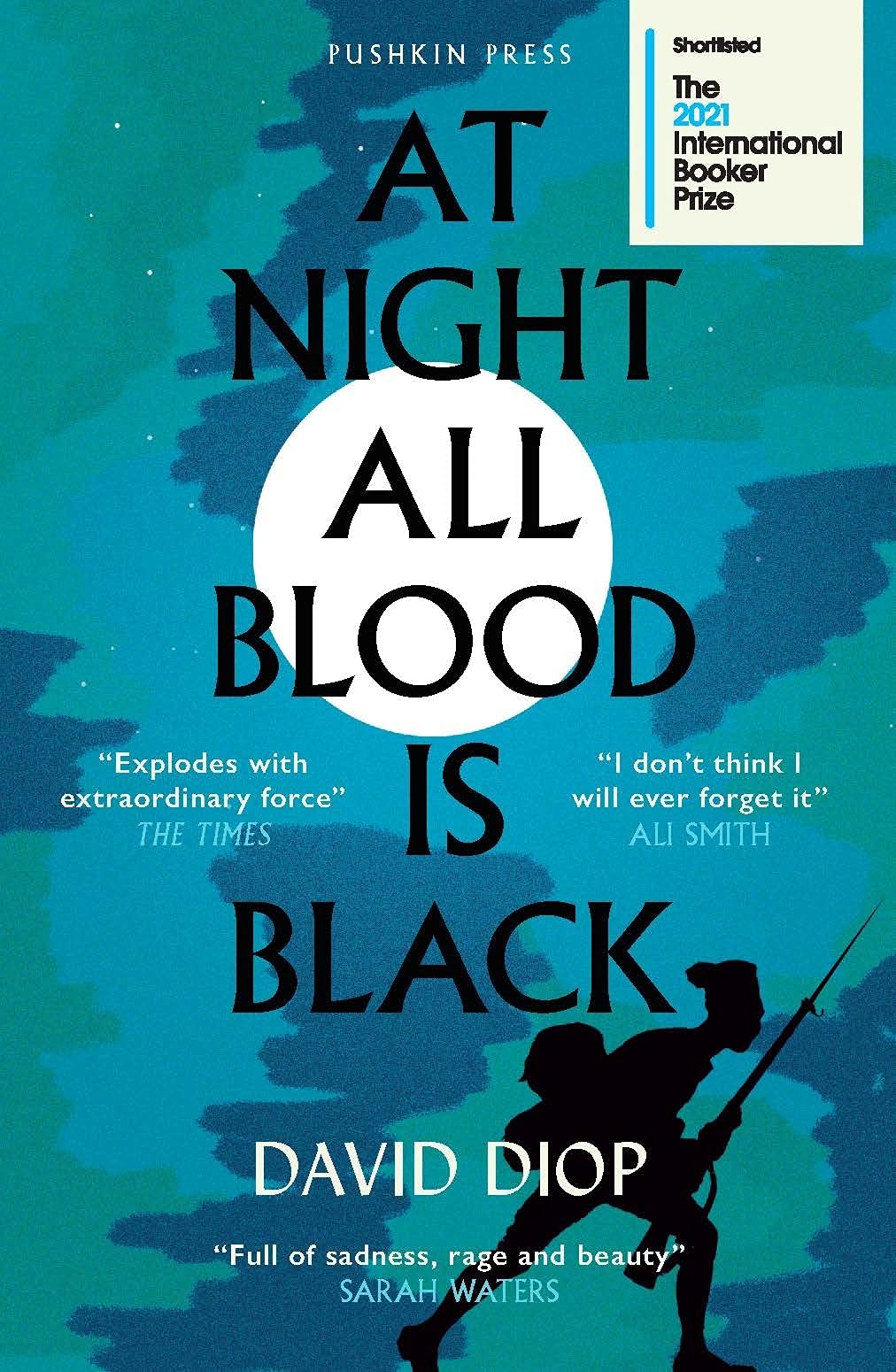
At Night All Blood is Black by David Diop
Although David Diop is French by nationality, he was born to a Senegalese father. This makes At Night All Blood is Black the first by a Senegalese writer that I read. I first came across the novel when it won the 2021 International Booker Prize. At Night All Blood Is Black was originally published in French as Frère d’âme in 2018 before its English translation was released in late 2020. The novel’s facet that first captured my attention was its slender appearance. It was meant to be read in one sitting but the novel, I soon discovered, was rather graphic. There were vivid depictions of violence and bloodlust. Born and raised in the Senegalese countryside, Alfa Ndiaye, the novel’s main character and primary narrator, was recruited by the French army for the First World War. He and his adopted brother Mademba Diop were sent to the trenches. Men like Alfa and Mademba were collectively called Senegalese Tirailleurs. The novel is a very intimate glimpse into the life of Alfa. Diop provided the readers an intimate peek into a complex psychological profile. This was necessary for understanding his actions in the trenches. It was both humane and inhumane. At Night All Blood Is Black was a very intense but insightful read about the pervasive impact of wars on those who were sent to the frontline.
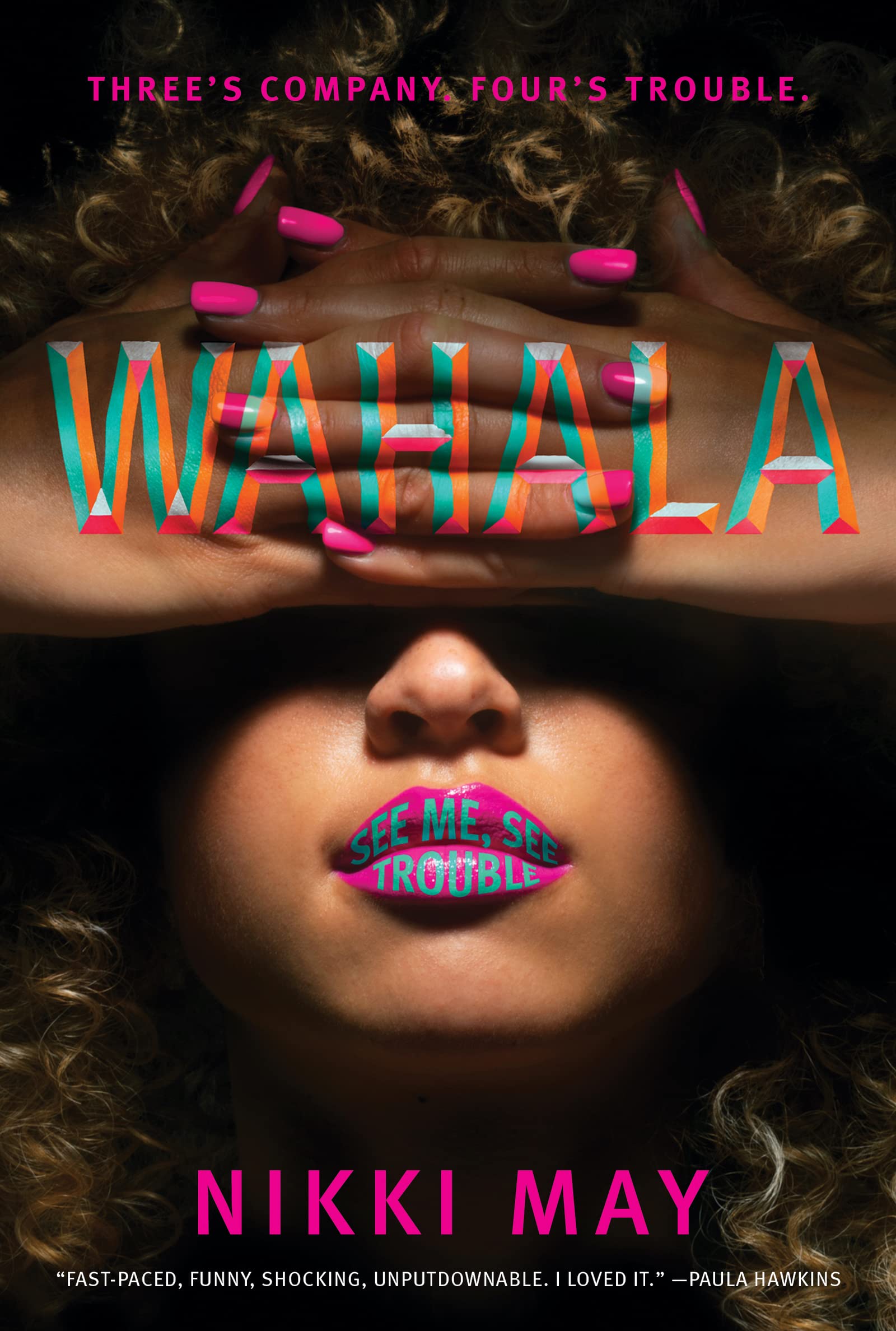
Wahala by Nikki May
It was in early 2022 that I first encountered Nigerian writer Nikki May. While searching for books to include in my 2022 Top 10 Books I Look Forward To, I stumbled upon Wahala which was part of several most anticipated lists. It didn’t take much to convince me to include the book on my own list. Besides, the title was more than enough to pique my interest. Unfortunately, it was only this year that I was able to obtain a copy of the book; I then decided to make it part of my African Literature Month. At the heart of May’s debut novel were three friends: Simi, Boo, and Ronke. They first crossed paths seventeen years ago at a university in Bristol they attended. They shared a common thread: they all had mixed heritage, with white British mothers and Nigerian fathers. For years, they stood by each other, through thick and thin. Then enter Isobel Babangari, Simi’s childhood friend; Boo and Ronke have never heard of her previously. Isobel was born into privilege but just like the three friends, she had a mixed heritage. Isobel was sly and manipulative, testing the friendship of the unsuspecting women. What rose to the fore was an intimate character study and an examination of the intricacies of female relationships. It was a riveting read but it failed to address some critical issues, i.e., exploration of internalized racism.
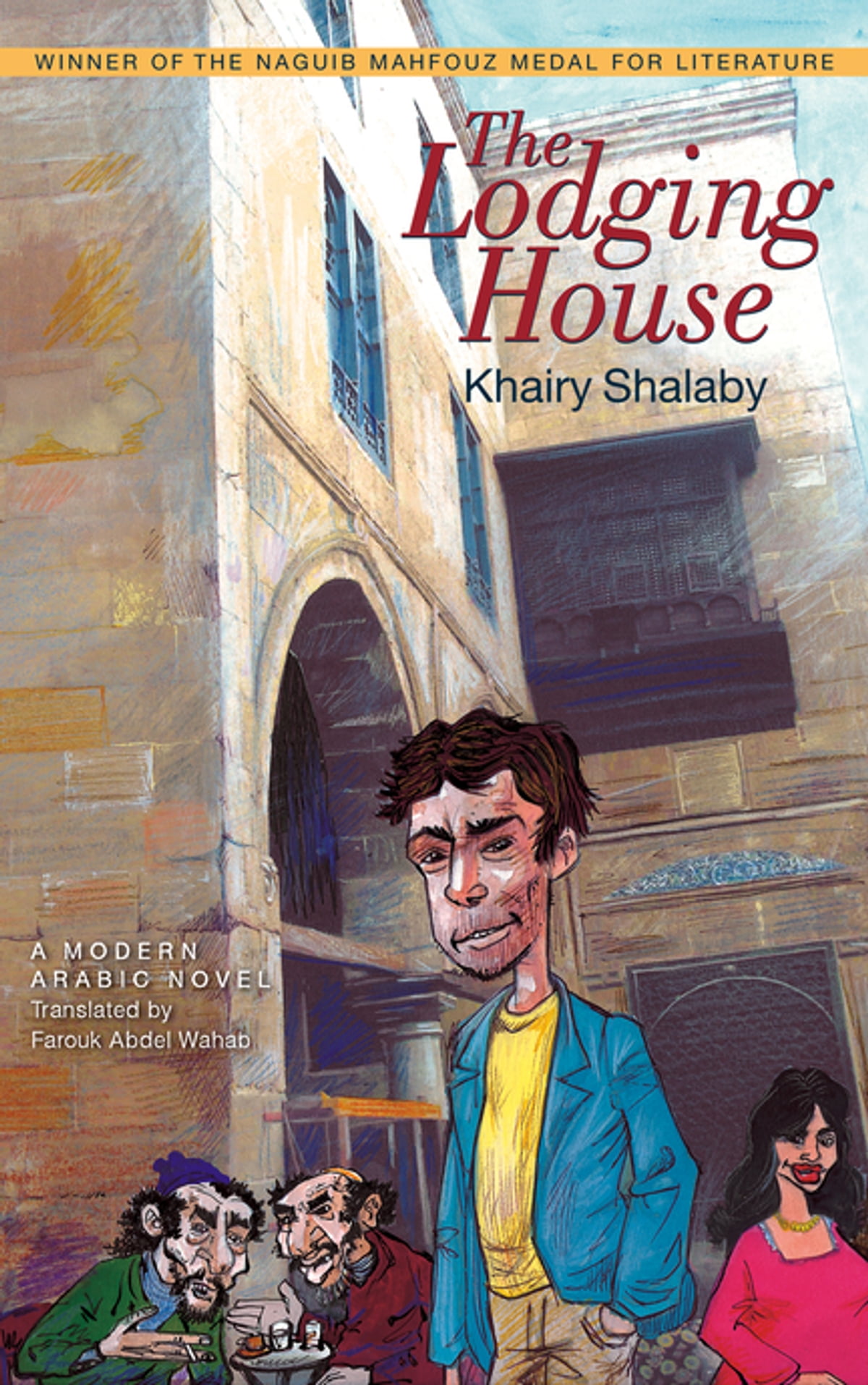
The Lodging House by Khairy Shalaby
From Nigeria, I traveled back to Egypt for Khairy Shalaby’s The Lodging House. It was through an online bookseller that I first came across the Egyptian writer; prior to 2022, I had never heard of Shalaby nor had I read any of his works before. Despite having no iota about who Shabaly was nor what The Lodging House was about, I didn’t hesitate to buy the book. Besides, my foray into Arabic literature is quite limited. I would learn that Shalaby was a prolific writer credited with over seventy books. The Lodging House was set in the city of Damanhour. It chronicled the story of an anonymous young man who got expelled from the Institute he was attending after a random burst of violence on his Math teacher. Disgraced, he fell from grace with his parents and his village, leaving him penniless and with no prospects. He became a vagrant living and sleeping on the streets. He was then befriended by Mahrous who carried him on his bicycle to Wikalat Atiya, the compound at the heart of the novel. The narrator’s gaze provided the readers glimpses into the quotidian Egyptian life; the compound, teeming with life and activity, was a microcosm of Egypt. There were also details of politics and the changing landscape of Egypt, riddled with humorous insights and adventures (and misadventures) by the narrator.

A Spell of Good Things by Ayọ̀bámi Adébáyọ̀
Nigerian writer Ayọ̀bámi Adébáyọ̀ broke into the literary scene back in 2017, with her debut novel Stay With Me. However, it was only in early 2020 that I first heard of the book. I ended up loving the book, thus, making me look forward to more of her works. This opportunity came this year when I learned about her latest release, A Spell of Good Things. A couple of weeks after I encountered the book, it was longlisted for the 2023 Booker Prize. It made it imperative for me to read the book immediately. Adébáyọ̀’s sophomore novel charted the story of two characters. The first was Ẹniọlá, a sixteen-year-old student born into a destitute family. He dreamed of attending a big university but first, he must overcome the beating he gets from his teachers because his parents were unable to pay his and his sister’s school fees. Meanwhile, Wúràọlá had everything that Ẹniọlá lacked. At twenty-eight, she was a resident working her way up to becoming a doctor. Because of her age, discussion about her marriage was inevitable. The novel was a vivid portrayal of the maladies that grip modern Nigeria: the dysfunctional educational system, political tensions, and the growing dichotomies between the rich and the poor. It was rather predictable and lacked the silent power that Stay With Me possessed. Still, it was an interesting read.
Reading Challenge Recaps
- My 2023 Top 23 Reading List: 11/23
- 2023 Beat The Backlist: 10/20; 86/60
- 2023 Books I Look Forward To List: 2/10
- Goodreads 2023 Reading Challenge: 90/90*
- 1,001 Books You Must Read Before You Die: 11/20
- New Books Challenge: 4/15
- Translated Literature: 43/40
*I updated my Goodreads target from 70 to 90 as I am quite ahead of my original target.
Book Reviews Published in August
- Book Review # 452: The Last of the Mohicans
- Book Review # 453: A Visit from the Goon Squad
- Book Review # 454: Moon Palace
- Book Review # 455: Tomorrow, and Tomorrow, and Tomorrow
- Book Review # 456: Bridge of Sighs
- Book Review # 457: Wahala
With its holidays and long weekends, August should have been a productive writing month. Unfortunately, it was the opposite as I procrastinated for most of the month. Nevertheless, I was able to find some time to write book reviews. Publishing six book reviews was a decent effort, five of which are from my pending reviews in 2022. With another one published today, I am now down to my last eight. September is going to be a big month for me, at work that is. I have been transferred to a new function. This is a function that is entirely new to me, hence, I will have to apportion more of my time learning about it and its intricacies. Nevertheless, I will still try to complete as many book reviews as possible.
September was supposed to be a foray into Latin American literature. However, I still have some works of African literature I must get to, hence, I will be extending my stay in Africa for a bit. After that, I will be reading works of Latin American writers. But because the year is drawing to a close, I will be focusing on books that are part of my active reading challenges. The joke’s on me for these books are rather thick, such as Roberto Bolaño’s 2666 and José Mármol’s Amalia. I have also lined up Julia Alvarez’s In the Time of Butterflies and works by Nobel Laureates in Literature Gabriel García Márquez and Mario Vargas Llosa. If time permits, I will include Isabel Allende’s latest novel, The Wind Knows My Name, to my reading list.
How about you fellow reader? How is your own reading journey going? I hope you enjoyed the books you have read. For now, have a great day. As always, do keep safe, and happy reading everyone!
 The Pine-Scented Chronicles