
Happy midweek everyone! Wow. We are already halfway through the week. How time flies. How has the year been going for you so far? I hope that the year has been kind to everyone. If not, I hope you will experience a reversal of fortune in the coming months. More importantly, I hope everyone is happy and healthy, in body, mind, and spirit.
With the midweek comes a fresh WWW Wednesday update, my first this year. WWW Wednesday is a bookish meme hosted originally by SAM@TAKING ON A WORLD OF WORDS. The mechanics for WWW Wednesday are quite simple, you just have to answer three questions:
- What are you currently reading?
- What have you finished reading?
- What will you read next?

What are you currently reading?
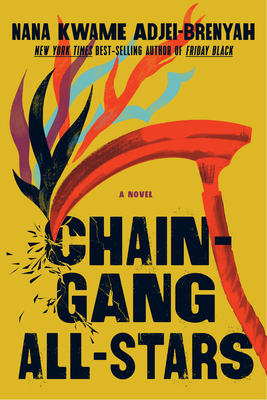
Whew. I spent August reading works of African writers; it was just the third time I hosted an African literature month. It was a wonderful journey across my most sparsely explored world literature. Unfortunately, I still had some books on reading challenges I had to read so I decided to extend my journey for a bit. This journey led me to Nana Kwame Adjei-Brenyah’s Chain-Gang All-Stars. It was while searching for books to include in my 2023 Top 10 Books I Look Forward to List that I came across Adjei-Brenyah and his debut novel which was part of several most anticipated lists. It was a no-brainer for me to include the book on my own list.
But Adjei-Brenyah’s nationality is American? I know but the moment I read his name, I knew that he has Ghanaian blood; the Kwame in his name pertains to the day he was born, a tradition observed by Ghanaians. Sure enough, I learned his parents are Ghanaians who migrated to the United States. I just started reading the book so I don’t have much to share yet. I will share more of my impressions of the book in this week’s First Impression Friday update.
What have you finished reading?

Nigerian writer Ayọ̀bámi Adébáyọ̀ broke into the literary scene back in 2017, with her debut novel Stay With Me. However, it was only in early 2020 that I first heard of the book. I ended up loving the book. It was literally one of my favorite reads of 2020. This favorable experience with her debut novel made me look forward to more of her works. This opportunity came this year when I learned about her latest release, A Spell of Good Things. A couple of weeks after I encountered the book, it was longlisted for the 2023 Booker Prize. It made it imperative for me to read the book immediately.
Adébáyọ̀’s sophomore novel charted the story of two characters. The first was Ẹniọlá, a sixteen-year-old student born into a destitute family. He was no ordinary child. Despite his age, he dreamed of attending a big university but first, he must overcome the beating he gets from his teachers because his parents were unable to pay his and his sister’s school fees. Meanwhile, Wúràọlá had everything that Ẹniọlá lacked. At twenty-eight, she was a resident working her way up to becoming a doctor. Because of her age, discussion about her marriage was inevitable. The novel was a vivid portrayal of the maladies that grip modern Nigeria: the dysfunctional educational system, political tensions, and the growing dichotomies between the rich and the poor. It was rather predictable and lacked the silent power that Stay With Me possessed. Still, it was an interesting read.
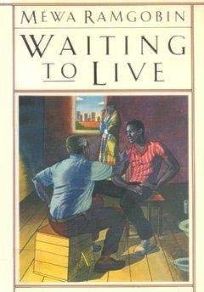
From Nigeria, I traveled back to South Africa. Prior to 2021, I had never heard of Mewa Ramgobin nor had I read any of his works before. Thanks to an online bookseller, I was introduced to the South African writer. Even though I had no iota about who Ramgobin was nor what Waiting To Live was about, I didn’t hesitate to buy it. As has been the case, my curiosity got the best of me. I just learned that Ramgobin is an anti-apartheid activist. He was also a politician
Published in 1986, Ramgobin’s novel Waiting To Live charted the story of Elias Mzimande, a young Black African whose dreams of having a better life made him leave his tribal village Umzinyathi for Durban. What he saw in Durban further lit the fire within him. He worked for the railways. His heroic actions during a disastrous fire earned him the respect of white architect Peter Evenmore. They became friends, with Peter introducing Elias to his wife, Mary. Their friendship was, for all intents and purposes, taboo. The white couple helped Elias fulfill one of his dreams: marrying his childhood sweetheart Nomsa and taking her to Durban. But one tragedy led to another, unraveling Elias’s view of life. On the backdrop, the evils of the apartheid reverberated. It was never directly mentioned but the implications were there. Palpable also was the hypocrisy of the white Africans who hid behind the mask of empathy. With the novel set during the apartheid, it was brimming with political overtones, particularly during the second half of the story. These rich political overtones, however, undermined what was a thin plot. Nevertheless, the novel was an insightful rendering of one of the darkest parts of contemporary South African history.
What will you read next?


 The Pine-Scented Chronicles