
Hello, readers! Welcome to another #5OnMyTBR update. The rule is relatively simple. I have to pick five books from my to-be-read pile that fit the week’s theme.
This week’s theme: Classics

5OnMyTBR is a bookish meme hosted by E. @ Local Bee Hunter’s Nook where you chose five books from your to-be-read pile that fit that week’s theme. If you’d like more info, head over to the announcement post!

Title: Adam Bede
Author: George Eliot
Publisher: The Zodiac Press
Publishing Date: 1984 (1859)
No. of Pages: 509
Synopsis:
Adam Bede, the first novel written by George Eliot (the pen name of Mary Ann Evans), was published in 1859. It was published pseudonymously, even though Evans was a well-published and highly respected scholar of her time.
The story’s plot follows four characters’ rural lives in the fictional community of Hayslope—a rural, pastoral and close-knit community in 1799. The novel revolves around a love triangle between beautiful but self-absorbed Hetty Sorrel, Captain Arthur Donnithorne, the young squire who seduces her, Adam Bede, her unacknowledged suitor, and Dinah Morris, Hetty’s cousin, a fervent, virtuous and beautiful Methodist lay preacher. (Source: Goodreads)

Title: The Invisible Man
Author: H.G. Wells
Publisher: Gollancz
Publishing Date: 2017 (1897)
No. of Pages: 144
Synopsis:
H.G. Well’s great novel of the dangers of science describes a man cast out from society by his own terrifying discovery. This is the story of Griffin, a brilliant and obsessed scientist dedicated to achieving invisibility. Taking whatever action is necessary to keep his incredible discovery safe, he terrorizes the local village where he has sought refuge. Wells skillfully weaves the themes of science, terror and pride as the invisible Griffin gradually loses his sanity and, ultimately, his humanity.
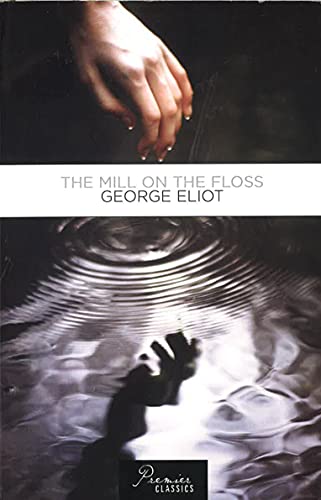
Title: The Mill on the Floss
Author: George Eliot
Publisher: Premier Classics
Publishing Date: 2010 (1860)
No. of Pages: 598
Synopsis:
George Eliot’s semi-autobiographical novel about the brilliant Maggie Tulliver epitomizes the author’s ability to find the drama at the heart of normal lives playing out in tandem with the universal themes of nature and society. Bankruptcy, death, flood, even the very flow of the river guide and often frustrate human ambition in The Mill on the Floss. Maggie and her brother Tom have grown up with a loving but hapless father who loses his living to the courts, leaving Tom to pay his debts and Maggie to languish in their impoverished house until she can escape into rich society with the help of her cousin, Lucy. Tender and tragic, The Mill on the Floss combines rich vignettes of family life with an elegant portrayal of the novel’s heroine. At the same time, Eliot offers a scathing critique of the Victorian era’s limiting social mores in matters of the heart while also celebrating many kinds of love.

Title: Antic Hay
Author: Aldous Huxley
Publisher: Vintage Classics
Publishing Date: 2004 (1923)
No. of Pages: 295
Synopsis:
When inspiration leads Theodore Gumbril to design a type of pneumatic trouser to ease the discomfort of the sedentary life, he decides the time has come to give up teaching and seek his fortune in the metropolis. He soon finds himself caught up in the hedonistic world of his friends Mercaptan, Lypiatt and the thoroughly civilized Myra Viveash, and his burning ambitions begin to lose their urgency.
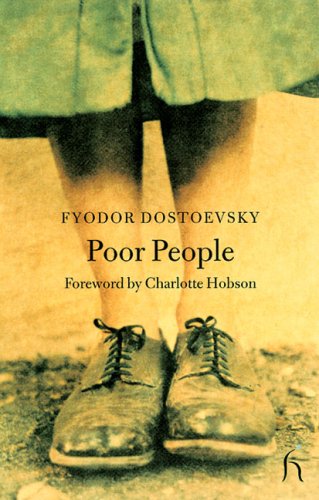
Title: Poor People
Author: Fyodor Dostoevsky
Translator: Hugh Aplin
Publisher: Hesperus Press Limited
Publishing Date: 2002 (1846)
No. of Pages: 130
Synopsis:
Written as a series of letters, Poor People tells the tragic tale of a petty clerk and his impossible love for a young girl. Longing to help her and change her plight, he sells everything he can, but his kindness leads him only into more desperate poverty, and ultimately into debauchery. As the object of his desire looks sadly and helplessly on, he – the typical ‘man of the underground’ – becomes more and more convinced of the belief that happiness can only be achieved with riches. Theirs is a troubled, frustrated love that can only lead to sorrow.
Poor People is Dostoevsky’s first original work. As both a masterpiece of Russian populist writing, and a parody of the entire genre, it is a profound and uneasy piece, with many glimpses of future genius.

Title: Buddenbrooks
Author: Thomas Mann
Translator (from German): H.T. Lowe-Porter
Publisher: Vintage Books
Publishing Date: May 1984 (1901)
No. of Pages: 604
Synopsis:
Originally published in Germany in 1901, Buddenbrooks is Thomas Mann’s first major novel, and one of the two for which he was awarded the Nobel Prize for Literature in 1929.
Buddenbrooks tells the story of four generations of a wealthy bourgeois family in northern Germany. With consummate skill, Mann draws a rounded picture of middle-class life: births and christenings; marriages, divorces, and deaths; successes and failures. These commonplace occurrences, intric=nsically the same, vary slightly as they recur in each succeeding generation. And as the Buddenbrook family eventually succumbs to modern influences – influences which are at variance with their own traditions – its downfall becomes certain.
 The Pine-Scented Chronicles
🤍🤍
LikeLike