Hello, readers! Welcome to another #5OnMyTBR update. The rule is relatively simple. I have to pick five books from my to-be-read pile that fit the week’s theme.
This week’s theme: Public Transport

5OnMyTBR is a bookish meme hosted by E. @ Local Bee Hunter’s Nook where you chose five books from your to-be-read pile that fit that week’s theme. If you’d like more info, head over to the announcement post!

Title: 4:50 From Paddington
Author: Agatha Christie
Publisher: HarperCollins
Publishing Date: 2011
No. of Pages: 271
Synopsis:
For an instant the two trains ran together, side by side. In that frozen moment, Elspeth witnessed a murder. Helplessly, she stared out of her carriage window as a man remorselessly tightened his grip around a woman’s throat. The body crumpled. Then the other train drew away.
But who, apart from Miss Marple, would take her story seriously? After all, there were no suspects, no other witnesses… and no corpse.
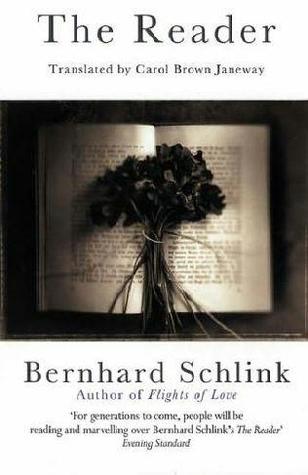
Title: The Reader
Author: Bernhard Schlink
Synopsis:
Hailed for its coiled eroticism and the moral claims it makes upon the reader, this mesmerizing novel is a story of love and secrets, horror and compassion, unfolding against the haunted landscape of postwar Germany.
When he falls ill on his way home from school, fifteen-year-old Michael Berg is rescued by Hanna, a woman twice his age. In time she becomes his lover—then she inexplicably disappears. When Michael next sees her, he is a young law student, and she is on trial for a hideous crime. As he watches her refuse to defend her innocence, Michael gradually realizes that Hanna may be guarding a secret she considers more shameful than murder. (Source: Goodreads)
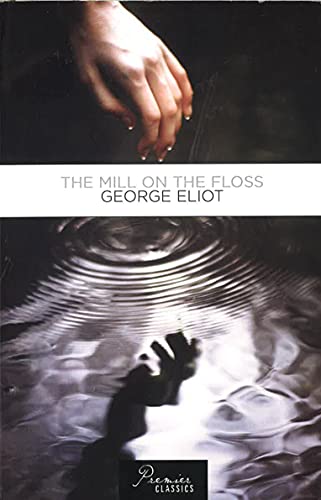
Title: The Mill on the Floss
Author: George Eliot
Publisher: Premier Classics
Publishing Date: 2010 (1860)
No. of Pages: 598
Synopsis:
George Eliot’s semi-autobiographical novel about the brilliant Maggie Tulliver epitomizes the author’s ability to find the drama at the heart of normal lives playing out in tandem with the universal themes of nature and society. Bankruptcy, death, flood, even the very flow of the river guide and often frustrate human ambition in The Mill on the Floss. Maggie and her brother Tom have grown up with a loving but hapless father who loses his living to the courts, leaving Tom to pay his debts and Maggie to languish in their impoverished house until she can escape into rich society with the help of her cousin, Lucy. Tender and tragic, The Mill on the Floss combines rich vignettes of family life with an elegant portrayal of the novel’s heroine. At the same time, Eliot offers a scathing critique of the Victorian era’s limiting social mores in matters of the heart while also celebrating many kinds of love.
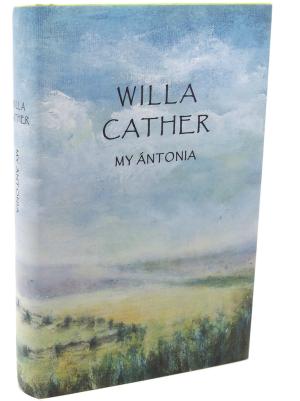
Title: My Antonia
Author: Willa Cather
Publisher: Book-of-the-Month Club, Inc.
Publishing Date: 1995
No. of Pages: 419
Synopsis:
Her fourth novel, My Antonia (1918), which she thought “the best thing I’ve ever done,” is set in pioneer-era Nebraska and is a story of contrasts – most noticeably the contrast between Antonia Shimerda, the destitute child of Bohemian immigrants, and Jim Burden, a native Virginian who, after being orphaned at the age of ten, is sent to live with his grandparents in Nebraska. The novel traces the parallel lives of Jim and Antonia – Jim (said to be modeled in Cather herself) goes to Harvard, becomes a traveling businessman, and returns to Nebraska infrequently; Antonia elopes with a shiftless railway conductor, comes home disgraced, and finds happiness with Anton Cuzak, a gentle farmer, like Alexandra Bergson of O Pioneers! – and like the land they both call home – Antonia comes to embody unshakeable simplicity and integrity.
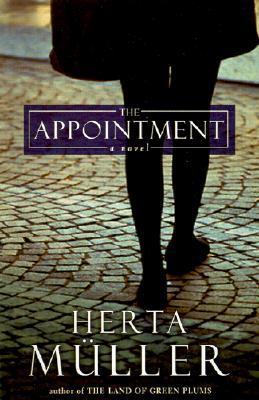
Title: The Appointment
Author: Herta Müller
Synopsis:
From the winner of the IMPAC Award and the Nobel Prize, a fierce novel about a young Romanian woman’s discovery of betrayal in the most intimate reaches of her life
“I’ve been summoned. Thursday, ten sharp.” Thus begins one day in the life of a young clothing-factory worker during Ceaucescu’s totalitarian regime. She has been questioned before; this time, she believes, will be worse. Her crime? Sewing notes into the linings of men’s suits bound for Italy. “Marry me,” the notes say, with her name and address. Anything to get out of the country.
As she rides the tram to her interrogation, her thoughts stray to her friend Lilli, shot trying to flee to Hungary, to her grandparents, deported after her first husband informed on them, to Major Albu, her interrogator, who begins each session with a wet kiss on her fingers, and to Paul, her lover, her one source of trust, despite his constant drunkenness. In her distraction, she misses her stop to find herself on an unfamiliar street. And what she discovers there makes her fear of the appointment pale by comparison.
Herta Müller pitilessly renders the humiliating terrors of a crushing regime. Bone-spare and intense, The Appointment confirms her standing as one of Europe’s greatest writers. (Source: Goodreads)
Title: Eastbound
Author: Maylis de Kerangal
Synopsis:
From Wellcome Prize winner Maylis de Kerangal comes a fast-paced story of two fugitives set on the Trans-Siberian railway, where a desperate Russian conscript hopes a chance encounter with a French woman will offer him an escape. In sensual prose evoking jazz music and infused with a sense of surreal softness, Maylis de Kerangal brings the filthy, violent circumstances of Aliocha’s journey into sharp focus.
‘The fever burning through this story, its suspense and its lyrical escapes don’t curb its sensuality, and precision. [Kerangal’s] language has an incredible driving force. It is both like a stone made up of many crystals, mixing registers with fluidity, and juxtaposing the poetic and the trivial. The whole thing has a unique rhythm, a sense of breathless speed: the sort of graceful rockslide that only she can pull off. In flux between interior and exterior, this is the perfect voyage.’ – Le Monde des Livres. (Source: Goodreads)
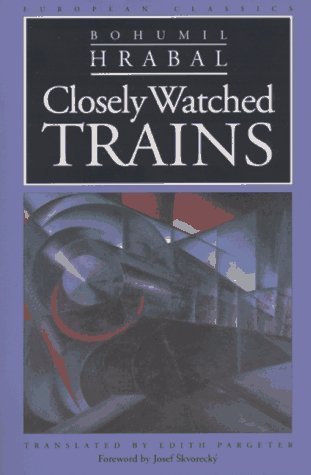
Title: Closely Watched Trains
Author: Bohumil Hrabal
Synopsis:
Bohumil Hrabal’s post-war classic about a young man’s coming of age in German-occupied Czechoslovakia is among his most beloved and accessible works. Closely Watched Trains is the subtle and poetic portrait of Miloš Hrma, a timid young railroad apprentice who insulates himself with fantasy against a reality filled with cruelty and grief. Day after day as he watches trains fly by, he torments himself with the suspicion that he himself is being watched and with fears of impotency. Hrma finally affirms his manhood and, with a sense of peace and purpose he has never known before, heroically confronts a trainload of Nazis.
Milan Kundera called the novel “an incredible union of earthly humor and baroque imagination.” After receiving acclaim as a novel, Closely Watched Trains was made into an internationally successful film that won the Academy Award for Best Foreign Film of 1967. This edition includes a foreword by Josef Škvorecký. (Source: Goodreads)
 The Pine-Scented Chronicles