
Happy midweek everyone! Wow. We are already halfway through the week. How time flies. How has the year been going for you so far? I hope that the year has been kind to everyone. If not, I hope you will experience a reversal of fortune in the coming months. More importantly, I hope everyone is happy and healthy, in body, mind, and spirit.
With the midweek comes a fresh WWW Wednesday update, my first this year. WWW Wednesday is a bookish meme hosted originally by SAM@TAKING ON A WORLD OF WORDS. The mechanics for WWW Wednesday are quite simple, you just have to answer three questions:
- What are you currently reading?
- What have you finished reading?
- What will you read next?

What are you currently reading?
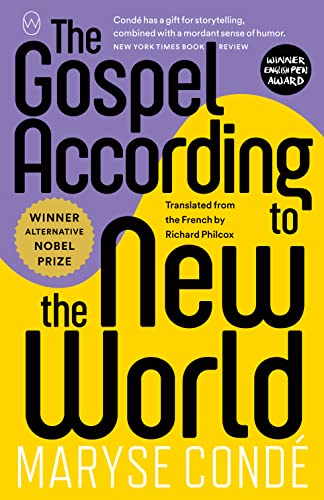
Just like that, September is about to end; this is my last WWW Wednesday update this month. Anyway, after spending nearly a month and a half reading the works of African writers, I traveled to another part of the literary world that I have rarely explored: South American literature. I hosted a South American Literature Month just once previously. I have just commenced a new reading journey, with Guadeloupean-born writer Maryse Condé. It was during the build-up for the 2019 Nobel Prize in Literature that I first encountered Condé. She was dubbed by many as a shoo-in for the award. Unfortunately, she did not receive the honor. Still, it was enough to pique my interest in her works. Her latest novel, The Gospel According to the New World is my third novel by Condé. I just started reading the book so I don’t have much of an impression on it right now. Nevertheless, I will be sharing my impressions in this week’s First Impression Friday update. That is if I am not done with it by then.
What have you finished reading?

My second book for my foray into South American literature brought me to a familiar name and terrain. Chilean writer Roberto Bolaño’s 2666 is one of his books that first captured my interest; I ended up reading The Savage Detectives first, making 2666 the second novel by Bolaño I read. I encountered both books and consequently, Bolaño, through must-read challenges. I have to admit that I was initially daunted by the books because of their sheer length; it goes without saying that Bolaño was a new territory for me. Still, I persisted and lo and behold, I was astonished.
2666, like The Savage Detectives, has a rather complex structure. Divided into five parts, it commenced with the introduction of four literary critics of diverse backgrounds and nationalities. The only interest they have in common is a German novelist named Benno von Archimboldi. As the story transitions between the five parts, it feels like it is losing its plot as each part introduces new characters and explores new subjects. The first part, The Part About the Critics, for instance, explored the nature of academic criticism, friendship, and romance. Meanwhile, the fourth part, The Part about the Crimes, is a section about crimes committed against women of different ages and was set in the Sonoran Desert; yes, the same place where The Savage Detectives ended. These contrasts between the five parts make the story a little disjointed and a little complicated as I had to sift through the different elements to find the threads that tie them all together. But this is what makes Bolaño a rather interesting writer. He is not a literary conformist and his ambitious works coax the readers to step beyond their comfort zones. It is not for everyone, however. This is the same for 2666 and The Savage Detectives.
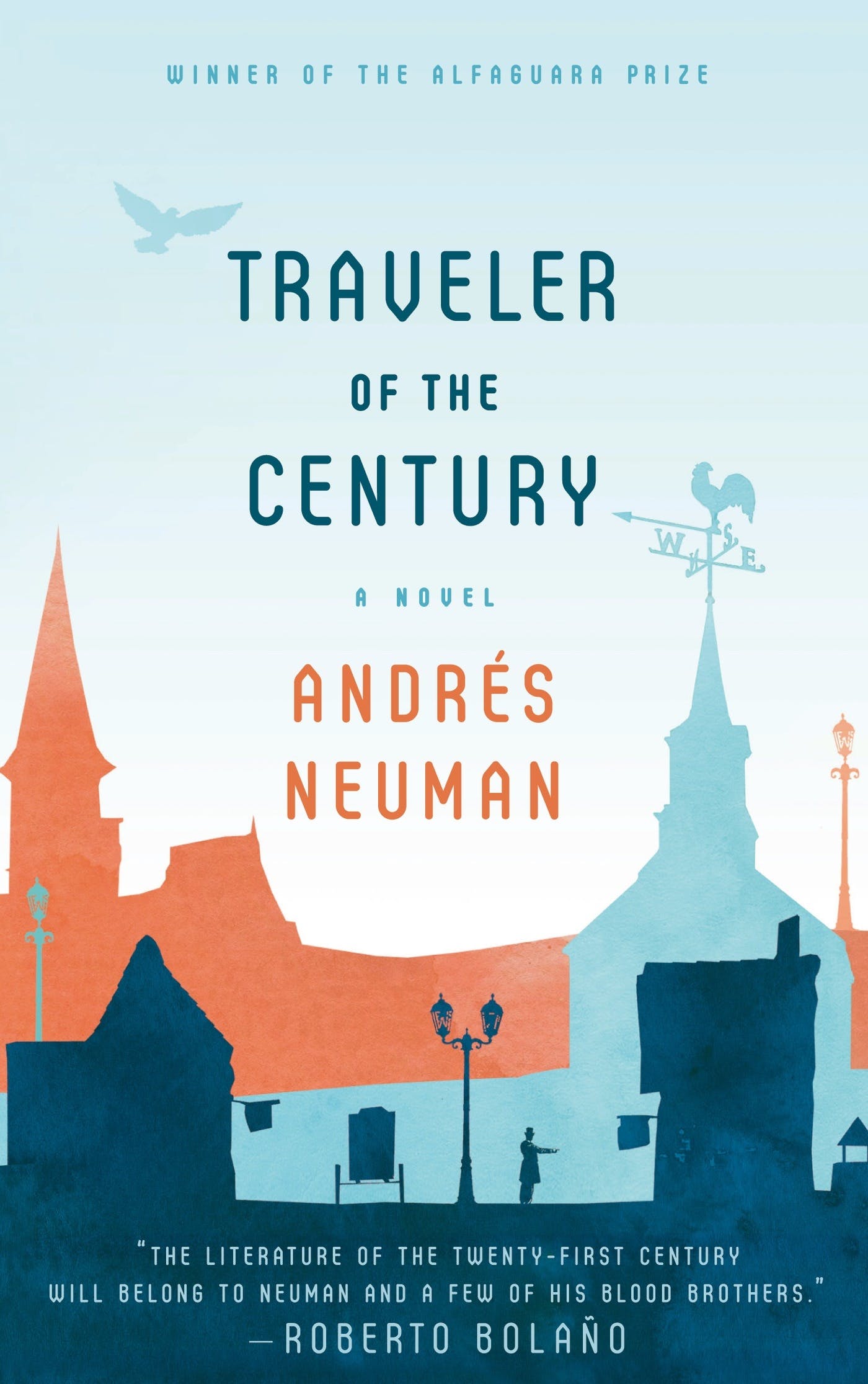
My next novel was, again, another second, my second novel written by an Argentine writer, or at least a writer born in Argentina. Interstingly, Traveler of the Century was the first novel by Andrés Neuman I read but it is his second novel I acquired. Shortly after the loosening of COVID-19 restrictions in mid-2020, I acquired a copy of Talking to Ourselves. But with my growing reading pile, I had to put reading the book on hold. Almost three years later, I would encounter Neuman again, and curious about what he has in store, I finally made a leap of faith and made Traveler of the Century part of my foray into South American literature.
Prior to reading Traveler of the Century, I learned that it was the book that elevated Neuman to global recognition; it was also his first novel to be translated into English. El viajero del siglo – its Spanish title – transports the readers to post-Napoleon Germany where Hans, the titular traveler, is on his way to Dessau. Along his way, he made a stopover at the fictional town of Wandernburg. It was supposed to be an overnight stop. What he did not expect was that he would be immersed in the local scene. It seems that Wandernburg was a town where time stood still. With each turn of the street, it fascinates travelers. Even its geographical association was tricky as it is situated between Prussia and Saxony. It is also the home to a diverse set of eclectic characters, among them Sophie Gottlieb, the daughter of one of the town’s most prominent denizens. She was also engaged to be married. It does seem like a romance story – and a lot of its elements point toward this direction – but the romance belies the ambitiousness of the complex stories comprised of backstories, and literary and political discourses. It was a compulsive story that made me look forward to more of Neuman’s works.
What will you read next?



 The Pine-Scented Chronicles
🩵
LikeLike
Finished- A Tale of Witchcraft
Currently- A Tale of Sorcery
Next- Ariadne
LikeLike