
Wow. We are now in the last quarter of the year. The first three quarters of the year zoomed past us. A lot has happened even though it doesn’t feel that way. How time flies. This also means that we have three more months to pursue our passions or complete projects that we have started. May we fill the rest of the year with great memories. I hope that the rest of the year will be kind to everyone and that it will be riddled with new adventures and growth. I hope that you will reap the benefits of everything you worked hard for during the year. I hope that the remainder of the year will be filled with great news and blessings. More importantly, I hope everyone is and will be healthy, in body, mind, and spirit.
While it is time to look forward, it is also time to look back to what a reading month it has been. September is somewhat of a hybrid reading month. The first ten days were spent reading works of African literature; I had to extend my foray into African literature for a bit because I still had books on my reading challenges. Following the conclusion of my literary journey across the African continent, I jetted to another part of the literary world that remains underexplored, at least by me: Latin American literature. It was back in 2021 when I first hosted a Latin American literature but I haven’t hosted one since so I decided to have one this year. The first time around made me look forward to reading more books from the region, and sure enough, the second trip is shaping up to be yet another worthy journey. Without more ado, here is a peek into how my September reading journey shaped up. Happy reading!
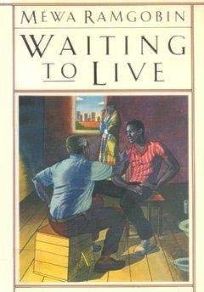
Waiting to Live by Mewa Ramgobin
My literary journey across the African continent next brought me to South Africa through Mewa Ramgobin’s Waiting to Live. It was through an online bookseller that I was introduced to the South African writer who, I learned, was also a vocal apartheid abolitionist. His novel, Waiting To Live charted the story of Elias Mzimande, a young Black African dreaming of having a better life. His dream led him to leave his tribal village Umzinyathi for Durban where he worked for the railways. Over the course of his work, he earned the respect of white architect Peter Evenmore. Peter and Elias strike a friendship that is seen as taboo. Peter, with his wife, even helped Elias marry his childhood sweetheart Nomsa. But a series of unfortunate events unraveled Elias’ view of life. Meanwhile, on the backdrop, the evils of the apartheid reverberated. Palpable also was the hypocrisy of the white Africans who hid behind the mask of empathy. The novel was brimming with political overtones, particularly during the second half of the story. These rich political overtones, however, were undermined by a thin plot. Nevertheless, the novel was an insightful rendering of one of the darkest parts of contemporary South African history.
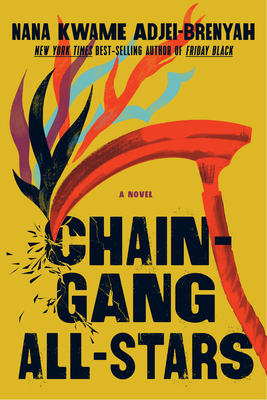
Chain-Gang All-Stars by Nana Kwame Adjei-Brenyah
At the start of the year, I listed 2023 book releases I am looking forward to. One of the ten books in the said list was Nana Kwame Adjei-Brenyah’s debut novel, Chain-Gang All-Stars. It was ubiquitous in similar most anticipated 2023 release lists, hence, it was a no-brainer for me to include the book in my own. While Adjei-Brenyah identifies as American, his parents were Ghanaian immigrants; the Kwame in his name was a giveaway. Chain-Gang All-Stars is a work of dystopian fiction and introduces Loreta Thurwar, the star of the titular Chain-Gang All-Stars Battleground which was broadcast on the Criminal Action Penal Entertainment (CAPE) channel. The Battleground pits prisoners against each other in scenes reminiscent of the gladiatorial battles in Rome’s Colosseum. It is a fight to the death. Those who survive three years at the Battleground earn a ticket to freedom. Thurwar, CAPE’s top drawer, was two weeks away from being Freed. But this is also entertainment. With a tension-filled atmosphere, Adjei-Brenyah’s debut novel is an insightful examination of America’s penal system, racism, and racial injustices, while, at the same time exposing our unchecked consumption of violence.

The Fishermen by Chigozie Obioma
Wrapping up my journey across African literature was another Nigerian writer; Nigeria is my most explored African literature. It was back in 2019 when I was first introduced to Chigozie Obioma when his sophomore novel, Orchestra of Minorities was shortlisted for the Booker Prize. I was not fully impressed by the book but I was willing to make concessions. I listed his debut novel The Fishermen in my 2023 Top 23 Reading List. The novel is set in the mid-1990s in the city of Akure. The titular fishermen were four brothers born into a middle-class family: Ikenna, Boja, Obembe, and Benjamin. Their father, because of his work, had to move to a different city, occasionally going home while their mother took care of them. The four siblings went fishing on Omi-Ala, a river adjacent to their home; this was despite being forbidden to do so. It was all innocent and fun until Abulu, the village madman, pronounced a prophecy that challenged the relationship between the brothers. From being a tightly knit unit, they were unbound by the prophecy. The Fishermen is a compulsive coming-of-age novel where the brothers cope with the harsh realities of this world. their story was juxtaposed with Nigeria’s tumultuous political landscape.

The Law of Love by Laura Esquivel
Immediately following the conclusion of my foray into African literature was the commencement of a journey across another part of the literary world I rarely explored: Latin American literature. I commenced this journey with Laura Esquivel’s The Law of Love, my second novel by the Mexican writer after her sweeping debut novel Like Water for Chocolates. While her debut novel was a fusion of historical fiction and magical realism, The Law of Love was an even more innovative literary piece. It has elements of magical realism and historical fiction which were further enriched by details of folklore and speculative fiction. The story commenced in 23rd-century Mexico City where Azucena, an “astroanalyst”, attempted to track Rodrigo, her “twin soul.” With its time travel elements, readers are introduced to different versions of both characters across time periods, starting in early colonial Mexico. The novel’s unusual structure, however, can get a little confusing but it was still a compulsive read about memory, history, and what it means to live and love. What made the reading experience more interesting were the other media comprising the novel. The narrative was enhanced by graphic novel elements.

2666 by Roberto Bolaño
Another familiar name in the Latin American literature landscape was Chilean writer Roberto Bolaño. His 2666 was one of his books that first captured my interest although I ended up reading The Savage Detectives first. I admit I was initially daunted by both books because of their length; it goes without saying that Bolaño was a new territory for me. I persisted and lo and behold, I was astonished by both books. 2666, like The Savage Detectives, has a rather complex structure. Divided into five parts, the story commenced with the introduction of four literary critics of diverse backgrounds and nationalities. Their shared interest was the reclusive German novelist Benno von Archimboldi. Each part introduced new characters and explored new subjects. The first part, The Part About the Critics, for instance, explored the nature of academic criticism, friendship, and romance. The fourth part, The Part about the Crimes was about crimes committed against women of different ages and was set in the Sonoran Desert. These contrasts made the story a little disjointed and complicated as I had to sift through these various elements to find the common threads that tie them together. But this is what makes Bolaño an interesting writer. He pushes the bounds of storytelling and his ambitious works coax the readers to step beyond their comfort zones. It is not for everyone, however.
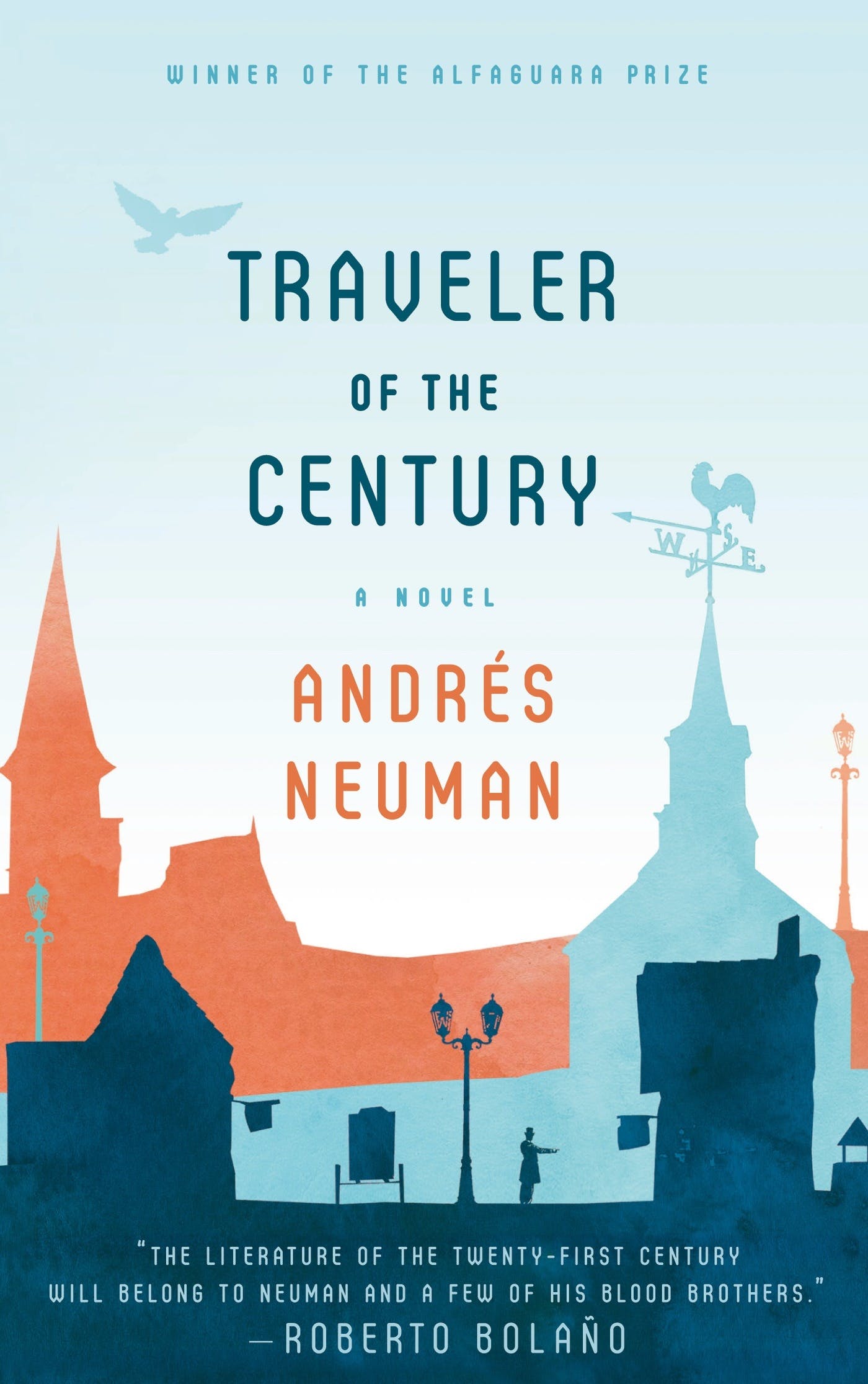
Traveler of the Century by Andrés Neuman
Chilean literature has become a familiar place for me. I can’t say the same for Argentine literature, hence, my resolve to read more works by Argentine writers starting with Andrés Neuman’s Traveler of the Century; the only other novel written by an Argentine writer I read was Hernan Diaz’s Trust. Traveler of the Century, I learned, was the book that elevated Neuman to global recognition; it was also his first novel to be translated into English. El viajero del siglo – its Spanish title – transports readers to post-Napoleon Germany where Hans, the titular traveler. On his way to Dessau, he made a stopover at the fictional town of Wandernburg. What was supposed to be an overnight stop lengthened. Hans found himself immersed in the local scene; Wandernburg was a town where time stood still. Situated between Prussia and Saxony, its geographical association was also perplexing. It was also the home to a diverse set of eclectic characters who made Hans’ stay more interesting. Among them was Sophie Gottlieb, the daughter of one of the town’s most prominent denizens who was engaged to be married. The novel developed into a romance story but the romance belied the ambitiousness of the complex novel. It was comprised of complex backstories riddled with compelling literary and political discourses. It was a compulsive story that made me look forward to more of Neuman’s works.
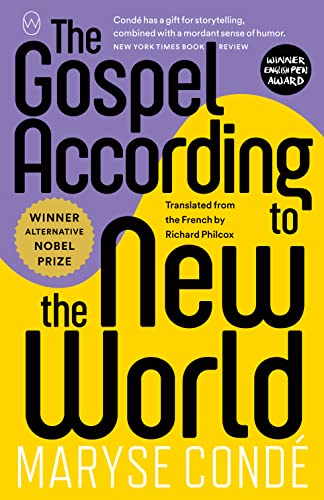
The Gospel According to the New World by Maryse Condé
From Argentina, my foray into Latin American literature brought me to Guadeloupe through Maryse Condé’s latest novel, The Gospel According to the New World, my third novel by the highly esteemed Guadaloupean-born writer. Said to be her final work – Conde is losing her eyesight – The Gospel According to the New World charted the story of Pascal Ballandra. When he was a baby, Pascal was abandoned in a shed where he was found by the childless couple who would eventually adopt him: Jean Pierre, owner of The Garden of Eden plant nursery, and his wife Eulalie. When he became an adult, Pascal transformed into a messianic figure or a semblance of one. He healed a disabled man named Lazare and even recruited 12 disciples with one named Judas. With the title and these explicit references, it doesn’t take a genius to figure out how the story is going to pan out. With adulthood loomed the question about Pascal’s provenance. He set out to find his parents but what he unveiled surprised him. Through Pascal’s journey of rediscovering himself, Conde uncorked subjects familiar in her works, the foremost of which was the legacy of colonialism and slavery. The novel also explores sexuality, gender, race, and inequality. However, the novel was undone by its ambition and the plethora of subjects it grappled with.

Tent of Miracles by Jorge Amado
My reading journey next took me to Brazil, specifically to the state of Bahia. One of Bahia’s most famous sons was Jorge Amado who established himself as a foremost storyteller. My first novel by Amado was Showdown which was part of my first foray into Latin American literature. Two years later, Tent of Miracles formed part of my second foray into Latin American literature. Originally published in 1968, Tent of Miracles forms part of a series Amado called “The Bahia Novels”. The heart of the story was Pedro Archanjo, a forsaken Bahian writer and self-taught social scientist whose legacy was about to be studied by Dr. James D. Levinson, an American professor. Believing that Archanjo’s works were seminal to mulatto literature, he enlisted the help of a Brazilian poet, Fausto Pena. The novel then transports the readers to the Pelourinho – the book’s setting – of the past. It was a utopia for creative minds, where artists, musicians, craftsmen, capoeiristas, poets, and even shamans converged. At the heart of the community was the titular Tent of Miracles. The novel was set during a very contentious part of Brazilian history, hence, the novel’s political overtones. Tent of Miracles, however, was not just a political novel as it was a literary smorgasbord that explored criminality, religion, and the dichotomies between the creative and the intellectual communities. Amado, as always, was splendid.

The Woman from Uruguay by Pedro Mairal
Closing my September reading journey was another Argentine writer; while my 2021 Latin American Literature Month was dominated by Chilean writers, my 2023 version, it seems, is going to be shaped by Argentine writers. Pedro Mairal’s The Woman from Uruguay is just the starting point; I am currently reading José Mármol’s Amalia. The Woman from Uruguay was the recounting of a pivotal point in the life of Lucas Pereyra. Born to relative privilege, he was a writer in his mid-forties. Now relegated to being a house husband, he was bereft of inspiration; his position was exacerbated by his wife, Catalina’s success. There was also a nagging suspicion that Catalina had been unfaithful. The catalyst for the chain of events that moved the story forward was a $15,000 advance from his Spanish publisher. Lucas traveled to Montevideo, Uruguay to cash in the advance. He would then exchange it in Buenos Aires “at the unofficial exchange rate.” His travel to Montevideo was also driven by his desire to meet Guerra again after their first encounter two months prior. What rose to the forefront was the story of a man at the crossroads. He was experiencing an existential crisis. It was a familiar territory but Mairal managed to conjure a compulsive story that probes deep into one’s motivations, flaws, and desires.
Reading Challenge Recaps
- My 2023 Top 23 Reading List: 13/23
- 2023 Beat The Backlist: 11/20; 92/60
- 2023 Books I Look Forward To List: 3/10
- Goodreads 2023 Reading Challenge: 99/90*
- 1,001 Books You Must Read Before You Die: 13/20
- New Books Challenge: 5/15
- Translated Literature: 49/40
*I updated my Goodreads target from 70 to 90 as I am quite ahead of my original target.
Book Reviews Published in September
- Book Review # 458: Sea of Tranquility
- Book Review # 459: A Spell of Good Things
- Book Review # 460: Glory
- Book Review # 461: Chain-Gang All-Stars
- Book Review # 462: Night Boat to Tangier
Like August, September has been a slow writing month. I am, unfortunately, lagging being, where writing is concerned. This is a contrast to how productive the year has been, reading-wise. September was busier than expected; I also spent a week on a holiday. Nevertheless, I was able to find time to write book reviews. I was able to finish five book reviews during the month, three of which were for books I read back in 2022. This means I am now down to my last five book reviews pending from the previous year. I am hoping for some reversal of fortune this October. I am hoping to tick off as many book reviews as I can. The last time I checked, I noted how I have nearly ninety book reviews pending. *Mind-blown*. Anyway, I will be taking it one step at a time.
October is bound to be a busy reading month as I will pursue my journey across Latin America. I have lined up works of female writers such as Valeria Luiselli’s Lost Children Archive, Isabel Allende’s The Wind Knows My Name, Mariana Enríquez’s Our Share of Night, and Julia Alvarez’s In the Time of Butterflies. Once I am done with all the books I lined up for Latin American Literature, I will be shifting my focus to books that are part of my ongoing reading challenges. I think I have about sixteen books from these challenges. These books, interestingly, are divided between works of European and North American literature. That makes the challenge easier I guess. This is how it is gong to be for the rest of the year, a scramble to finish these said books. But this is how I have always concluded my recent reading years. So what else is new I guess?
How about you fellow reader? How is your own reading journey going? I hope you enjoyed the books you have read. For now, have a great day. As always, do keep safe, and happy reading everyone!
 The Pine-Scented Chronicles
💛📖
LikeLike