Dismantling Walls and Divides
Back in 2020, during the height of the pandemic, Scottish writer Douglas Stuart shot to fame with his debut novel, Shuggie Bain. The book was longlisted for the prestigious Booker Prize. Being part of the longlist was an achievement in itself, especially for the first published work. Through a stringent process, the book was chosen to be a part of the magic thirteen from over a hundred books. Stuart would go all the way and achieve a feat that was only achieved by five other writers: winning the Booker Prize with his debut novel. With his win, Stuart became just the second Scottish writer to win the prestigious literary prize. The book was also a finalist for the National Book Award.
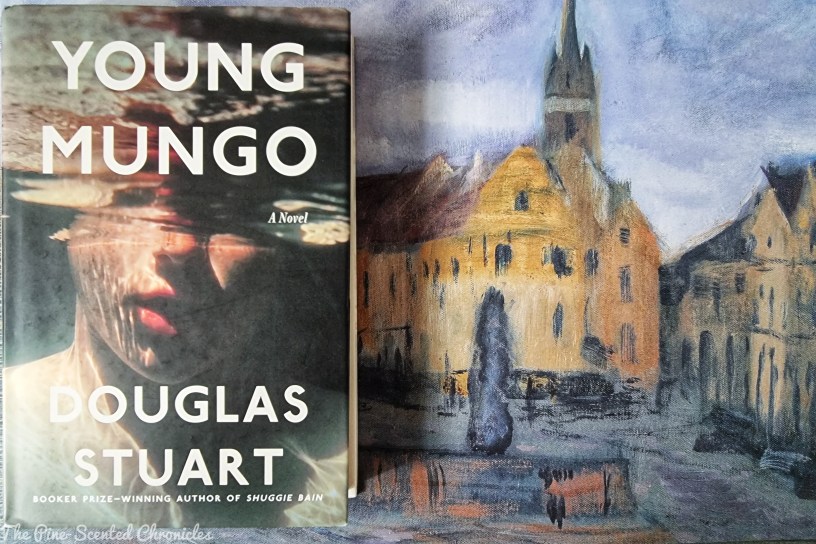
With the accolades he received through his debut novel, Stuart has certainly set the expectations high for his succeeding works, if ever. It didn’t take long as two years after his soaring debut, Stuart made his highly-anticipated literary comeback. His sophomore novel, Young Mungo, was released in early 2022. Capitalizing on his earlier success, Stuart once again transported the readers to early 1990s working-class Glasgow. This is a familiar impoverished environment upon which the story of the titular Shuggie Bain was juxtaposed. The heart of Stuart’s sophomore novel was Mungo Hamilton. Like Shuggie Bain, he was fifteen years old when he was introduced.
Young Mungo opened with Mungo being taken by two men, both strangers to him. It was against his wishes. His mother, with a tea mug of fortified wine in her hand, simply watched from a window as her son reluctantly submitted himself to the friends she met at Alcoholics Anonymous; as the story progressed, they were identified as “St” Christopher and Gallowgate who were both former convicts. They were taking Mungo on a camping trip into the glens where he would be taught how to gut a fish, make a fire, and other essential survival skills. The goal was to toughen Mungo up. The two adults informed Mungo they had carted him off from the city to the wilderness of the countryside to test his mettle and to “make him a man.”
“Mungo’s capacity for love frustrated her. His loving wasn’t selflessness; he simply couldn’t help it. Mo-Maw needed so little and he produced too much, so that it all seemed a horrible waste. It was a harvest no one had seeded, and it blossomed from a vine no one had tended. It should have withered years ago, like hers had, like Hamish’s had. Yet Mungo had all this love to give and it lay about him like ripened fruit and nobody bothered to gather it up.”
~ Douglas Stuart, Young Mungo
But let us get to know Young Mungo first. Mungo was the youngest of three children born to Maureen, or Mo-Maw as her children would refer to her; she refused to be called any other endearing term, i.e. mom, mother, ma. Hamish, the firstborn and Mungo’s older brother, was nineteen. He was the father to a daughter with his teenage girlfriend. Because Hamish already left the family home, the upkeep of the house and taking care of Mungo fell into the hands of Jodie, the only daughter. While she was still in high school, Jodie filled in the maternal role. Their mother was an alcoholic who had the proclivity to disappear without any preambles.
The fishing trip ran parallel to another narrative line. Ensconced on a bus between the two strangers, Mungo contemplates how he found himself in his current situation. This formed the second half of the novel which came in the form of a flashback. It was the springtime preceding the camping expedition. After a day out sketching in a patch of scrub adjacent to the tenement they were living in, Mungo came upon a makeshift dovecot (a “doocot”) built on a nearby wasteland. Described as “a purgatory only forty feet wide,” the doocot soon transformed into a sort of escape for Mungo and James, a boy a year older than Mungo who lived on the next street over.
Their initial interaction was awkward, with their conversation centered around doves, something that James had an obsession with. It soon dawned on Mungo that James was unlike any other boy that Mungo had previously met. James had a gentle side to him and he was also soft-spoken, the antithesis of the men who dominated Mungo’s life and a reflection of his own. James’ gentleness was a reprieve from the toxic masculinity that enveloped Mungo from his birth. With Mungo’s visit to the doocot – and eventually to James’ house – becoming increasingly regular, the cursory conversations led to deeper subjects, the primary of which was confronting their shared loneliness.
In a way, James was a catalyst for opening up portions of Mungo he obscured from the rest of the world. His older siblings, and even his mother, had strong personalities. Hamish is the leader of a teenage gang who robbed and intimidated the local Catholics while Jodie is known in the neighborhood as an intelligent and ambitious girl. Growing up in this neighborhood, Mungo was exposed to anything but kindness. For instance, his name – he was named after the patron saint of Glasgow – made him the subject of ridicule by his peers. He also became the subject of everyone’s ridicule because of his softer temperament, and the palpable deviations of his demeanors from what society considered as norms for male behavior. He barely had liberty as his actions and responses were based on diktats by men.
“She wondered what lay ahead for her baby brother. What woman would love him now? She hoped for someone who would be grateful for his good looks and reticent ways. Someone who would feel blessed by his quiet attention, who would take all his love and keep it safe. There would be girls who would want to mother him forever, who’d be reduced by the helpless dip of his eyes into some primitive need to cook and clean and care for him.”
~ Douglas Stuart, Young Mungo
Despite all of the ridicule forwarded his way, Mungo chose to have a gentle perspective on life. He was the direct opposite of his siblings. He was more awkward and more sensitive. He was the odd one out, an anomaly amidst the rough and tough life of the Glaswegian neighborhood they were living in. It is for this reason that James was a breath of fresh air. Their similarities – including their love for their alcoholic and helpless mothers – made them gravitate toward each other. In a world that demanded harshness, they both chose gentleness. They also both craved happiness. Theirs was a friendship so rare juxtaposed to the squalid Glaswegian tenements. Their friendship inevitably led to a budding romance that straddled the sexual.
Palpably. the budding romance between Mungo and James confronts social norms prevailing during the period. Men were supposed to be virile and harsh, especially in a foreboding environment such as the one that the two boys grew up in. The society they grew up in has a singular definition of sexuality and masculinity. They tried to conform to these expectations; Stuart poignantly captured these pressures and how they adversely impacted individuals. Everyone, including his brother, wanted to toughen up Mungo; the case is the same for James. In this ecosystem, manning up entails a healthy dose of violence, such as the capability to endure pain and inflict pain on others. Physical pain was indelibly woven into the novel’s lush tapestry, again, the antithesis to the heartwarming story of the self-discovery of Mungo and James.
Mungo, for his part, submitted himself to the pervasive toxic masculinity that enveloped him at every turn; he was left with no recourse. He tried projecting swagger but it all felt superficial. He felt like an imposter. Being with James, however, felt like the most natural thing for Mungo. The same is true for James. Still, there were other pressures they had to confront. One prevalent subject explored by the novel was the sectarian conflict between Catholics and Protestants. It is also another divide that the book’s main characters must hurdle. Mungo was born into and raised in a Protestant family while James was a Catholic. This added more layers to the affectionate romance story of two teenage boys as their story doubles as a pursuit of the acceptance of a society with stringent standards; dense and close-minded standards that do not allow even the slightest deviations.
One of the novel’s achievements, once again, was the evocative portrait of the backdrop upon which the story was set. Glasgow, once again, was prominently displayed. Like what he did in Shuggie Bain, Stuart adeptly walked the readers through the bleak world of late 20th-century Glasgow’s East End. He once again provided a window into an impoverished world devastated by Thatcher-era policies. The cuts on the heavy industry that built the region resulted in joblessness and a lack of upward mobility; trade unions have lost their voices. Alcoholism and substance abuse have become ubiquitous. Violence and hostility were currencies. Hopelessness and helplessness were prevalent in a world still paying the steep price of radical changes brought about by the policy of de-industrialization.
“Waves of loveliness ebbed over him followed by waves of shame. They came like Jodie alternating the hot and cold taps and trying to balance a bath with him already in it. This time, though, he couldn’t pull his legs to his chest and escape it, he would be burned or he would be chilled as it happened. There was no pulling way.“
~ Douglas Stuart, Young Mungo
Indeed, the East End was a place where people got stuck. It is a whirlpool that sucks you in. It sucks all hope. It was a world where men always had the upper hand; Jodie’s boyfriend, for instance, was a married teacher. Still, in the midst of the squalor that permeated the story, hope abounds. The love story at the heart of the novel exemplifies this, balancing the violent scenes. together with humorous scenes astutely woven into the rich tapestry. Some characters also refused to be pulled by the quagmire. A character who dreams of going to university ultimately does, defying the odds. Ultimately, Stuart manages to convey a hopeful message. Further, Stuart deep dives into the psychological profile and motivations of the characters, including the villains whose actions and impulses were the products of their circumstances.
It cannot be denied that there are palpable parallels between Stuart’s two novels. However, such similarities are superficial. While Shuggie Bain came across as a son’s homage to his mother, Young Mungo painted the portrait of a teenager trying to navigate the shaky waters of adolescence. There were new experiences waiting, such as romance, the exploration of sexuality, and the development of a dream beyond the poverty he was used to. What also sets Young Mungo apart from its predecessor is its surer approach to storytelling. Minimized were the facets that undermined his debut novel as Stuard developed a better grasp of his prose. It is one of the many pleasures of reading Stuart’s sophomore novel.
Young Mungo is an evocative story about star-crossed lovers and forbidden love. It was a powerful love story that confronted taboos and societal norms, such as religious divides, homophobia, and toxic masculinity. It was also, at its heart, the vivid coming-of-age story of a young boy who does not fit in with the dark backdrop. A designer by profession, Stuart has always had an interest in literature but had to hold off pursuing it at a young age because of his circumstances. In a way, Shuggie Bain and Mungo were the author’s alter egos. Shuggie Bain was a rite of passage that established him as a writer to look out for. With his sophomore novel, he consolidated his stranglehold as one of this generation’s literary stars.
“Mungo knew fine well that people had demons. Mo-Maw’s showed itself whenever she jangled for a drink. Her demon was a flat, eel-like snake with the jaw and beady eyes of a weasel and the matted coat of a mangy rat. It was a sleekit thing on a chain leash that shook her and dragged her towards things she ought to be walking away from. It was greedy and it was cunning.”
~ Douglas Stuart, Young Mungo
Book Specs
Author: Douglas Stuart
Publisher: Grove Press
Publishing Date: 2022
Number of Pages: 390
Genre: Bildungsroman
Synopsis
Douglas Stuart’s first novel, Shuggie Bain, winner of the 2020 Booker Prize, is one of the most successful literary debuts of the century so far. Published or forthcoming in forty territories, it has sold more than one million copies worldwide. Now Stuart returns with Young Mungo, his extraordinary second novel. Both a page-turner and literary tour de force, it is a vivid portrayal of working-class life and a deeply moving and highly suspenseful story of the dangerous first love of two young men.
Growing up in a housing estate in Glasgow, Mungo and James are born under different stars – Mungo a Protestant and James a Catholic – and they should be sworn enemies if they’re to be seen as men at all. Yet against all odds, they become best friends as they find a sanctuary in the pigeon dovecote that James has built for his prize racing birds. As they fall in love, they dream of finding somewhere they belong, while Mungo works hard to hide his true self from all those around him, especially his big brother Hamish, a local gang leader with a brutal reputation to uphold. And when, several months later, Mungo’s mother sends him on a fishing trip to a loch in Western Scotland with two strange men whose drunken banter belies murk pasts, he will need to summon all his inner strength and courage to try to get back to a place of safety, place where he and James might still have a future.
Imbuing the everyday world of its characters with rich lyricism and giving full voice to people rarely acknowledged in the literary world, Young Mungo is a gripping and revealing story about the bounds of masculinity, the divisions of sectarianism, the violence faced by many queer people, and the dangers of loving someone too much.
About the Author
To learn more about the award-winning writer, click here.
 The Pine-Scented Chronicles
NICE POST 💚💯🙏🇪🇸
LikeLike
💛🩵
LikeLike