
Happy Halloween! Happy midweek everyone! Woah, today is the first day of the eleventh month of the year. That leaves us sixty more days to wrap things up for 2023. How has the year been going for you so far? I hope that the year has been kind to everyone. If not, I hope you will experience a reversal of fortune in the last two months of the year. More importantly, I hope everyone is happy and healthy, in body, mind, and spirit.
With the midweek comes a fresh WWW Wednesday update, my first this year. WWW Wednesday is a bookish meme hosted originally by SAM@TAKING ON A WORLD OF WORDS. The mechanics for WWW Wednesday are quite simple, you just have to answer three questions:
- What are you currently reading?
- What have you finished reading?
- What will you read next?

What are you currently reading?

With the start of a new month is the commencement of a new literary journey. In late October, I started my foray into European literature which, I surmise, will not last as I will be focusing on books on my reading challenges. You see, I have been lagging behind; it has become a yearly tradition for me to cram as the year draws to a close. HAHA. Anyway, my journey across Europe takes me to Germany/Switzerland with one of the books I have long been looking forward to, Nobel Laureate in Literature Thomas Mann’s The Magic Mountain. This is my first novel by Mann and is also my 1,100th novel and my 110th read this year. In reading the book, I am hitting two birds with one stone as The Magic Mountain is part of both my 2023 Beat the Backlist Reading Challenge and my 2023 Top 23 Reading List. I just started reading The Magic Mountain although I did read some reviews of the book already. However, I will only be sharing my initial impressions of the book in this week’s First Impression Friday.
What have you finished reading?

It was in the past week that I capped one reading journey and commenced a new one. I finished my foray into Latin Latin American literature with Mariana Enríquez’s Our Share of Night. I first came across the Argentine writer in 2021 when her book, The Dangers of Smoking in Bed, was shortlisted for the International Booker Prize. Imagine my disappointment when I learned it was a short story collection. Nevertheless, I was hoping that she would publish a novel – I, later on, learned that she already published four but Our Share of Night was the first to be translated into English. When I encountered a copy of the book, I didn’t hesitate and bought it, even making it part of my Latin American literature month.
At the heart of Our Share of Night is the father and son duo of Juan and Gaspar Peterson. The year was 1981. Following the untimely demise of his wife, Juan took his son to visit his in-laws’ estate, in Misiones in northeast Argentina. What was supposed to be a healing trip turned into a nightmare when they uncovered a deeply kept family secret: a cult called the Order. Things came to a head when it was revealed that Gaspar’s fate was inevitably tied up with the cult which has a preoccupation with the supernatural evil presence called Darkness and immortality. With the presence of the Order looming, Juan and Gaspar were forced to flee. Juan went at lengths to ensure his son’s safety but in the process of doing so, he must also confront his own demons. Set during the dictatorship (1976-1983), the Order takes victims of the regime for torture and human sacrifice under the cover of state-sponsored abductions. The novel, with the Order as a conduit, captures the literal horrors of the dictatorship. Yet amidst this darkness, friendship and familial love flourished. Our Share of Night is a complex novel and no amount of words can fully capture this compelling story of a father and son and of a nation reeling from the horrors of the regime.

When a door closes, a new one opens. From Latin America, I traveled to Europe to commence a new literary journey. I opened my foray into European literature with yet another unfamiliar writer although a name that I kept on encountering. I have long been curious about Austrian writer Rainer Maria Rilke as he is often part of literary discourses. However, his oeuvre is comprised primarily of poetry, an alley I still couldn’t imagine myself exploring, at least for now. Imagine my delight when I learned he published a novel, The Notebooks of Malte Laurids Brigge.
Like The Magic Mountain, The Notebooks of Malte Laurids Brigge is part of my 2023 Top 23 Reading List; this says how much I was looking forward to the book. Rather than a straightforward narrative, the novel was comprised of notebook and journal entries made by the titular Malte Laurids Brigge. In his early twenties, Brigge moved from Denmark to Paris; in his home country, he was part of an affluent family but in Paris, he was poor. Through these notebook entries, Brigge captured life on the streets of Paris, beyond the glitz and glamour often attached to it. The novel transforms into a philosophical musing that revolves mainly around existentialism. Interspersed into the story were flashbacks to his childhood. Writing for Brigge has become a distraction to negate his fear of death. The novel provides a window into the psychological profile of Rilke; some of the letters were actual letters Rilke sent his wife. It was poetic and some of his ramblings readers can relate to.

From gay Paris, my literary journey next took me to the island republic of Salina on the Italian Peninsula with Sicilian Prince Giuseppe Tomasi di Lampedusa’s The Leopard. Prior to 2020, I had never heard of di Lampedusa nor have I encountered any of his works. I first came across the book in 2020, shortly after the easing of COVID-19 protocols. I was curious about the book, especially after I learned it was one of the 1,001 Books You Must Read Before You Die. I listed the book as part of my 2023 Beat the Backlist Reading Challenge.
Originally published in 1958, the novel charted the fortune of Prince Fabrizio di Salina. The novel was set during the period of Italian unification called the Risorgimento. Like most of the Kingdoms on the Italian Peninsula, the kingdom of Salina was on the brink of being dissolved and made a part of the new Italian Republic. The unification entailed the dismantling of monarchies across the peninsula, something that Prince Fabrizio was cognizant of. When a group of Italian soldiers made their way to Sicily, the Salinas fled to Donnafugata, where they had an estate. Through the story of a declining aristocrat and his family, the novel captures the political and social shifts taking place in Italy following the Risorgimento. It captured the overall attitude of Sicily toward this change. The novel also doubles as a meditation on death and loss of collective memory while probing the intricacies of families.

That’s four new-to-me writers in a row. I can’t remember when I first encountered Russian writer Ludmila Ulitskaya. One thing is for sure, she – at least her works – has been ubiquitous lately. This didn’t escape my attention. My interest in her oeuvre was further piqued when I kept seeing her name in discourses apropos the Nobel Prize in Literature. When I encountered her novel, Jacob’s Ladder during one of my random bookstore excursions, I didn’t hesitate to buy the book. My growing anticipation of the book pushed me to include it in my 2023 Top 23 Reading List.
Jacob’s Ladder contains a dual narrative, one in the present and one in the past. The present involves Nora Ossetsky, a set designer, theatrical director, and writer in late-Soviet and post-Soviet Moscow. She was a single mother who was raising her son, Yurik. The second plotline followed the story of Nora’s grandparents Marusya Kerns and Jacob Ossetsky in the revolutionary and Stalinist periods. The second plotline was built from a cache of letters and journal entries made by Jacob. On the surface, Jacob’s Ladder is a family saga that spans several decades. One of the elements that piqued my interest was two father and son duos – one in the past and one in the present – but the fathers were often physically absent and emotionally unavailable to their sons. But more than being a family saga, the novel chronicled Russia’s modern history, from the fall of the Romanovs to the rise of Joseph Stalin to the dismantling of the Union of Soviet Socialist Republics. With the vast territory it covered and its accessible writing, Jacob’s Ladder is easily one of my best reads this year.
What will you read next?
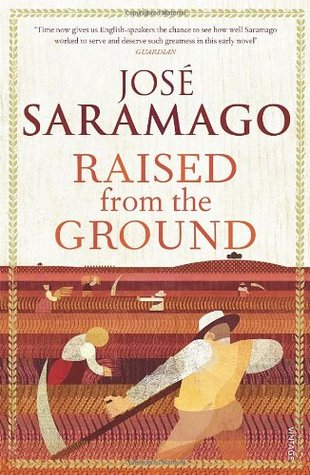
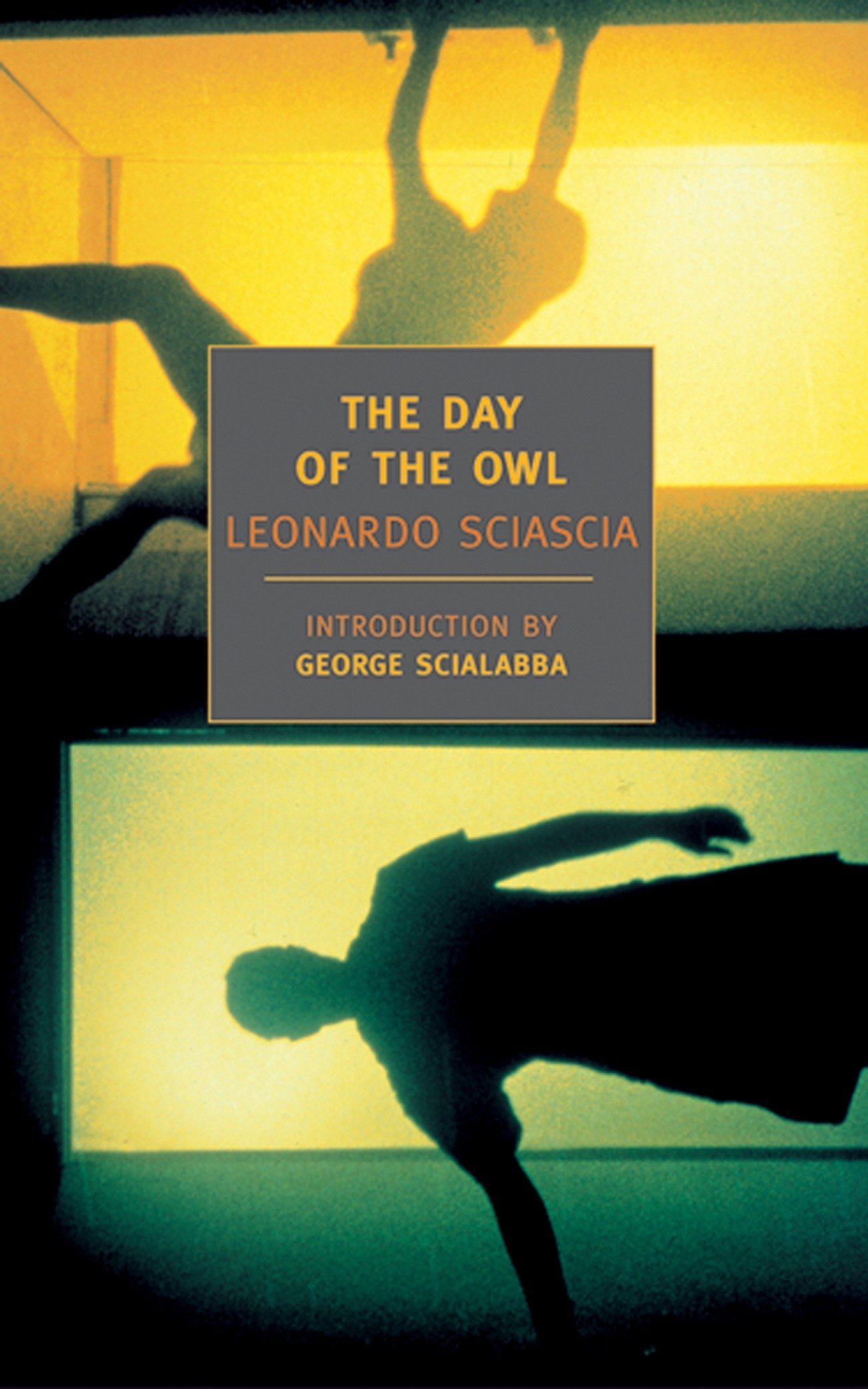

 The Pine-Scented Chronicles
🎃
LikeLiked by 1 person