
Happy Halloween! Happy midweek everyone! How has the year been going for you so far? I hope that the year has been kind to everyone. If not, I hope you will experience a reversal of fortune in the remaining weeks of the year. More importantly, I hope everyone is happy and healthy, in body, mind, and spirit.
With the midweek comes a fresh WWW Wednesday update, my first this year. WWW Wednesday is a bookish meme hosted originally by SAM@TAKING ON A WORLD OF WORDS. The mechanics for WWW Wednesday are quite simple, you just have to answer three questions:
- What are you currently reading?
- What have you finished reading?
- What will you read next?

What are you currently reading?
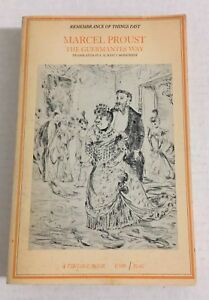
Woah. We are midway through November. How time flies. Still, I find myself in the territory of European literature. My foray into works of European literature brought me to Marcel Proust’s The Guermantes Way. This is the third volume in the French writer’s magnum opus, Remembrance of Things Past/In Search of Lost Time; the second volume in the septet, Within A Budding Grove, was my current read in last week’s WWW Wednesday update. After holding back on reading the novel as I waited to complete all seven books – I am still looking for one book – I am now on a journey to finish reading the novel. However, because of its length, it might take me some time to complete all seven volumes. I just started reading The Guermantes Way. Nevertheless, I am kind of expecting it to be the same as the first book in the septet, Swann’s Way. The book will introduce a set of characters who will impact the life of the book’s anonymous narrator. I will be sharing more of my impressions of the book in this week’s First Impression Friday update.
What have you finished reading?

After a rather slow reading week, I again picked up pace. In the past week, I was able to finish three books, the first of which is the aforementioned Within a Budding Grove by Marcel Proust. To make sure that I keep my momentum going, at least where Remembrance of Things Past/In Search of Lost Time is concerned, I included the novel and The Guermantes Way in my 2023 Beat the Backlist Challenge. As the year is drawing to a close, I am focusing on books in my reading challenges. In essence, I am shooting two birds with one stone.
At the heart of Within a Budding Grove is the anonymous narrator; it is generally accepted amongst literary pundits that the narrator was Proust himself. The narrator was now acquainted with the Swanns, the family at the heart of the first volume of the novel. In being part of their circle, he inevitably became drawn to their daughter, Gilberte. In the first part of the second volume, the narrator’s feelings for Gilberte take a firmer shape. However, her parents were not too fond of the narrator. As fate would have it, the two’s paths diverged. What ensued was the narrator’s relationships with different women. The second part of the novel covers his travel to the seaside town of Balbec with his grandmother and Françoise. It was in Balbec that he befriended members of the Guermantes aristocrat, Robert de Saint-Loup, and of the painter Elstir who we first meet as a foolish young man belonging to Madame Verdurin’s “little clan” in Swann’s Way. The novel sheds light on French society but its focus is the narrator’s sexual and romantic awakening. He ditched the innocent gaze as we see him grow and develop as a person and as a member of society. Again, I was drawn both by the character and his lush description of his experiences and his environment. I can’t wait to read the rest of the novel.

From France, my literary journey next took me to Bulgaria, a part of the world of literature I don’t recall having ventured into. Enter Georgi Gospodinov. Thanks to the International Booker Prize, I came across his novel Time Shelter. I wasn’t originally too keen on the book but when it was announced as the winner, I relented. I wanted to know what the book holds; literary pundits were also singing songs of praise for the book. It seems that Gospodinov is quite a literary star in his native Bulgaria. To cut things short, my interest was piqued.
Thankfully, I was able to obtain a copy of the book. I then resolved to read the book this year, making it part of my foray into European literature. Like Within a Budding Grove, the novel was narrated by an anonymous character who was basically the author himself. One day, he bumped into Gaustine in Vienna. They got acquainted and the narrator soon learned that Gaustine has set up a clinic in Zurich for the elderly who are suffering from Alzheimer’s disease. The clinic was comprised of different floors which represented different decades of Europe’s past. The tailor-fitted rooms were a safe haven for people who wanted to escape the present. The clinic provides comfort from the tediousness of the present by going back to the past. Gaustine’s idea soon spread, to some consequences. Time Shelter is no ordinary novel. It does not conform to the structural conventions of the typical novel. It is, at parts, satirical and philosophical. It was humorous in parts. It also asks big questions related to memory and the past. Do the answers to the chaos of our quotidian lives lie in the past?
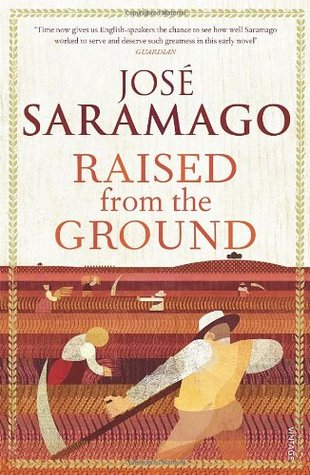
From Eastern Europe, my next read took me to Western Europe, to the Iberian peninsula. It has been some time since I read a book by Nobel Laureate in Literature José Saramago. I have been meaning to read a novel by the Portuguese writer, particularly Raised from the Ground, a book I purchased during the first Big Bad Wolf Sale in Manila back in 2018. As such, I included the book in my 2023 Beat the Backlist challenge. This will provide me no reason to further delay reading the book.
Raised from the Ground was originally published in 1980 and was one of Saramago’s earlier works. The novel tells the story of João Mau-Tempo and his family during the early 20th century. João was born in the Portuguese countryside as the oldest son of Sara and Domingos. Domingos was an abusive husband, prompting his wife to leave him. João then grew up in abject poverty. At a young age, he had to toil the soil in order to earn a living for his mother and siblings. The novel detailed how the poor were often exploited by the rich and the powerful. Calls for reforming the system are often quelled. Meanwhile, changes were sweeping the rest of Portugal. The monarchy was overthrown for a democracy which was soon replaced by dictatorship. We read about how João and his kin navigated this sea of changes. It was palpable, however, that despite the changes in the men in power, the poor remained poor. Historical contexts made me appreciate the novel although I also appreciated the resilience of the characters; the novel, I learned, was inspired by the story of Saramago’s grandfather. Overall, it was a compelling read.
What will you read next?

 The Pine-Scented Chronicles
With these, usually stumped at next read
Currently- Ariadne
Finished- A Tale of Sorcery
Next- (depends, on when I finish my current read)
LikeLike