
Hello, readers! Welcome to another #5OnMyTBR update. The rule is relatively simple. I have to pick five books from my to-be-read pile that fit the week’s theme.
This week’s theme: Short Read

5OnMyTBR is a bookish meme hosted by E. @ Local Bee Hunter’s Nook where you chose five books from your to-be-read pile that fit that week’s theme. If you’d like more info, head over to the announcement post!

Title: Death in Venice
Author: Thomas Mann
Translator (from German): Stanley Appelbaum
Publisher: Dover Publications, Inc.
Publishing Date: 1995
No. of Pages: 62
Synopsis:
One of the most famous literary works of the twentieth century, the novella “Death in Venice” embodies themes that preoccupied Thomas Mann (1875-1955) in much of his work: the duality of art and life, the presence of death and disintegration in the midst of existence, the connection between love and suffering and the conflict between the artist and his inner self. Mann’s handling of these concerns in this story of a middle-aged German writer, torn by his passion for a Polish youth met on a holiday in Venice, resulted in a work of great psychological intensity and tragic power.
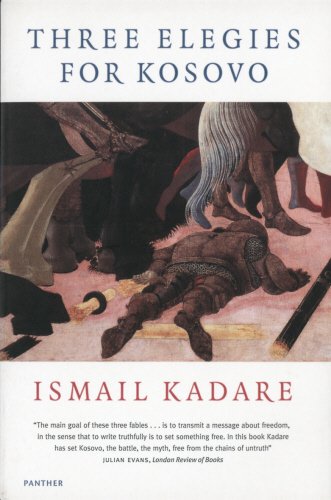
Title: Three Elegies for Kosovo
Author: Ismail Kadare
Translator (from Albanian): Peter Constantine
Publisher: The Harvill Press
Publishing Date: 2000
No. of Pages: 87
Synopsis:
A quarrel that has simmered for six centuries, stemming from a battle that changed the course of history.
28 June 1389, the Field of the Blackbirds. The Christian army – made up of Serbs, Bosnians, Albanians and Romanians – confronts an Ottoman army led by Sultan Mourad. In ten hours the battle is over, and the Muslims possess the field; an outcome that has haunted the vanquished ever since. These legends of betrayal and the symbols of defeat have continued to define the national identities of each race.
28 June 1989, the Serb leader Slobodan Milosevic launches his campaign for a fresh massacre of the Albanians, the majority population of Kosovo.
In three short narratives Kadare evokes that first defining moment in European history, identifying how the agony of the tiny population at the close of the twentieth century is a symptom of the sickness that European civilisation has carried in its bloodstream for six hundred years.
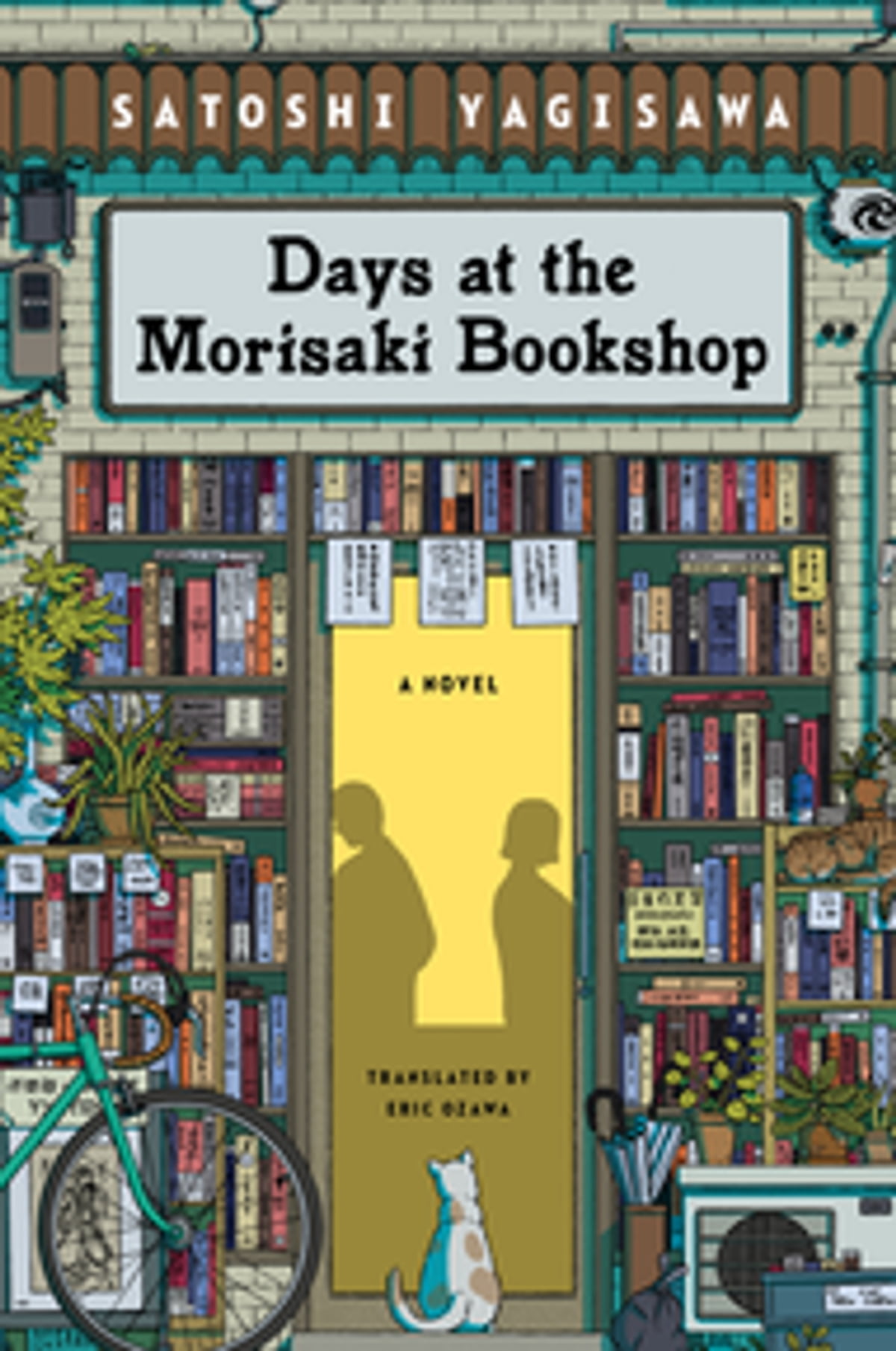
Title: Days at the Morisaki Bookshop
Author: Satoshi Yagisawa
Translator (from Japanese): Eric Ozawa
Publisher: Harper Perennial
Publishing Date: 2023 (2010)
No. of Pages: 147
Synopsis:
Twenty-five-year-old Takako has enjoyed a relatively easy existence – until the day her boyfriend, Hideaki, the man she expected to wed, casually announces he’s been cheating on hear and is marrying the other woman. Suddenly, Takako’s life is in freefall. She loses her job, her friends, and her acquaintances, and spirals into a deep depression. In the depths of her despair, she receives a call from her distant uncle Satoru.
An unusual man who has always pursued something of an unconventional life, especially after his wife, Momoko, left him out of the blue five years earlier, Satoru runs a secondhand bookshop in Jimbocho, Tokyo’s famous book district. Takako once looked down on Satoru’s life; now, she reluctantly accepts his offer of the tiny room above the bookshop rent-free in exchange for helping out at the store. The move is supposed to be temporary, until she can get back on her feet. But in the months that follow, Takako surprises herself when she develops a passion for books, becomes a regular at a local coffee shop where she makes new friends, and eventually meets a young editor from a nearby publishing house who’s going through his own messy breakup.
But just as she begins to find oy again, Hideaki reappears, forcing Takako to rely once again on her uncle, whose own life has begun to unravel. Together, these seeming opposites work to understand each other and themselves as they continue to share the wisdom they’ve gained in the bookshop.

Title: Grief is the Thing With Feathers
Author: Max Porter
Publisher: Graywolf Press
Publishing Date: 2015
No. of Pages: 114
Synopsis:
Here he is, husband and father, scruffy romantic, a shambolic scholar – a man adrift in the wake of his wife’s sudden, accidental death. And there are his two sons, who, like him, struggle in their London flat to face the unbearable sadness that has engulfed them. The father imagines a future of well-meaning visitors and emptiness while the boys wander, safe and unsupervised.
In this moment of violent despair, they are visited by Crow – an antagonist, trickster, goad, protector, therapist, and bay-sitter. This self-described “sentimental bird,” at once wild and tender, who “finds human dull except in grief,” threatens to stay with the wounded family until they no longer need him. As weeks turn to months and the pain of loss lessens with the balm of memories, Crow’s efforts are rewarded and the little unit of three begins to recover: Dad resumes his book about the poet Ted Hughes; the boys get on with it, grow up.
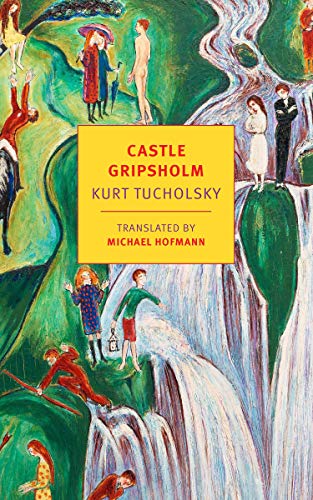
Title: Castle Gripsholm
Author: Kurt Tucholsky
Translator (from German): Michael Hofmann
Publisher: New York Review of Books
Publishing Date: 2019
No. of Pages: 127
Synopsis:
Castle Gripsholm, the best and most beloved work by Kurt Tucholsky, is a short novel about an enchanted summer holiday. It begins with an assignment: Tucholsky’s publisher wants him to write something light and funny, otherwise about whatever Tucholsky wants. A deal is struck and the story is off: about Peter, a writer; his girlfriend, known as the Princess; and a summer vacation far from the hurly-burly of Berlin. Peter and the Princess have rented a small house attached to a historic castle in Sweden, and they have five weeks of long days and white nights at their disposal; five weeks for swimming and walking and sex and talking and visits with Peter’s buddy Karlchen and with Billy, the Princess’s best friend. It is perfect, until they meet a weeping girl fleeing the cruel headmistress of a home for children. The vacationers decide they must free the girl and send her back to her mother in Switzerland, which brings about an encounter with authority that casts a worrying shadow over their radiant summer idyll. Soon they must return to Germany. What kind of fairy tale are they living in?
 The Pine-Scented Chronicles
📖
LikeLike