A Lasting Legacy
In the ambit of Latin American literature, Chilean writer Roberto Bolaño is a titan. Born into a humble lower middle-class home, he rose above his social ranks and conquered his dyslexia to become one of the most recognized names in the ambit of literature. He established an oeuvre that spanned a plethora of genres, from poetry to short stories to novels. While he would be renowned for his novels, it was in poetry that he commenced his literary career, publishing his first poetry collection, Reinventar el amor (Reinventing Love), in 1976. Success, however, was elusive even after he expanded to prose in the early 1990s. While honing his craft, he held a series of low-paying jobs.
His fortune started to look up after the publication of Los Detectives Salvajes in 1998. It was the book that elevated him to literary stardom, giving him his long-awaited breakthrough. It also established his reputation as one of the foremost Latin American novelists of his generation. Los Detectives Salvajes won Bolaño the Rómulo Gallegos Prize, touted as the Spanish-language equivalent of the Booker Prize. As the saying goes, there was no way but up. His works were critically acclaimed. The shift to prose proved a seminal juncture in his literary career. However, while Bolaño was celebrated within Spanish-speaking literary circles, he was relatively unknown by the rest of the world.
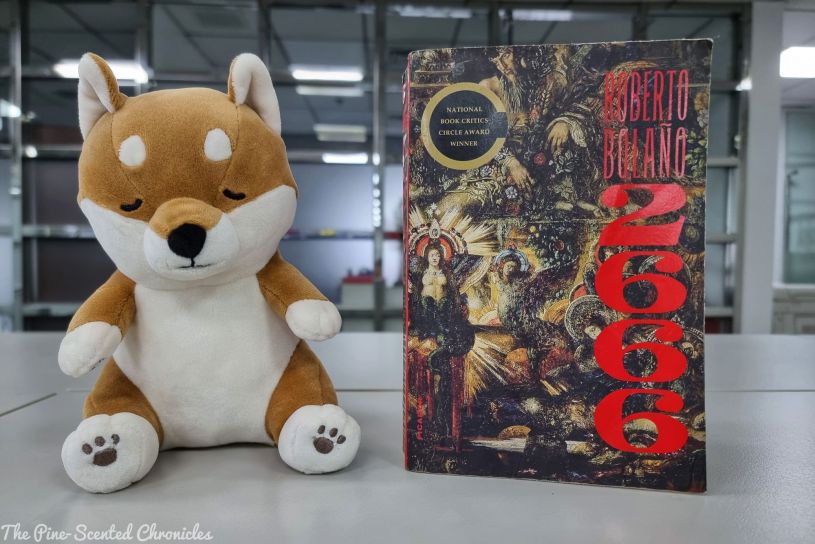
The Anglophone world finally got to learn about the Chilean writer in 2008, with the publication of the English translation of his novel. 2666. It was an immediate and resounding sensation, consolidating Bolaño’s status as a global literary star. It was hailed by many literary pundits and journals as one of the best books of 2008. It also won the National Book Critics Circle Award for Fiction. The success of 2666 paved the way for the translation of his works previously published in Spanish, including Los Detectives Salvajes which was published in English as The Savage Detectives. Both The Savage Detectives and 2666 are seminal tomes of Latin American literature. It was, however, unfortunate that Bolaño was unable to witness how his works became revered across the world; he passed away before the publication of 2666.
“What a sad paradox. Now even bookish pharmacists are afraid to take on the great, imperfect, torrential works, books that blaze a path into the unknown. They choose the perfect exercises of the great masters. Or what amounts to the same thing: they want to watch the great masters spar, but they have no interest in real combat, when the great masters struggle against that something, that something that terrifies us all, that something that cows us and spurs us on, amid blood and mortal wounds and stench.”
~ Roberto Bolaño, 2666
The work that introduced Bolaño and his oeuvre to the rest of the world, 2666 was divided into five parts, with the novel opening with The Part About the Critics. The critics referred to were the French Jean-Claude Pelletier, the Italian Piero Morini, the Spaniard Manuel Espinoza, and the English woman Liz Norton. They came from and grew up in different backgrounds. However, they had a shared interest: the study and pursuit of Benno von Archimboldi, a reclusive German novelist, and his works. It was these shared intellectual pursuits that made their paths intersect through literary symposia and discourses. They soon forged a circle that was both intellectual and social. Their pursuit, however, evolved into an obsession that made them trace Archimboldi’s whereabouts, even contacting his publisher, Mrs. Bubis.
The Part About Amalfitano. A transition took place toward the end of the first part, with the action shifting from Europe to Mexico, a familiar place in Bolaño’s literary landscape; Bolaño spent his youth in Mexico City. Through connections, the literary critics learned that the elusive Archimboldi was last seen in the fictional border city of Santa Teresa which is said to be modeled after Ciudad Juárez. The second part, however, introduced a new character in Oscar Amalfitano, a Chilean professor of philosophy. Along with his young adult daughter Rosa, he arrived at the University of Santa Teresa from Barcelona where he used to teach. The professor singlehandedly raised his daughter after his wife abandoned him and their daughter. As the story moved forward, a growing concern was introduced: the city was being plagued by a string of unsolved femicides.
The Part About Fate. The third part of the novel introduces a new set of characters. Oscar Fate was an American journalist who worked for an African-American-centric magazine in Harlem. He was sent to Santa Teresa to cover a boxing match; this was despite his lack of experience in covering sports events. During the match, he encountered Chucho Flores, a Mexican journalist who informed Fate about the murders happening around Santa Teresa. It immediately piqued Oscar’s interest and even asked his newspaper if he could do a feature on the murders. His newspaper, however, was averse to the idea. This did not stop Oscar from pursuing the leads, getting in touch with Guadalupe, a female journalist covering the murders. A German American named Klaus Haas was the primary suspect.
The Part About the Crimes. The novel’s fourth part was its heftiest and most extensive. In this section, the novel focuses its attention on the unsolved murder spree which spanned from 1993 to 1997. The mutilated bodies of around 100 women were found across the city. There was not a single thread that connected these serial murders as the women were of varying ages – some victims were as young as eleven years old – and social standing. Bolaño shone the proverbial spotlight on these women’s lives and the possible causes of their deaths. Trying to get to the bottom of these murders was Juan de Dios Martinez, a police detective. He was investigating Haas while also investigating the case of a man who was urinating in churches. His investigation of the murders would get derailed when pieces of evidence pointed in a different direction.
“That is, it was the fear that afflicts most citizens who, one fine (or dark) day, choose to make the practice of writing, and especially the practice of fiction writing, an integral part of their lives. Fear of being no good. Also fear of being overlooked. But above all, fear of being no good. Fear that one’s efforts and striving will come to nothing. Fear of the step that leaves no trace. Fear of the forces of chance and nature that wipe away shallow prints. Fear of dining alone and unnoticed. Fear of going unrecognized. Fear of failure and making a spectacle of oneself. But above all, fear of being no good. Fear of forever dwelling in the hell of bad writers.”
~ Roberto Bolaño, 2666
It was palpable that the fourth part of the novel’s heart. It was in this section that the mystery built up further while vividly capturing Bolaño’s fascination with violence that marked the latter years of his career; The Savage Detectives was cast from the same mold. The femicide, however, was no mere literary device. The mysterious serial killing captured the criminality that pervaded Ciudad Juárez in the 1990s when women were kidnapped, raped, and even mutilated. Most of these cases were unsolved, with several ending up as cold cases. Bolaño astutely captured the factors that contributed to the breakdown of law and order. Drug cartels operated behind the scenes. Exacerbating this was the city’s unexpected industrial boom and the wave of migrants who were racing to make it across the border. The institutions tasked to solve these crimes barely functioned as they were undermined by corruption and incompetence.
With its grisly details of the murders, The Part About the Crimes is the dark heart of 2666. It was also propped with details of police procedurals. This gave the novel a different complexion as the novel transformed into a pseudo-crime documentary; after all, the crimes committed, while fictional, were inspired by actual events. Like The Savage Detectives, 2666 is partly experimental in nature and is also a rumination on the very nature of storytelling. As Bolaño has proven in his other work, he managed to successfully blur the lines between fiction and non-fiction while keeping the story novelistic at its core. In straddling both the real and the fictional, Bolaño was essentially crafting his own literary niche.
The Part About the Archimboldi. The novel came full circle in the final section as the reclusive Archimboldi was finally unmasked. The layers of mystery surrounding him were slowly unpeeled, leading to the story’s climax. His real identity was revealed – he was born Hans Reiter in 1920 in Prussia. In a way, Bolaño was deflecting the murders by providing the details about the mysterious character who was touted to be a shoo-in for the Nobel Prize in Literature. The circumstances that led to his eventual hermetical existence and his shift to a career in writing were also revealed. He derived his pen name from an equally obscure Italian painter named Giuseppe Arcimboldo. A final revelation ties the story together, bringing the five fragmented parts to a full circle.
By extension, the novel was an allegory. Not only was it Bolaño’s experiment in storytelling but woven into its lush tapestry was Bolaño’s perception of literature as a whole. He saw through its lack of real order. As such, he pushed the conventions of writing in his works. He was a literary rebel and 2666 was a further testament to this. 2666 was unconventional not only in its structure but also in its execution. It was, at the same time, fragmented and the convergence of a plethora of literary genres such as crime fiction and literary satire. It was erratic. It lacked a robust plot. But it is in this chaos that Bolaño and his works thrived. Through these works, Bolaño was pushing the boundaries of writing and, consequently, the readers’ imagination. Bolaño has no scruples confronting the mundane. This resulted in some of the world’s most revered titles.
“I steal into their dreams. I steal into their most shameful thoughts, I’m in every shiver, every spasm of their souls, I steal into their hearts, I scrutinize their most fundamental beliefs, I scan their irrational impulses, their unspeakable emotions, I sleep in their lungs during the summer and their muscles during the winter, and all of this I do without the least effort, without intending to, without asking or seeking it out, without constraints, driven only by love and devotion.”
~ Roberto Bolaño, 2666
Beyond probing the nature of storytelling and crimes, 2666 cast a net over a vast territory. The machinations of evil reverberated in the darker corners of the novel. The novel also probed into the ironies that persist in the academic world. Mental illness, memory, and the yearning for meaning were also astutely woven into the novel’s rich tapestry. Vis-a-vis mystery and the novel’s forensic elements, the novel explored journalism. There were also undertones of romance and illicit love affairs. Adding more density to the novel were historical details. Apart from the rampant criminality that plagued Santa Teresa, 2666 captured the Eastern Front during the Second World War, a subject rarely captured in literature. 2666, without a doubt, is an unconventional but multilayered and multifaceted literary masterpiece.
Interestingly, as was conveyed in A Note from the Author’s Heirs, Bolaño originally instructed his publisher, Jorge Herralde, to have the book published as a serial, even providing instructions on how they should appear and at what intervals. Bolaño realized that his days were numbered but he wanted to ensure his heirs’ future. Ultimately, to preserve the book’s literary value, his publisher and his friend Jorge Echevarria (who was also designated as his literary executor), had the book published in a single volume. They obtained the acquiescence of Bolaño’s heirs before publishing it in a single volume. This is aligned with Bolaño’s original plan of publishing the book – had his illness not gotten worse, hence, his untimely demise – as a single volume. Going against Bolaño’s wishes has indeed helped preserve the novel’s value even though each of its five parts can act as a standalone novel.
2666 was Roberto Bolaño’s swan song. His last novel consolidated his stranglehold as one of the best Latin American writers of his generation while, at the same time, introducing him to the rest of the world. 2666 was no ordinary novel as it vehemently and unapologetically challenged the conventions of writing. The multilayered novel straddled the thin lines separating fiction and nonfiction. An ordinary writer would have balked at the ambition but Bolaño was no ordinary writer. 2666 was the convergence of crime fiction, detective fiction, literary satire, and even picaresque. It is an ambitious literary masterpiece that pushed the boundaries of both storytelling and the readers’ imagination.
Needless to say, it is not a novel that suits everyone’s tastes. 2666 can be a test of reading stamina that requires the readers’ full attention. Its lyrical and beautiful language seduces the readers; it belies the novel’s darker and heavier elements of evil and murder. With its different elements, the novel is erratic, chaotic, and uneven. Nevertheless, in its complexity, one can find a rewarding literary experience. 2666, without a doubt, is an impressive and massive literary masterpiece deserving of the accolades it has received. It deservedly earned its place in the vaunted halls of literature.
“And yet your shadow isn’t following you anymore. At some point your shadow has quietly slipped away. You pretend you don’t notice, but you have, you’re missing your fucking shadow, though there are plenty of ways to explain it, the angle of the sun, the degree of oblivion induced by the sun beating down on hatless heads, the quantity of alcohol ingested, the movement of something like subterranean tanks of pain, the fear of more contingent things, a disease that begins to become apparent, wounded vanity, the desire just for once in your life to be on time. But the point is, your shadow is lost and you, momentarily, forget it.”
~ Roberto Bolaño, 2666
Book Specs
Author: Roberto Bolaño
Translator (from Spanish): Natasha Wimmer
Publisher: Picador
Publishing Date: September 2009
Number of Pages: 893
Genre: Literary, Mystery, Satire
Synopsis
Three academics on the trail of a reclusive German author; a New York reporter on his first Mexican assignment; a widowed philosopher; a police detective in love with an elusive older woman – these are among the searchers drawn to the border city of Santa Teresa, where over the course of a decade hundred of women have disappeared.
In the words of The Washington Post, “With 2666, Bolaño joins the ambitious overachievers of the twentieth-century novel, those like Proust, Musil, Joyce, Gaddis, Pynchon, Fuentes, and Vollmann, who push the novel far past its conventional size and scope to encompass an entire era, deploying encyclopedic knowledge and stylistic verve to offer a grand if sometimes idiosyncratic, summation of their vulture and the novelist’s place in it. Bolaño has joined the immortals.
About the Author
To learn more about Roberto Bolaño, click here.
 The Pine-Scented Chronicles
🧡
LikeLike