
Happy New Year everyone! We’ve successfully completed a 365-day revolution around the sun. But with every end comes a new beginning. We are provided with 366 blank pages – 2024 is a leap year – upon which to paint new memories. I hope that we will all paint these blank canvases with good and lasting memories, may it be with the people we love or all by ourselves. Thankfully, things are finally looking up after spending nearly three years under a shroud of uncertainty due to the pandemic. I sure hope that the good times keep on rolling.
As has been the tradition in the past few years, I will be kicking off the new year by looking back to the previous year, its hits, and of course, its mishits. It is also an opportunity to take a glimpse of how the coming year is going to shape up. This book wrap-up is a part of a mini-series that will feature the following:
- 2023 Top Eighteen Favorite Books
- 2023 Book Wrap Up
- 2023 Reading Journey by the Numbers
- 2023 20 Most Memorable Book Quotes (Part I)
- 2023 20 Most Memorable Book Quotes (Part II)
- 2023 New Favorite Authors
- 2024 Books I Look Forward To List
- 2024 Top 24 Reading List
- 2024 Beat the Backlist Challenge

Going Above and Beyond
2022 brought me so much joy. Not once did I expect that I would end 2022 with over 100 books completed. Reading 100 books in a year has been a lifetime dream. After repeated failures – the most books I read in a year before 2022 was 93 – I ended up giving up on this dream; it was a reflex action. But just when I least expected it, I was able to pull off what I deemed was impossible for the first time in over a decade of dedicated reading; I ended 2022 with 103 books. was beyond cloud nine when the year ended. I relished the moment because I felt like it was a feat I would never be able to accomplish again. I felt like it was an anomaly.
But then again, life had its pocket of surprises. 2023 came and I was expecting it to be just another ordinary reading year. I was wrong. At the start of the year, I set very modest reading goals because I didn’t want to put too much pressure on myself. After all, I just wanted to take this journey in strides. Further, history shows that reading 100 books in a year is a herculean task that entails a lot of effort. Nevertheless, I was brimming with renewed enthusiasm, opening my 2023 reading journey by catching up on 2022 book releases I was not able to read in 2022. I planned to read most of them toward the end of 2022 but I never quite got around to doing it. This has become a pattern in the past two years.
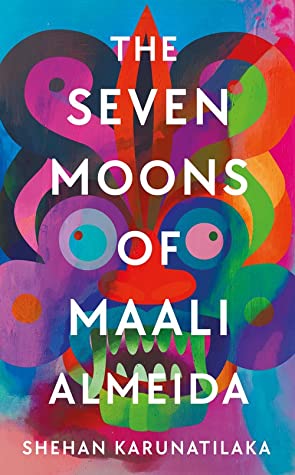
I kicked off my 2023 reading journey with aplomb. As if a foreshadowing, I opened the year with Barbara Kingsolver’s latest novel, Demon Copperhead. It was a grand opening as this coming-of-age novel laced with scathing social commentaries would eventually be announced as a co-winner of the 2023 Pulitzer Prize for Fiction, alongside Hernan Diaz’s Trust. Another award winning novel succeeded Demon Copperhead. Shehan Karunatilaka’s The Seven Moon of Maali Almeida was awarded the 2022 Booker Prize, making it one of my most anticipated reads of 2023. Both books did not fail me. Both of these novels dazzled me, raising my anticipation for what the year has in store for me.



1,000th Novel and Reckoning With Ulysses
Toward the end of my brief reading catchup on 2022 book releases, I slowly set the tone for one of my most groundbreaking moments, at least where my reading is concerned. When the year started, I was cognizant that I would be reading my 1,000th novel. This means that I will be crossing paths with James Joyce and his labyrinthine novel, Ulysses. It is a time for reckoning. This was the reason why I listed the book on my 2023 Top 23 Reading List. The book was also a part of my 2017 Top 20 Reading List. To recap, I was looking forward to reading one of the most popular literary titles back in 2017. I was daunted but I was looking forward to what the book has in store for me. Unfortunately, I ended up giving up on the book midway through. It didn’t make sense to me at that time.
Despite the setback, I resolved to read Ulysses at a latter date, when I have matured as a reader. There is no way I am letting the book hang as part of my did-not-finish list. I promised myself that the book was going to be my 1,000th novel. To prepare me for this second meeting, I read Joyce’s collection of stories, Dubliners. Reading the book helped me in understanding Ulysses although they greatly differ in style and execution. Nevertheless, Dubliners acclimated me to Joyce’s brand of storytelling although the sense of intimidation was still there. Once I loosened up, the story started to wrap itself around me.
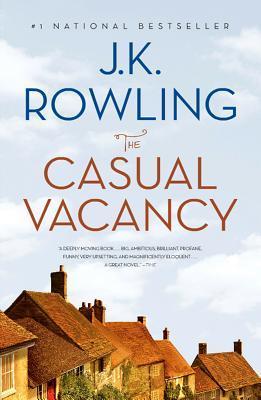
As expected, Ulysses was not an easy read and it requires a lot from the reader; there is a reason that the book earned as many critics – Virginia Woolf among them – as admirers. It is not a book that will suit everyone’s taste. Riding on this wave of confidence, I embarked on a journey across British and Irish literature. The journey reintroduced me to familiar names such as J.K. Rowling, Virginia Woolf, and Iris Murdoch. It has been some time since I last read a work by this female trio. I also read Salman Rushdie’s Victory City, the first novel he published since his stabbing incident in August 2022.
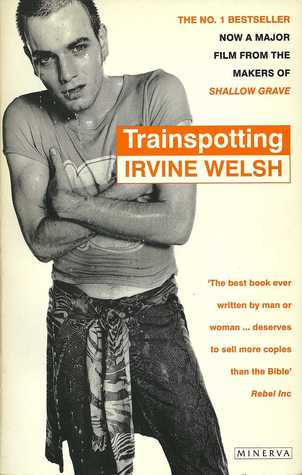
This return to British literature allowed me to finally tick off one of my longstanding resolutions: completing Douglas Adams’ The Hitchhiker’s Guide to the Galaxy series. New-to-me writers who were part of this foray into British and Irish literature were Irvine Welsh (Trainspotting), Graham Greene (Brighton Rock), and Emma Donoghue (Room). Two Booker Prize-winning books – Julian Barnes’ The Sense of an Ending and J. G. Farrell’s The Siege of Krishnapur – further highlighted what has been another memorable trip across a familiar literary territory.





Literary Journey Staples
Japanese literature has certainly become a mainstay of my annual reading journey. After all, it is one of my favorite parts of the vast world of literature. Compared to previous years, I decided to host my Japanese literature month(s) earlier than usual; I usually hold it during my birth month, July. Prompted my first travel to Japan – yes, it was another highlight of my year – I decided to start my foray into Japanese literature in April. It lasted for two months, with April dedicated to Japanese writers whose oeuvre I have yet to explore. Imagine. I feel like I have explored a healthy portion of Japanese literature only to realize that what I have covered is just a small portion of it. Japanese literature is vast, literally.
My first month of venturing across Japanese literature introduced me to Japanese writers who are making a name for themselves, at least on the global stage; they are already renowned in Japan. Among them are Natsuko Imamura (The Woman in the Purple Skirt), Sôsuke Natsukawa (The Cat Who Saved Books), Emi Yagi (If Cats Disappeared from the World), Mizuki Tsujimura (Lonely Castle in the Mirror), and Toshikazu Kawaguchi (Before the Coffee Gets Cold). The old reliable were present as well. I finally read my first novel by Osamu Dazai, No Longer Human. Dazai is lauded as one of the pioneers of the I-novel. I also read my first novel by Sawako Ariyoshi, The Doctor’s Wife, and Morio Kita, The House of Nire. The latter was inspired by Thomas Mann’s Buddenbrooks, another book I am looking forward to.
From new-to-me writers to familiar writers. May brought me back to the familiar literary territories. Kicking off the reading train was a very familiar name, Haruki Murakami. Murakami released a new novel in 2023, 街とその不確かな壁 (Machi to sono futashika na kabe, The City and Its Uncertain Walls); the novel is still to be released in English. This was welcome news in the international book community; I was also among those who were looking forward to the book. While waiting for the English translation of the novel, I read his last two novels – at least those that were translated into English – I have yet to read, Dance Dance Dance and South of the Border, West of the Sun. During the year, I also learned that Mieko Kawakami released a new work in Japanese. I can’t wait for these two books to be released in English.
Beyond Haruki Murakami, who recently celebrated his 75th birthday (January 12), I also read the works of Jun’ichirō Tanizaki (Diary of a Mad Old Man), Yukio Mishima (Forbidden Colors), Shūsaku Endō (Deep River), Keigo Higashino (The Devotion of Suspect X), Yōko Tawada (The Last Children of Tokyo), and Banana Yoshimoto (Asleep). A trip across Japanese literature would not be complete without the works of its three Nobel Laureates in Literature: Yasunari Kawabata (The Old Capital), Kenzaburō Ōe (Death by Water), and Kazuo Ishiguro (We Were Orphans). Each of the books I read during this two-month journey has its own charm. Each book also explores various facets of Japanese culture and history that made me further appreciate the country, its people, and its culture.


Of Translated Literature and Nobel Laureates in Literature
In a way, my foray into Japanese literature molded how the rest of my reading year was going to be. For the first time since I started reading, I read more translated works than works originally written in English. You see when I started tracking all the books I read, including their details, e.g., the original language they were written in, I noted how very “English” my reading list is. At the start of 2023, more than 80% of all the books I read were written in English. As such, I resolved to reduce this glaring dichotomy. Ironically, I started 2023 with three months worth of works purely written in English. It was only when I pivoted toward Japanese literature that I read works that were written in other languages.
It comes as no surprise that outside of English, Japanese topped my list of languages the books I read were originally written in. I concluded the year with 25 books written in Japanese. Spanish follows Japanese, with 10 books; both, by the way, are my personal bests in a year for each language. The surge in Spanish novels was driven by my return to Latin American literature, my first since 2021. This journey includes the works of Chilean writers Roberto Bolaño (2666) and Alejandro Zambra (Chilean Poet). Both novels were my second book by the respective writers. It was Chilean writers who dominated my first foray into Latin American literature. The second time around, however, was dominated by its neighboring Argentina. Sashaying into Argentine literature gave me a glimpse into the country’s history.
Mariana Enríquez’s Our Share of Night and José Mármol’s Marmol were set centuries apart and yet they painted a glaringly familiar portrait. These are portraits disrupted by pandemonium, mainly military and political. They highlighted Argetina’s struggle to come to grips with its destiny. Andrés Neuman (Traveler of the Century) and Pedro Mairal (The Woman from Uruguay) further gave me a flavor of Argentina. My foray into Latin American literature was also a return to the works of Laura Esquivel (The Law of Love), Isabel Allende (The Wind Knows My Name), Maryse Condé (The Gospel According to the New World), and Jorge Amado (Tent of Miracles). There is no leaving Latin American literature without the works of Nobel Laureates in Literature Gabriel García Márquez (The General in His Labyrinth) and Mario Vargas Llosa (Aunt Julia and the Scriptwriter).




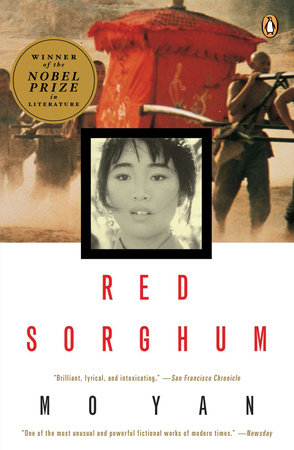
Speaking of the Nobel, I meant to dedicate a month to reading the works of Nobel Laureates in Literature. It did not materialize but I was able to riddle my journey across regional literature with their works. Mo Yan (Red Sorghum) and Orhan Pamuk (Nights of Plague), for instance, bookended my two-month journey across Asian literature. This return to Asian literature was memorable. For one, I read four works of Filipino writers. This is the most books by a Filipino writer I read in a year; I was making up for my lack of Filipino books in 2023. This literary journey also set my personal best for most works by Chinese (5) and Korean writers (3) in a year. I also read most works originally written in Chinese (3) and Korean (3) in a year this year. I also read my first books originally written in Hebrew, Bengali, Tamil, Hiligaynon, Tagalog, and Vietnamese.
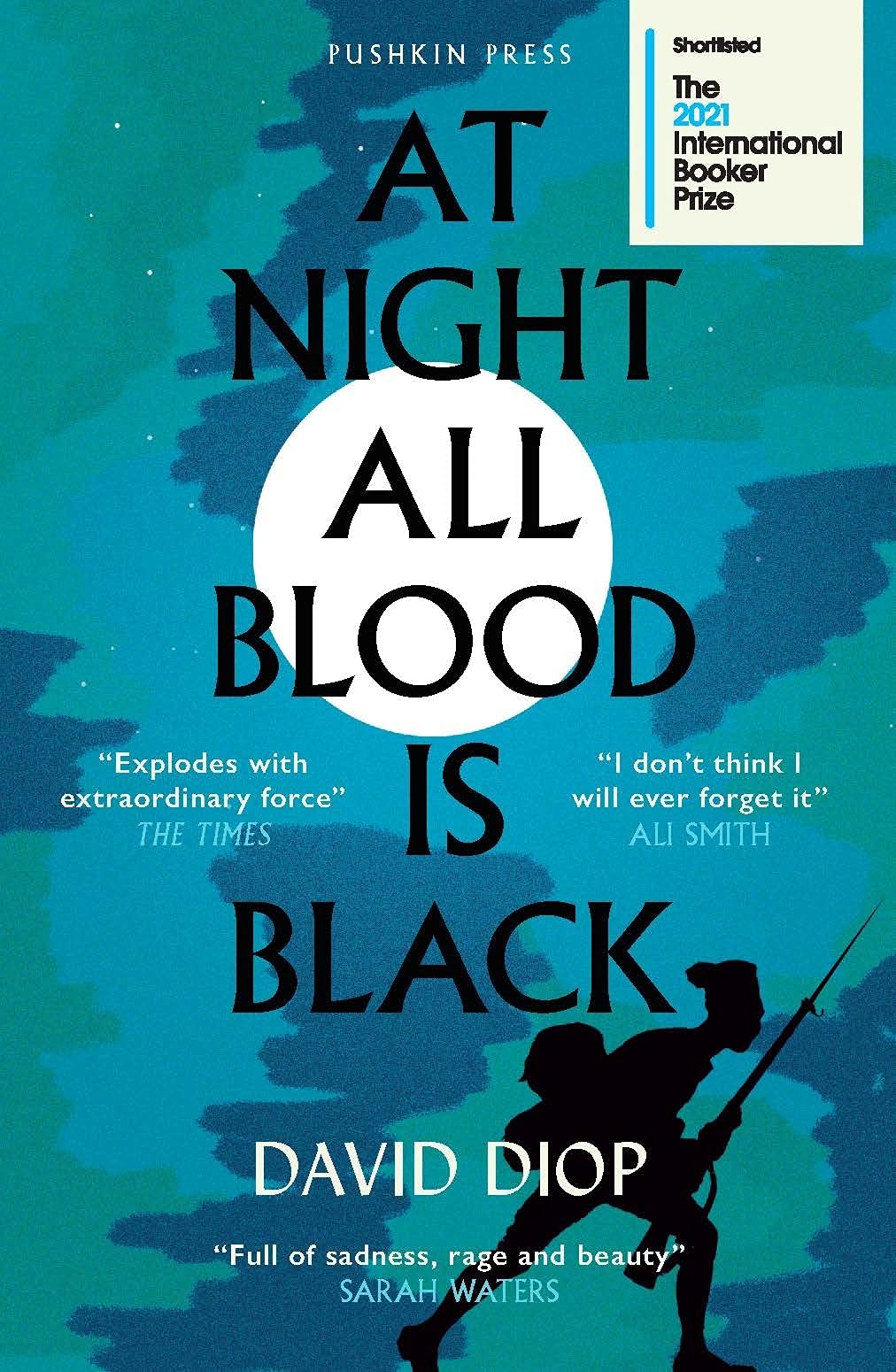
Meanwhile, Naguib Mahfouz (Palace of Desire and Sugar Street), Wole Soyinka (Chronicles from the Land of the Happiest People on Earth), J.M. Coetzee (Elizabeth Costello), Nadine Gordimer (July’s People), and Abdulrazak Gurnah (Paradise) commenced my journey across African literature. I also finally got to read the International Booker Prize-winning book At Night All Blood is Black by David Diop; Diop has Senegalese heritage and the novel chronicled the story of Senegalese Tirailleurs, a corps of colonial infantry in the French Army who were sent to the frontlines of the First World War. These works of African writers gave voice to a diverse continent pulsating with life despite its colonialist past; the same can be said about Latin American and Asian literature.
One of the books I was looking forward to reading was Thomas Mann’s The Magic Mountain. The first time I encountered the book, it immediately spoke to me. There was something about it that captured my imagination. It did take me some time to obtain a copy of the book and read it. It was my first book by the Nobel Laureate in Literature and man was it worth the wait. It went above and beyond my expectations and made me look forward to reading Mann’s other works. It also occupies a special place in my reading list as it is the 1,100th novel I read. A part of my trip across European literature was a return to José Saramago’s body of work. Almost four years since I read my first novel by the Portuguese writer, I read Raised from the Ground. On top of this, I read another International Booker Prize-winning novel, Georgi Gospodinov’s Time Shelter which is also the first novel originally written in Bulgarian that I read.


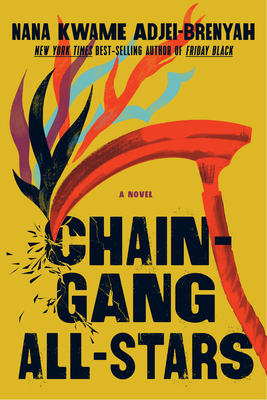


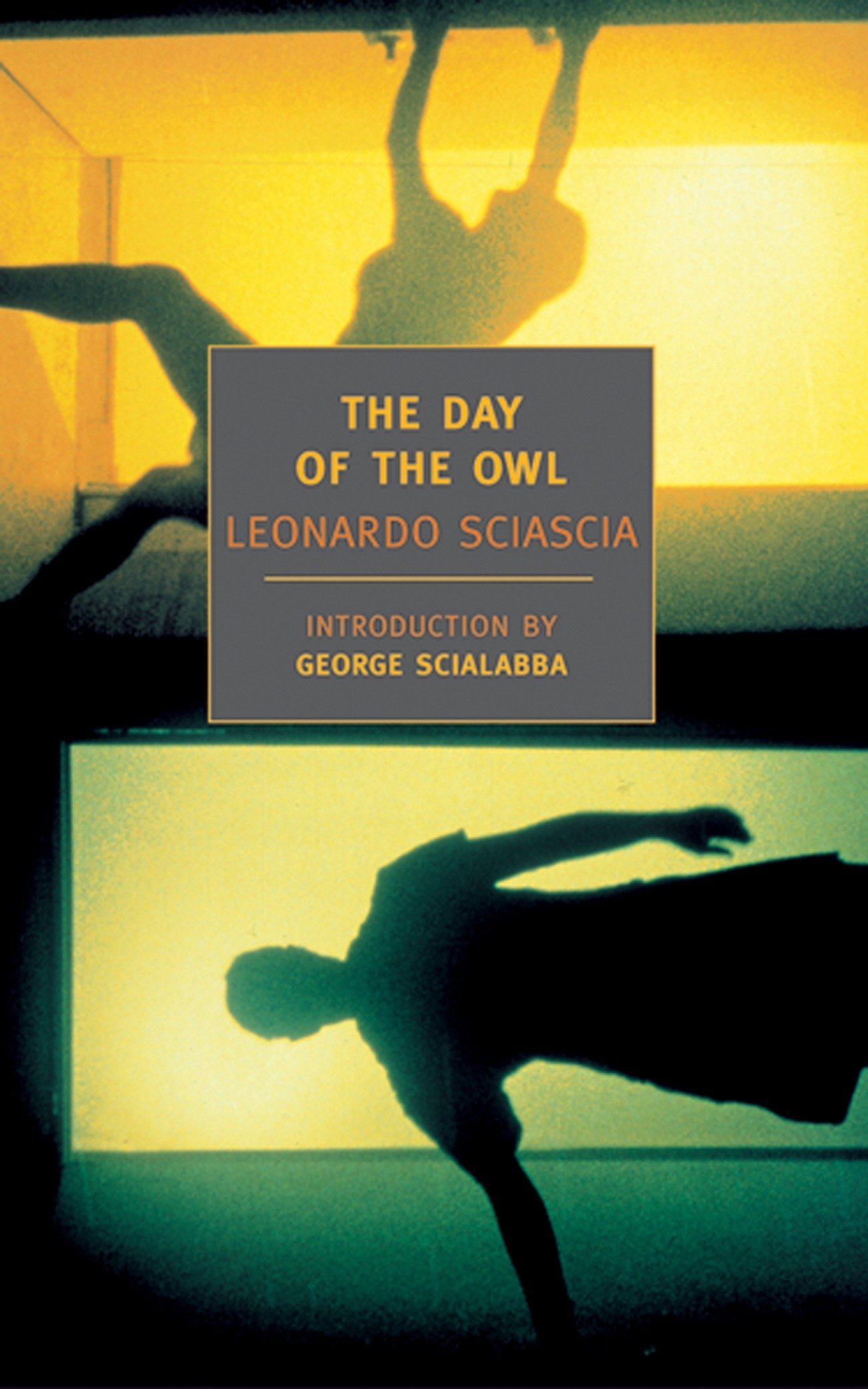
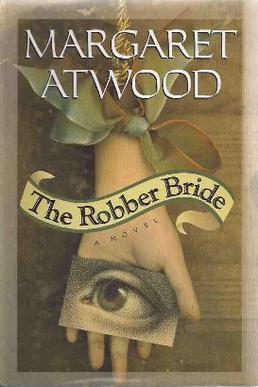
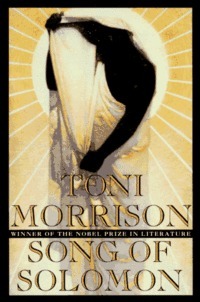
Capping the year were the works of North American writers; well, the only non-American writer on this stretch was Margaret Atwood. I reserved American writers for last as most of the books pending on my reading challenges were books by American writers. I am just glad I was able to complete my two most crucial reading challenges – my 2023 Top 23 Reading List and 2023 Beat the Backlist Challenge – way before the year ended. Atwood’s The Robber Bride was my sixth by the Canadian literary giant but my first since her Booker Prize-winning book The Testaments. Meanwhile, Toni Morrison’s Song of Solomon was my third novel by the Nobel Laureate in Literature. New books closed the year: Ann Napolitano’s Hello Beautiful, Colson Whitehead’s Crook Manifesto, Ann Patchett’s Tom Lake, and Paul Murray’s The Bee Sting.
Looking back at 2023, translated literature dominated my reading list although the gap between translated literature and works originally written in English was slim; the final tally was 68 to 62. Nevertheless, I am still glad of how the year turned out because I am slowly diversifying my reading list. After all, my goal is to learn more about the rest of the world and books are my windows to people and culture that are beyond my proximity. I must also note that the year was not dominated by American writers, interestingly. It was the Japanese writers who dominated 2023, with 26 books I read written by Japanese writers. This number does not include those who recognize other nationalities. Writers from the United Kingdom came in second with 15 books. American writers are third with 14 books.
Beyond the numbers, I am more than satisfied with how my 2023 reading journey shaped up. Several books stood out and astounded me beyond words. There were several pleasant surprises. This is the beauty of reading, I guess. We are never sure of what to expect. We just let the words, the stories, the characters wrap themselves around us. Each book, though not perfect, always has something to offer. They are doors to worlds beyond our imagination. They are our escapes from our tedious quotidian realities.


Milestones and Breakthroughs
2022 was a record-breaking year. And as I have mentioned above, I never imagined I would ever break the records I set in 2022. But I guess, with a little push, the boundaries of possible and impossible can be breached. Life has its own little surprises. I ended the year with 130 books, the most I read in a year. Imagine, reading 100 books in a year was just once a dream I have been working hard on. My repeated failure made me realize that I might never be able to pull it off. But lo and behold! I managed to do so, not only once but twice. Actually, even when I realized I could pull it off, I was still ambivalent. I didn’t cut myself some slack until I was finally able to pull it off. I was beyond ecstatic because this has been one of the reading goals I wanted to achieve badly and many times I fell short.
These books were also written by 123 different writers from various parts of the world. This resets the record I set in 2022; in 2022, I read books written by 97 writers. During the year, I read both my 1,000th (Ulysses) and 1,100th (The Magic Mountain) novels. It still baffles me how more than 10% of all the novels I read were novels I read in 2023. While my reading moved at a pace I did not expect, it came at a price. My writing slowed down. The number of book reviews I published was way below my target. This leaves me with tons of pending book reviews. Oh well. This means that I have to get my act together this year and clear my pending list. I also again failed at completing the ten books in my 2023 Top 10 Books I Look Forward To list; I guess this is nothing new.
2024 in Perspective
The past two years have proven to me that the impossible can be possible. I am more than capable of breaking barriers and breaching new heights. I hope that I get to build more on this reading momentum this 2024, or at least sustain it. For the time being, I am completing all my 2023 wrap-up series. This has become a yearly tradition. On the reading end of it, I am catching up on books released in 2022 and 2023 that I was not able to read in the past year. As for goals and targets, I still want to be very conservative. Apart from reading, other parts of my life are starting to resume. For instance, 2023 has been my most traveled year. I was up and about for most of the year. I guess this is also the reason why I fell beyond my writing quotas.
Speaking of goals, I have several reading goals for this year. As always, I am setting goals that I know are realistic and doable. I have already mentioned hosting a reading month reading entirely the works of Nobel Laureates in Literature. I am hoping that 2024 will finally allow me this one. 2024 is another year that is going to be dominated by translated books and non-American writers. This is to align with my goal of diversifying my reading and read-books lists. To realize this, I am crafting a 2024 Top 24 Reading List that is brimming with works of non-American writers. Japanese Literature will also be a staple, and so will the annual Beat the Backlist Challenge. Dang, I do have quite a hefty number of unread books on my bookshelf but I will try to hold myself from adding more.
There are quite a lot of books I want to read. Why are there too many good books yet too little time? I can only sigh but I need to pick myself up because I want to lose myself in these stories. I must say that the past four years – perhaps the pandemic was also a boost – have been my most prolific reading years. These years were also marked by huge strides and milestones. I am looking forward to breaking even more barriers in 2024. Here’s a toast to an amazing, healthy, and safe 2024! May it be a great year for everyone, may it be in terms of reading or not. May we all achieve all our goals this year. Happy reading!

 The Pine-Scented Chronicles
📖
LikeLike