
Happy Wednesday everyone! Woah. Well, technically today is Thursday; yes, I am late with my WWW Wednesday update, unfortunately. Today is the 29th day of February which means that tomorrow, we will be welcoming the last month of the first quarter of 2024. Oh how time flies. How has your year been so far? I hope that it has been great. I also hope and pray that the rest of the year will be brimming with good news, positive energy, and blessings. I also hope that everyone will be happy and healthy, in body, mind, and spirit.
Anyway, back to the orginal goal of this weekly update. WWW Wednesday is a bookish meme hosted originally by SAM@TAKING ON A WORLD OF WORDS. The mechanics for WWW Wednesday are quite simple, you just have to answer three questions:
- What are you currently reading?
- What have you finished reading?
- What will you read next?

What are you currently reading?

Capping my February reading month are the first three translated works I read this year. Interestingly, these three were all originally written by Korean writers; I am transitioning to Japanese literature in March, hence, this selection of reading. Closing February is Yu Miri’s The End of August. I first encountered the book in mid-2023 when its English translation was finally released to critical acclaim. The book was initially published in Japanese in 2004, making it the perfect book to transition to my foray into Japanese literature; interestingly, Japanese literature was my most-read last year. Moreover, the book is part of my 2024 Top 24 Reading List, making it the third book from the said list that I read.
With over 700 pages, The End of August is a sweeping work of historical fiction that transports the readers to the first half of the 20th century. Set in the Korean city of Miryang during the Japanese occupation, the story commences with the birth of Lee Woo-gun. Witnessing the birth of Woo-gun was his 12-year-old hyung (older brother) Lee Woo-cheol. Woo-cheol is a talented runner who is known beyond his hometown. Winning races left and right, he set his eyes on the 1940 Tokyo Olympics which was, unfortunately, canceled due to the Second World War. There are several layers to the story. First, it is a family saga; it was Yu’s attempt to rebuild her maternal grandfather’s profile. In fact, the writer was occasionally mentioned within the story. It also vividly chronicled the contentious relationships between Japan and Korea. I am midway through the story and I can’t wait to see how it all pans out. On the technical side, I would have rather had the translator translate everything. Korean terms such as eomoni, hyung/hyeong, and abeoji felt a little out of place.
What have you finished reading?

My three-book foray into East Asian literature started with Hwang Bo-Reum’s Welcome to the Hyunam-Dong Bookshop. It was last year when I first encountered the book; last year, there was a spate of novels focused on reading, bookshops, and libraries such as Satoshi Yagisawa’s Days at the Morisaki Bookshop and Michiko Aoyama’s What You Are Looking For Is in the Library. I read these two works of Japanese literature so I guess I am not going to make an exception with Hyunam-Dong Bookshop. Interestingly, this is Hwang’s debut novel and was published in 2022 before it was translated into English in 2023. Moreover, she is a software engineer by profession which I think is important in the plot.
The novel is set in the Seoul neighborhood of Hyunam (dong is Korean for neighborhood). Tired of her highly regimented life as defined by society, Yeongju decided to walk away from it to pursue her lifelong dream: opening her own bookshop. However, it was not as easy as it seemed. Arranging the papers for their opening and ensuring they run smoothly are two different things she must contend with. Helping Yeongju in running the bookshop is Minjun, a recent university graduate who was running the coffee bar, and Yumi, Yeongju’s best friend. What Yeongju did not expect was that the bookshop would eventually turn into a hub of the community. It was there that different personalities converged, among them a mother who was more known as her child’s mother rather than by her name, an avid book reader who reads more books than Yeongju, and an exhausted corporate slave. Each character gave the story different complexions. While it is a reminder of the wonders and pleasures of reading and books, it is also a subtle and astute examination of the tediousness of our times and the waning interest in pursuing our passions. Overall, Welcome to the Hyunam-Dong Bookshop is a compelling read.
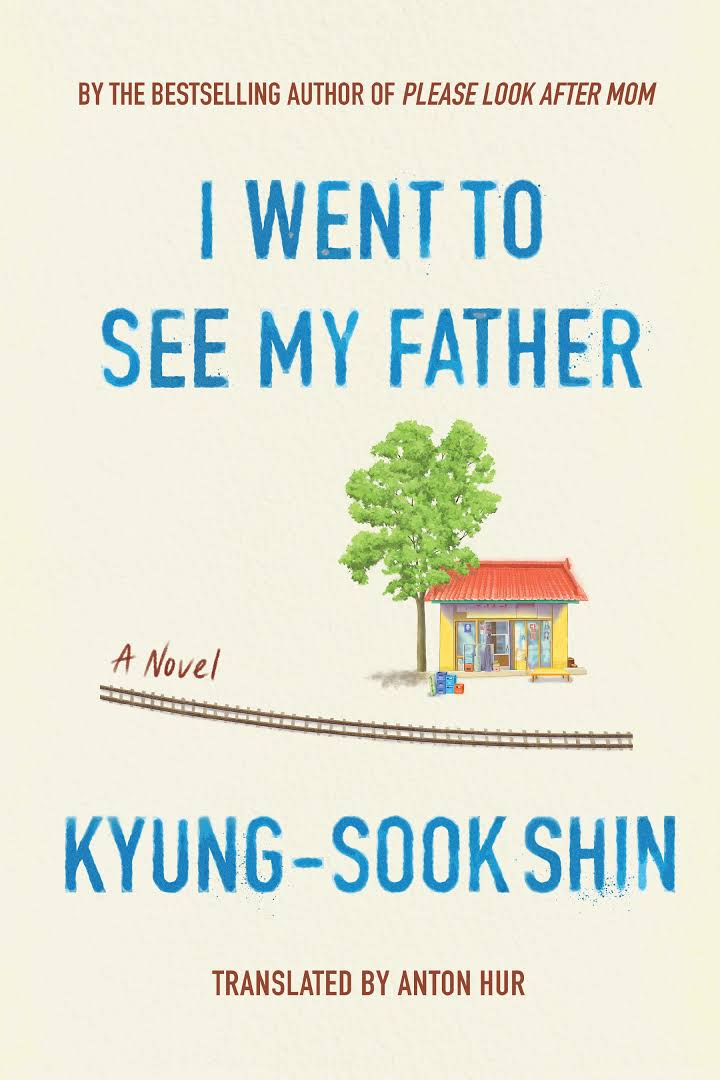
From an unfamiliar writer to a not-so-new-to-me writer. It was back in 2018 when I first encountered Kyung-Sook Shin. Her award-winning novel Please Look After Mom was ubiquitous. It wasn’t long before I was persuaded to take a chance on the book. Although I was not totally impressed, I was still riveted by the story and the examination of the dynamics of Asian parents and their adult children. It seems that it is this very same angle that Shin was going after when she published I Went to See My Father. It is, in a way, a companion read to Please Look After Mom.
The story was narrated by Hon (or Honnie as her father would fondly to her). She is already in her sixties and is the fourth born and the oldest daughter born to a family of farmers living in the South Korean countryside. Due to her mother’s hospital appointment in Seoul, Hon was prompted to stay with his father in her childhood home which was now just occupied by their parents; they were six siblings. It would have been an ordinary visit but Hon was still grieving the death of her daughter two years ago; she perished in an accident. However, during her quick stay with her father, nostalgia prompted her to revisit her memories of her father. Is he the strong man she built in her imagination? As she walked the halls of her childhood home and looked after her father – he suffered from insomnia and occasional bouts of sleep talking and dementia – Hon was unveiling new revelations. In the tradition of Please Look After Mom, I Went to See My Father is a moving story that examines our often-complicated relationships with our parents who, in their stoicism, silently work hard to ensure that their family survives. However, this facade belies the pains they had to go through.
What will you read next?

 The Pine-Scented Chronicles