
How time flies! While January, most say, stretched too long, February felt like it passed us by like a breeze. It didn’t even give us time to catch our breath. Nevertheless, I hope that the first two months of the year have been kind to everyone and that everything is going as planned. February came with its own stresses but I am glad we were all able to survive the first two months of the year. I hope that the rest of the year will be brimming with good news, blessings, and victories for each and every one of us. I hope 2024 will be a good one. More importantly, it is my fervent wish that everyone will be happy and healthy, in body, mind, and spirit.
Before I can dive into March, let me flash back and reflect on how my February reading journey unfolded. Essentially, February was an extension of my January reading month. In the past two months, I have been reading books published during the current decade. I have quite a backlog from these years. In the past few years, I have tried to devote more time to reading new books, i.e. books published in the same year. However, it is not easy to take the backlist reader from me resulting in the piling up of recently published books I have yet to read. To decongest this, I resolved to read them to kick off my 2024 reading year. So far, this reading catch-up has been a memorable experience as it took me to various points of the world. Without more ado, here is a peek into how my February reading journey shaped up. Happy reading!

The Deluge by Stephen Markley
Kicking off my February reading journey is my longest read, so far, this year. At 880 pages long, Stephen Markley’s The Deluge was a book I was not planning to read. I had no iota about who Markley was nor had I encountered his works until recently when his latest novel, The Deluge, was cited by several prestigious literary pundits and publications as one of the best reads of 2023. Markley’s sophomore novel is a thought-provoking literary masterpiece about one of our growing concerns: climate change. It is ambitious in scope, covering subjects a wide array of political, social, and ecological subjects. It has a grim vision of the future and is unsparing in its examination of the forces that propel the world’s descent into an inevitable pandemonium. There was already a foreshadowing of how Markley envisions the future should we fail to act urgently. At the start of the novel, Markley mentioned Cormac McCarthy’s The Road, a Pulitzer Prize-winning book that also provided a grim portrait of the future. The Deluge, however, does not hold all the solutions for this growing concern as Markley himself is not a scientist. Nevertheless, the book is a powerful reminder that climate change is a global concern that requires collective action. Lest we forget, it is our future that is at stake. Should we fail to act immediately, Markley’s grim vision is just a matter of when.

I Was the President’s Mistress!! by Miguel Syjuco
Like how I have been trying to read more new books, I have also been expanding my foray into Philippine literature with 2023 being my most productive reading year to date; I read four works written by Filipino writers. I am starting my foray earlier this year, with Miguel Syjuco’s I Was the President’s Mistress!!, a book that immediately grabbed my attention upon its release in 2022. I Was the President’s Mistress!! is palpably a satire that came in the form of interview transcripts. Props for the innovation. The titular President’s Mistress was Nova Vita. After years in the limelight, she wanted to lead a peaceful life but her world was turned upside down when it was revealed that she was the president’s mistress. To safeguard her own interest, she gave a no-holds-barred interview with Syjuco. At first, the intrigue worked. As someone familiar with the Philippine political landscape, I immediately saw through the smokescreen, if you can call it that because Syjuco did not mask who or what he was referencing. However, the story got waylaid when it started to focus on Vita’s affairs when she was younger. Moreover, her running for political position felt out-of-place and out-of-character. It does not align with what she established in the earlier parts of the story. The story had a lot of potential but Syjuco started losing the plot. .

The Love Songs of W.E.B. Du Bois by Honorée Fanonne Jeffers
After Stephen Markley’s The Deluge, my next longest read is American poet Honorée Fanonne Jeffers’ The Love Songs of W.E.B. Du Bois which I first encountered shortly after it was released in 2021. It piqued my interest after it was listed by many literary pundits and publications as one of the best reads of the year. Jeffers’ debut novel follows two major storylines. The story opens in the past, in a Native American settlement called Creek where the lives of Native Americans intersected with the lives of enslaved Africans; both were brutalized and exploited by European traders and colonizers. As the story moved forward, Creek started losing its Native American heritage as it transformed into a plantation and eventually became Chicasetta, a fictional town in Georgia. It is from this town that the mother side of Ailey Pearl Garfield, the book’s main character, traces its provenance. We first met Ailey when she was three years old. The story then charts her growth and development, learning to navigate the complicated world. The two major storylines eventually merge, with the past chronicling the plight of African Americans and their journey toward liberty and desegregation. Meanwhile, Ailey’s coming-of-age story portrays their current plights, including racism and discrimination. Overall, The Love Songs of W.E.B. Du Bois is an evocative literary masterpiece and is easily one of my favorite reads this year.

The Sentence by Louise Erdrich
It was in 2016 or 2017 when I was able to obtain one of Louise Erdrich’s works. I have yet to read the book as it was her Pulitzer Prize-winning novel, The Night Watchman that I read first. Her second novel I read,, The Sentence, was nominated for the Women’s Prize for Fiction. I guess this convinced me to give the book a chance; The Night Watchman left me wanting more. The Sentence was narrated by Tookie, a Native American woman – Erdrich is renowned for giving voice to Native Americans – living in Minnesota. When she was in her 30s, Tookie got involved in the theft of the body of Budgie, her friend’s lover. The body was taped with drugs, resulting in Tookie’s arrest. She was sentenced to 60 years in prison but through the assistance of a reservation lawyer, her sentence was cut to seven years. Following her release, she found a job at Birchbark Books; her reformed life was dominated by books. The Sentence is a book about books, with several writers and books referenced in the book. In a way, the book’s title pertains to two things at once: a literary sentence and a prison sentence. The novel also captured the recent pandemic and how it altered our lives. It was also rife with social commentaries on the persisting oppression of both Native and African Americans. The Sentence, with elements of magic, is a vivid take on the times we are living in and also of the magic books hold.

When We Were Birds by Ayanna Lloyd Banwo
From North America, my literary journey next took me to the Caribbean for my first venture into Latin American literature this year. It was in 2022 when I first encountered Ayanna Lloyd Banwo’s When We Were Birds. The title immediately piqued my interest; the book’s cover also looked interesting. Set in Banwo’s native Trinidad and Tobago, When We Were Birds was the story of two unlikely individuals. Yejide St Bernard had the misfortune, or perhaps not, of being born into a family with a long line of women who are destined to commune with the dead. Despite her contentious relationship with her mother, Yejide reluctantly took over the role on the eve of her mother Petronella’s death. It was the dead that would forge Yejide’s path with Emmanuel Darwin’s path. From the countryside, Darwin moved to the fictional city of Port Angeles, a place that “could swallow a man whole” his mother cautioned him, to earn money to buy medicine for his sick mother. Ironically the only job he was able to find was at Fidelis, a vast cemetery; their Rastafari faith disallows them from coming into contact with the dead. It was at Fidelis where Yejide and Emmanuel crossed paths under unusual circumstances. Overall, When We Were Birds is a riveting ghost story, love story, and mystery.

Thrust by Lidia Yuknavitch
When I first encountered Lidia Yuknavitch’s Thrust, I was reluctant to read the book although it came in highly recommended by fellow readers. It was only toward the end of the year that I relented after it was listed by several literary publications as one of the best reads of the year. At the heart of the story was Laisvė, which, in Lithuanian, means freedom. Born in the latter part of the 21st century – the story commenced in 2085 – she lost her brother and mother when she was young. This left her in the care of her grieving father, Aster. Together, they lived in The Brook, a remnant of what was once the bustling Big Apple. Surrounding The Brook are big walls that protect it from the rising sea waters; climate change has drastically altered the global landscape. Meanwhile, Laisvė was no ordinary child as she possessed the special ability of being able to travel across time by water. She ferried unusual objects of great significance, delivering them to their rightful owners, to alter the course of their personal history. Her mission made her cross paths with artists, accused murderers, and even the children of dictators. As the story toggles between the future and the past, we read about a society that is on the brink of collapse. In a way, Thrust is a continuation of my foray into dystopian literature which started with Stephen Markley’s The Deluge. Both books are thought-provoking with urgent messages.

Hard by a Great Forest by Leo Vardiashvili
At the start of the year, as has been customary, I have listed ten books to be released during that year that I am looking forward to. Among the titles that immediately grabbed my attention was Leo Vardishvili’s Hard By A Great Forest. It was a no-brainer for me to include the Georgia-born writer’s debut novel. Hard by a Great Forest follows Saba as he traces the trail left behind by his father Irakli and older brother Sandro who both disappeared in Georgia. Two decades before, when Georgia was gripped by tumult, Saba, Sandro, and Irakli fled to England; it was the years immediately following Georgia’s declaration of independence from the Soviet Union. They left behind the matriarch promising that they would one day pay for her safe travel from Georgia to England. It was easier said than done. The matriarch passed away. The patriarch was haunted by the past, prompting him to return almost two decades later. Through Saba’s adventures and misadventures, Vardiashvili painted an evocative portrait of a country reeling from the consequences of war that destabilized it for decades. Saba’s quest doubles as a documentary of how wars, sometimes Georgians against Georgians, indelibly altered the nation’s landscape. the novel is about loss, the refugee experience, and both the survivors and those who were not able to survive. While it was brimming with references to fairy tales, Hard by a Great Forest is far from a fairy tale. Nevertheless, it beacons with a hopeful message.

Velvet Was the Night by Silvia Moreno-Garcia
It was during the pandemic that I learned about Mexican writer Silvia Moreno-Garcia. Her novels were everywhere; I read two of her novels: Gods of Jade and Shadow, a book I liked because of its mythological elements; and Mexican Gothic which got comparisons with Daphne Du Maurier’s Rebecca. Meanwhile, Velvet Was the Night was recommended by former US President Barack Obama in his 2022 Summer Reading List. Like Gods of Jade and Shadow, Velvet Was the Night is a work of historical fiction. However, Velvet Was the Night has a more straightforward narrative, and is devoid of the fantasy that the other two books I read had. The novel is set in early 1970s Mexico City. Various student protests were gripping different parts of the country. This was driven by the forced disappearance of various individuals by the government. Political mayhem plagued the capital city. The novel introduces Maite, a secretary working at a prestigious law firm, a world detached from the chaos brewing outside. Meanwhile, Elvis was a young criminal for hire working under El Mago. He was assigned to tail Leonora, a young woman who recently became Maite’s neighbor. All these strands were carefully woven together by Moreno-Garcia to depict a pivotal period in modern Mexico’s history. Velvet Was the Night was a testament to Moreno-Garcia’s versatility as a storyteller.

Welcome to the Hyunam-dong Bookshop by Hwang Bo-Reum
After reading books originally written in English, I finally had my first translated works. The first of which was Hwang Bo-Reum’s Welcome to the Hyunam-Dong Bookshop, a book I first encountered last year. This is Hwang’s debut novel and was published in 2022 before it was translated into English in 2023. Moreover, she is a software engineer by profession. The novel is set in the titular Seoul neighborhood of Hyunam. It charted the fortunes of Yeongju, a woman at the crossroads. Tired of her highly regimented life as defined by society, she decided to walk away from her old life to pursue her lifelong dream: managing her own bookshop. Opening a business, however, comes with its own set of challenges. Helping came in the form of barista Minjun, a recent university graduate still figuring out how to navigate the world of adults, from and roaster Yumi, Yeongju’s best friend. Each of these characters had their own concerns. Meanwhile, the quaint bookshop slowly turned into a hub of the community. Different personalities converged there, among them a mother defined by her role, an avid book reader socially detached from the rest of the world, and an exhausted corporate slave. While Welcome to the Hyunam-Dong Bookshop is a reminder of the wonders and pleasures of reading and books, it is also a subtle and astute examination of the tediousness of our times and the waning interest in pursuing our passions.
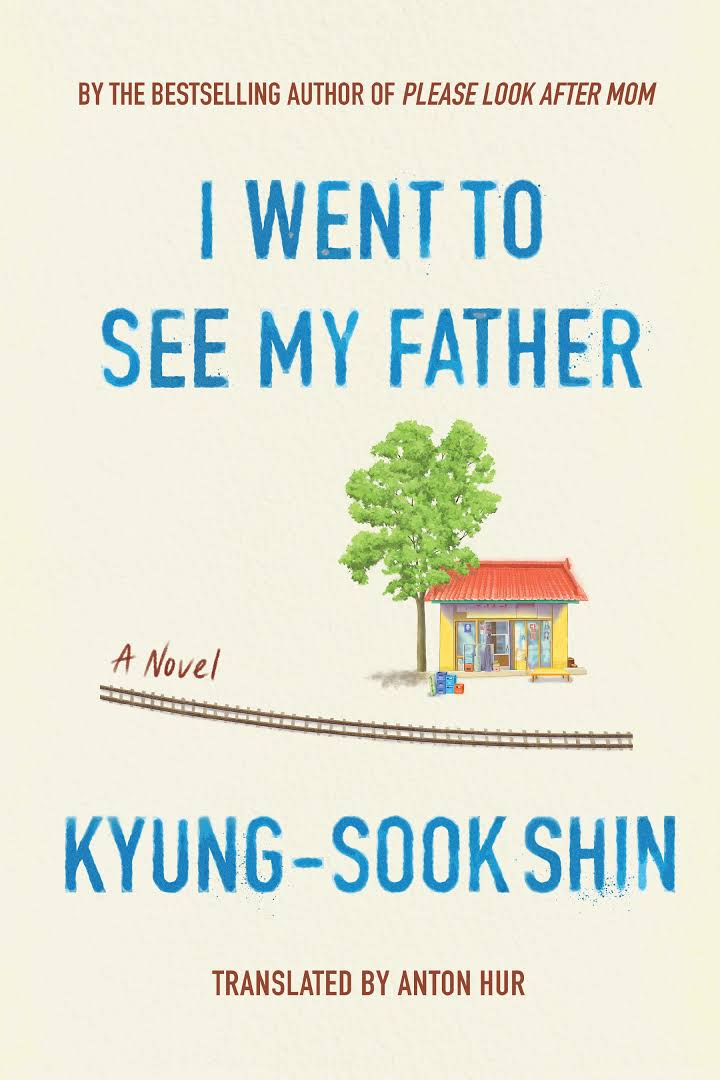
I Went to See My Father by Kyung-Sook Shin
Another Korean writer who has recently been gaining global recognition is Kyung-Sook Shin who I first encountered in 2018 when her award-winning novel Please Look After Mom was ubiquitous. Although I was not totally impressed, I was still riveted by the examination of the dynamics of Asian families. It is this same angle that Shin went after when she published I Went to See My Father. It is, in a way, a companion read to Please Look After Mom. The story was narrated by Hon (or Honnie as her father would fondly to her). Already in her sixties, she is the fourth child and the oldest daughter born to a family of farmers living in the South Korean countryside. Her mother’s hospital appointment in Seoul prompted Hon to stay with her father in her childhood home. It was no ordinary visit. Hon, grieving the death of her daughter two years ago, was swept by nostalgia upon returning home. This prompted her to revisit her memories of her father. As she walked the halls of her childhood home and looked after her father – he suffered from insomnia and occasional bouts of sleep talking and even dementia – Hon was seeing her father in a new light. In the tradition of Please Look After Mom, I Went to See My Father is a moving story that examines our often-complicated relationships with our parents who, in their stoicism, silently work hard to ensure that their family survives.

The End of August by Yu Miri
Capping my February reading month is another work of a Korean writer. However, Yu Miri’s The End of August was originally published in Japanese. It was midway through 2023 when I first came across the novel; it was originally published in 2004 but was translated only in 2023 following the success of the translation of Miri’s Tokyo Ueno Station. In The End of August, we meet present-day Yu Miri who was about to participate in a marathon. To help her, she enlisted the help of three mudangs to conduct a shamanistic ritual to get in touch with the spirit of her deceased maternal grandfather, Lee Woo-cheol. The book then transports the readers to the first half of the 20th century. The Korean peninsula was occupied by the Japanese. Woo-cheol, meanwhile, has gained recognition for his running talent. Together with his younger brother, Woo-gun, he trained for the 1940 Tokyo Olympics. Unfortunately, the 1940 Olympics was canceled due to the Second World War. In the background, we read about the colonial period. The Korean identity was being muddled by the Japanese. The novel is rich in historical context but the story of Namiko particularly piqued my interest. Like Woo-cheol, she was from Miryang and even watched the brothers train. Unfortunately, she was taken by the Japanese and turned into a comfort woman. Overall, it was a compelling read with different elements that did not always meld together.
Reading Challenge Recaps
- My 2024 Top 24 Reading List: 3/24
- 2023 Beat The Backlist: 0/20; 21/60
- 2024 Books I Look Forward To List: 1/10
- Goodreads 2024 Reading Challenge: 22/80
- 1,001 Books You Must Read Before You Die: 0/20
- New Books Challenge: 1/15
- Translated Literature: 3/40
Book Reviews Published in February
- Book Review # 480: The Bee Sting
- Book Review # 481: Prophet Song
- Book Review # 482: Dust Child
- Book Review # 483: The House of Doors
- Book Review # 484: Crook Manifesto
- Book Review # 485: The Deluge
- Book Review # 486: Family Lore
- Book Review # 487: Hard by a Great Forest
- Book Review # 488: Yonder
- Book Review # 489: The Candy House
Following a very slow month – at least where writing is concerned – I was able to gather steam and create some sort of momentum in February. I ended the month with a total of ten book reviews published. This is the most I published in a month since April and May 2023 when I published at least nine book reviews each. This also marks the first time since July 2022 that I was able to publish at least ten book reviews. So yay for that! However, half of the reviews I published were of books I read in 2024. This means I still have a lot of catching up to do. In fact, there are still about three books I read in January 2023 that I have yet to review. I am crossing my fingers that I get to complete all of them this March. As always, my mantra is still to take it one step at a time.
For March, I originally planned to hold a Japanese literature month because of my impending travel to the Land of the Rising Sun later this month. However, I finally decided to dedicate it to the works of female writers. This is to align with the celebration of Women’s History Month and International Women’s Day on March 8. I am already ironing out the details but one thing is for sure, I will be focusing on books in my ongoing reading challenges. Among the books I am looking at include Isabel Allende’s Of Love and Shadows, Joyce Carol Oates’ Them, Marga Ortigas’ The House on Calle Sombra, Eleanor Catton’s The Luminaries, and Marie Vieux-Chauvet’s Dance on the Volcano.
How about you fellow reader? How is your own reading journey going? I hope you enjoyed the books you have read. For now, have a great day. As always, do keep safe, and happy reading everyone!
 The Pine-Scented Chronicles