
Happy Wednesday everyone! How has your year been so far? I hope that it has been great. I also hope and pray that the rest of the year will be brimming with good news, positive energy, and blessings. I also hope that everyone will be happy and healthy, in body, mind, and spirit.
Wednesdays also mean WWW Wednesday updates. WWW Wednesday is a bookish meme hosted originally by SAM@TAKING ON A WORLD OF WORDS. The mechanics for WWW Wednesday are quite simple, you just have to answer three questions:
- What are you currently reading?
- What have you finished reading?
- What will you read next?

What are you currently reading?
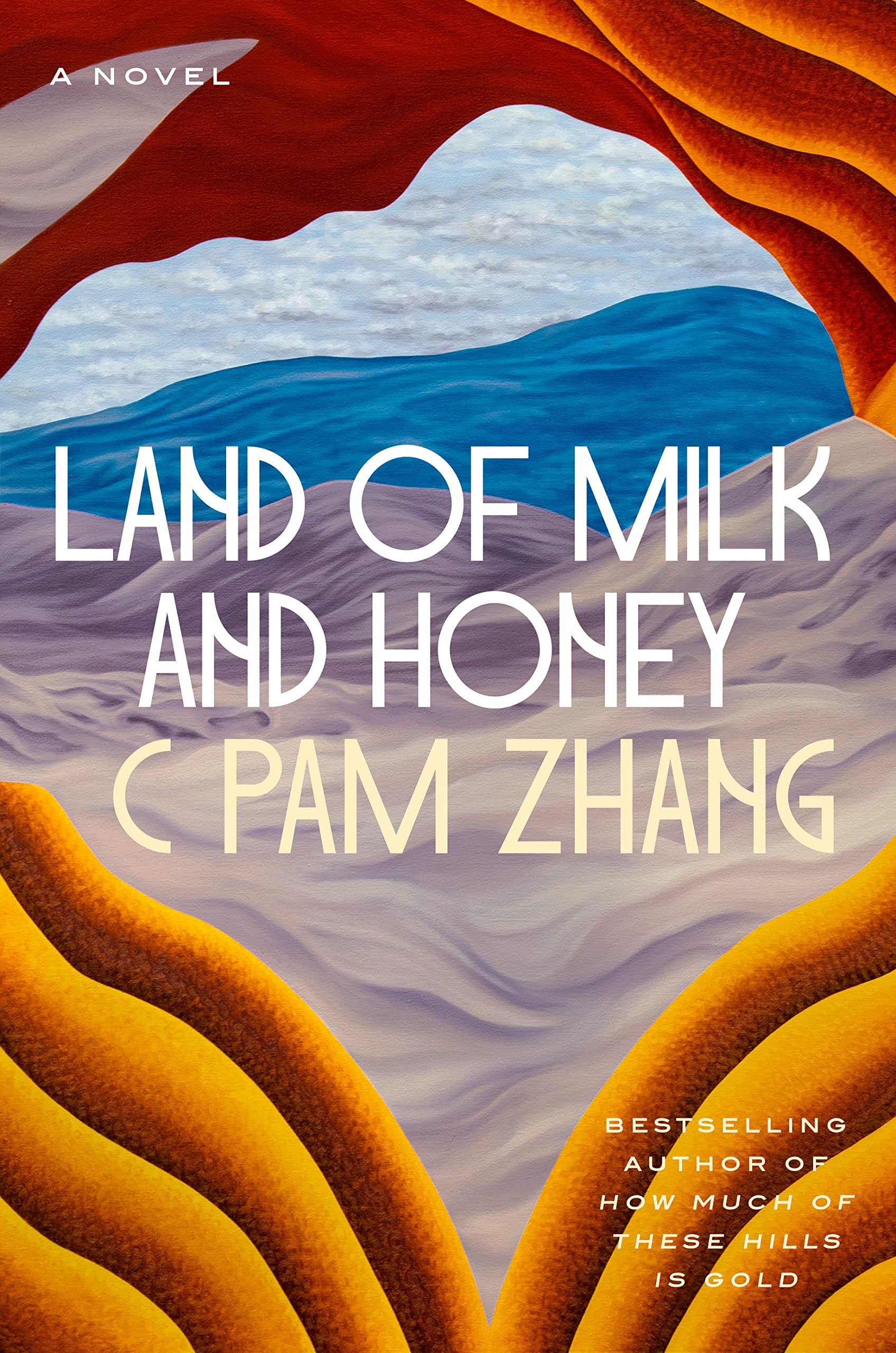
I originally planned to read works of Japanese literature this March in light of my planned travel to the Land of Rising Sun later this month. However, I decided to take on a different path. Instead, I have resolved to read the works of female writers. This is in line with the month’s theme: March is Women’s History Month. Moreover, March 8 is International Women’s Day. It just so happens that the last four books I read in February were written by women, including my first three translated books this year. I will be building on this momentum this March. This foray into works of female writers brought me to C Pam Zhang’s latest novel, Land of Milk and Honey. I loved her debut novel, How Much of These Hills Is Gold so when I learned about her latest novel, I was ecstatic.
I was actually hoping to obtain a copy of the book last year. However, the delivery of the book was delayed. The ending, I only got to read it this year. What piqued my interest about Zhang’s sophomore novel is that it has quite a different theme. Or so at least from what I understand of the synopsis. You see, while her debut novel transports the readers to the past, her latest novel transports the readers to the future. This is, without design, a continuation of my foray into works of dystopian fiction this year; I already read Stephen Markley’s The Refuge and Lidia Yuknavitch’s Thrust. However, I can also sense that Land of Milk and Honey deals with the same themes that Zhang’s debut novel tackled. It is still too early to tell as I just started reading the book. Should I not be able to finish it on or before Friday, I will be sharing more of my insights in this week’s First Impression Friday update.
What have you finished reading?

I closed my February reading journey with my first work originally written in Japanese: Yu Miri’s The End of August. I just realized how funny it is that I ended February with a book referring to a different month. Anyway, it was midway through 2023 when I heard about the book. When I encountered the book during one of my “random” bookstore trips, I purchased it without ado. I even made it part of my 2024 Top 24 Reading List, making it the third book from the said list that I read so far. While researching the book, I also learned that Miri was Korean and that she gained global recognition with her first translated novel, Tokyo Ueno Station, another ubiquitous book.
From what I can surmise, the success of Tokyo Ueno Station led to the renewed interest in Miri’s oeuvre, hence the translation of The End of August, a book that was originally published in 2004. In The End of August, we meet present-day Yu Miri. About to participate in a marathon, she enlisted the help of three mudangs to conduct a shamanistic ritual to get in touch with the spirit of her deceased maternal grandfather, Lee Woo-cheol. The book then transports the readers to the first half of the 20th century. The Korean peninsula was occupied by the Japanese. Woo-cheol was a talented runner (and lady’s man) who, along with his younger brother Woo-gun, trained for the 1940s Tokyo Olympics. Unfortunately, the 1940 Olympics was canceled due to the Second World War. In the background, Miri captured the follies of the colonial period when the Korean identity was being muddled by the Japanese. The novel is rich in historical context but the story of Namiko particularly piqued my interest. Like Woo-cheol, she was from Miryang but was taken by the Japanese and turned into a comfort woman. Overall, it was a compelling read with different elements that did not always meld together.
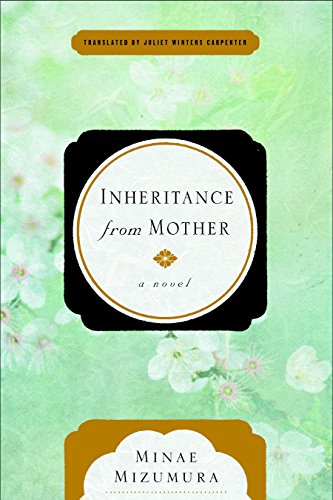
From an unfamiliar writer to a not-so-new-to-me writer. I first encountered Minae Mizumura in the 2018 Big Bad Wolf Sale. I had no iota about who she was nor had I read any of her works before. This did not stop me from purchasing a copy of A True Novel which I was able to read only during the first year of the pandemic. I ended up liking the novel which made me look forward to reading more of her works. The opportunity came this year when I decided to read Inheritance from Mother. This was supposed to be the primer for my foray into Japanese literature before I decided to shift to a different theme this month; the book still aligned with this shift.
Inheritance from Mother opened with two sisters – Natsuki and Mitsuki – discussing the inheritance they received from their recently deceased mother; they each received roughly 30 million yen. The novel’s focus, however, was on Mitsuki. She was already in her fifties and was their mother’s caretaker. Mitsuki, we learn, resented their mother Noriko for leaving their father in a nursing home to run away with a teacher. Their mother was also demanding and whimsical. But duty beaconed. While taking care of their mother, Mitsuki must also deal with a marriage that is doomed to fail because of her philandering husband. With their mother’s death, Mitsuki must come to terms with her mother’s legacy. Noriko left her younger daughter with a divided view of the world. She also left her daughter to fend on her own. Inheritance from Mother is an evocative tale that tackles the complexities of mother and daughter relationships, particularly within the ambit of highly regimented Asian culture. The novel, nevertheless, resonates with warmth and universality that appeals to readers from across the world.
What will you read next?

 The Pine-Scented Chronicles