A Damsel in Distress
It is without a doubt that Daphne du Maurier’s Rebecca is a literary classic. The passage of time has not dimmed its luster. It is a literary masterpiece that remains one of the most studied, recommended, and beloved literary works. Over time, it has also developed into one of the hallmarks of a growing literary subgenre: gothic fiction. It has been adapted into different media, including an Academy Award-winning 1940 Alfred Hitchcock psychological film of the same title. A Netflix adaptation of the novel was also released in 2020. The book has also influenced several contemporary literary works. One of the book’s characters, Mrs. Danvers, for instance, was alluded to in Stephen King’s Bag of Bones.
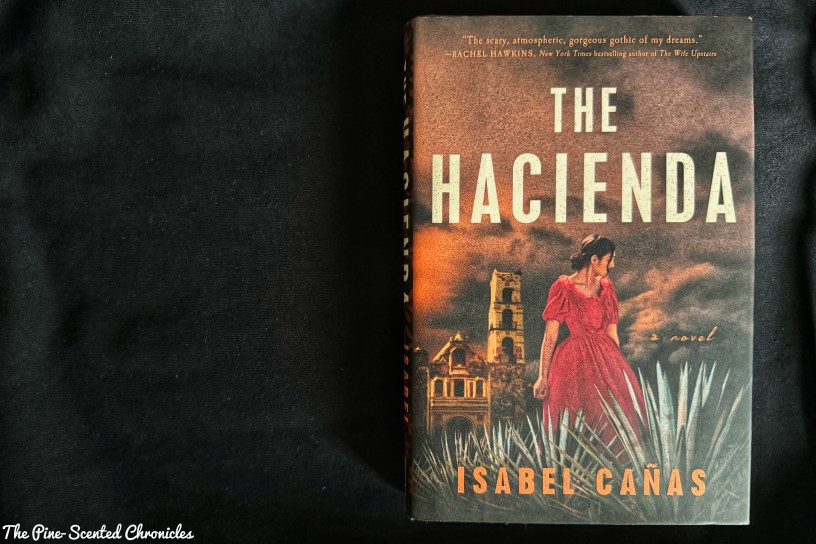
“Last night, I dreamt I went to Manderley again.” Rebecca’s opening line is one of the most famous opening literary lines. Its infamous, rather conspicuously famous setting, the West Country estate Manderley has become the inspiration for several contemporary literary settings. Its fine prints were palpable in High House, the setting of Silvia Moreno-Garcia’s 2020 gothic horror novel Mexican Gothic; Mexican Gothic echoed several elements of the literary classic. Another Mexican writer, Isabel Cañas followed suit. In 2022, she published her debut novel, The Hacienda. Interestingly, The Hacienda was touted as a crossover between Rebecca and Mexican Gothic.
The Hacienda was set in the years immediately following the conclusion of the Mexican War of Independence. At the heart of the novel was Beatriz Hernández Valenzuela. Beatriz, a Mestiza, was the only daughter of an insurgent general and a criollo woman. Following the end of the war, political turmoil ensued resulting in the execution of General Hernandez and the destruction of the Hernandez abode. It was at this critical juncture in Beatriz’s life that Don Rodolfo Solórzano entered the life of the novel’s heroine; the two met during a social event. In a way, Don Rodolfo was a knight in shining armor to Beatriz’s damsel in distress. Beatriz, however, was no typical damsel in distress as she possessed a strong personality.
“Even when she walked into the most sickened of houses to purify their energy with copal and smudging of burnt herbs on the walls and hearths, houses so diseased she ordered me to stand outside with the inhabitants, the voices rippled off her like water off silver, her aura as impenetrable as a warrior’s gleaming shield. She was a prophet in a land that had been stripped of its gods: a healer of the sick, a beacon in the night. She reached into steel-dark clouds to control the storms of the rainy season, seizing lightning as her reins and bending them to her will to turn harvests into gold. She called the voices to heel and banished them. I was not her.”
~ Isabel Cañas, The Hacienda
By marrying into the affluent and powerful Solórzano clan, Beatriz has ensured her future. However, this came at a price. For one, Don Rodolfo advocated for the opposite side of Beatriz’s father’s fight for independence. This created a rupture between Beatriz and her mother. There were also whispers questioning the circumstances surrounding the sudden demise of Don Rodolfo’s first wife. Beatriz had to mute her mother’s misgivings about their unlikely pairing and the rumors surrounding the previous Mrs. Solórzano. Further, in becoming part of the clan, she had to trade the comforts of the city for the security of the Mexican countryside. From the city, she moved to Hacienda San Isidro, the titular hacienda.
Hacienda San Isidro is a vast estate owned by the Solórzano family, handed down from father to son. What Beatriz saw once she arrived was not the grand palace she was hoping for. It was a far cry from the haven she was hoping for following her recent misfortunes. Hacienda San Isidro was certainly not the Manderley that Rebecca’s Maxim de Winter presented to his anonymous young bride. It was in a state of disrepair. Its carpets and walls were decrepit. Nevertheless, it still possessed its charm and it echoed older grandeur. With a little hard work and careful attention, Hacienda San Isidro can be restored to its former glory and Beatriz was willing to put in the work to transform it into a decent home.
To make these badly needed changes, Beatriz had to contend with the hacienda’s ambivalent servants and Rodolfo’s enigmatic and taciturn sister, Doña Juana. Juana was unmarried and had taken residence at the hacienda. But there is also more to the estate than meets the eye. It held secrets that Juana and her brother were unwilling to share with the newest member of their family. As she explores the hacienda’s nook and crannies, Beatriz can’t help but feel a supernatural presence following and watching over her. Further, once darkness envelopes the house, an eerie presence looms. Everyone, including Juana and the other servants, retreats from the house. In true gothic horror fashion, Don Rodolfo returns to the capital on an urgent business, leaving Beatriz to fend for herself.
As the presence started feeling heavier, it started dawning on Beatriz that the house was haunted. It was also increasingly becoming more aggressive and erratic. To exorcise the spirit, Beatriz sought the help of the Catholic Church. The Criollo village priest was ambivalent about Beatriz’s claim and refused to perform other acts beyond blessing the house. A Mestizo priest, Padre Andrés, however, was willing to aid Beatriz. Padre Andrés is a young priest who was once a resident of the hacienda. Like most characters in the story, he was shrouded by a veil of enigma. It was soon revealed that Padre Andrés entered the priesthood during the Spanish Inquisition. This is to cover up his real nature: he is a brujo.
“It is said that mortal life is empty without the love of God. That the ache of loneliness’s wounds is assuaged by obedience to Him, for in serving God we encounter perfect love and are made whole. But if God is the Father, Son, and Holy Spirit, if He is three in one in the Trinity, then God knows nothing of loneliness…God knows nothing of loneliness, because God has never tasted companionship as mortals do: clinging to one another in darkness so complete and sharp it scrapes flesh from bone, trusting one another even as the Devil’s breath blooms hot on their napes.”
~ Isabel Cañas, The Hacienda
Brujo is essentially a witch doctor; however, he is described as a witch in the story. When the house attacked Beatriz and Padre Andrés, Andrés warded off the wayward supernatural force by using magic. After reciting the standard Latin prayers and the holy water, Andrés shifted to incantations using his native language. The confluence of the region’s folklore and the Catholic church gave the novel a distinct complexion. Beatriz has to be mum about Andrés’ secret because of the Inquisition. As Beatriz and Andrés got embroiled in the haunting of the hacienda, family secrets started to float to the surface.
Horror was the prevailing theme as darkness enveloped the story; without any preamble, Cañas throws the reader immediately into the heart of the action. The horror element of the novel was quite graphic. Nevertheless, this aspect of the novel brought out some of the best qualities of Cañas’ writing. Her writing was key in the crafting of an atmospheric read. The horror, turmoil, and prevailing attitudes of the period were vividly captured. This amplifies the sense of paranoia and dread that were swirling around the story. The hacienda also came alive with Cañas’ descriptive writing. She was sublime both in situating the readers in the mind of Beatriz and transporting the readers to the vast grounds of Hacienda San Isidro. These two elements complemented each other.
The story wove in and out of the past and the present as Cañas provides the individual backstories of the main characters. Their story was juxtaposed to a young Mexican republic still reeling from its war of independence. Historical contexts, subtly woven into the story, further enriched the lush tapestry. Slowly, each character’s haunted past was revealed, some of which are integral to the events in the novel. As their individual threads converge into a haunting landscape, what manifested was not just a simple horror story. The novel’s different layers tackled a plethora of subjects with betrayal, erasure, colorism, and the patriarchy among them. Community life was also depicted through the novel’s exploration of local politics and belief systems.
The power dynamics and the patriarchy were most evident in the novel’s examination of the Spanish casta (caste) system. Spanish casta classified individuals based on their ethnic background. A Mestizo/Mestiza has a mixed heritage: one Indigenous and one Spanish parent. Meanwhile, a Criollo/Criolla was a Spanish individual born in the Americas. There was a stigma surrounding individuals with mixed heritages which was evident in the story. Those who are of pure Spanish descent look down on them. Despite Mexico’s independence from Spain, the casta system persisted. It was one of the heritages of colonialism, another subject that was astutely woven into the story. The trauma of colonialism reverberated all throughout the story. It came in the form of discrimination, racism, and acts of white supremacy.
“Neither of us loosened our arms. I do not know how long we stood there, twined tightly as lovers in the soft glow of the candles on the altar. Rain beat the roof of the capilla; deep in the night, an owl’s soft call echoed across the valley. She was safe. She was safe. I did not know why she had fled, but I knew this: as long as my feet felt the earth beneath me and myheart the heavens above, I would not let any harm come to her.”
~ Isabel Cañas, The Hacienda
Beyond the horror and mystery, the novel had overtones of romance that developed throughout the story. As characters, both Beatriz and Andrés were equally compelling. By narrating the story from their own points of view, the readers get to know them better. Beatriz was strong-willed and had a good head above her shoulder. She was not easily spooked by everything going on around her. She was a breath of fresh air in an era when women had limited choices due to the prevalence of sexism. Andrés, meanwhile, was as obstinate as Beatriz. He was a fascinating character astutely fleshed out by Cañas. Beatriz and Andrés matched each other’s personalities. Another interesting character was Juana who evokes images of Rebecca‘s Mrs. Danvers.
In her debut novel, Cañas’ prose was on point although there were sections where the story meandered and the details ephemeral; it was not without its flaws. It is the convergence of romance, mystery, and history, all of which were astutely woven together into a lush tapestry by Cañas’ descriptive writing. It was further enriched by supernatural elements. The novel was both richly graphic and atmospheric. Cañas craftily built tension and horror, keeping the readers on edge. The horror belies the plethora of subjects the novel tackled, among them the legacy of colonialism, colorism, and the intersection of folklore and the Catholic church. Amid this melee are two fascinating characters who propelled the story forward. Overall, The Hacienda is a promising literary debut from a rising literary star.
“A ribbon of warmth unspooled in my belly, its curiosity piqued by his words. I could not ignore it, not when heat bloomed in my cheeks, not when he st barely a foot from me. Perhaps the yearning was forged from loneliness, from a lack of touch, but it was all real the same. It was a rope drawn taut, firmly anchored in me, and reaching to…”
~ Isabel Cañas, The Hacienda
Book Specs
Author: Isabel Cañas
Publisher: Berkley
Publishing Date: 2022
No. of Pages: 337
Genre: Gothic, Horror, Historical, Romance
Synopsis
During the overthrow of the Mexican government, Beatriz’s father was executed and her home destroyed. When handsome Don Rodolfo Solórzano proposes, Beatriz ignores the rumors surrounding his first wife’s sudden demise, choosing instead to seize the security that his estate in the countryside provides. She will have her own home again, no matter the cost.
As Luz’s father, Vladimir, secretly designs their retirement home in the Dominican Republic, mother and daughter collide, ramping up tensions in Nothar ark as the novel races toward a near-fatal climax.
A beautifully layered portrait of family, friendship, and ambition that announces Cleyvis Natera as an electrifying new voice, Neruda on the Park weaves a rich and vivid tapestry of community as well as the sacrifices we make to protect what we love most.
About the Author
Isabel Cañas is a Mexican American speculative fiction writer. She lived in Mexico, Scotland, Egypt, Turkey, and New York City, among other places. She then settled in the Pacific Northwest. She holds a doctorate in Near Eastern Languages and Civilizations and writes fiction inspired by her research and heritage. She is also a 2018 graduate of Clarion West. In 2022, she published her debut novel, The Hacienda which was nominated for the Bram Stoker Awards. Her sophomore novel, Vampires of El Norte, was published in 2023.
 The Pine-Scented Chronicles