
Happy Wednesday everyone! How has your year been so far? I hope that it has been great. I also hope and pray that the rest of the year will be brimming with good news, positive energy, and blessings. I also hope that everyone will be happy and healthy, in body, mind, and spirit.
Wednesdays also mean WWW Wednesday updates. WWW Wednesday is a bookish meme hosted originally by SAM@TAKING ON A WORLD OF WORDS. The mechanics for WWW Wednesday are quite simple, you just have to answer three questions:
- What are you currently reading?
- What have you finished reading?
- What will you read next?

What are you currently reading?

We are nearly halfway through March. Nevertheless, my venture into the works of female writers is still in full swing. This journey, so far, has transported me to various parts of the world; my most recently completed read, Marie Vieux Chauvet’s Dance on the Volcano, transported me to the Dominican Republic. Now, I am crossing oceans. My next destination is New Zealand, with another work of historical fiction. It was in 2019 when I first came across Eleanor Catton’s The Luminaries. I had no iota about who Catton was nor have I encountered any of her works before that fated day. Upon learning the book won the 2013 Booker Prize, I bought the book without any more ado. Nearly five years later, I am finally reading it. It is also a part of my 2024 Top 24 Reading List, making it the sixth book from the list I read. Since I have just started reading the book, I still don’t have much impression about it, except perhaps its length. I will be sharing my initial impressions of the book in this week’s First Impression Friday update.
What have you finished reading?
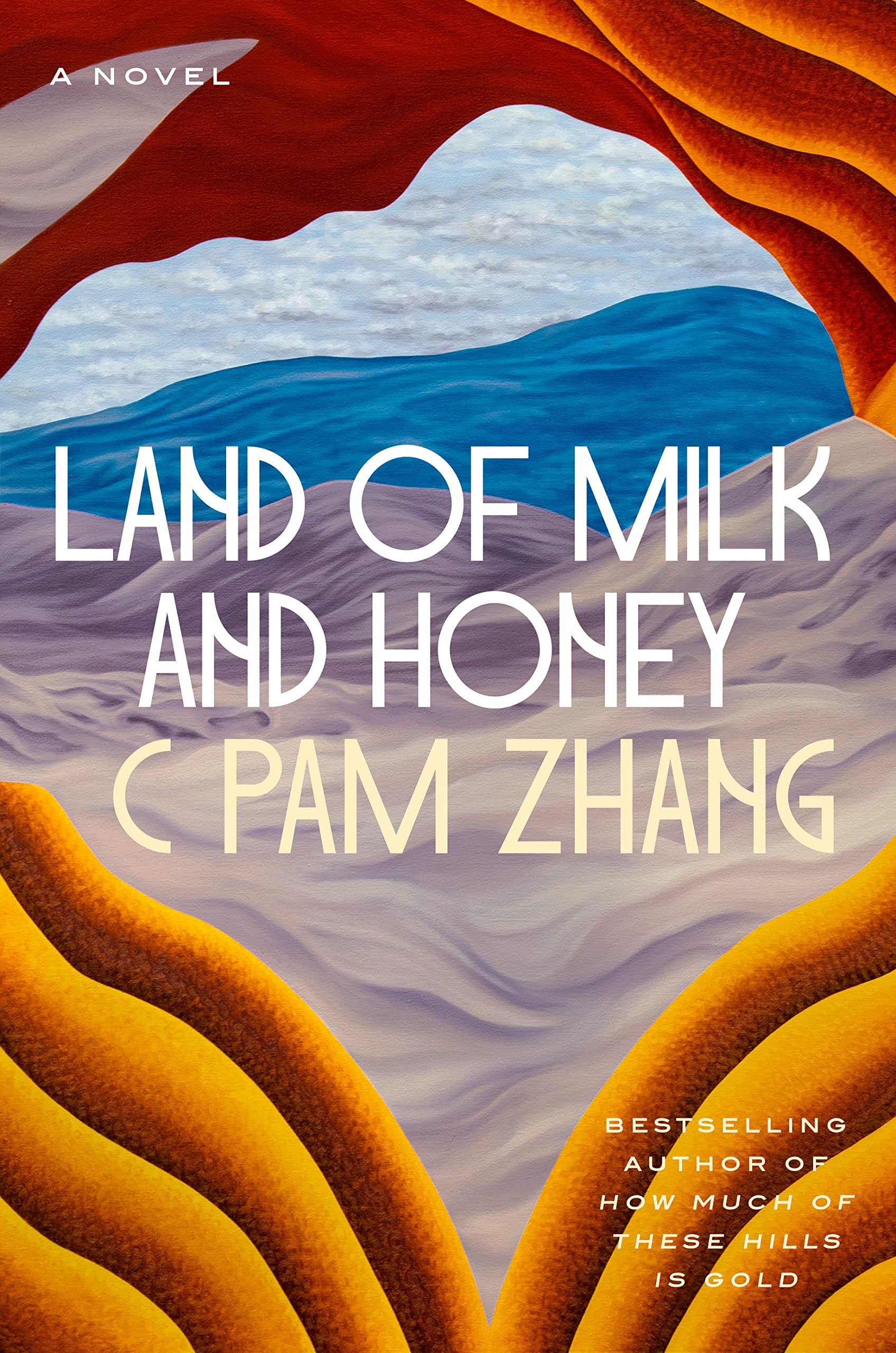
I had quite a busy reading week as I was able to complete three books, the first of which is C Pam Zhang’s Land of Milk and Honey. Zhang first broke into the literary scene in 2020 with her debut novel, How Much of These Hills Is Gold. Longlisted for the Booker Prize, the book really captivated me, making me look forward to more of her works. This came true in 2023 when she published her sophomore novel. When I learned about Land of Milk and Honey’s release, I was ecstatic. Unfortunately, I was not able to obtain a copy of the book; I managed to do so early this year. In a way, reading the book is an extension of my 2020 to 2023 releases reading catch-up.
While Zhang’s debut novel transports the readers to the past, her sophomore novel transports the readers to the not-so-distant future where the readers meet an anonymous narrator. The narrator is a young Asian American chef who finds herself stuck in England following the closure of America’s borders. With no prospect, she applied for a job at an “elite research community” presided over by an anonymous mogul; she would refer to him as “my employer.” The research community is situated on an Italian mountaintop and was devised to lure top scientists with the hope of cultivating animals and precious seeds in underground farms and orchards. In Zhang’s vision of the future, most plant and animal species have gone extinct after they were smothered by a smog that wrapped itself around the planet. Interestingly, the first quarter of the year has been filled with dystopian novels, and Land of Milk and Honey, which came as a surprise, is an addition to this. While the novel tried to cover as much territory as it could, most subjects were explored ephemerally. Overall, it had an interesting premise and also a testament to what Zhang can offer to global readers.

From a familiar writer to an unfamiliar writer. My literary journey next took me to my backyard. Yes, in Philippine literature, a part of the literary world which, ironically, I had not extensively explored although I have been putting in the works in the past few years. After a good one last year when I was able to finish four works by Filipino writers, I am building up the momentum by reading my second this year, Marga Ortigas’ The House on Calle Sombra. Like The Luminaries, Ortigas’ debut novel is part of my 2024 Top 24 Reading List; I also had not heard of Ortigas until 2022 when I was enamored by the book’s cover.
The House on Calle Sombra is set in Manila and charts the fortunes of the Castillo de Montijo family. The family’s story started when the patriarch, Federico Julian, arrived in Manila in 1937. He was an orphan and was penniless when he fled from the Civil War in Spain. As soon as he arrived in the Philippines, the Second World War started, prompting him to flee to the mountains. Federico Julian soon became a prisoner of war. But as if a twist of fate, it was during his incarceration that he met Fatimah, a Muslim woman, who helped nurse him back to health. The two fell in love and when the war ended, they married. In exchange for this, Fatimah left her faith. The story does get a little confusing as it shifts across three different periods without a preamble. But as the story moved forward, it was clear that the novel was covering three important phases of Philippine history: pre and post-war, the Martial Law period, and the recent War against Drugs. It has a diverse cast of characters which propelled the story although most of the characters were dislikable. Nevertheless, The House on Calle Sombra is a vivid commentary on the maladies that continue to plague the Philippines.
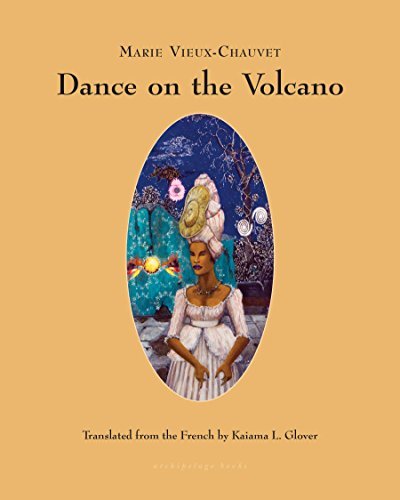
Concluding yet another three-book stretch is Marie Vieux Chauvet’s Dance on the Volcano. Before 2023, I had never heard of the Haitian writer nor had I encountered any of her works. It was through an online bookseller that I came across her. Curious about what the book has in store and looking forward to a new (at least from my perspective) voice, I did not hesitate to buy the book. Excited at the prospect of exploring a new body of work, I made Dance on the Volcano a part of my 2024 Top 24 Reading List.
At the heart of Dance on the Volcano is Minette, a mixed-race (mulatto) girl whose extraordinary singing talent was discovered on the streets of Port-au-Prince by a white music teacher. For years, Minette’s talent was trained by the teacher but under a veil of secrecy. But after years of clandestine training, Minette and her teacher finally took the risk and tricked the director of Port-au-Prince’s Comedie Theater into starring her in a production. There were laws against people of color performing on stage. Nevertheless, Minette’s talent captivated everyone, including the governor who took on the duty of protecting her but preventing any other people of color from gaining the same status. The novel, however, was no simple rags-to-riches story. As Minette navigates the streets of Haiti, she sees the hardships of the slaves. Tensions were also running high between the whites, the mulattos (freedmen), and the black slaves although it was not always visible; this is the allegorical volcano of the title. The book really caught my attention. It was a vivid lesson about Haiti’s history and the struggles of slaves which is more commonly tackled in the works of American writers. Overall, Dance on the Volcano was a riveting read although I feel like I was shortchanged by the ending.
What will you read next?

 The Pine-Scented Chronicles