Exploring New Worlds
Ireland, without a doubt, has a rich and long literary tradition. With a history that spans nearly two millennia, Irish literature is the third oldest literature in Europe; only Greek and Latin literature existed longer than Irish literature. Early Irish literature was written in Irish Gaelic and came in the forms of religious texts, poetry, and even mythological tales. One of the earliest preserved poems is Amra Choluim Chille (Elegy of St. Columba) by Dallán Fórgaill which is estimated to have been written in 597. These recordings were found in inscriptions cut into wood or carved into the stone. Irish literature also played a seminal role in shaping and influencing the written form of English literature; Irish and English literature, over the course of history, have become intertwined.
The advent of the printing press toward the end of the 15th century altered the landscape of Irish literature. It, unfortunately, saw the demise of Gaelic; it would experience a renaissance in the 19th century. In the 20th century, Irish-language works were published globally. This run tangent with the ascent of English-language writers such as James Joyce, Edmund Burke, Jonathan Swift, Oliver Goldsmith, Maria Edgeworth, Oscar Wilde, and George Bernard Shaw. They have produced some of the most highly-revered literary masterpieces such as Ulysses, The Chronicles of Narnia, Gulliver’s Travels, and The Picture of Dorian Gray. This long tradition continues in the contemporary, with award-winning writers such as Anne Enright, Sally Rooney, John Banville, and Anna Burns carrying on the proverbial torch.
Colm Tóibín is another globally recognized contemporary Irish writer. While he would be renowned for his works of fiction, he worked first as a journalist and a travel writer. His earliest published works were travelogues. In 1990, he forayed into the world of fiction with the publication of his debut novel, The South. The rest, they say, was history. His works earned him various accolades across the world. While the Booker Prize remains elusive, he was nevertheless nominated for the prestigious literary award a whopping four times, making the shortlist three times for The Blackwater Lightship (1999), The Master (2004), and The Testament of Mary (2013). The Master also earned him the International Dublin Literary Award in 2006. Tóibín was also selected by the Arts Council of Ireland as the Laureate for Irish Fiction.
“Even tiny details stayed in her mind. When she deliberatively tried to think about something else, or leave her mind blank, events from the day would come quickly back. For each day, she thought, she needed a whole other day to contemplate what had happened and store it away, get it out of her system so that it did not keep her awake at night or fill her dreams of what had actually happened and other flashes that had nothing to do with anything familiar, but were full of rushes of colour or crowds or people, everything frenzied and fast.“
~ Colm Tóibín, Brooklyn
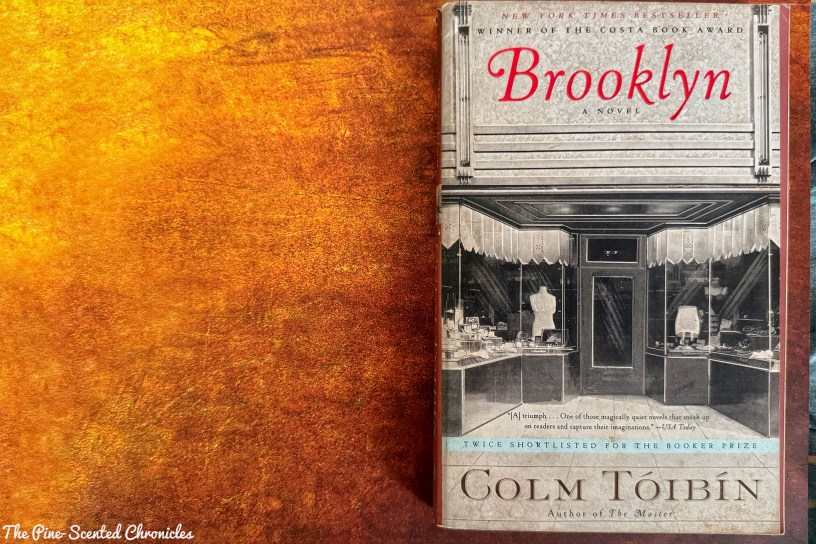
Another literary work that earned Tóibín both global recognition and accolades is Brooklyn. Published in 2009, Brooklyn chronicled the story of Eilis Lacey, a young Irish woman living in 1950s Enniscorthy with her mother and older sister Rose. Eilis has also never left home and is studying to become a bookkeeper. While Rose was working at an office, Eilis was able to obtain employment at a grocery store owned by Miss Kelly. Miss Kelly, however, was a pompous social climber who treated her customers based on their social status. For instance, Miss Kelly once snubbed Rose when she went to the store. This made Rose and their mother instantly dislike Miss Kelly and Eilis working for her. Due to her mathematical skills, Eilis was made by Miss Kelly to work longer hours. Despite this, Eilis was receiving meager pay.
To help her sister fulfill her dreams, Rose enlisted the help of Father Flood. Father Flood is an Irish priest who grew up in town but is now living in Brooklyn, New York City. Father Flood was only too happy to oblige, putting into motion the process of Eilis immigrating to the United States. In Brooklyn, Eilis moved to the boardinghouse owned by Ms. Kehoe, an Irishwoman in Father Flood’s parish; Ms. Kehoe would take the role of Eilis’ second mother. Father Flood was also able to find her a suitable job in Bartocci’s department store in Brooklyn. Eilis started to slowly integrate into her new environment. Just as when things were slowly settling down, letters from her family caused her to yearn for home. Her severe homesickness prompted her floor supervisor Miss Fortini to enlist the help of Father Flood.
To take her mind off home, Father Flood assisted Eilis in enrolling in the night classes at Brooklyn College; her tuition was already paid for by a fellow Catholic parishioner. She took the courses necessary to become a certified bookkeeper. Eilis, however, was still not able to make new friends but her classes distracted her from her lingering homesickness. It also provided her a glimpse into what her life in Brooklyn could be. Eilis was starting to fall in love with the American Dream and the idea of becoming an American. Around this time, Father Flood started hosting dances at the church every Friday night. Eilis had no recourse but to attend these dances, along with the girls living at Mrs. Kehoe’s boardinghouse. Attending the dances proved to be a pivotal point in Eilis’ life. It was during one of these dances she attended that she caught the attention of a young man named Tony.
Tony Fiorello was born and raised in Brooklyn but his parents were Italian immigrants. He admitted to Eilis that he attended the Irish dances because he was attracted to Irish girls. The two soon started spending more time together and getting to know each other. Tony was working as a plumber with his brothers, something that impressed Eilis. On the other hand, Tony was impressed by Eilis’ drive to complete her studies. Beyond attending the dances, the young couple went on dinners and watched the movies. He also walked her home. Unlike Eilis who was a little more reserved and kept her emotions in check, Tony had no scruples in expressing his feelings and it didn’t take long before he confessed that he had fallen in love with her. Tóibín then painted an evocative portrait of a young couple navigating uncharted territories.
“She was mainly interested in clothes and shoes, and where they could be bought and at what price and at what time of the year. Changing fashions and new trends were her daily topic, although she herself, as she often pointed out, was too old for some of the new colours and styles. Yet, Eilis saw, she dressed impeccably and noticed every item each of her lodgers was wearing. She also loved discussing skin care and different types of skin and problems. Mrs. Kehoe had her hair done once a week, on a Saturday, using the same hairdresser each time, spending several hours with her so that her hair would be perfect for the rest of the week.“
~ Colm Tóibín, Brooklyn
On the surface, Brooklyn is a romance story that brings together two contrasting personalities. Nevertheless, they managed to navigate this sea of differences. However, the novel does not reduce itself to a mere romantic story although it was one of its seminal elements. Brooklyn was, on a broader scale, Eilis’ coming-of-age. Her time in Brooklyn was her journey of self-discovery. Finding herself in a new environment allowed her to gain several experiences that, in the long run, were integral in molding who she is as a person. She started to understand herself better while also seeing greater possibilities, thus, making her yearn for the proverbial American Dream. These experiences made her a stronger individual, spiritually, emotionally, and even morally. Seminal in Eili’s coming-of-age and journey of self-discovery was the presence of Tony and the novel’s romantic overtones.
Tony’s presence, in a way, slowly opened up Eilis, dismantling her emotional barriers. Eilis, after all, grew up in a household where emotions are rarely discussed. Even when she moved to the United States, Eilis distanced herself from any emotional attachment lest they preclude her from achieving her goals. Eilis had a proclivity to keep secrets, both from Tony and her family. Her secretive nature was another barrier between her and those she loved, causing undue distress. It was another trait that Eilis had to learn to undo. Tóibín underlined how this open communication should be cultivated, may it be between mother and daughter, sisters, and even lovers. However, Tóibín also iterated that those who spent their lives concealing their true emotions can have a challenging time opening up or being honest with the people they love.
Brooklyn also pans out beyond the concerns of the main characters. The novel underscored a plethora of socio-economic themes. For one, the novel subtly underscored the Irish diaspora. Following Irealnd’s declaration of independence from the United Kingdom, Irish denizens have emigrated to various parts of the world, primarily due to economic and social reasons. The 1950s, in which the novel was set, was particularly a pivotal moment in the history of the Irish diaspora. Continued economic decline, especially in the agricultural sector, resulted in high unemployment rates. This prompted nearly half a million Irish to move to other countries to search for the proverbial greener pastures. This also entailed Ireland losing at least 16% of its population. It comes as no surprise that many referred to the 1950s as the decade of doom and gloom.
The younger members of the Irish populace were cognizant of their prospects. Eilis herself, before the arrival of Father Flood, knew she had little prospect of upward mobility in Enniscorthy. With rural Ireland’s preoccupation with social status and prestige, getting married is imperative, and to get married, she must have a decent and respectable job. Moving to Brooklyn, however, proved no different as Eilis’ situation was no better. Nevertheless, Brooklyn made Eilis dream big. Although she occasionally yearns for a semblance of home – her homesickness lingered – Eilis had better prospects for climbing the socio-economic ladder in Brooklyn, a realization she eventually had. Her life in Brooklyn also provided her a new perspective. The novel also captured how the Irish looked up to those who moved to other countries.
“Now, she felt that she was being singled out for something for which she was not in any way prepared, and this, despite the fear it carried with it, gave her a feeling, or more a set of feelings, she thought she might experience in the days before her wedding, days in which everyone looked at her in the rush of arrangements with light in their eyes, days in which she herself was fizzy with excitement but careful not to think too precisely about what the next few weeks would be like in case she lost her nerve.“
~ Colm Tóibín, Brooklyn
For all its wonderful elements, the book drew strength in how Tóibín captured Brooklyn in the 1950s. It was a melting pot that was teeming with different cultures. It was where several immigrants such as Irish and Italians settled; the immigrant experience was vividly captured in the novel as well. Tóibín was also able to capture the changes taking place in 1950s American society, such as the urbanization of Long Island and the arrival of television. Brooklyn was an atmospheric novel that Tóibín was able to adroitly weave together with the quality of his writing. He brought the beauty out of the mundane and made the readers part of Eilis’ and the characters’ individual victories.
Like most of Tóibín’s works, Brooklyn earned him several accolades. The novel won the 2009 Costa Novel Award was shortlisted for the 2011 International Dublin Literary Award and was longlisted for the 2009 Man Booker Prize. These are on top of its being listed as one of the best-written works of historical fiction and of fiction in general. Brooklyn, in ways more than one, is a subtly powerful novel. In Eilis, he was able to create a seemingly unremarkable character yet whose growth and development were the novel’s backbone. All throughout, Tóibín examined the complexities of romantic relationships, the immigrant experience, and the attitudes of rural Irish society while capturing the shifts in American society and even the proverbial American dream. A romance story, a work of historical fiction, and also a coming-of-age story, Brooklyn is a multifaceted novel by one of the best contemporary Irish writers.
“Nothing here was part of her. It was false, empty, she thought. She closed her eyes and tried to think, as she had done so many times in her life, of something she was looking forward to, but there was nothing. Not the slightest thing. Not even Sunday. Nothing maybe except sleep, and she was not even certain she was looking forward to sleep. In any case, she could not sleep yet, since it was not yet nine o’clock. There was nothing she could do. It was as though she had been locked away.“
~ Colm Tóibín, Brooklyn
Book Specs
Author: Colm Tóibín
Publisher: Scribner
Publishing Date: May 2010 (2009)
No. of Pages: 262
Genre: Historical, Romance
Synopsis
One of the most unforgettable characters in contemporary literature” (Pittsburgh Post-Gazette), Eilis Lacey has come of age in small-town Ireland in the hard years following World War Two. When an Irish priest from Brooklyn offers to sponsor Eilis in America, she decides she must go, leaving her fragile mother and her charismatic sister behind.
Eilis finds work in a department store on Fulton Street, and when she least expects it, finds love. Tony, who loves the Dodgers and his big Italian family, slowly wins her over with patient charm. But just as Eilis begins to fall in love, devastating news from Ireland threatens the promise of her future.
About the Author
Colm Tóibín was born on May 30, 1955, in Enniscorthy, County Wexford, Ireland. He was the fourth of five children born to Mícheál and Bríd Tóibín. His father taught history at the Christian Brothers’ school in Enniscorthy while his mother published several poems in local newspapers. Tóibín developed a stammer following his separation from his parent after his father suffered from a brain aneurysm when Tóibín was still eight. Tóibín received his secondary education at St. Peter’s College in Wexford. During his stay at St. Peter’s, he started writing poetry. It was also during his teenage years that he recognized his homosexuality. In 1975 Tóibín earned a Bachelor of Arts degree from University College Dublin, where he studied English and history.
Post-university, Tóibín moved to Barcelona where he taught English. When he returned to Ireland, he started working as a journalist and travel writer. His earlier works were travelogues such as Walking Along the Border (1987; reissued as Bad Blood: A Walk Along the Irish Border in 1994) and Dubliners (1990), both with photographs by Tony O’Shea, and Homage to Barcelona (1990). It was also in 1990 that he published The Trial of the Generals: Selected Journalism, 1980–1990. He would publish more travelogues and nonfiction books such as Love in a Dark Time: And Other Explorations of Gay Lives and Literature (2001).
However, Tóibín is more renowned for his works of fiction. He made the shift in 1990 with the publication of The South. He followed it up with The Heather Blazing (1992), The Story of the Night (1996), and The Blackwater Lightship (1999). The Blackwater Lightship was his first novel to be shortlisted for the prestigious Booker Prize. His fifth novel, The Master (2004) is considered by pundits as his magnum opus. It earned him several accolades such as shortlisting for the Booker Prize. It also won him the 2005 Lambda Literary Award, the 2005 Stonewall Book Award, and the 2006 International Dublin Literary Award. His next novel, Brooklyn (2009) was also critically received. He is slated to release a new work in 2024, Long Island. Tóibín also published collections of short stories. In 2022, he published his first collection of poems, Vinegar Hil.
In 2007, Tóibín was elected Fellow of the Royal Society of Literature and in 2011, he was awarded the Irish PEN Award. In 2022, the Arts Council of Ireland selected Tóibín as the Laureate for Irish Fiction. He is also a member of the American Academy of Arts and Letters and the American Academy of Arts and Sciences. He is also a playwright, a literary critic, an educator, and an editor. Tóibín is currently residing in Southside Dublin City.
 The Pine-Scented Chronicles