
Happy Tuesday everyone! As it is Tuesday, it is time for a Top Ten Tuesday update. Top Ten Tuesday is an original blog meme created by The Broke and the Bookish and is currently being hosted by That Artsy Reader Girl.
This week’s given topic: Unread Books on My Shelves I Want to Read Soon
I know I am kind of late on this prompt but I still would want to do it because I have tons of books on my bookshelf I have been meaning to read for the longest time. Some of these books have been sitting on my bookshelf for as long as five years! Here goes!

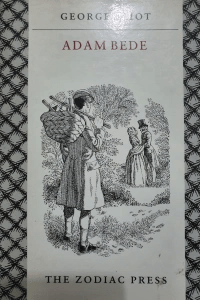
Title: Adam Bede
Author: George Eliot
Publisher: The Zodiac Press
Publishing Date: 1984
No. of Pages: 509
Synopsis:
Adam Bede, the first novel written by George Eliot (the pen name of Mary Ann Evans), was published in 1859. It was published pseudonymously, even though Evans was a well-published and highly respected scholar of her time.
The story’s plot follows four characters’ rural lives in the fictional community of Hayslope—a rural, pastoral and close-knit community in 1799. The novel revolves around a love triangle between beautiful but self-absorbed Hetty Sorrel, Captain Arthur Donnithorne, the young squire who seduces her, Adam Bede, her unacknowledged suitor, and Dinah Morris, Hetty’s cousin, a fervent, virtuous and beautiful Methodist lay preacher. (Source: Goodreads)
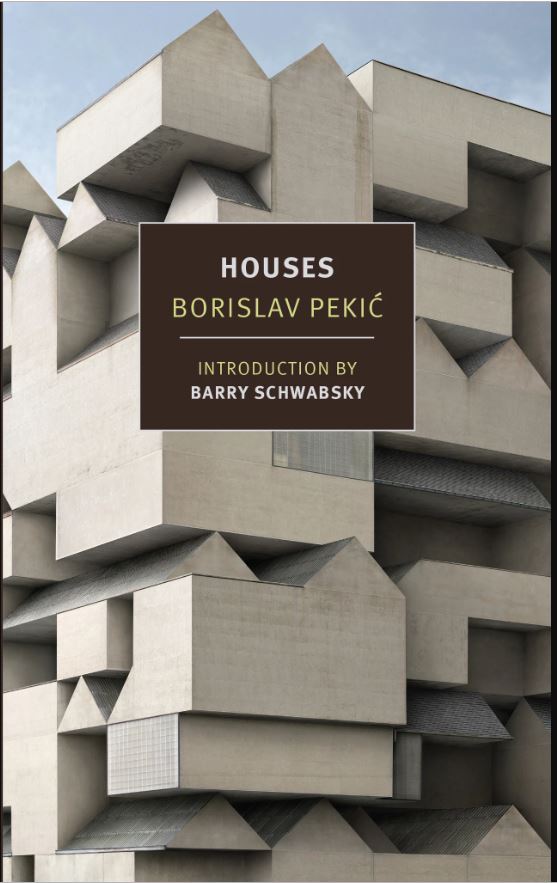
Title: Houses
Author: Borislav Pekic
Translator (from Serbian): Bernard Johnson
Publisher: New York Review of Books
Publishing Date: 2016
No. of Pages: 212
Synopsis:
Building can be seen as a master metaphor for modernity, which some great irresistible force, be it Fascism or Communism or capitalism, is always busy rebuilding, and Houses is a book about a man, Arsenie Negovan, who has devoted his life and his dreams to building.
Bon vivant, Francophile, visionary, Negovan spent the first half of his life building houses he loved and even named – Juliana, Christina, Agatha – while making his hometown of Belgrade into a modern city to be proud of. The second half of his life, after World War II and the Nazi occupation, he has spent in one of those houses, looked after by his wife and a nurse, in hiding. Houses is set on the final day of his life, when Negovan at last ventures forth to see the world as it is.
Negovan is one of the great characters in modern fiction, a man of substance and deluded fantasist, a beguiling visionary and a monster of selfishness, a charmer no matter what. And perhaps he is right to fear that home is only an illusion in our world, or that only in illusion there is home.

Title: The Invention of Morel
Author: Adolfo Bioy Casares
Translator (from Spanish): Ruth L.C. Simms
Publisher: New York Review of Books
Publishing Date: 2003
No. of Pages: 103
Synopsis:
Jorge Luis Borges declared The Invention of Morel a masterpiece of plotting, comparable to The Turn of the Screw. This fantastic exploration of virtual realities also bears comparison with the sharpest work of Philip K. Dick. It is both a story of suspense and a bizarre romance, in which every detail is at once crystal clear and deeply mysterious.
Inspired by Bioy Casares’s fascination with the movie star Louise Brooks, The Invention of Morel has gone on to find such admirers as Julio Cortazar, Gabriel Garcia Marquez, and Octavio Paz. As the model for Alain Resnais and Alain Robbe-Grillet’s Last Year in Marienbad, this classic of modern Latin American literature also changed the history of film.

Title: Poor People
Author: Fyodor Dostoevsky
Translator (from Russian): Hugh Aplin
Publisher: Hesperus Press Limited
Publishing Date: 2002
No. of Pages: 130
Synopsis:
Written as a series of letters, Poor People tells the tragic tale of a petty clerk and his impossible love for a young girl. Longing to help her and change her plight, he sells everything he can, but his kindness leads him only into more desperate poverty, and ultimately into debauchery. As the object of his desire looks sadly and helplessly on, he – the typical ‘man of the underground’ – becomes more and more convinced of the belief that happiness can only be achieved with riches. Theirs is a troubled, frustrated love that can only lead to sorrow.
Poor People is Dostoevsky’s first original work. As both a masterpiece of Russian populist writing, and a parody of the entire genre, it is a profound and uneasy piece, with many glimpses of future genius.

Title: The Black Notebook
Author: Patrick Modiano
Translator (from French): Mark Polizzotti
Publisher: Mariner Books
Publishing Date: 2016
No. of Pages: 131
Synopsis:
Paris in the 1960s was a city rife with suspicion and barely suppressed violence. Amid this tension, Jean, a young writer adrift, met and fell for Dannie, an enigmatic woman fleeing a troubled past. A half century later, with his old black notebook as a guide, he retraces this fateful period in his life, recounting how, through Dannie, he became mixed up with a group of unsavory characters connected by a shadowy crime. Soon Jean, too, was a person of interest to the detective pursing their case – a detective who would finally provide the key to Dannie’s darkest secret.
The Black Notebook bears all the hallmarks of this literary master’s unsettling and intensely atmospheric style. Patric Modiano invites us into his unique world, a Paris infused with melancholy, uncertain danger, and the fading echoes of lost love.

Title: The Black Book
Author: Orhan Pamuk
Translator (from Turkish): Maureen Freely
Publisher: Vintage International
Publishing Date: July 2006
No. of Pages: 461
Synopsis:
Galip is a lawyer living in Istanbul. His wife, the detective novel-loving Ruya, has disappeared. Could she have left him for her ex-husband or Celal, a popular newspaper columnist? But Celal, too, seems to have vanished. As Galip investigates, he finds himself assuming the enviable Celal’s identity, wearing his clothes, answering his phone calls, even writing his columns. Galip pursues every conceivable clue, but the nature of the mystery keeps changing, and when he receives a death threat, he begins to fear the most.

Title: Buddenbrooks
Author: Thomas Mann
Translator (from German): H.T. Lowe-Porter
Publisher: Vintage Books
Publishing Date: May 1984 (1901)
No. of Pages: 604
Synopsis:
Originally published in Germany in 1901, Buddenbrooks is Thomas Mann’s first major novel, and one of the two for which he was awarded the Nobel Prize for Literature in 1929.
Buddenbrooks tells the story of four generations of a wealthy bourgeois family in northern Germany. With consummate skill, Mann draws a rounded picture of middle-class life: births and christenings; marriages, divorces, and deaths; successes and failures. These commonplace occurrences, intric=nsically the same, vary slightly as they recur in each succeeding generation. And as the Buddenbrook family eventually succumbs to modern influences – influences which are at variance with their own traditions – its downfall becomes certain.

Title: Sentimental Education
Author: Gustave Flaubert
Translator (from French): Adrianne Took
Publisher: Wordsworth Classics of World Literature
Publishing Date: 2003
No. of Pages: 448
Synopsis:
Sentimental Education has been described both as the first modern novel and as a novel to end all novels. Weaving a poignant love story into his account of the 1848 revolution, Flaubert shows a society in the grip of stereotypes, on every level. There is something farcical in his depiction of characters who aspire to act but are dogged by cliche at every turn. To a greater extent even than Madame Bovary, Sentimental Education is an indictment of modern consumerism, contrasting the hollowness of material achievement with the lasting beauty of the ideal. Flaubert’s study of success and failure offers us a terrible sadness in a terrible beauty, yet is one of the world’s great comic masterpieces.

Title: The Scarlet Letter
Author: Nathaniel Hawthorne
Publisher: Barnes & Noble Books
Publishing Date: 2004
No. of Pages: 216
Synopsis:
The Scarlet Letter, America’s first psychological novel, exploded society’s view of Puritanism upon its initial publication in 1850, and today – perhaps more than ever – it holds the power to change the way we think about human relationships, punishment, and the status quo.
Nathaniel Hawthorne’s novel is a dark tale of love, crime, and revenge set in colonial New England. It revolves around a single, forbidden act of passion that forever alters the lives of three members of a small Puritan community: Hester Prynne, an ardent, fierce, and ultimately ostracized woman who bears the symbol of her sin – the letter A stitched into the breast of her gown – in humble silence; the Reverent Arthur Dimmesdale, a respected public figure who is inwardly tormented by long-hidden guilt; and the malevolent Roger Chillingworth, Hester’s husband – a man who seethes in an Ahab-like lust for vengeance.
The landscape of this classic novel is uniquely American, but the themes it explores are both timeless and universal – the nature of sin, guilt, and penitence, the clash between our private and public selves, and the spiritual and psychological cost of living outside society. Constructed with the elegance of a Greek tragedy, The Scarlet Letter brilliantly illuminates the truth that lies deep within the human heart.

Title: A Book of Memories
Author: Péter Nádas
Translators (from Hungarian): Ivan Sanders, Imre Goldstein
Publisher: Picador
Publishing Date: 1997 (1986)
No. of Pages: 706
Synopsis:
First published in Hungary in 1986, Péter Nádas’s A Book of Memories is a modern classic, a multilayered narrative that tells three parallel stories of love and betrayal. The first takes place in East Berlin in the 1970s and features an unnamed Hungarian writer ensnared in a love triangle with a young German and a famous aging actress. The second composed by the writer, is the story of a late-nineteenth-century German aesthete whose experiences mirror his own. And the third voice is that of a friend from the writer’s childhood, who brings his own unexpected bearing to the story. Compared by critics to Proust, Mann, and Joyce, this sensuous tour de force is “unquestionably a masterpiece” (The New Republic)
 The Pine-Scented Chronicles