
Happy Tuesday everyone! As it is Tuesday, it is time for a Top Ten Tuesday update. Top Ten Tuesday is an original blog meme created by The Broke and the Bookish and is currently hosted by That Artsy Reader Girl.
This week’s given topic: Top Ten Books I Had Very Strong Feelings About
I know. This is supposed to be a Tuesday prompt. However, I have been quite occupied on Tuesdays and I wanted to do this meme because I have scores of books that aroused strong feelings in me. Without ado, here are some of these books. Happy reading everyone!


The Shadow of the Wind by Carlos Ruiz Zafón
Snippet from my review: One of the greater accomplishments of the novel is Ruiz Zafón’s writing. Under the shadows of the eerie atmosphere, the storytelling was sublime. The narrative was verbose, rich in descriptions and intricate details. Ruiz Zafón’s stylistic writing gave life to the setting and the story. His artistic writing is an ode to literature, a blatant reminder to readers of the reasons why they read. The novel was sprinkled with several great and memorable quotes.
Honestly, I was reluctant to read the book. It was left to gather dust on my bookshelf. But when the pandemic happened, the opportunity presented itself. Nearly four years since I bought the book, I was finally able to read The Shadow of the Wind. And I was beyond astounded by the atmosphere that Ruiz Zafón created. On top of these are the memorable characters whose struggles and stories I sympathized with. This is one of my all-time favorite reads.
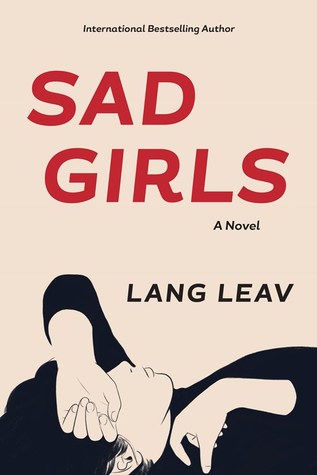
Sad Girls by Lang Leav
Snippet from my review: One of the things I found most perplexing about the book is how truly unromantic it is. Written by a famed poet, I was really expecting some fireworks or at least more explosive lines. Instead, I found nothing but cliches and unromantic similes that would have worked in a poem but not in a novel. Audrey and Rad’s shotgun love affair left very few to desire.
When I learned that poet Lang Leav was about to release her debut novel, I was one of those who were looking forward to it. But lo and behold! The book left me disappointed. I guess the above snippet summarizes how I felt about it. Perhaps my judgment might have been compromised by my lofty standards and my high expectations. Nevertheless, the book didn’t live up to the hype. Interestingly, the situation with Sad Girls is the antithesis for The Shadow of the Wind.

Rebecca by Daphne du Maurier
Snippet from my review: Just like Bronte’s Wuthering Heights, one of the facets that characterized this Gothic tale is the intricate description and construction of Manderley, a magnificent old house. Du Maurier’s rich descriptions were precise and vivid. Before the reader’s eyes, she gave life to the entire estate – its long halls, its flashy boudoirs, its cavernous rooms, and its finely manicured lawns. Manderley was painted to be more than just a setting nor was it drawn to be a mere spectator -in its own right, it is a distinct albeit inanimate character that dictated and oversaw the majority of the story’s flow.
Rebecca! It is, without a doubt, one of the most popular books out there. It was no surprise it immediately piqued my interest when I first encountered it through must-read lists. I was really looking forward to it. And boy did it live up to the hype. Like The Shadow of the Wind, its eerie atmosphere reeled me in. The mystery. The tenterhook. They were on point. I felt like I was at Manderley with the second Mrs. Maxim de Winter. It was an exhilarating experience.

Wuthering Heights by Emily Brontë
Snippet from my review: The prevailing theme is the love story of Catherine, Heathcliff, and Edgar Linton. Linton is the son of Thrushcross Grange’s owners and resents Heathcliff’s presence. This love triangle shows Catherine’s superfluous nature. Willful and free-spirited, she is one of the weakest characters in the story although her presence is repeatedly impressed on the reader because of Heathcliff’s devotion. But there is another love story that is taking shape in the present and is molded by the events that happened before.
Like Rebecca, Wuthering Heights is one of the beloved literary classics. And for good reason, although some are rather ambivalent about the book. Regardless, I never expected to be swept by the story because I was expecting a typical love story. I guess the strong emotions the book evoked were mainly due to Heathcliff. He is, for all intents and purposes, the archetypal literary villain. However, the book also paints a different portrait of him that made me see through his facade, which made me root for him.

Infinite Jest by David Foster Wallace
Snippet from my review: One can’t help but be astounded by the novel’s encyclopedic scope, incorporating different subjects and theories pertaining to linguistics, film studies, addiction, science, sports, and even issues of national identity. Wallace’s knowledge is simply astounding and how he hemmed it into one cohesive postmodern novel is an art in itself. One can barely imagine the extent of research that the author had to conduct in order to come up with this gloomy but realistic forecast of the future. It is a satire wrapped in humor.
So Infinite Jest. It was a friend who recommended the book to me although she did issue a caveat. It was no ordinary book. And the caveat was justified. This, however, did not preclude me from reading one of the most discussed literary works. The book was the type that you would either love or hate. Not only was it complex, it meandered. The book’s abstract painting of the future gives one the creeps. It made me wonder. On the literary side of things, it made me see a different dimension of storytelling, that it does not necessarily have to conform to conventions.

Ulysses by James Joyce
Snippet from my review: Ulysses is a multilayered novel with a distinct structure. This structure is one of its most interesting facets but it can also be one of its most polarizing. The novel was essentially divided into eighteen episodes which, on the surface, was nothing out of the ordinary. But as the complexity of subjects it grapples with has exemplified, there was nothing mundane or straightforward about Ulysses, including its structure. These eighteen episodes were individually unique, each narrated from different perspectives and by different voices.
Like Infinite Jest, James Joyce’s Ulysses is a book that many find daunting. And also, for good reasons. The first time I tried to read it, my mind was discombobulated. I had to DNF it because it barely made sense to me at that time. With this, however, was the promise to read it again when I am more mature as a reader. The second time around, the story started to make more sense. I was able to wade through the book’s unusual structure. After finishing the book, I felt both relief and joy because I was finally able to read one of the most complex books in history.
War and Peace by Leo Tolstoy
Snippet from my review: In over a thousand pages of intricate storytelling and masterful depiction, Tolstoy fascinated readers with his realistic portrayal of the Napoleonic invasion. Reading the novel was like watching a 3-D animated film, wherein the reader can literally breathe in the scenes that Tolstoy painted with his words. Military men and authors who specialize in war literature who read his work were impressed at the vividness and craftiness of the war scenes. Tolstoy’s contemporary writers like Fyodor Dostoyevsky, Ivan Turgenev, and Ivan Goncharov also sang accolades for this colossal masterpiece. But who can blame these storied men for their fascination with War and Peace?
To be honest, I was also daunted by War and Peace. The book by the Russian master storyteller was quite thick. Moreover, I was not a fan of Anna Karenina. Despite this, I still wanted to venture further into the world of Tolstoy. I am glad I did because War and Peace was able to redeem Tolstoy to me. I was not expecting that it would be an easier read. I liked how it flowed. I also liked how it dismantled all my preconceived notions of it and Tolstoy’s body of work. Overall, it evoked both wonder and a sense of accomplishment.
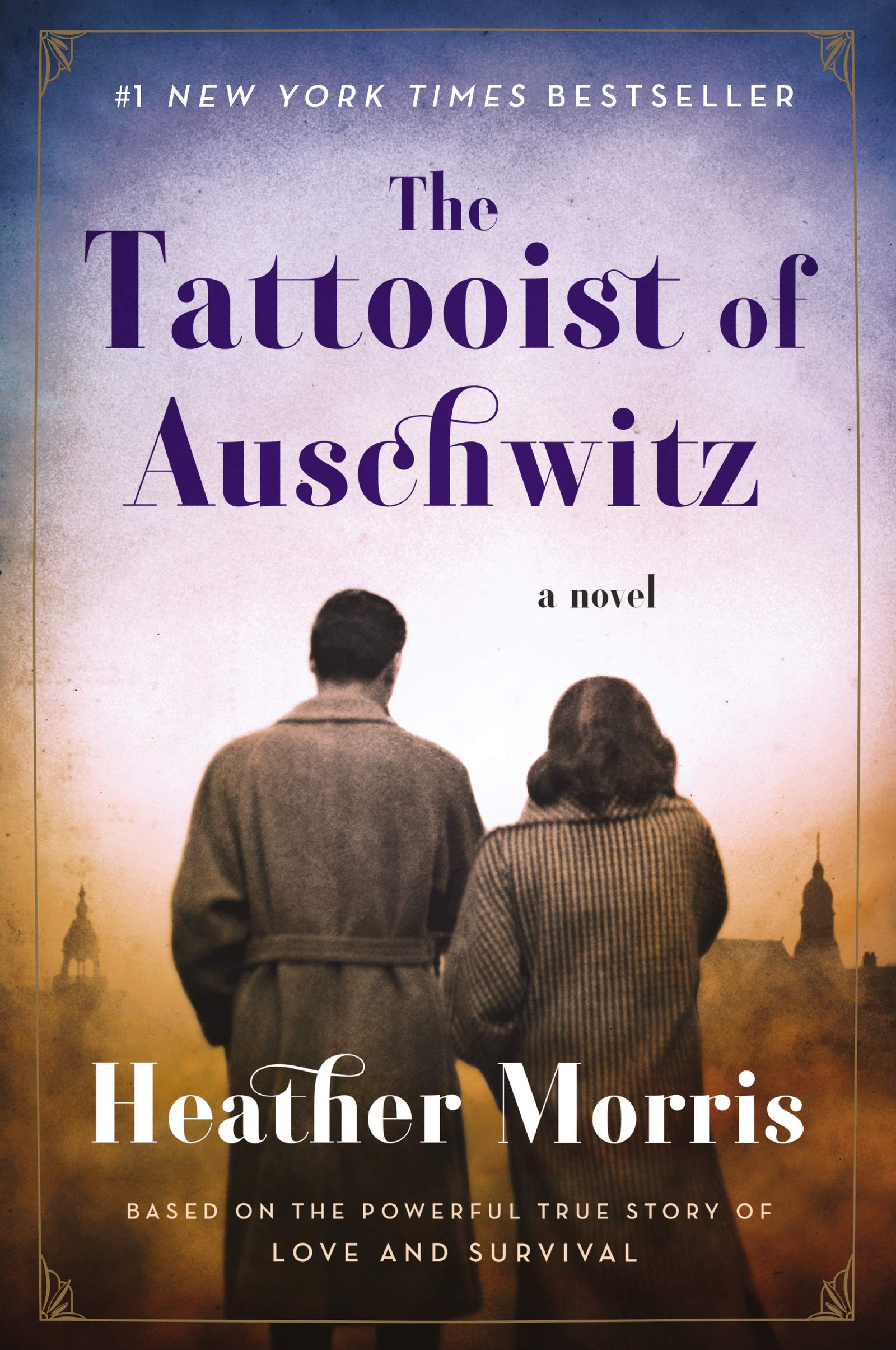
The Tattooist of Auschwitz by Heather Morris
Snippet from my review: But there is more to The Tattooist of Auschwitz than just a love story. It is a portrayal of the day-to-day events within the walls of the concentration camps. The violence within the walls is the antithesis of Lale and Gita’s story but also a reminder of the atrocities of war. Abuse of power and debauchery are also recurring themes woven into the tapestry of the story. Morris’ vivid descriptions transported the readers to the dark halls of Auschwitz, to its dreariest parts, to the heart that made the place beat.
Ah. Another case that is similar to Sad Girls. I was looking forward to Heather Morris’ The Tattooist of Auschwitz. It was a work of historical fiction and we are supposed to at least appreciate works about the horrors of the Second World War. But I guess that is not always the case. To be fair, the story was fascinating. However, what undid it for me was the quality of writing. It was underwhelming. I felt immediately that it was written for the movies. I wasn’t wrong.
Moby Dick by Herman Melville
Snippet from my review: But Moby Dick is more than just about whales and the whaling industry. In Alternatively titled The Whale, it is also the story of one man and his quest to capture a mythical leviathan that has haunted him ever since their first encountered it. At its core, Captain Ahab’s obsession for vengeance against Moby Dick pervades the narrative, becoming one of its centrifugal points. As Pequod set sail, Captain Ahab quite eloquently enunciated the main mission of Pequod – to seek revenge on the sea monster that caused one of his legs to be amputated. To remind him of his lifelong endeavor, he replaced his leg with a prosthesis fashioned from a whale’s jaw.
Moby Dick is one of those books that you just keep on hearing or reading about. After all, it is one of the beloved literary classics. And we are supposed to love the classics. I guess not. I plunged into the narrative believing that I could debunk what I felt was an unfair Goodreads evaluation; the book has a low rating on Goodreads. Moby Dick is an innovative literary work but its complexities render most of it unreadable. Props to Melville for his visionary writing but he lost me with the tedious encyclopedic knowledge of the whaling industry. Whilst it was fascinating, it was also exasperating and very difficult to get into.

Midnight’s Children by Salman Rushdie
Snippet from my review: As always, Rushdie’s depiction of his home country is admirable. India is a colorful country filled with numerous stories, and Midnight’s Children is just among them. Rushdie knows how to pay tribute to his roots like no other author does. He didn’t mince a word in describing its political system, its history, its social diversity, and its prevailing social issues. But in spite of its growth, superstitious beliefs and tradition are still prominent. Rushdie’s fortitude in bringing all these things to light is truly astounding.
The Booker of Bookers. Salman Rushdie’s Midnight’s Children is one of the titles I have been looking forward to for quite some time. Thankfully, I was able to read the book back in 2018. It lived up to the hype. The book was a masterpiece of storytelling that made me appreciate Rushdie’s prose and storytelling. It was just simply stellar, astounding even. It is no wonder that it is one of the towering achievements of modern literature.
 The Pine-Scented Chronicles
I also loved ‘Midnight’s Children’, and had problems with ‘Moby Dick’. Sorry to hear though that you didn’t like ‘Anna Karenina’, but you’ve got some excellent texts here. 🙂
LikeLike
I guess the experience with Anna Karenina is due to my lack of understanding of the concerns underlined by Tolstoy. In retrospect, I have come to appreciate more the story. It would be a case of Ulysses for me. 🙂
LikeLiked by 1 person
I used to teach it, but a very long time ago, so I’ve forgotten much. I’ll have to have a recap from my old notes. 🙂
LikeLike