
Happy Tuesday everyone! As it is Tuesday, it is time for a Top Ten Tuesday update. Top Ten Tuesday is an original blog meme created by The Broke and the Bookish and is currently being hosted by That Artsy Reader Girl.
This week’s given topic: Books on my Summer 2024 TBR


Title: Poor People
Author: Fyodor Dostoevsky
Translator: Hugh Aplin
Publisher: Hesperus Press Limited
Publishing Date: 2002
No. of Pages: 130
Synopsis:
Written as a series of letters, Poor People tells the tragic tale of a petty clerk and his impossible love for a young girl. Longing to help her and change her plight, he sells everything he can, but his kindness leads him only into more desperate poverty, and ultimately into debauchery. As the object of his desire looks sadly and helplessly on, he – the typical ‘man of the underground’ – becomes more and more convinced of the belief that happiness can only be achieved with riches. Theirs is a troubled, frustrated love that can only lead to sorrow.
Poor People is Dostoevsky’s first original work. As both a masterpiece of Russian populist writing, and a parody of the entire genre, it is a profound and uneasy piece, with many glimpses of future genius.
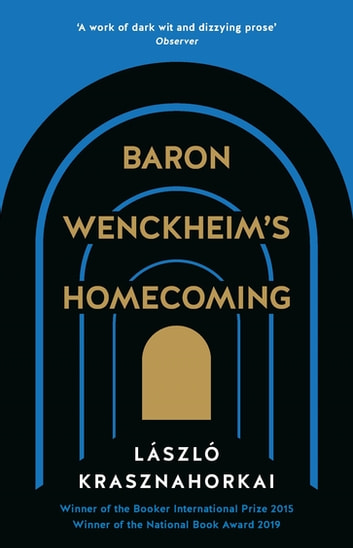
Title: Baron Wenckheim’s Homecoming
Author: László Krasznahorkai
Translator (from Hungarian): Ottilie Mulzet
Publisher: Tuskar Rock Press
Publishing Date: 2021
No. of Pages: 558
Synopsis:
Nearing the end of his life, Baron Bela Wenckheim flees his gambling debts in Buenos Aires and decides to return to the small Hungarian town where he wishes to be reunited with his high-school sweetheart. News of his arrival travel fast, and the town’s conmen and politicians sense a rare opportunity.

Title: The Three Musketeers
Author: Alexandre Dumas
Translator (from French): William Barrow
Publisher: The Reader’s Digest
Publishing Date: 2013 (1844)
No. of Pages: 568
Synopsis:
All For One, One For All!
When daring young swordsman d’Artagnan travels to Paris seeking honor and fortune in the king’s Guard, he quickly befriends the famed three Musketeers—Athos, Porthos, and Aramis.
Loyal servants to the crown, the four friends cross swords with street criminals, face the cardinal’s Guards in duels to the death, and save the honor of the queen by unraveling treasonous schemes in a race against time. It will take epic courage, chivalry, and skill to thwart the plots against them and achieve victory at last.
Alexandre Dumas’s classic swashbuckling tale of adventure, swordplay, and unbreakable friendship is enriched with brand-new, action-packed illustrations by renowned artist Brett Helquist. (Source: Goodreads)
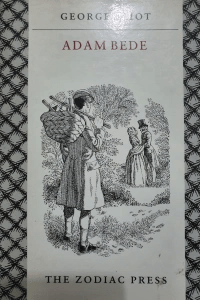
Title: Adam Bede
Author: George Eliot
Publisher: The Zodiac Press
Publishing Date: 1984
No. of Pages: 509
Synopsis:
Adam Bede, the first novel written by George Eliot (the pen name of Mary Ann Evans), was published in 1859. It was published pseudonymously, even though Evans was a well-published and highly respected scholar of her time.
The story’s plot follows four characters’ rural lives in the fictional community of Hayslope—a rural, pastoral and close-knit community in 1799. The novel revolves around a love triangle between beautiful but self-absorbed Hetty Sorrel, Captain Arthur Donnithorne, the young squire who seduces her, Adam Bede, her unacknowledged suitor, and Dinah Morris, Hetty’s cousin, a fervent, virtuous and beautiful Methodist lay preacher.” (Source: Goodreads)

Title: I’m Not Stiller
Author: Max Frisch
Translator (from German): Michael Bullock
Publisher: Harcourt Brace
Publishing Date: 1994
No. of Pages: 384
Synopsis:
Previously available in the United States only in an abridged version, I’m Not Stiller is now published for the first time in its entirety. It is the haunting story – part Kafka, part Camus – of a man in prison. His wife, brother, and mistress recognize him and call him by his name, Anatol Ludwig Stiller. But he rejects them, repeatedly insisting he’s not Stiller. Could he possibly be right – or is he deliberately trying to shake off his old identity and assume a new one?

Title: The Devil in the Hills
Author: Cesare Pavese
Translator (from Italian): Peter Owen Ltd.
Publisher: Sceptre
Publishing Date: 1990
No. of Pages: 183
Synopsis:
Cesare Pavese is now generally regarded as one of the most important writers of the century. This novel is among his best work. It is the story of a young married man, rich and self-indulgent, who has an elderly mistress, and whilst participating in the debauchery prevalent amongst his friends, nevertheless desires desires to lead a more useful life.
‘Is worth reading if only to get the smell and heat of summer in Turin on the hills about… makes us realise sadly how great a loss it was to modern fiction that Pavese died so young.’ ~ Sean O’Faolain

Title: Identity
Author: Milan Kundera
Translator (from French): Linda Asher
Publisher: HarperPerennial
Publishing Date: 1999
No. of Pages: 168
Synopsis:
There are situations in which we fail for a moment to recognize the person we are with, in which the identity of the other is erased while we simultaneously doubt or own. This also happens with couples – indeed, above all with couples, because lovers fear more than anything elese “losing sight” of the loved one.
With stunning artfulness in expanding and playing variations on the meaningful moment, Milan Kundera has made this situation – and the vague sense of panic it inspires – the very fabric of his new novel. Here brevity goes hand in hand with intensity, and a moment of bewilderment marks the start of a labyrinthine journey during which the reader repeatedly crosses the border between the real and the unreal, between what occurs in the world outside and what the mind creates in its solitude.
Of all contemporary writers only Kundera can transform such a hidden and disconcerting perception into the material for a novel – one of his finest, most painful, and most enlightening, which, surprisingly, turns out to be a love story.
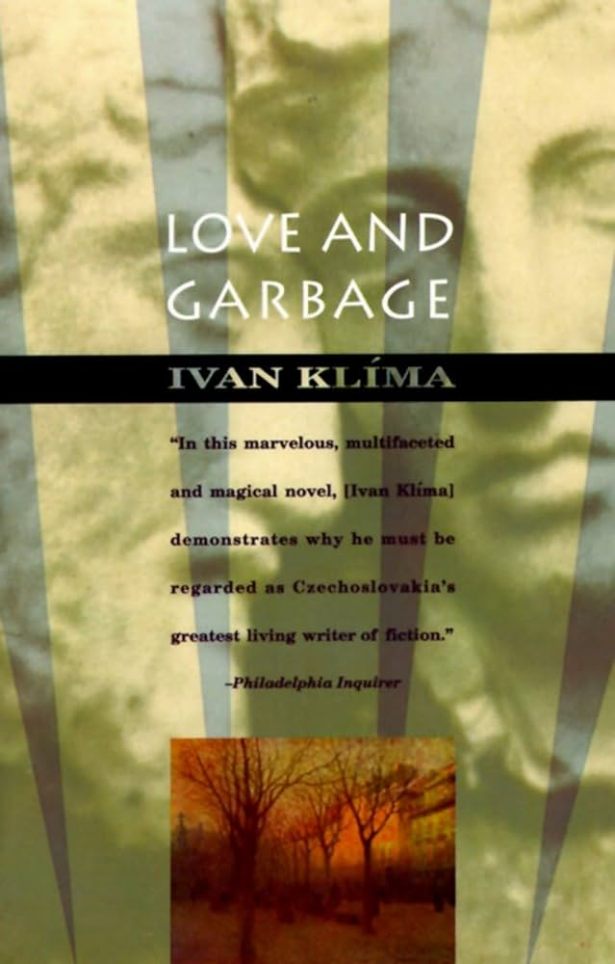
Title: Love and Garbage
Author: Ivan Klíma
Translator (from Czech): Ewald Osers
Publisher: Vintage Books
Publishing Date: April 1993 (190)
No. of Pages: 224
Synopsis:
Like Milan Kundera and Josef Skvorecky, Ivan Klima is a Czech writer whose work was banned in his own country and thus was more or less compelled to become truly international in scope and impact. For although Love and Garbage is set in Prague in the years before the Velvet Revolution, it explores themes of conscience and betrayal that cut to the bone of life in both totalitarian and democratic societies.
The writer-hero of this shrewd, humane, and poignant novel by the author of Judge on Trial has responded to state suppression by becoming a street-sweeper. From his vantage point in Prague’s gutters comes a piercing vision of a world in which everything – from uncomfortable ideas to a former mistress – may be reduced to garbage and only love has the power to grand permanence.
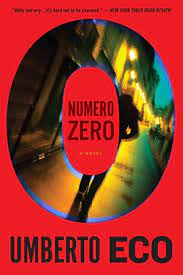
Title: Numero Zero
Author: Umberto Eco
Translator (from Italian): Richard Dixon
Publisher: Mariner Books
Publishing Date: 2016
No. of Pages: 191
Synopsis:
1945, Lake Como. Mussolini and his mistress are captured and shot by local partisans. The precise circumstances of Il Duce’s death remain controversial.
1992, Milan. Colonna, a depressed hack writer, is offered a fee he can’t resist to ghostwrite a book. His subject: a fledgling newspaper, which happens to be financed by a powerful media magnate. As Colonna gets to know the team, he learns of the editor’s paranoid theory that Mussolini’s corpse was a body double and part of a wider Fascist plot. It’s the scoop the newspaper desperately needs. The evidence? He’s working on it.
It’s all there: media hoaxes, mafiosi, the CIA, the Pentagon, blackmail, love, gossip, and murder. A clash of forces that have shaped Italy since World War II – from Mussolini to Berlusconi. Numero Zero is the work of a master storyteller.
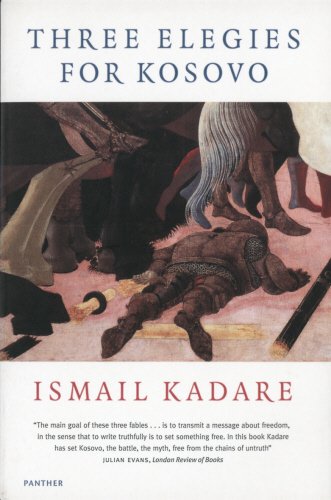
Title: Three Elegies for Kosovo
Author: Ismail Kadare
Translator (from Albanian): Peter Constantine
Publisher: The Harvill Press
Publishing Date: 2000
No. of Pages: 87
Synopsis:
A quarrel that has simmered for six centuries, stemming from a battle that changed the course of history.
28 June 1389, the Field of the Blackbirds. The Christian army – made up of Serbs, Bosnians, Albanians and Romanians – confronts an Ottoman army led by Sultan Mourad. In ten hours the battle is over, and the Muslims possess the field; an outcome that has haunted the vanquished ever since. These legends of betrayal and the symbols of defeat have continued to define the national identities of each race.
28 June 1989, the Serb leader Slobodan Milosevic launches his campaign for a fresh massacre of the Albanians, the majority population of Kosovo.
In three short narratives Kadare evokes that first defining moment in European history, identifying how the agony of the tiny population at the close of the twentieth century is a symptom of the sickness that European civilisation has carried in its bloodstream for six hundred years.
 The Pine-Scented Chronicles
Some excellent classics there. 🙂
LikeLike