
Happy Wednesday everyone! Wednesdays mean WWW Wednesday updates. WWW Wednesday is a bookish meme hosted originally by SAM@TAKING ON A WORLD OF WORDS. The mechanics for WWW Wednesday are quite simple, you just have to answer three questions:
- What are you currently reading?
- What have you finished reading?
- What will you read next?

What are you currently reading?

My foray into the works of European literature is still in full swing despite the fact that June is about to end; I commenced this journey in May when I read works of European Nobel Laureates in Literature. Oh my! We are nearly halfway through the year. Time is flying fast. Despite this, I am working my way to completing books that are part of my ongoing reading challenges and lists. One of the books I included in my 2024 Top 24 Reading List is Norwegian writer Karl Ove Knausgård’s latest novel, The Wolves of Eternity. I have long been curious about my namesake’s oeuvre so when The Wolves of Eternity was released last year, I was high in anticipation. I planned to read it earlier but it is only now that I got the opportunity.
The novel opens with nineteen-year-old Syvert Løyning who has recently completed his stint in the Norwegian national service, as a cook in the navy. He returned home to his mother and twelve-year-old brother Joar; his father, who was his namesake, passed away when he was eleven. The year was 1986 and Syvert was unsure of what he will do. Attending university was an option but not a firm one. He was also unable to find a job. One day, he stumbled upon his father’s old things which included letters written in Russian. It piqued his curiosity and was further intrigued when he learned from his mother that, shortly before his death, his father wanted a divorce. The story then charts how Syvert confronts his memories and the past. A new chapter introduced Yevgeny. I think this is a clue that leads to the enigma surrounding Syvert’s father. I am not sure though. Still, I am looking forward to the revelations that I perceive will eventually come as the story approaches its conclusion.
What have you finished reading?
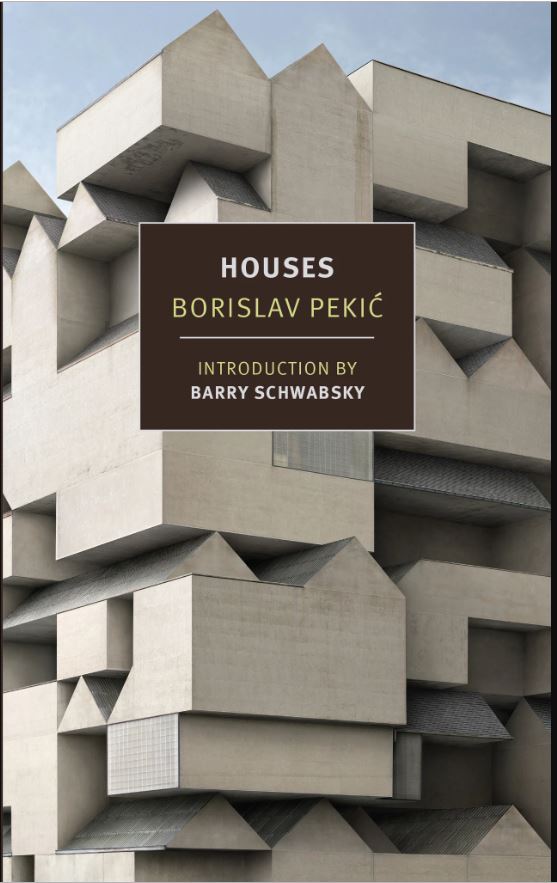
After a couple of slow reading weeks, I was able to pick up some pace in the past week. I was able to complete three books, the first of which was Borislav Pekić’s Houses. Before 2019, I had never heard of the Yugoslavian/Serbian writer until I encountered his book through an online bookseller. It was also a time when I was learning about New York Review Books; they were ubiquitous. Driven by curiosity, I obtained a copy of Houses. Unfortunately, it was left to gather dust on my bookshelf, hence, its inclusion on my 2024 Beat The Backlist Challenge reading list.
Originally published in Serbian as Hodočašće Arsenija Njegovana (The Pilgrimage of Arsenie Negovan) in 1970, Houses was Pekić’s second novel. The heart of the story was Arsénie Negovan. He was a Francophile who dedicated the first half of his life to building houses. When he was seventy-seven years old, on June 3, 1968, he decided to write his final will and testament. Before drawing it out, he decided to venture out and take a final glimpse on the houses he built. It was the first time in a while that he left his threshold; for three decades, he relied on his wife Katarina and his lawyer to deal with his business. His houses are so special that Negovan gave them names, feminine names. His expedition was also a dive into the past. The last time he ventured out was March 27, 1941, which, to a non-Yugoslavian reader wouldn’t make much of an impression. Apparently, it was on this date that the military went into a revolt to overthrow the Yugoslav government; two days prior, the government signed an agreement with Nazi Germany. As such, Houses transforms itself into a probe into geopolitics and the economy while painting an image of a man who was equally passionate and delusional. It was a quick read which made me want to explore more works of Balkan writers.
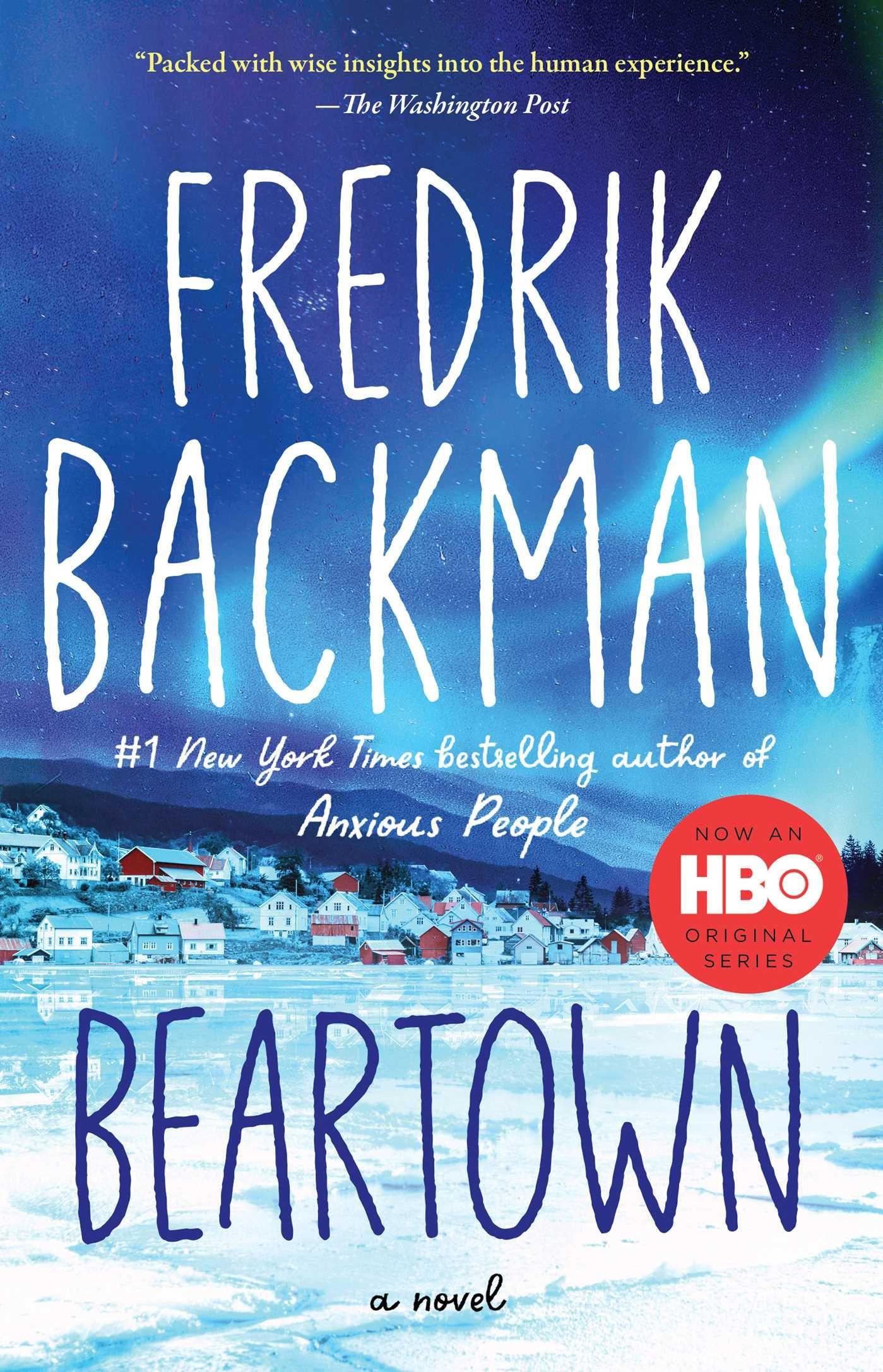
From the Balkans, my venture into European literature transported me to the northern part of the continent, to Sweden in particular. It has been some time since I discovered Fredrik Backman’s humor but to be honest, I was apprehensive about reading any of his works, at first. I am glad I gave A Man Called Ove a chance as it introduced me to a new excitable voice. Anxious People only underlined this growing interest in his works. At the start of the year, I included Beartown on my 2024 Top 24 Reading List.
Beartown is the first book of a trilogy of the same name. Originally published in 2016, the eponymous Beartown is a town located in the Swedish countryside. It was on the cusp of decline as jobs became scarce and its denizens started to leave for bigger cities. When the town’s junior hockey team made it to the semifinals of the national youth games, the entire town erupted in jubilation. The team was spearheaded by prodigy Kevin Erdahl; he was the heart of the team since he was seven. The novel also introduces Benji, his best friend; David, the team’s coach; and Peter Andersson who was once an ice hockey prodigy himself and is now the general manager of the junior team. The crux of the story, however, involves Amat, a not-so-physically imposing new member of the ice hockey team; Kevin; and Maya, Peter’s oldest daughter. A tragic event involving them divided the town and unveiled the fault lines that lay underneath the town’s stoic façade and wall of silence. The novel probes into the dynamics of communities while underscoring heavy but relevant themes such as addiction, friendship, loyalty, abuse, and the prevalence of the culture of victim blaming. What fascinated me again was Backman’s understanding of human nature.

The three-book stretch concluded with another familiar name but whose oeuvre I haven’t had a taste of for nearly a decade. Admittedly, although I was looking forward to Gustave Flaubert’s Madame Bovary – it was a familiar presence in must-read lists – the book left me wanting for more; please note that this was how I felt back then. Despite this, I wanted to explore the highly-heralded French writer’s body of work which eventually came in the form of Sentimental Education, a book I obtained during the Big Bad Wolf Sale.
Set against the backdrop of the 1848 Revolution, Sentimental Education charted the story of Frédéric Moreau. Frédéric was a young man born to the middle class. While on a boat headed for his childhood home, Nogent-sur-Seine, he saw a beautiful woman who he instantly fell in love with; he would later learn her name was Madame Marie (Angèle) Arnoux. At home, his friend Charles Deslauriers encouraged him to pursue Madame Arnoux; one thing was against Frédéric’s favor, Madame Arnoux was married to Jacques. Through Deslauriers, Frédéric got acquainted with Monsieur Dambreuse, a wealthy banker. Everything seemed uphill for the novel’s hero. His fortune started to change when he received an unexpected but hefty inheritance from a recently deceased uncle. It was supposed to be Frédéric’s gateway to the elite circles of Paris and, hopefully, to the heart of Madam Arnoux. But as fate would have it, there is no reprieve for the young man. Madame Arnoux was faithful to her husband. Frédéric’s love soon end in disillusionment. Once idealistic, his views were pierced by the realities surrounding him. It was, as the title suggests, a “sentimental education.”
What will you read next?


 The Pine-Scented Chronicles