
Happy Wednesday everyone! Wednesdays mean WWW Wednesday updates. WWW Wednesday is a bookish meme hosted originally by SAM@TAKING ON A WORLD OF WORDS. The mechanics for WWW Wednesday are quite simple, you just have to answer three questions:
- What are you currently reading?
- What have you finished reading?
- What will you read next?

What are you currently reading?
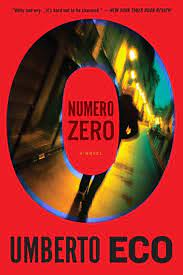
Whoa. It felt like it was just yesterday when July started. Now, we are done with a third of the month. How has July been for everyone? Mine was riddled with reunions with long-time friends. I guess I get to abuse the July birthday card. This, however, has not stopped me from venturing further into the vast landscape of European literature; this is the third consecutive month of my foray into this fabled part of the literary world. This journey has introduced me to new names such as Jenny Erpenbeck and Karl Ove Knausgård. It also made me wander into familiar territories. Take my current read, Umberto Eco’s Numero Zero, for instance. This is my fourth novel by the highly-heralded Italian writer.
Of the four Eco novels I have read so far, Numero Zero is the slimmest. It is Eco’s seventh novel. I just learned this today: it is the last novel Eco released during his lifetime. The novel is narrated by Colonna, a hack journalist, a sometime translator, and a ghostwriter of detective stories. Already in his fifties, he was hired by Simei to work on a newspaper called Domani (Tomorrow) financed by Commendator Vimercate, an influential businessman. However, not everything is as it seems. What ensued was a tale of how historical truths are being challenged, so much so that fiction was slowly turning into reality. One such historical truth birthed a conspiracy theory regarding Italian strongman Benito Mussolini. I am a couple of pages away from completing the book which I find is timely and relevant given the present context.
What have you finished reading?

I am quite aware of the lack of female writers on my venture into the works of European literature; to be fair, the two months prior to this journey were dedicated to works of female writers, including female European writers. I did, however, read a work by Zadie Smith, Vigdis Hjorth, and, just recently, Jane Austen. During the recently concluded Big Bad Wolf Sale, I was able to obtain copies of the last two Austen novels I have yet to read: Mansfield Park and Persuasion. I did not hesitate to include the former in my ongoing European literature. Besides, it has almost been two years since I read Northanger Abbey, the last Austen novel I read.
The titular Mansfield Park is a vast estate owned by the affluent Sir Thomas and Lady Maria Bertram. The couple had four children: Tom, Edmund, Maria, and Julia. The heart of the story, however, was Lady Bertram’s niece, Fanny Price. Fanny was born to an impoverished family. Her father was a disabled sailor who drank heavily. Lady Bertram and Mrs. Norris, her other sister, agreed to foster Fanny. When she was ten, Fanny moved in with her relatives. The opulence of Mansfield Park overwhelmed her; she was not used to such an ostentatious display of wealth. Her cousins, all older than her, also gave her a lukewarm reception. Tom was a spendthrift and also a drunk. Her female cousins, meanwhile, were shallow whose only desire was to enter into a gainful marriage. It was in Edmund that Fanny found a friend. As she grows up. Fanny gets used to the atmosphere and even becomes Lady Bertram’s companion. Morality plays a seminal role as the story paints the psychological portrait of the people Fanny met at Mansfield Park. The values of rural communities surface as the story moves forward. Fanny, like most Austen characters, is a spectator and observer as these rural values, including family values, interplay. This is always a fascinating facet of Austen’s works.
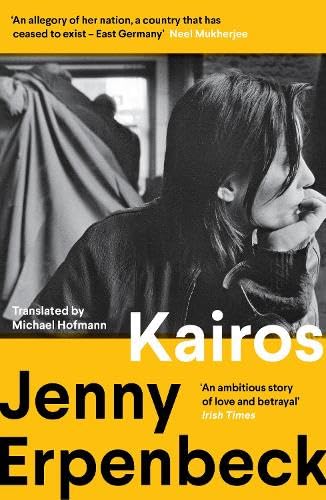
For the first time since April, I have read back-to-back works of female writers. It was not until this year that I encountered German writer Jenny Erpenbeck who I first came across through the International Booker Prize. Her latest novel, Kairos was longlisted for the prestigious literary prize. I was dismissive of it at first, especially as I had never read any of Erpenbeck’s works before. My interest and curiosity were soon piqued when the book made it to the shortlist. It fully commanded my attention when it was announced the winner of the International Booker Prize. Without ado, shortly after its victory, I obtained a copy of the book which I immediately delved into.
What immediately struck me about the book was its title which is a little unusual although the Greek touch did interest me. In ancient Greek, Kairos (καιρός) meant “the right or critical moment” while in modern Greek, it means time or weather. I guess that is a giveaway of what the book is about. Time. Sure enough, Kairos transports the readers in time although it commences in the present when Katharina, the novel’s heroine, learns about Hans’, her former lover, demise. A box of his papers sent to her apartment served as a time capsule that took her back to when they first met in East Berlin in 1986. She was nineteen while Hans was married to Ingrid and was in his fifties. Despite this, the two got swept into a whirlwind romance. The novel captures the dynamics and the landscape of relationships, including its intellectual facets. Katharina’s and Hans’ love story was juxtaposed with the decline of East Germany. Like East Germany, their dreams and hopes were slowly crumbling. As the collapse of the Berlin Wall was approaching, the intricacies and complexities of the novel’s characters’ love story were also approaching its inevitable collapse. Kairos is an atmospheric story fraught with nostalgia.
What will you read next?


 The Pine-Scented Chronicles