
Hello, readers! It is Monday again! As it is Monday, welcome to another #5OnMyTBR update. The rule is relatively simple. I must pick five books from my to-be-read piles that fit the week’s theme.
This week’s theme: In Translation

5OnMyTBR is a bookish meme hosted by E. @ Local Bee Hunter’s Nook where you chose five books from your to-be-read pile that fit that week’s theme. If you’d like more info, head over to the announcement post!
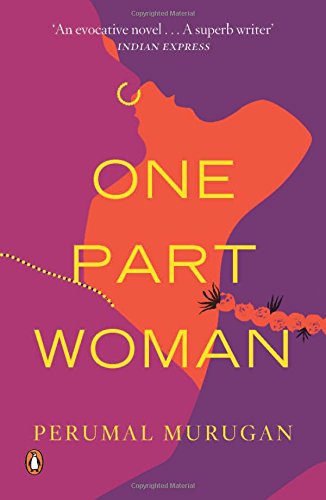
Title: One Part Woman
Author: Perumal Murugan
Original Language: Tamil
Translator: Aniruddhan Vasudevan
Publisher: Penguin Books
Publishing Date: 2014
No. of Pages: 240
Synopsis:
Kali and Ponna’s efforts to conceive a child have been in vain. Hounded by the taunts and insinuations of others, all their hopes come to converge on the chariot festival in the temple of Maadhorubaagan, the half-female god. Everything hinges on the one night when rules are relaxed and consensual union between any man and woman is sanctioned. This night could end the couple’s suffering and humiliation. But it will also put their marriage to the ultimate test.
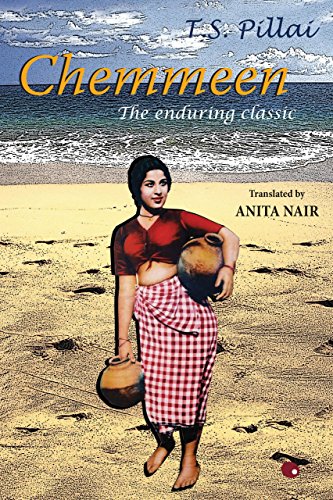
Title: Chemmeen
Author: Thakazhi Sivasankara Pillai
Original Language: Malayalam
Translator: Anita Nair
Publisher: Harper Perennial
Publishing Date: 2011
No. of Pages: 238
Synopsis:
First published in 1956, Chemmeen was adapted into a film of the same name, and won critical acclaim as well as unprecedented commercial success. A deeply affecting story of love and loss set amidst a fishing community in Kerala, the novel transports us into the lives and minds of its characters, Karuthamma and Pareekutty, whose love remains outside the bounds of religion, caste, and marriage. Then, one night, Karuthamma and Pareekutty meet and their love is rekindled while Palani, Karuthamma’s husband, is at sea, baiting a shark.
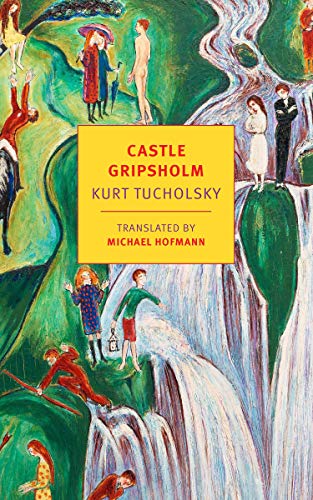
Title: Castle Gripsholm
Author: Kurt Tucholsky
Original Language: German
Translator: Michael Hofmann
Publisher: New York Review of Books
Publishing Date: 2019
No. of Pages: 127
Synopsis:
Castle Gripsholm, the best and most beloved work by Kurt Tucholsky, is a short novel about an enchanted summer holiday. It begins with an assignment: Tucholsky’s publisher wants him to write something light and funny, otherwise about whatever Tucholsky wants. A deal is struck and the story is off: about Peter, a writer; his girlfriend, known as the Princess; and a summer vacation far from the hurly-burly of Berlin. Peter and the Princess have rented a small house attached to a historic castle in Sweden, and they have five weeks of long days and white nights at their disposal; five weeks for swimming and walking and sex and talking and visits with Peter’s buddy Karlchen and with Billy, the Princess’s best friend. It is perfect, until they meet a weeping girl fleeing the cruel headmistress of a home for children. The vacationers decide they must free the girl and send her back to her mother in Switzerland, which brings about an encounter with authority that casts a worrying shadow over their radiant summer idyll. Soon they must return to Germany. What kind of fairy tale are they living in?
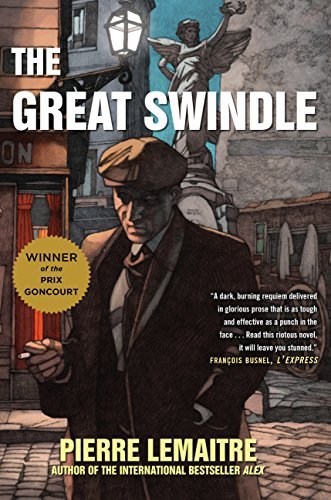
Title: The Great Swindle
Author: Pierre Lemaitre
Original Language: French
Translator: Frank Wynne
Publisher: MacLehose Press
Publishing Date: 2015
No. of Pages: 439
Synopsis:
October 1918: the war on the Western Front is all but over. Desperate for one last chance of promotion, an ambitious lieutenant, Henri d’Aulnay Pradelle, sends two scouts over the top of the trenches, and contrives to shoot them in the back to incite his men to heroic action once more.
And so is set in motion a series of shocking events that will bind together the fates and fortunes of Pradelle and the two soldiers who discover his crime: Albert Maillard and Edouard Péricourt.
Back in civilian life, Albert and Edouard find themselves in a society whose reverence for its dead cannot quite match its resentment for those who survived. Penniless, morphine-dependent, cut-off from their families, psychologically and physically destroyed by their wartime experience, the two soldiers conspire to enact an audacious form of revenge against the country that abandoned them to penury and despair, with a scheme to swindle the whole of France on an epic scale.
Set amid the ruins of one of the most brutal conflicts of the modern era, this is a devastating portrait of the darker side of post-war France with all her villains, cowards, and clowns, revealing the unbearable tragedy of the lost generation.

Title: Fontamara
Author: Ignazio Silone
Original Language: Italian
Translator: Eric Mosbacher
Publisher: Everyman
Publishing Date: November 15, 1994
No. of Pages: 160
Synopsis:
It is Silone’s first novel and is among his most famous works. It received worldwide acclaim and sold more than a million and a half copies in twenty-seven languages. It was first published in German translation in Zurich, Switzerland in 1933, and was published in English by Penguin Books in September 1934. Fontamara is derived from the Italian ‘Fonte Amara’ (Bitter Stream.) Appearing on the eve of the Spanish Civil War, and published just a few months after Hitler came to power, when the world was beginning to take sides for or against fascism, the novel had a galvanising effect on public opinion. Fontamara ‘became the very symbol of resistance’ and ‘is widely agreed to have played a major role as a document of anti-Fascist propaganda outside Italy in the late 1930s,’ as it criticises the deceitful and immoral nature of the Fascist party and its followers.
Fontamara is a fictional small rural village in Marsica in the Abruzzo region. The people (the Fontamaresi) are poor and the village is very remote to the extent that the citizens are unaware of world events such as the rise of Fascism. There is a tremendous gap between the ‘’cafoni’’ (peasants) who populate ‘’Fontamara’’ and those who live in the city. The Fontamaresi work the Earth to survive, turn to emigration as a means of economic improvement and are ignorant to events happening outside of their town. They are cut off from the rest of Italy and thus unaffected by modernity and new technology. The Impresario is a stark contrast to the Fontamaresi, who have laboured for centuries to little avail, as he quickly became the richest man in the region and embodies the power, authority and immorality of the Fascists. The Fontamaresi are exploited due to their naïvety and ignorance, the women are raped by the squadristi (a group of Fascists), Berardo Viola makes the ultimate sacrifice to allow the continued distribution of clandestine texts to spread the word about socialism and encourage rebellion against Fascism and at the end the majority of the population are killed at the hands of the Government. (Source: Goodreads)

Title: King, Queen, Knave
Author: Vladimir Nabokov
Original Language: Russian
Translator: Dmitri Nabokov
Publisher: Vintage International
Publishing Date: February 16, 2011
No. of Pages: 272
Synopsis:
This novel is the story of Freyer, a wealthy and boisterous proprietor of a men’s clothing emporium, Ruddy, self-satisfied, and thoroughly masculine, he is perfectly repugnant to his exquisite but cold middle-class wife, Martha. Attracted to his money but repelled by his oblivious passion, she longs for their nephew instead, the thin, awkward, myopic Franz. Newly arrived in Berlin, Franz soon repays his uncle’s condescension in his aunt’s bed.
 The Pine-Scented Chronicles