
Happy Wednesday everyone! Wednesdays also mean WWW Wednesday updates. WWW Wednesday is a bookish meme hosted originally by SAM@TAKING ON A WORLD OF WORDS. Unfortunate
The mechanics for WWW Wednesday are quite simple, you just have to answer three questions:
- What are you currently reading?
- What have you finished reading?
- What will you read next?

What are you currently reading?
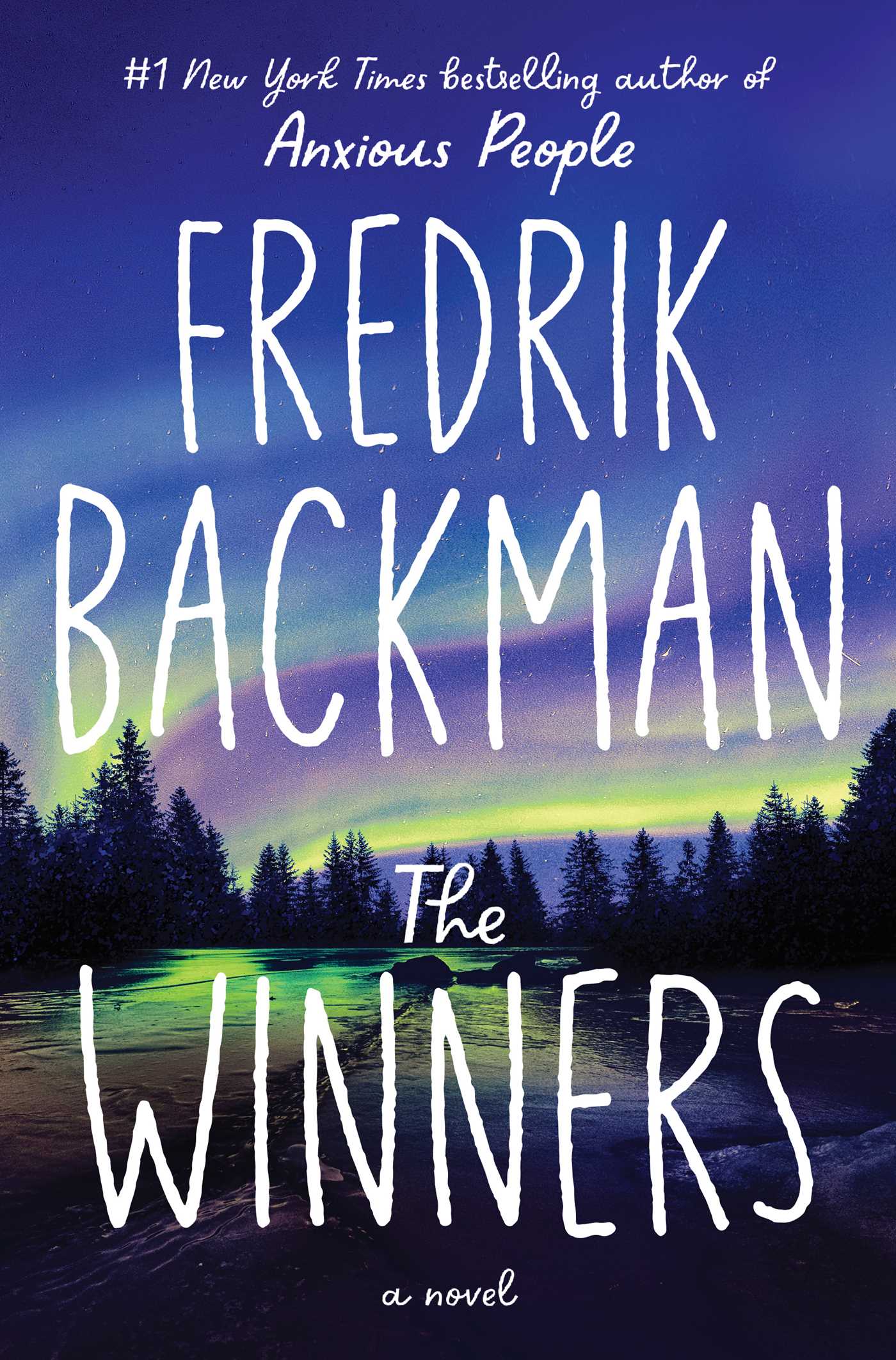
A new month has beckoned which means I should be venturing into a new literary world after immersing myself in the works of European literature in the past three months. However, I decided to extend this journey for a couple of days more to cover books that I have been looking forward to but wasn’t able to get into in the past three months. Ironically, I was originally not planning to read Fredrik Backman’s The Winners; this is also the case for Us Against You. However, before my trip to Japan, I changed my mind because I wanted to know what happened to the characters introduced in Beartown. The three books flowed seamlessly and I don’t want to skip a beat.
The Winners is the final book in the Beartown trilogy. It picks up where the second book left off. Or not really. In the final book, two years have already passed and several changes have taken place. The Beartown ice hockey A-team is now a member of the elite group after being a regular cellar dweller. It was thanks to Elizabeth Zackell and her unusual coaching approach which helped turn Amat into a superstar. However, when the story commenced, Amat was dealing with a slump after a failed attempt at being drafted for the NHL. Benji, on the other hand, has left ice hockey and embarked on a journey across the world. Bobo has become Zackell’s assistant. While the book is thicker than the first two books, I find the plot a little thinner because I guess some of the subjects highlighted in the book were already tackled in the earlier books. I see The Winners as a way to wrap up nicely what has been a very riveting series. Sadly, there are dark overtones to the story.
What have you finished reading?

Admittedly, my foray into the works of Polish writers is scant, to say the least. Actually, the only name that comes to mind when we talk about Polish literature is Nobel laureate in literature Olga Tokarczuk. I have since wanted to expand my venture into Polish literature. The opportunity came this year when I came across Andrzej Szczypiorski during the recently concluded Big Bad Wolf book fair. Even though I barely had any iota about who Szczypiorski was, I obtained a copy of his book, The Beautiful Mrs. Seidenman. The book had an introduction by Chimamanda Ngozi Adichie – although I dislike her politics – also convinced me.
When I learned that book is listed as one of the 1,001 Books You Must Read Before You Die, I knew I had to read the book. Originally published in 1988 in Polish as Początek, the novel is set in German-occupied Poland. Before the German occupation in September 1939, the eponymous Irma Seidenman lost her husband Ignacy, a radiologist. Preserving his legacy provided her a new hope until the Nazis came. In her thirties, Irma was the model Aryan envisioned by Adolf Hitler: fair hair, blue eyes, and regular features. However, Mrs. Seidenman is a Jew, placing her in immediate danger. Nevertheless, she managed to evade persecution by passing as the widow of a Polish officer; she adopted the alias, Maria Magdalena Gostomska. However, like most war novels, this story is just not about Mrs. Seidenman as it also charts the fortunes of the people orbiting around her. Among them is the young man Pawelek who, as a young boy, fervently desired Mrs. Seidenman. Through his eclectic cast of characters, Szczypiorski vividly captured the horrors of the Second World War and the atrocities that have become reality for those who were at the heart of it. Heartbreaking but brimming with hope, The Beautiful Mrs. Seidenman finds power in providing voices to those who have been muted by history.
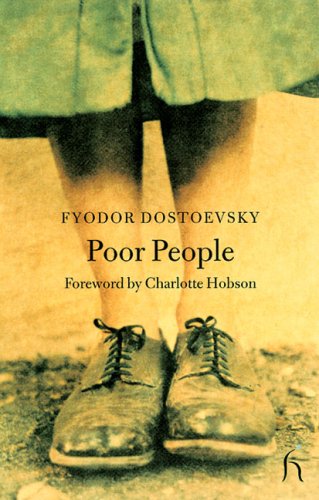
Unlike Szczypiorski, Fyodor Dostoevsky is a name that has been very familiar to me although I admit that it was through must-read lists that I first came across the Russian writer and his works. Back in early 2017, I read Brothers Karamazov and a year later, Crime and Punishment. However, it took time before I got to return to his oeuvre. Just this year, I read Devils although it was Poor People that I listed in one of my reading challenges, 2024 Beat the Backlist Challenge. It didn’t feel like time had passed by because reading Devils felt very familiar. This was also the same feeling when I read Poor People.
Originally published in Russian between 1854 and 1855 as Бедные люди (Bednye lyudi), Poor People (alternatively published as Poor Folk) is Dostoevsky’s first published novel. The story was written in epistolary form and captured the correspondence between Varvara Dobroselova and Makar Devushkin. They are second cousins twice removed who were residing across from each other on the same street in terrible apartments. In their correspondences they both aired their miseries; they were both poor, hence, the book’s title. It was also through their letters to each other that we learn more about the two protagonists. Varenka was from the countryside but moved to St. Petersburg when her father lost his job. Varenka longed for the countryside and loathed the city. Meanwhile, Makar works as a copyist. He was belittled by his colleagues due to the condition of his clothes. We read how their lives slowly changed by their interactions with the people around them. Like his succeeding works, Poor People vividly captures the psychological profiles of the two main characters. It unsurprisingly set the tone for Dostoevsky’s succeeding works.

Like Szczypiorski, I had very little inkling about who Cesare Pavese was when I first encountered him through an online bookseller. Nevertheless, my interest was piqued, hence, I purchased a copy of The Devil in the Hills; this was during the first year of the pandemic. Apparently, Pavese is quite a prodigious writer and was one of the leading Italian writers in the first half of the 20th century. I would encounter him, with great surprise, in Natalia Ginzburg’s Family Sayings; Pavese had encounters with Ginzburg’s family. Oh, it seems that Leone Ginzburg, Natalia’s husband, was among his mentors at university.
Anyway, I was not planning on reading The Devil in the Hills but changed my mind eventually after I realized that I had read very few works of Italian literature. In what is considered Pavese’s most personal novel, the book follows the adventures of three university students – Oreste, Pieretto, and the narrator, a thinly veiled Pavese – in post-war Italy. They were carefree Turin students of rural origins who decided to spend their summer vacation in the Piedmont countryside. It was there that they came across Poli, an affluent and debauched man who lets his estate run wild. Poli then invited his new friends to his estate, Greppo. At Greppo, the three young men were attended to by Gabriella, Poli’s estranged wife. It was surely a strange arrangement. The three young men found themselves slowly drawn into the world of Poli and Greppo. This would also test the friendship of the trio. In a way, the novel reminded me of Ernest Hemingway’s The Sun Also Rises in how it captured the decadence of the lost generation and how the ennui post-war has impacted them. The Devil in the Hills is a slender read which I hoped was a little longer. I did like Pavese’s descriptive writing which captured the beauty of the countryside.
What will you read next?


 The Pine-Scented Chronicles