
Happy Wednesday everyone! Wednesdays also mean WWW Wednesday updates. WWW Wednesday is a bookish meme hosted originally by SAM@TAKING ON A WORLD OF WORDS. Unfortunate
The mechanics for WWW Wednesday are quite simple, you just have to answer three questions:
- What are you currently reading?
- What have you finished reading?
- What will you read next?

What are you currently reading?

Just like that, we are already midway through August. Woah. Leo season is about to end while Virgo season is waving over the horizon. It also means that the Philippines is getting closer to the start of the Holiday season. As soon as it hits September 1, Christmas songs will permeate the radio waves and malls. Time does fly fast. Regardless, I hope that the year is going great for everyone. I hope that the remainder of the year will shower everyone with unending blessings and good news. I hope everyone will be healthy in mind, body, and spirit. I also hope that everyone gets to achieve everything they want to achieve at the start of the year. In terms of my reading, I am positive that I will be able to hit all my goals. I guess starting earlier than usual on my reading challenges has helped me.
Currently, I have shifted to a new literary territory after spending over three months reading exclusively works of European literature. I am reading Adam Verghese’s The Covenant of Water. It was early last year when I first encountered Verghese while searching for the most anticipated 2023 book releases. The Covenant of Water was ubiquitous, hence, it was a no-brainer for me to include it on my 2023 Top 10 Books I Look Forward To List. Unfortunately, I was not able to obtain a copy of the book last year. However, once I was able to grab a copy of the book, I set on reading it without ado. What first surprised me about the book was its length. It is rather think which is a good thing for me. I will be sharing more of my impression of the book in this week’s First Impression Friday update.
What have you finished reading?
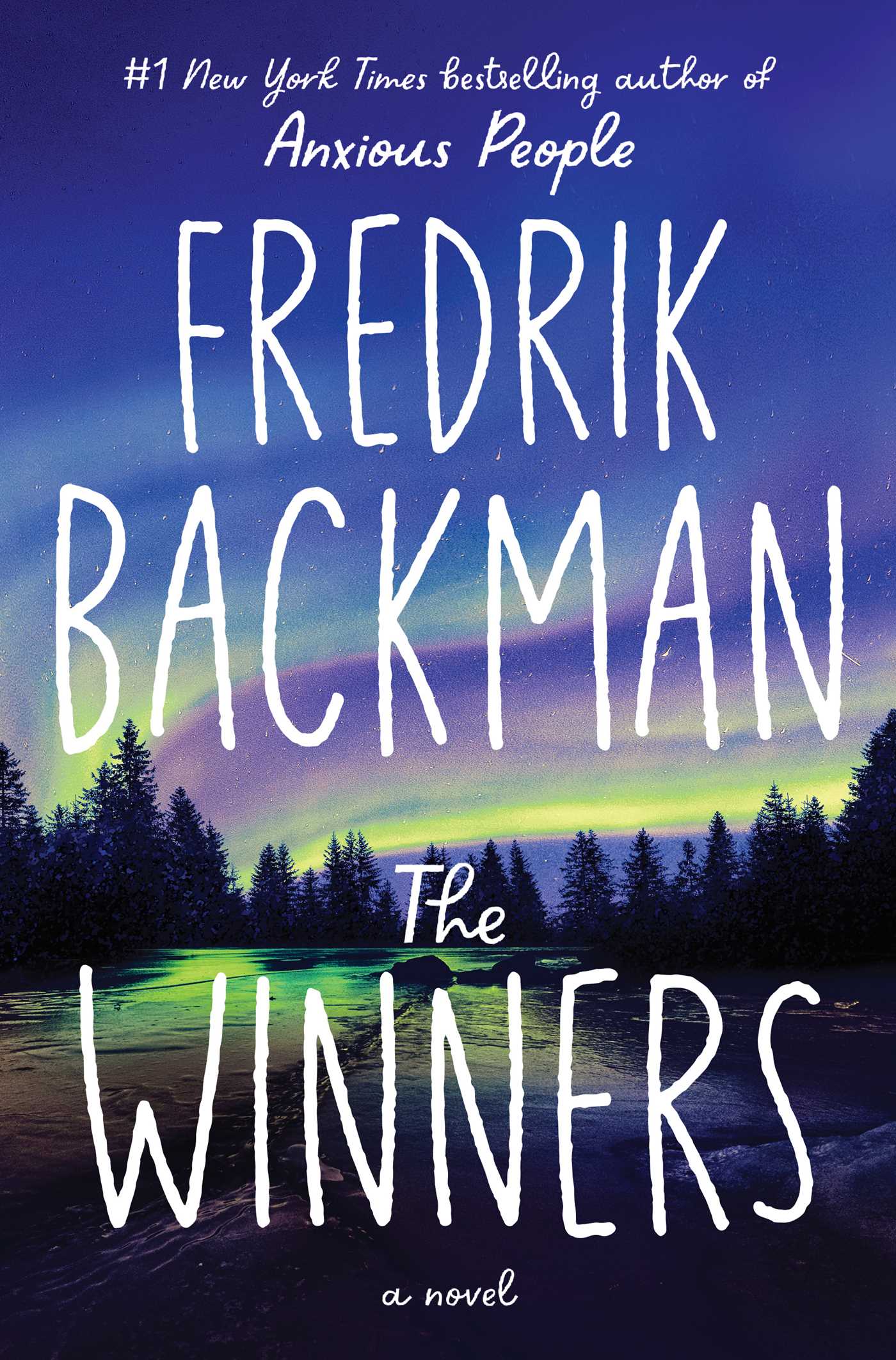
My venture into European literature was supposedly ended in July. However, because of my compunction for changing my mind at the drop of my hat, I decided to extend my stay for a bit. There were some books I resolved to read at the last minute. The main culprit is the sequels to Fredrik Backman’s Beartown. I did not intend to read the second and third books in the trilogy, thinking that I would read them next year. However, I changed my mind when I was picking books to take with me to Japan. I took with me Us Against You. Since I already read the first two books, it was a no-brainer for me to read the last, The Winners.
The Winners take place two years after the events covered by its predecessor. The Beartown Ice Hockey A-Team has now established a winning culture. It is not the best team in the country but it is among the top. Its recent successes left its rival town Hed in the dust. Leading the charge was Amat but his recent venture into being drafted into the NHL dampened his spirit. Questions about his participation in the new season lingered. He refused to show himself in training. Benji, on the other hand, has left town and become a vagabond. Bobo, the last of the trio left when the rest of the junior team moved to head, has been designated as assistant coach. The A-Team’s coach was cognizant that she must act immediately. She strings along former team manager Peter Andersson. Peter, since leaving the team, has worked under his wife. However, Peter still yearns for the ice rink. The last book in the trilogy pretty much builds on the same subjects explored in the first two books. The Winners is about healing and rediscovering one’s self amidst the tumult. A new plotline keeps the readers at the edge of their seats. The story, however, was bookended by deaths. Overall, The Winners nicely wraps up the Beartown trilogy and underlines Backman’s deep understanding of the intricacies of both communities and the individual.

From a familiar name to another familiar name but whose oeuvre I have yet to explore. As one ventures across the vast ambit of literature, one is most likely to bump into Franz Kafka. He is one of the most popular names out there and his works are ubiquitous. If my memory serves me right, it was Haruki Murakami who first introduced me to him through the Japanese writer’s complex novel Kafka on the Shore. Kafkaesque was also a familiar adjective. In 2019, I finally acquired a copy of The Castle. However, it would take about five years before I was finally able to read the book.
The Castle, I just learned, was the last novel written by the Czech writer. The story commences with the arrival of a young man named K. in an anonymous village located at the foot of the titular castle. Residing in the castle was Count Westwest. He arrived late at night looking for a place to stay. There were, however, no rooms available at the local inn but they offered him a bed of straw in the building’s taproom. The locals were immediately in doubt of K.’s intentions as he claimed that the Castle enlisted his assistance as a land surveyor. To obtain permission to stay at the village, K. must seek approval from the castle. A castle director named Klamm requested K. to speak with the village mayor. The mayor informed K. that there must have been a mix-up in the communication because they did not request a land surveyor. Things only got more confusing for K. at this point. It was no surprise that the novel was bereft of a robust plot. One thing was clear. K. wanted to establish a connection with the castle and it was this quest that the novel charts. This also underlines the legacy of Kafka’s oeuvre as the novel veers away from the conventions of traditional storytelling. The Castle challenges one’s reading mettle. It was surely no easy read.
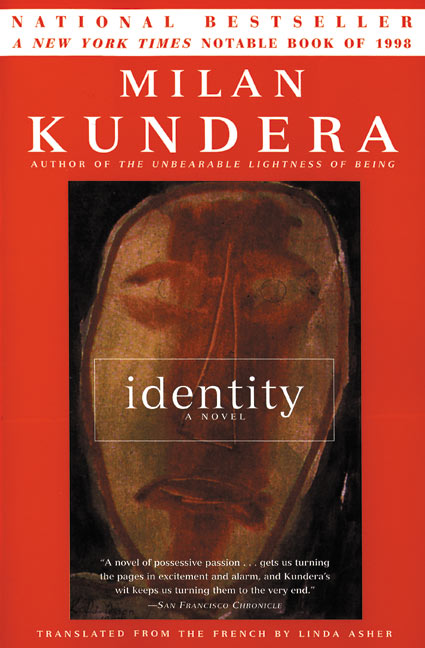
For my next literary stop, I stayed in Central Europe. Last year, I was saddened by the news of Czech writer Milan Kundera’s demise last year. To honor his name, I wanted to read one of his works last year but I kept pushing it back. I had many books lined up, hampering me from taking on any of his works. Reading one of his works this year was also not originally part of my plan. However, reminded of my plan last year – and also doubled by the recent demise of Albanian writer Ismail Kadare – I resolved to read Identity which was originally published in French in 1998 as L’Identité; it was his second novel originally written in French.
Kundera’s literary career is often divided into three major sections. Identity is part of the latter third of his career. The novel charted the intimate relationship between Chantal, a middle-aged divorcée, and Jean-Marc, her slightly younger and less socially ambitious lover. The lovers were to meet on the coast of Normandy but they initially struggled to find each other, often mistaking strangers for one another even though the strangers barely resembled them. This immediately sets the tone for the novel which is literally, as the title advertises, about identities. The lovers would eventually meet but there was always something thrumming the surface, percolating, waiting to explode. In alternating perspectives, we learn about each of them. Chantal’s anxieties were triggered by her memories of the death of her child with a previous partner. Age was also exacerbating her anxieties. Jean-Marc, on the other hand, found himself questioning his lover as Chantal unpeeled layers of herself. He was also starting to question himself. Musings brimmed the story and reel the readers in. Identity had a promising premise but slowly crumbles under the weight of its ambition. I wish the story was longer.

Before 2023, I have never come across James McBride nor have I encountered any of his works. His latest novel, The Heaven & Earth Grocery Store, fell under the radar when I was searching for the most anticipated 2023 book releases. It was in mid-2023 when I came across the book. Several literary publications were listing it as one of the best books of the year so far. The book was also gaining positive responses from fellow book readers. Many have even touted it as a shoo in for some major literary prizes. All of these were factors in my curiosity about the book. However, it was only this year that I could obtain a copy of the book.
My initial impression of The Heaven & Earth Grocery Store is that it sounded arbitrary. Imagine my surprise when this title belied a complex novel resonating with deep messages. The novel commences in 1972 in the town of Pottstown, Pennsylvania. Excavators unearthed a skeleton in an old well in Chicken Hill, a predominantly Black neighborhood but pieces of evidence of the grim crime were destroyed by the Hurricane the day following the discovery of the skeleton. The story then flashes back 47 years earlier. Moshe Ludlow, a theater manager, married Chona, the youngest daughter of Rabbi Flohr, the owner of the Heaven & Earth Grocery Store. When Moshe’s fortunes grew, he asked his wife to sell the grocery store and leave Chicken Hill, a suggestion Chona vehemently rejected. Twelve years later, Chona fell ill but no doctor can provide a logical diagnosis but she was able to recover. Meanwhile, the state wanted to institutionalize Dodo, a 12-year-old Black boy living with his aunt and uncle following the demise of his mother. Dodo was deaf. However, Moshe and Chona did not want him to be taken by the state, hence, they hid him. A work of historical fiction, The Heaven & Earth Grocery Store has several layers that keep the readers occupied. With its diverse cast of characters, it is a compelling read about race explored with a tinge of wit and humor.
What will you read next?


 The Pine-Scented Chronicles