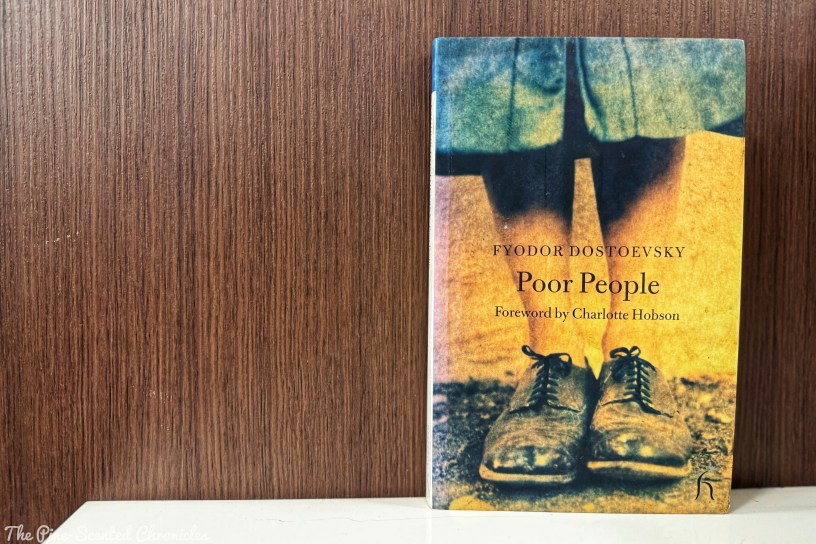
In Search of Dignity
It was in the 19th century that Russian literature blossomed when it experienced its golden age. It was also the period when it emerged as a major force in universal literature. The most celebrated period of Russian literature, the 19th century produced major literary talents such as Vasily Zhukovsky, Alexander Pushkin, Nikolai Gogol, Ivan Turgenev, Anton Chekhov, and Leo Tolstoy. Collectively, they have written several literary masterpieces which elevated Russian literature to global recognition. These literary masterpieces are among the most notable and the most celebrated not only in the ambit of Russian literature but also in world literature. These writers and their oeuvres transcended time and borders as they remain relevant in contemporary literary discourses.
Another one of the most distinguished Russian writers from this period was Fyodor Mikhailovich Dostoyevsky. Born on November 11, 1821, in Moscow, Russia, his name is spoken with reverence. He is one of the select few who has become synonymous with Russian literature. Readers and literary critics alike regard him as one of the best novelists of all time. His literary heritage has been immortalized and a foray into world literature would not be complete without encountering Dostoyevsky or any of his works. Crime and Punishment (1866), The Idiot (1868 to 1869), The Demons (also published as The Devils and The Possessed, 1871 to 1872), and Brothers Karamazov (1880) form the core of his literary heritage. Collectively referred to as his four masterworks, they are among the staples of both Russian and world literature.
From the onset, Dostoyevsky was already seen by many as a literary star. These all started with his first major work, Bednyye lyudi (Бедные люди)). His first major work did not escape the attention of literary critics who generously sang songs of praise for the novel. Shortly after the book’s publication in 1846, he was named by the most influential critic of his day, Vissarion Belinsky, as the great new talent of Russian literature. Belinsky referred to it as Russia’s first social novel. The novel was warmly received in St. Petersburg’s major literary circles. Other established writers were also praising the new talent. In 1894, the novel was made available to Anglophone readers. The book’s first English title was Poor Folk but succeeding translations alternatively titled it Poor People.
“You must not be angry with me for having been so sad yesterday; I was very happy, very content, but in my very best moments I am always for some reason sad. As for my crying, that means nothing. I don’t know myself why I am always crying. I feel ill and irritable; my sensations are due to illness. The pale cloudless sky, the sunset, the evening stillness – all that – I don’t know – but I was somehow in the mood yesterday to take a dreary and miserable view of everything, so that my heart was to fall any did the relief of tears. But why am I writing all this to you? It is hard to make all that clear to one’s own heart and still harder to convey it to another. But you, perhaps, will understand me. Sadness and laughter both at once! How kind you are really. You looked into my eyes yesterday as though to read in them what I was feeling and were delighted with my rapture.”
~ Fyodor Dostoevsky, Poor People
At the heart of Poor People are Makar Alekseyevich Devushkin and Varvara Alekseyevna Dobroselova. They are second cousins twice removed. Makar and Varvara were residing across from each other on the same street. The novel takes on the form of an epistolary novel and captures the correspondence between them which commenced on the eighth of April. Makar recently moved into his new apartment. Born to poor families, they were living in squalor. Makar, for instance, occupied a portioned-off section of a kitchen. He lived with several other tenants in the same apartment building, among them the Gorshkov family whose patriarch lost his job through a lawsuit, the circumstances of which Makar was not aware. The letters they wrote were a form of escape from the realities surrounding them. In their letters, they write about their complaints, mainly about their living conditions.
Through their correspondences, Dostoyevsky was painting not only their circumstances but also capturing their individual histories and psychological profiles. Already forty-seven years old, Makar was living alone and was employed as a government clerk and copyist. Makar was honest and sympathetic to the plights of the poor even though he was a part of the lower rungs of society. Rather than save his money, he squanders it by buying Varvara gifts. His character flaw also made him give his money to the Gorshkov family. He was constantly belittled by his colleagues due to the condition of his threadbare clothes. This was exacerbated by his repeated misfortunes rooted in his being publicly taunted and his constant errors at work. Taking pity on him, his boss gave him money to buy new clothes.
Varenka, on the other hand, used to live in the countryside. Her father was a steward in the province of Tula. However, after her father lost his job, they moved to St. Petersburg. Varvara despised living in St. Petersburg and preferred the solitude of country life. Life was also unkind to Varenka’s parents. Her father, after losing his job, became violent and even alcoholic. Her mother, on the other hand, fell into a spell of depression. Following her father’s demise when she was fourteen, Varenka and her mother moved in with the landlady Anna Fyodorovna, a cruel and unpleasant woman who made life difficult for Varenka. Anna, nevertheless, feigns sympathy for Varenka’s plight. was tutored by Pokrovsky, a poor student. Eventually, Varenka fell in love with Pokrovsky and even bought him a complete set of Alexander Pushkin’s works for his birthday.
However, fate never seems to favor Varenka as a series of further misfortunes ensues, leaving her devastated. In the present, Varenka was earning a living as a seamstress but following the unfortunate turn of events, she wanted to move to a different part of the city but her meager earnings do not allow her such luxury. Like Makar, Varenka finds salvation in the kindness of the people around her. When Anna’s abuses became excessive, Varenka found shelter in the company of Fedora who lived across the street. Fate started to smile on Varenka when she crossed paths with Mr. Bykov, a rich widower and an acquaintance of Anna Fyodorovna and Pokrovsky’s father. While Mr. Bykov’s entry into Varenka’s life was seen as favorable, it came with a price. His presence threatens to sow discord between the cousins and close friends.
“I gradually begin a desk to sink into that condition which is so common with me at night in my illness, and which I call mystic care. It is the most oppressive, agonising state of terror of something that I cannot define, something ungraspable and outside of the natural order of things, but which may yet take shape this very minute, as though in mockery of all the conclusions of reason, and come to me and stand before me as an undeniable fact, hideous, horrible, and relentless… In spite of all the protests of reason, The mind loses all power of resistance. It is unheeded, it becomes useless, and this inward division intensifies the agony of suspense. It seems to me something like the anguish of people who are afraid of the dead.”
~ Fyodor Dostoevsky, Poor People
The most overriding theme of Dostoevsky’s debut novel is palpably poverty. The living conditions of the two protagonists and the landscape of poverty in St. Petersburg were vividly captured by Dostoevsky. It was the main characters’ poverty that became a common ground for them, thus, their growing friendship. This was despite the contrasts between Makar and Varvara. Varvara was younger than Makar. She was also born into a relatively wealthy family but when she moved to St. Petersburg and got to know Makar, Makar started supporting her financially. Meanwhile, Varvara disclosed a detail about her past suggesting a dishonorable act committed against her, pushing her to the peripheries of normal society. Despite her past and her cousin’s doting demeanor, Varenka was driven in her pursuit of being independent.
Makar, on the other hand, adored his younger cousin and made his world orbit around her, even buying her gifts. Like his cousin, he is not without aspirations. He dreams of becoming a writer. He likes reading literature, an interest he shared with Varvara. He was excited to befriend Ratazyayev, a former official who was now earning a living as a hack writer and lodged in the same building as he did. Ratazyayev cultivated Makar’s interest in writing and reading, inviting him to his literary parties and giving him books to read. From the complete works of Alexander Pushkin that Varvara gifted to her lover to the Ratazyayev’s literary parties, literature is integral in the lives of the main characters in Poor People. In a way, literature provided a means for escape from the miserable conditions surrounding them.
Throughout the characters’ interaction with those around them, including affluent individuals, Poor People underlines how wealth can be whimsical. People can fall in and out of fortune. This was underlined by the story of Varvara’s family and further underscored by the fate of the Gorshkov family. One’s wealth can disintegrate as quickly as it came. One can hit the jackpot one day and the day after, fall into the quagmires of poverty. Meanwhile, some individuals tire themselves to the bones but are still stuck in the same station in life. No matter how hard they work and toil, they remain poor. Ironically, those who have experienced this kind of poverty are often more generous and sympathetic to the plight of the poor. While Varvara was more sensible in her management of her money, Makar was more sensible where the plight of the poor was concerned.
“Perhaps one may be out late, and had got separated from one’s companions. Oh horrors! Suddenly one starts and trembles as one seems to see a strange-looking being peering from out of the darkness of a hollow tree, while all the while the wind is moaning and rattling and howling through the forest—moaning with a hungry sound as it strips the leaves from the bare boughs, and whirls them into the air. High over the tree-tops, in a widespread, trailing, noisy crew, there fly, with resounding cries, flocks of birds which seem to darken and overlay the very heavens. Then a strange feeling comes over one, until one seems to hear the voice of some one whispering: “Run, run, little child! Do not be out late, for this place will soon have become dreadful! Run, little child! Run!” And at the words terror will possess one’s soul, and one will rush and rush until one’s breath is spent—until, panting, one has reached home.”
~ Fyodor Dostoevsky, Poor People
The novel also examines the other factors that exacerbated their poverty. Makar, for instance, can be decadent, indulging his cousin. He does not save the little money that he earns and would rather spend them buying gifts for Varvara or giving them to the Gorshkovs. When he received a small fortune, Makar spent it on alcohol. But the correspondence between Makar and Varvara was not limited to their personal despair or the shame they feel for their station in life. Their correspondences astutely underscored society’s nonchalant attitude toward the plight of the poor. They felt powerless whilst the rest of the world frowned upon them. Several instances, such as how Makar was treated by his colleagues, highlighted how society at large humiliates and, to a greater extent, dehumanizes the poor. The dichotomy between the poor and the affluent is stark.
Stifling the characters’ plight was the constricted atmosphere of Saint Petersburg. This was capably fleshed out by Dostoevsky’s writing. The novel’s epistolary form provided glimpses into the character’s innermost thoughts. This direct access to their thoughts creates an intimate and personal connection between the readers and the characters. While social injustice was iterated, the novel also captured a society that was bereft of compassion. Nevertheless, through the characters, Dostoevsky captured the resilience and the indomitability of the human spirit in light of the challenges it has to face. It also highlighted the transformative power of empathy and interconnectedness. Boss’ small act of generosity, for instance, helped salvage Makar’s dignity. Hope emerges at various points in the story.
Interestingly, Dostoevsky wrote what would be his first major literary work in nine months after finding himself in dire financial straits. His decadent lifestyle and growing gambling addiction resulted in him facing financial difficulties. Vestiges of this decadence were somehow channeled through Makar. With his works of translations of foreign books also bringing economic stability, Dostoevsky ventured into writing his own book. Poor People then is a deeply personal book peopled with realistically fleshed-out characters. Casting a net over a vast territory, the novel probed into the glaring dichotomies between the poor and the rich and social injustices. On the brighter side, the novel underscored the resilience of the human spirit and the power of empathy and interconnectedness. Poor People set the tone for the rest of Dostoevsky’s oeuvre, which already contained vestiges of genius that would be encapsulated in his later works.
“Clouds overlaid the sky as with a shroud of mist, and everything looked sad, rainy, and threatening under a fine drizzle which was beating against the window-panes, and streaking their dull, dark surfaces with runlets of cold, dirty moisture. Only a scanty modicum of daylight entered to war with the trembling rays of the ikon lamp. The dying man threw me a wistful look, and nodded. The next moment he had passed away.”
~ Fyodor Dostoevsky, Poor People
Book Specs
Author: Fyodor Dostoevsky
Translator (from Russian): Hugh Aplin
Publisher: Hesperus Press Limited
Publishing Date: 2002 (1846)
No. of Pages:130
Genre: Literary, Historical
Synopsis
Written as a series of letters, Poor People tells the tragic tale of a petty clerk and his impossible love for a young girl. Longing to help her and change her plight, he sells everything he can, but his kindness leads him only into more desperate poverty, and ultimately into debauchery. As the object of his desire looks sadly and helplessly on, he – the typical ‘man of the underground’ – becomes more and more convinced of the belief that happiness can only be achieved with riches. Theirs is a troubled, frustrated love that can only lead to sorrow.
Poor People is Dostoevsky’s first original work. As both a masterpiece of Russian populist writing, and a parody of the entire genre, it is a profound and uneasy piece, with many glimpses of future genius.
About the Author
To learn more about Fyodor Dostoevsky/Dostoyevsky, one of the greatest Russian writers of all time, click here.
 The Pine-Scented Chronicles