
Happy Wednesday everyone! Wednesdays also mean WWW Wednesday updates. WWW Wednesday is a bookish meme hosted originally by SAM@TAKING ON A WORLD OF WORDS. Unfortunate
The mechanics for WWW Wednesday are quite simple, you just have to answer three questions:
- What are you currently reading?
- What have you finished reading?
- What will you read next?

What are you currently reading?

My foray into recently published novels, i.e., books published in 2023 and 2024, is in full swing. I was able to read two books published last year that I have been looking forward to: James McBride’s The Heaven & Earth Grocery Store and Abraham Verghese’s The Covenant of Water. This shift also allowed me to read two books in my 2024 Top 10 Books I Look Forward To List. Currently, I am focusing on books released in the current year. I was not even aware that Nigerian writer Chigozie Obioma was releasing a new work this year. This was until I encountered book reviews of The Road to the Country. This was welcome news. It was through the Booker Prize that I first encountered Obioma; his 2019 novel Orchestra of Minorities was shortlisted for the prestigious literary prize. His debut novel, The Fishermen, was also shortlisted for the Prize.
Honestly, I was quite surprised that The Road to the Country was not even longlisted this year. Oh well. This did not hamper me from wanting to read the book. Thankfully, I was able to obtain a copy of the book over the weekend. Without ado, I started reading the book. His third novel is more steeped in history than his previous works. It transported me to the heart of the Biafran War; I am familiar with the war because of Chimamanda Ngozi Adichie’s Half of A Yellow Sun. The story is conveyed primarily through the perspective of Kunle, a student who travels from Lagos to Biafra in search of his younger brother, Tunde. The guilt over a childhood accident instigated by Kunle lingered; this accident left the younger Tunde paralyzed. This is how the story starts, and as it progresses, it takes the readers to the war. What makes the novel distinct is the interjection of the voice of a seer who foresaw the war 20 years before. I can’t wait to see how Obioma spins the tale.
What have you finished reading?

Because of our lengthy holiday – four days straight of not reporting to work – I was able to have a prolific reading week. I was able to finish four books, the first of which was Rachel Khong’s Read Americans. Before this year, I had never heard of Rachel Khong nor had I encountered any of her works. However, her latest novel was a recurring presence in several most anticipated 2024 Books Lists. It was then a no-brainer for me to include it in my own. Luckily, I was able to snap a copy of the book. Real Americans is just the third book from my 2024 Top 10 Books I Look Forward To list.
Real Americans also occupy the distinct position of being the 1,199th novel I read. The novel starts with Lily Chen who we first meet in New York City in 1999. She was working as an unpaid intern, barely scraping by. Her life changed when she met Matthew Maier, the scion of a wealthy pharmaceutical company; she was not cognizant of this when they first met. Life took its natural course. They fell in love and got married. They also had a son named Nick who Lily initially thought was not her son. Cut Part 1. The story then pans to 2021 and the voice shifts to 16-year-old Nick. Things apparently did not go as planned between her parents. His story also introduced interesting elements that I was not expecting. I initially thought that the book was a straightforward exploration of who and/or what makes a “real” American, as the title suggested. Nevertheless, it did explore this subject but somehow from a different vantage point. This digression makes the novel a compelling read. The third part takes the readers into the future and back into the past as the plot starts to gain clarity. The novel raises several interesting questions about the future, particularly about genetics. The writing, however, can be bland in parts. Elements of history, science, and even fantasy make Real Americans a riveting read.

Upon updating my reading list, I noted that I was nearing my 1,200th novel. This then placed me in a quandary because I had no plans yet on what book to occupy this spot. After pondering on it, I decided to have Percival Everett’s James occupy this century mark. Although Everett has been around for a while, it was only during the pandemic that I encountered him. I first came across him when his novel Telephone was a finalist for the Pulitzer Prize. His novel The Trees was also shortlisted for the 2021 Booker Prize. There are plenty of reasons for me to dip my fingers into his oeuvre. The opportunity came earlier this year when I learned that he was publishing a new work, James. It was a no-brainer for me to add it to my own most anticipated releases list. My anticipation for the book tripled when it was announced as part of the 2024 Booker Prize longlist.
I already heard several things about James. One, it is a literary retelling of Mark Twain’s Adventures of Huckleberry Finn (1885); I have yet to read the book. James is narrated by the eponymous James or Jim, the other half of the protagonists of Huckleberry Finn. The story is set in the antebellum Southern United States. When he learned that he was about to be sold by his owner, Jim plotted his escape. He became a runaway slave which automatically made him a hunted; slave and plantation owners often commissioned slave hunters to retrieve the runaways. Along the way, Jim encountered Huck (Huckleberry Finn), a young boy who tagged along with him. Like Jim, Huck was an escapee; he escaped from his abusive father by faking his own death. Together, they journeyed down the Mississippi River; they were also cognizant that going in the opposite direction from the Free States would throw off their pursuers. While in a raft and a boat, Jim and Huck traveled at night and rested in daylight. The darkness served as a blanket of protection from any slave hunter who might spot them. Despite this, they encountered different people along their journey. It was their cleverness that saved them. The last stretch of the novel is rather dark and heavy. Reminding me of Harriet Beecher Stowe’s Uncle Tom’s Cabin and a bit of John Grisham’s A Time to Kill, James is a timely examination of the legacies of racism and the slave trade.

Irish writer Colm Tóibín has long been on my want-to-read list. He has earned several accolades for his works but the opportunity to explore his oeuvre never seems to come. This was until last year when I was finally able to read Brooklyn. This work of historical fiction has been considered by many literary pundits and readers as his magnum opus. I can definitely understand why. I liked the book and looked forward to reading more of Tóibín’s works. When I learned that he was releasing a new work this year, I was looking forward to it and luckily enough, the book was already available in my local bookstore.
Before reading Long Island, I learned that apparently, Tóibín has shied away from writing a sequel to his works, i.e., his novels are all standalone. He made an exception with Brooklyn, thus, we again meet Eilis Lacey. She is now older – twenty years have passed – and her last name is no longer Lacey but Fiorello. It is the 1970s. She is still married to Italian American Tony and is a mother to a teenage son and daughter. However, her marital life was shaken to the core by the arrival of unexpected news. This prompted her to plan to go back home to Enniscorthy in Ireland and visit her aging mother. Besides, it has been two decades since the last time she was home. Her children have also not visited her hometown. It was an opportunity for her children to meet their grandmother as well. It was also an opportunity to catch up with the people who were once part of her life. Among them was Jim Farrell. Before she returned to Brooklyn and to Tony, Eilis had a brief affair with Jim. In the present, Jim owns the family pub and is in a love affair with Nancy, Eilis’ former friend. How will Eilis’ return impact the dynamics of Enniscorthy? The story takes time to build but gathers steam toward the final stretch. It was a little different from Brooklyn but it exposed me as well to the beauty of Enniscorthy.

My four-book stretch concluded with another familiar writer. Nigerian writer Akwaeke Emezi first captured my interest with their – yes, they are non-binary, hence, the pronoun – debut novel, Freshwater. The book enchanted me and, since then, I have been looking forward to reading their works. When I learned that they were releasing a new work this year, Little Rot, I was looking forward to it. Besides, I was not a fan of their last release, You Made a Fool of Death with Your Beauty. Thankfully, I was able to obtain a copy of Little Rot, making it the fourth novel by them that I read.
At the heart of the novel are young, upper-class Nigerians Aima and Kalu who fell in love in Houston. Kalu’s family runs a business in Lagos which Kalu has to look after, prompting Kalu and Aima to return to their homeland. However, upon returning to Nigeria, things started to unravel. When Kalu dropped Aima at the airport on a Friday evening, they were going their separate ways after four years of relationship. Aima was on her way to a high-society nightclub with her best friend Ijendu while Kalu was attending an exclusive sex party with his childhood friend, Ahmed. It goes without saying that they were devastated. Kalu wanted to drown his sorrow in alcohol, drugs, and partying. This sets the story up for a descent down the hole, specifically to underground Lagos. Over the weekend, the characters test the limits of their friendship. They learn more about themselves and about each other. This was just the surface as the novel also grapples with the power dynamics between men and women. Sexual cruelty, exploitation, and hypocrisy were all vividly and extensively captured. Overall, Little Rot is a compelling read, one can expect nothing less from Emezi. It was pandemonium but it was an interesting one.
What will you read next?


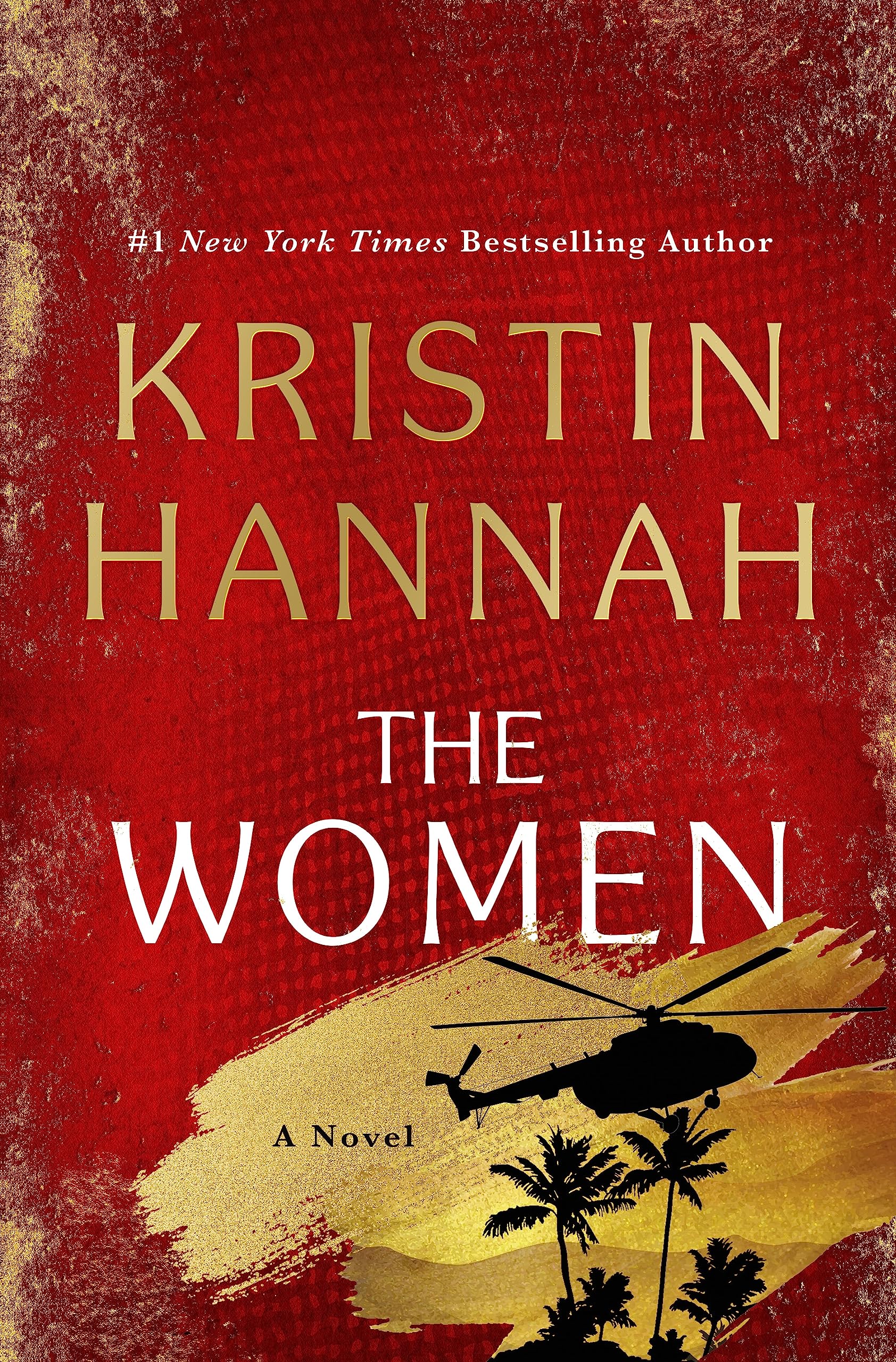
 The Pine-Scented Chronicles
I really enjoyed The Women! Several of these are on my TBR. I hope you enjoy your current read!
LikeLiked by 1 person
Now I am really looking forward to The Women which is going to be my next read. Thanks!
LikeLike