
This is the second part of my August 2024 Book Haul. There are still books I ordered which are in transit and are, thus not included in my book haul post. This book haul update features books that were written and published before 2024. For the first part of my August Book Haul, you may refer here. For now, happy reading!
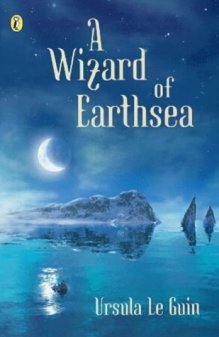
Title: A Wizard of Earthsea
Author: Ursula Le Guin
Publisher: Puffin Books
Publishing Date: 1971 (1968)
No. of Pages: 202
Synopsis:
A tale of wizards, dragons and terrifying shadows.
The young wizard Sparrowhawk, tempted by pride to try spells beyond his powers, lets loose an evil shadow-beast in his land. Only he can destroy it, and this quest leads him to the farthest corner of Earthsea.
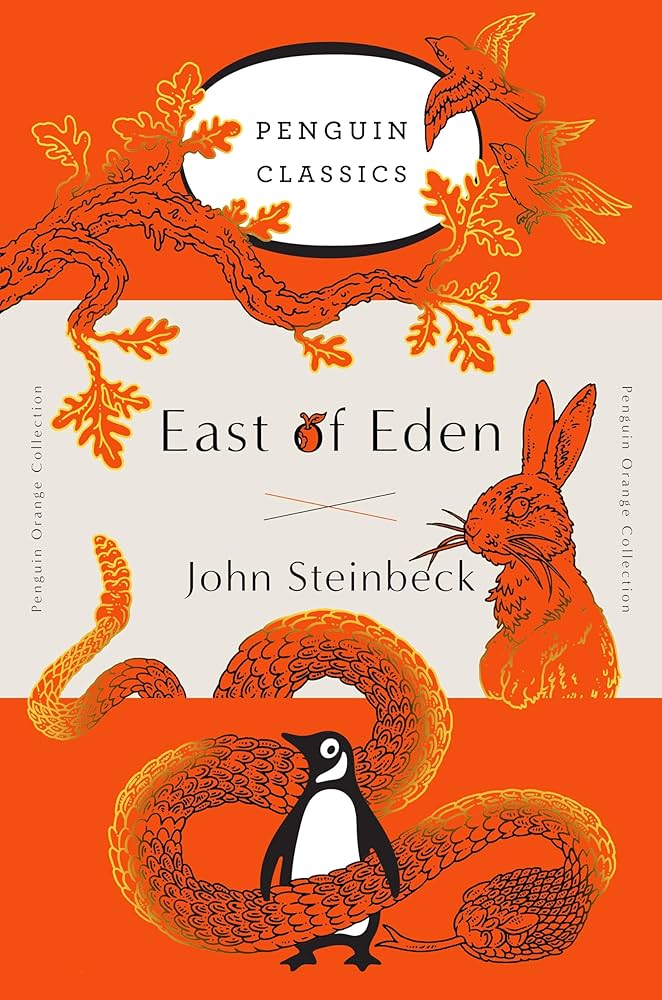
Title: East of Eden
Author: John Steinbeck
Publisher: Penguin Classics
Publishing Date: 2016 (1952)
No. of Pages: 601
Synopsis:
East of Eden is the masterpiece of Nobel Prize winner John Steinbeck’s later years – a vastly ambitious novel that is at once a family saga and a modern retelling of the Book of Genesis. In his journal, Steinbeck called East of Eden “the first book,” and indeed it has the primordial power and simplicity of myth. Set in the rich farmland of California’s Salinas Valley, this sprawling and often brutal novel follows the intertwined destinies of two families – the Trasks and the Hamiltons – whose generations helplessly reenact the fall of Adam and Eve and the poisonous rivalry of Cain and Abel. East of Eden is a work in which Steinbeck created his most mesmerizing characters and explored his most enduring themes: the mystery of identity, the inexplicability of love, and the murderous consequences of love’s absence.

Title: Kamchatka
Author: Marcelo Figueras
Translator (from Spanish): Frank Wynne
Publisher: Atlantic Books
Publishing Date: 2010 (2003)
No. of Pages: 309
Synopsis:
In the forecourt of a petrol station outside of Buenos Aires, a father says goodbye to his son: ‘Kamchatka,’ he whispers softly into his ear. And then they part, forever.
Ten-year-old Harry lives in a world of Superman comics and games of Risk – a world in which men have superpowers and boys can conquer the globe on a board game. But in the outside world, a military junta has taken power; and amid a political climate of fear and intimidation, people are disappearing without trace.
Kamchatka is a heartbreaking novel: set in Argentina during the bloody coup d’état of 1976, it tells the enchanting story of a young boy trying to make sense of a world during a time of extraordinary upheaval.

Title: Stick Out Your Tongue
Author: Ma Jian
Translator (from Chinese): Flora Drew
Publisher: Picador
Publishing Date: August 2007 (1987)
No. of Pages: 93
Synopsis:
When Stick Out Your Tongue was originally published in China in 1987, a blanket ban was placed on Ma Jian’s future work. With its publication in English, readers get a rare glimpse of Tibet through Chinese eyes. In this profound work of fiction, a Chinese writer whose marriage has fallen apart travels to Tibet. As he wanders through the countryside, he witnesses the sky burial of a Tibetan woman who died during childbirth, shares a tent with a nomad who is walking to a sacred mountain to seek forgiveness for sleeping with his daughter, and hears the story of a young female lama who died during a Buddhist initiation rite. In stories both enchanting and horrifying, beautiful and macabre, seductive and perverse, Stick Out Your Tongue offers a startlingly vivid portrait of Tibet.

Title: Marshland
Author: Otohiko Kaga
Translator (from Japanese): Albert Novick
Publisher: Dalkey Archive Press
Publishing Date: 2024 (1985)
No. of Pages: 831
Synopsis:
At forty-nine, Atsuo Yukimori is a humble auto mechanic living an almost penitentially quiet life in Tokyo, where his coworkers know something of his military record but nothing of his postwar past as a petty criminal. Out of curiosity he accompanies his nephew to a demonstration at a nearby university and is gradually drawn into a friendship, then a romance, with Wakako Ikehata, the brilliant but mentally unstable daughter of a university professor. As some of the student radical groups turn to violence and terrorism, Atsuo and Wakako find themselves framed for the lethal bombing of a Tokyo train What follows is a delicate balance of Kafkaesque procedural, revealing the corrupt intricacies of the police and judicial system of Japan, and an exploration of the “marshland” of the title through extraordinarily beautiful pastoral scenes.
The wealth of Kaga’s work in fiction remains to be discovered by the Anglophone world. Marshland is a revelation of modern Japanese history and culture, a major novel (though only the second to be translated into English) from a master well-known in his own country.

Title: The Setting Sun
Author: Osamu Dazai
Translator (from Japanese): Donald Keene
Publisher: New Directions
Publishing Date: 1968 (1956)
No. of Pages: 175
Synopsis:
I wonder how it would be if I let go and yielded myself to depravity.
This powerful and tragic novel paints life in a nation in social and moral crisis. Set in the early postwar years, it probes the destructive effects of war and the transition from a feudal Japan to an industrial society. Osamu Dazai died, a suicide, in 1948. But the influence of his book has made “people of the setting sun” a permanent part of the Japanese language, and his heroine, Kazuko, a young aristocrat who deliberately abandons her class, a symbol of the anomie that pervades so much of the modern world.

Title: Foucault’s Pendulum
Author: Umberto Eco
Translator (from Italian): William Weaver
Publisher: Guild Publishing
Publishing Date: 1989 (1988)
No. of Pages: 641
Synopsis:
Foucault’s Pendulum is a superb entertainment by the author of The Name of the Rose. An enthralling mystery, a sophisticated thriller, a breathtaking journey through the world of ideas and aberrations, the treasures and traps of knowledge, Umberto Eco’s new novel will delight, tease, provoke, and stimulate.
One Colonel Ardenti, who has unnaturally black brilliantined hair, an Adolphe Menjou mustache, wears maroon socks and fought in the Foreign Legion, starts it all. He tells three editors at a Milan publishing house that he has discovered a coded message about a Templar plan, centuries old and of diabolical complexity, to tap a mystic source of power greater than atomic energy.
The editors (who have spent altogether too much time rewriting crackpot manuscripts on the occult by self-subsidizing poetasters and dilettantes) decide to have a little fun. They’ll make a plan of their own. But how?
Randomly they throw in manuscript pages on hermetic thought. The Masters of the World, who live beneath the earth. The Comte de Saint-Germain, who lives forever. The secrets of the solar system contained in the measurements of the Great Pyramid. The Satanic initiation rites of the Knights of the Temple. Assassins, Rosicrucians, Brazilian voodoo. They feed this all into their computer, which is named Abulafia (Abu for short) after the medieval Jewish cabalist.
A terrific joke, they think – until people begin to disappear mysteriously, one by one, starting with Colonel Ardenti.
 The Pine-Scented Chronicles