
And the -ber months are finally here. Hello September! How time flies. We are already two-thirds through 2024. This also means that the fourth-month-long holiday celebration here in the Philippines has commenced. Malls and radio stations automatically started playing Christmas songs the moment the clock hit 12:00 AM on September 1. But as the holiday starts picking momentum – local news sites and shows have started counting down to Christmas and some houses are already being propped up – I hope that the remainder of the year will be filled with blessings and positive news. I hope that everything you worked hard for from the start of the year will get repaid. I hope everyone gets to accomplish their goals before the year wraps up; we still have four months to go after what our hearts yearn for. I hope that everyone will get to savor the fruits of their labor.
In terms of reading, I have set quite lofty goals at the start of the year. As such, I still have several goals and reading challenges to tick this year. I hope that I get to achieve them before the year ends. Nevertheless, I am on track with most of my goals and challenges. A key factor for this is my early start on my 2024 Top 24 Reading List. Historically, I tend to read this book toward the end of the year; I usually cram which, at times, pushes me to the edge of my seat. In August, I finally concluded my foray into the works of European literature although I had to extend for a bit to cover books I still wanted to read. What followed was a quandary because I was not sure where to go after Europe. I considered reading works of Asian literature but after some contemplation – and the Booker Prize’s announcement of its longlist – I resolved to read recently published works. While I did have a catch-up earlier this year, there are some that I have been looking forward to for the longest time. Without further ado, here is a peek into how my August reading journey shaped up. Happy reading!
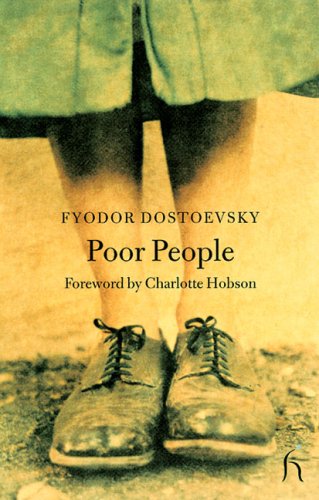
Poor People by Fyodor Dostoevsky
Back in early 2017, I had my first venture into the works of highly esteemed writer Fyodor Dostoevsky. His novel Brothers Karamazov, while quite thick, was a very compelling examination of the human psyche. The book made me want to explore Dostoevsky’s oeuvre further and is a great factor in my interest in Russian literature in general. Almost seven years after reading the book, I read my fourth novel by Dostoevsky. Poor People is part of my 2024 Beat the Backlist Challenge. Originally published in Russian between 1854 and 1855 as Бедные люди (Bednye lyudi), Poor People (alternatively published as Poor Folk) is Dostoevsky’s first published novel. The story was written in epistolary form and captured the correspondence between second cousins Varvara Dobroselova and Makar Devushkin. They were residing across from each other on the same street in terrible apartments. Their letters captured their miseries, living, and, as the story moved forward, their backstories. Makar was born poor, hence, the soft spot he has for those who were born in the lower rungs of society. Varvara, on the other, used to live in comfort in the countryside but fate turned its back against her family. In St. Petersburg, she found herself at the mercy of her cruel landlord and her cousin. Casting a net over a vast territory, Poor People probed into the glaring dichotomies between the poor and the rich and social injustices. On the brighter side, the novel underscored the resilience of the human spirit and the power of empathy and interconnectedness. Poor People set the tone for the rest of Dostoevsky’s oeuvre and contained vestiges of the brilliance that would be further exemplified by his later works.
Goodreads Rating:


The Devil in the Hills by Cesare Pavese
It was during the height of the pandemic that I first came across Italian writer Cesare Pavese. I first encountered him through an online bookseller. It immediately piqued my interest, hence, my purchase of The Devil in the Hills. I would eventually learn that Pavese was quite a prodigious writer and was one of the leading Italian writers in the first half of the 20th century. Imagine my surprise when I encountered him in Natalia Ginzburg’s Family Sayings; Pavese had encounters with Ginzburg’s family. Many literary pundits consider The Devil in the Hills as Pavese’s most personal novel. It charted the adventures of three university students – Oreste, Pieretto, and the narrator, a thinly veiled Pavese – in post-war Italy. All were from the Italian countryside and sought higher education in Turin. The novel focuses on a summer vacation they spent in the Piedmont countryside. It was there that they came across Poli, an affluent and debauched who was as carefree as them; Poli lets his estate, Greppo, run wild. Poli invited his new friends to his estate where the three young men were attended to by Poli’s estranged wife, Gabriella. The three students found themselves slowly reeled into the world of Poli and Greppo. This would also test the friendship of the trio. In a way, the novel reminded me of Ernest Hemingway’s The Sun Also Rises in how it captured the decadence of the lost generation and how the ennui post-war has impacted them. The Devil in the Hills is a slender read which I hoped was a little longer. Nevertheless, I relished Pavese’s descriptive writing which captured the idyll of the countryside.
Goodreads Rating:

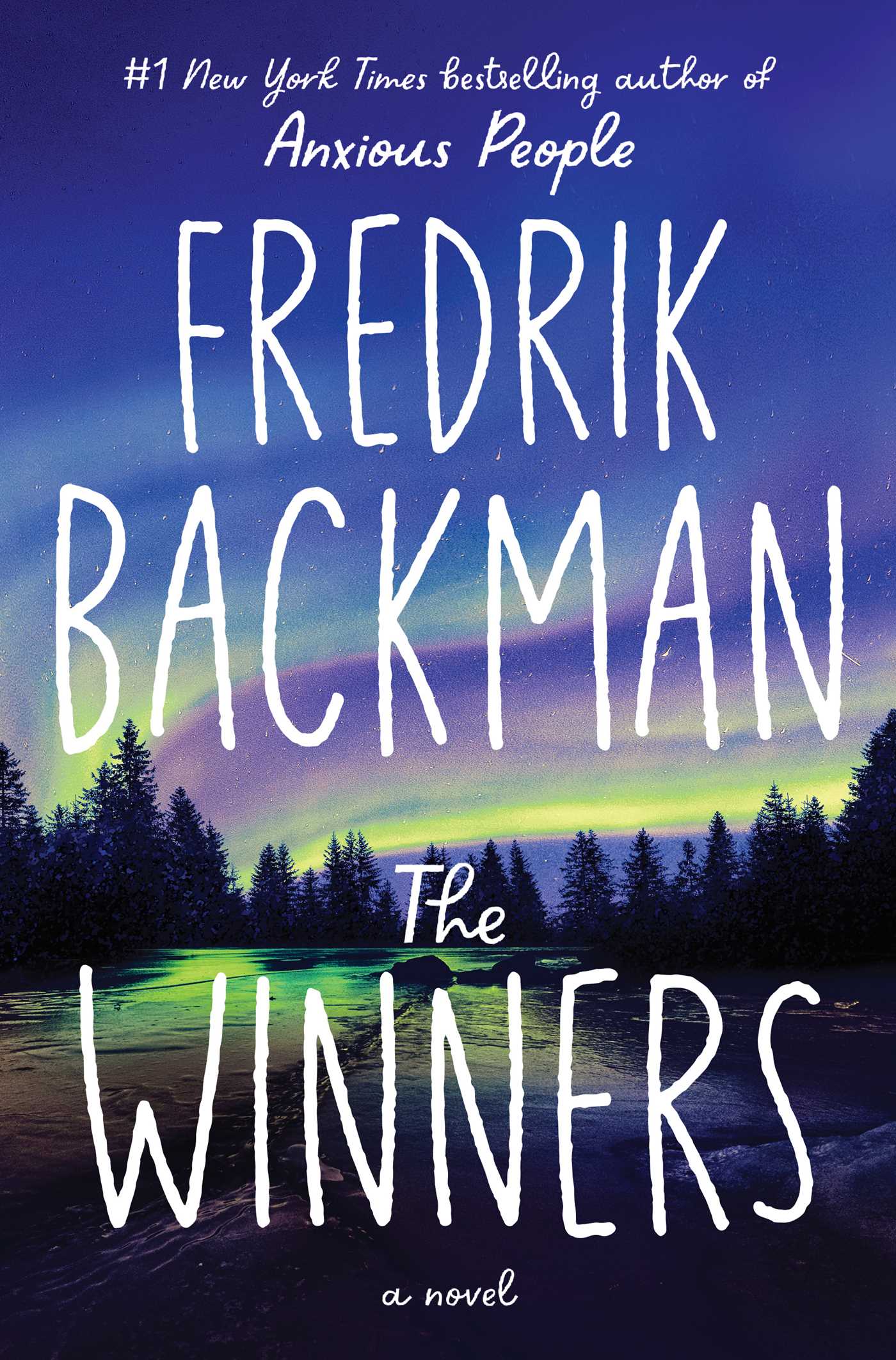
The Winners by Fredrik Backman
One of the reasons why I extended my foray into European literature was my desire to complete Fredrik Backman’s Beartown Trilogy. My original plan was to delay reading the second and third books in the trilogy, thinking that I would read them next year. I eventually changed my mind and having read the first two books in the trilogy, it was a no-brainer for me to read the last. The Winners takes place two years after the events covered by its predecessor. In the interim, the Beartown Ice Hockey A-Team established itself to be an elite team after years of being cellar dwellers. Following the scandal involving former prodigy Kevin Erdahl, Amat took on the helm of leading the team. However, his recent venture into being drafted into the NHL dampened his spirit, prompting questions about his participation in the new season. Benji, on the other hand, has left town and become a vagabond. Bobo, the last of the trio left when the rest of the junior team moved to head, was assigned assistant coach. When the novel starts, ominous signs show. A storm threatened to inundate Beartown and its longtime rival Hed. This was followed by the death of a beloved character. Her funeral, however, would string along the characters who have left the town, including Maya; Maya went to the capital to pursue her studies. On the backdrop, the rivalry between Beartown and Hed escalates. The Winners, building on the themes explored in the first two books, is about healing and rediscovering one’s self amidst the tumult. It was bookended by tragedies but The Winners nicely wraps up the Beartown trilogy. It underscores Backman’s deep understanding of the intricacies of both communities and the individual.
Goodreads Rating:

The Castle by Franz Kafka
Perusing must-read lists almost a decade ago led me to writers whose oeuvres I would have never thought of exploring. One name I bumped into through these lists was Franz Kafka, one of the most popular names out there. His works are ubiquitous but if my memory serves me right, it was Haruki Murakami who first introduced me to him through the Japanese writer’s novel Kafka on the Shore. Kafkaesque was also a familiar adjective. In 2019, I finally acquired a copy of The Castle. I have been wanting to read the book but it was just this year that I finally read it. The last novel written by the Czech writer, The Castle commences with the arrival of a young man named K. in an anonymous village located at the foot of the titular castle; the castle was occupied by Count Westwest. When K. arrived late at night looking for a place to stay, there were no rooms available at the local inn. They, however, offered him a bed of straw in the building’s taproom. The locals were apprehensive about K.’s intentions; he claimed that the Castle enlisted his assistance as a land surveyor. To obtain permission to stay at the village, K. must seek approval from the castle. Thus commenced a journey that took him to various parts of the town to meet various characters such as Klamm, his supposed link to the Castle; and the town’s mayor who informed him that there might have been a miscommunication and that K.’s services were not required. One thing was clear. K. wanted to establish a connection with the castle and while it loomed above him, he never made it to the castle. Bereft of a robust plot and veering away from the conventions of traditional storytelling, the novel underlines the legacy of Kafka’s oeuvre. The Castle was no easy read and it challenges one’s reading mettle but it was rewarding nevertheless.
Goodreads Rating:
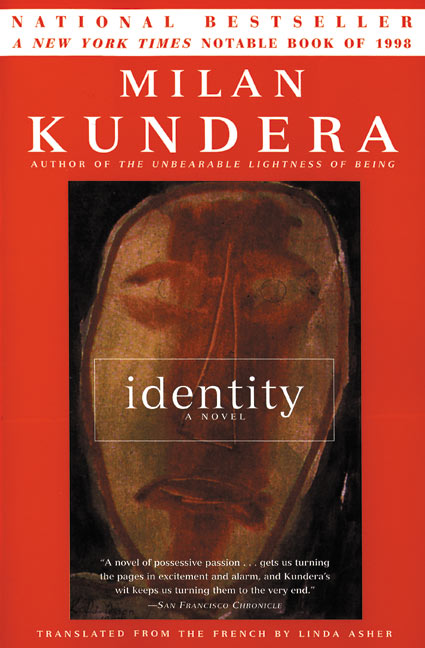
Identity by Milan Kundera
For my next literary stop, and my last stop for my foray into European literature, I stayed in Central Europe. Last year, I was saddened by the news of Czech writer Milan Kundera’s demise. To honor his name, I wanted to read one of his works last year but I kept pushing it back. Reading one of his works this year was also not originally part of my plan. However, reminded of my plan last year – and also doubled by the recent demise of Albanian writer Ismail Kadare – I resolved to read Identity which was originally published in French in 1998 as L’Identité; it was his second novel originally written in French. Identity captured the intimate relationship between Chantal, a middle-aged divorcée, and Jean-Marc, her slightly younger and less socially ambitious lover. The lovers were to meet on the coast of Normandy. However, they initially struggled to find each other; they mistook strangers for one another even though the strangers barely resembled them. This sequence sets the tone for the novel which is literally, as the title advertises, about identities. While the lovers eventually met, there was always something amiss thrumming the surface, percolating, waiting to explode. In alternating perspectives, we learn about the two main characters. Chantal’s anxieties were triggered by her memories of the death of her child with a previous partner. Age was also exacerbating her anxieties. Jean-Marc found himself questioning his lover. He was also starting to question himself. Introspections and memories brimmed the story and reel the readers in. Identity had a promising premise but slowly crumbles under the weight of its ambition.
Goodreads Rating:


The Heaven & Earth Grocery Store by James McBride
After spending over three months reading works of European literature, I turned in a new leaf. The transitory book was James McBride’s The Heaven & Earth Grocery Store; before 2023, I had never come across McBride nor have I encountered any of his works. Several literary publications were listing his latest novel as one of the best books of 2023, naturally piquing my interest. All of these were factors in my curiosity about the book. While I initially found the book’s title arbitrary, I soon learned that it belied a complex novel resonating with deep messages. The novel commences in 1972 in the town of Pottstown, Pennsylvania when excavators unearthed a skeleton in an old well in Chicken Hill, a predominantly Black neighborhood. Pieces of evidence of the grim crime were soon destroyed by Hurricane Agnes. To understand the origin of the skeleton, the story flashes back 47 years earlier. Moshe Ludlow, a theater manager, married Chona, the youngest daughter of Rabbi Flohr, the owner of the titular Heaven & Earth Grocery Store. The store was the melting pot of different cultures and people from different walks of life. Chona, generous and kind, extended credit to the impoverished. Chona was the novel’s embodiment of social justice. The crux of the story, however, involved Dodo, a 12-year-old Black boy living with his aunt and uncle. Left deaf by an explosion that claimed his mother’s life, the state wanted to institutionalize Dodo. What ensued was the unraveling of a community. Initially divided by color, culture, and ethnicity, the denizens of Chicken Hill came together. The novel’s eclectic cast and the messages it conveyed vis-à-vis racial divides, communities, and the resilience of the human spirit made The Heaven & Earth Grocery Store one of my favorite reads this year.
Goodreads Rating:

The Covenant of Water by Abraham Verghese
August, it seemed, was brimming with some of my favorite reads this year. Since the start of 2023, I have been looking forward to reading Abraham Verghese’s The Covenant of Water; it was part of my 2023 Top 10 Books I Look Forward To List. However, it was only this year that I was able to obtain a copy of the book. Verghese’s sophomore novel, The Covenant of Water commences in 1900 in Southern India where 12-year-old Mariamma was wedded off to forty-year-old widower Big Appachen. Mariamma moved to Parambil in Kerala where her husband’s family lived. Basically a child bride, Mariamma struggled to fit into her new role but with the kindness of those around her, she slowly adjusted. She also learned that her husband’s family has a unique affliction which she called “the Condition.” Meanwhile, Mariamma’s marriage started to blossom. She would bear a daughter and a son but always feared how the Condition would alter her and her family’s fate. Alternating with Mariamma’s story is the story of Dr. Digby Kilgour, a Scottish physician who joined the Indian Medical Service in Madras. But like Mariamma, his life was struck with tragedy, hence, his move to Madras. When an accident rendered him unable to practice his profession, Digby turned to farming. It was on his farm that he would encounter the denizens of Parambil, intertwining DIgby’s fate with Mariamma’s. Spanning almost eight decades, the novel was panoramic in its scope. Verghese painted a vivid portrait of India, its people, and its culture. At the same time, the novel soars with its portrait of the indomitable human spirit. The Covenant of Water is the history of a family and of a country both unraveling at the turn of the century. Parts historical fiction, parts family saga, and parts social commentary, Verghese’s sophomore novel is a lush tapestry deserving of all the accolades it received. It is a testament to Verghese’s status as a literary star.
Goodreads Rating:

Real Americans by Rachel Khong
Before this year, I had never heard of Rachel Khong nor had I encountered any of her works. However, her latest novel, Real Americans, was a recurring presence in several most anticipated 2024 book lists. Without ado, I included it on my own list, making it the third book from my 2024 Top 10 Books I Look Forward To list that I read. It was then a no-brainer for me to include it in my own. Real Americans also occupies the distinct position of being the 1,199th novel I read. The novel charted the fortunes of three generations of the Chen family, starting with Lily who we first meet in New York City in 1999. An unpaid intern after graduating from university, her life changed when she met Matthew Maier, the scion of a wealthy pharmaceutical company; she was unaware of this when they first met. They fell in love and got married. They also had a son named Nick who was a spitting image of his father and had no traces of his Asian heritage. The story then pans to 2021 and the voice shifts to 16-year-old Nick. Things apparently did not go as planned between her parents. His story also introduced interesting elements that I was not expecting. I initially thought that the book was a straightforward exploration of who and/or what makes a “real” American, as the title suggested. Nevertheless, it did explore this subject but somehow from a different vantage point. This digression makes the novel a compelling read. The third part takes the readers into the future and back into the past as the plot starts to gain clarity. The novel raises several interesting questions about the future, particularly about genetics. The writing, however, can be bland in parts. Elements of history, science, and even fantasy make Real Americans a riveting read.
Goodreads Rating:

James by Percival Everett
Occupying the spot of being the 1,200th novel I read is Percival Everett’s James, making Everett the first American writer in a while to occupy a century read. I first came across the American writer when his novel Telephone was a finalist for the Pulitzer Prize. His novel The Trees was also shortlisted for the 2021 Booker Prize. When I learned that he was releasing a new work, James, this year, I added it to my most anticipated releases list. My anticipation for the book tripled when it was announced as part of the 2024 Booker Prize longlist. The novel is a retelling of Mark Twain’s Adventures of Huckleberry Finn (1885) but from the perspective of Jim. James transports the readers back to the antebellum Southern United States where James – or Jim – upon learning his impending sale by his owner, plotted his escape. Becoming a runaway risks becoming a hunted; plantation owners commission slave hunters to retrieve runaways. During his escape, Jim came across Huck (Huckleberry Finn), a young boy who, like Jim, was an escapee; he escaped from his abusive father by faking his own death. Together, they journeyed down the Mississippi River, cognizant that going in the opposite direction from the Free States would throw off their pursuers. They travel in a raft and a boat at night and rest in daylight, the darkness serving as a veil against any hunter who might spot them. Despite this, they encountered an eclectic cast of characters. It was their cleverness that saved them. The last stretch of the novel is rather dark and heavy. Reminding me of Harriet Beecher Stowe’s Uncle Tom’s Cabin and a bit of John Grisham’s A Time to Kill, James is an evocative examination of the legacies of racism and the slave trade.
Goodreads Rating:

Long Island by Colm Tóibín
Irish writer Colm Tóibín has earned several accolades for his works but the opportunity to explore his oeuvre never seems to come. Last year, I finally got the chance to when I read Brooklyn. This work of historical fiction has been considered by many literary pundits and readers as his magnum opus. The book made me look forward to reading more of Tóibín’s works. Earlier this year, I learned he was releasing a new work. Luckily enough, the book was already available in my local bookstore. Before reading Long Island, I learned that Tóibín prefers writing standalone books and has not written any sequels to his works. He made an exception with Brooklyn, making Long Island its sequel. When we again meet Eilis Lacey, she is now older – twenty years have passed – and her last name is now Fiorello. It is the 1970s and Eilis is a mother to a teenage son and daughter. However, her marital life was threatened by a piece of unexpected news, prompting her to seek refuge in Enniscorthy and visit her aging mother. Besides, the last time she was home was before she became a mother. Going home also allowed her children to visit their mother’s hometown and get to know their grandmother. But going back to Enniscorthy also entailed revisiting memories of youth that have gotten lost in the bedlam of life, particularly her memories of Jim Farrell who now owns the local pub and is in a love affair with Nancy, Eilis’ former friend. How will Eilis’ return impact the dynamics of Enniscorthy? The story was a bit of a drag but eventually gathered steam as it approached its inevitable conclusion. It was a little different from Brooklyn but it exposed me as well to the beauty of Enniscorthy.
Goodreads Rating:

Little Rot by Akwaeke Emezi
From one familiar name to another familiar name. Nigerian writer Akwaeke Emezi first captured my interest with their – yes, they are non-binary, hence, the pronoun – debut novel, Freshwater. Freshwater left me in awe and made me look forward to reading more of their works. Earlier this year, I learned they were releasing a new work, Little Rot. Without ado, I included the book in my reading list. Besides, I was not a fan of their last release, You Made a Fool of Death with Your Beauty. Little Rot is the fourth novel by them I read. At the heart of the novel are young, upper-class Nigerian couple Aima and Kalu who fell in love in Houston. Kalu’s family runs a business in Lagos which Kalu has to look after, prompting Kalu and Aima to return to their homeland. However, upon returning to Nigeria, things started to unravel. After years of being in a relationship, they decided to go their separate ways. Rather than boarding her flight, Aima attended a high-society nightclub with her best friend Ijendu. Kalu, on the other hand, attended an exclusive sex party hosted by his childhood friend, Ahmed. The breakup devastated both. Kalu wanted to drown his sorrow in alcohol, drugs, and partying. This sets the story up for a descent down the hole, specifically to underground Lagos. Over a weekend, the characters test the limits of their friendship while learning about themselves. The dive into the underbelly of Lagos also exposes the power dynamics between men and women where sexual cruelty, exploitation, and hypocrisy were prevalent. Overall, Little Rot is a compelling read, one can expect nothing less from Emezi. It was pandemonium but it was an interesting one.
Goodreads Rating:

The Road to the Country by Chigozie Obioma
It was through must-read lists that I learned about Nigerian writers. Chinua Achebe and Ben Okri were familiar presences in these lists. This piqued my curiosity. Through the Booker Prize, I was further able to expand my foray into the works of Nigerian writers. Among the many writers that I encountered through the Booker Prize was Chigozie Obioma. His novel, Orchestra of Minorities, was shortlisted for the 2019 edition. Four years later, I am reading my third novel by Obioma. It was actually just recently that I learned about his latest release, The Road to the Country. It received positive feedback, hence, its inclusion in my reading list. Obioma’s third novel takes the readers to one of the pivotal events in his home country’s contemporary history, the Biafran War. The story revolves mainly around Kunle, a young student at the University of Lagos. He was haunted by the past, particularly by the unfortunate accident that left his brother Tunde. Consumed by guilt for the role he played in the accident, he traveled to eastern Nigeria to search for his missing brother; Tunde away from their hometown of Akure to the east with a young Igbo woman. At this time, the tensions between the Nigerian army and the Biafran army were starting to escalate. Kunle inadvertently found himself being part of the Biafran army. Kunle was a cipher at the onset but started opening up as the story moved forward. He became the readers’ guide to the heart of the conflict. Alternating with his narrative was the voice of a seer, an Ifa diviner living in the 1940s. The seer was conveying Kunle’s story as a set of visions. The Road to the Country is a vivid depiction of a section of Nigerian contemporary history and of the atrocities of war.
Goodreads Rating:

Arrow of God by Chinua Achebe
Wrapping up my August reading journey is a digression from what I originally planned. It was supposed to be a run of recently published books but when I noted that I read works of Nigerian writers in succession, I resolved to read Chinua Achebe’s Arrow of God. Besides, the book is part of my 2024 Top 24 Reading List. Achebe is also one of my primers to the world of Nigerian literature. Arrow of God is the 18th book from my 2024 Top 24 Reading List I read and is the third book by Achebe I read. Arrow of God is the third book in the highly-regarded The African Trilogy. While they don’t share characters, the books are thematically interconnected. The novel is set amongst the rural villages of the Igbo people in colonial Nigeria during the 1920s. The story opens with a bitter feud between the villages of Umuaro and Okperi; they were on the cusp of going to war over a piece of disputed land. Nwaka, an influential and affluent member of Umuaro, advocated for the war which was against the advice of Ezeulu, the Chief Priest of Ulu, the ruling deity of Umuaro. Nwaka nevertheless pursued the path of engaging in a tribal war. The conflict came to an abrupt halt when Captain T.K. Winterbottom, the designated District Officer by the British monarch, entered the scene. Arrow of God vividly captures the transition of Nigeria to Western ideals, a stark contrast to Things Fall Apart which was heavily steeped in tradition. We read about Nigerian culture and traditions, mainly of the Igbo tribe; Achebe’s writing was heavily influenced by Igbo culture. We also read about the exploitation of the Europeans by the Nigerians. As tradition is convoluted by new influences. the locals found themselves in a quandary. Overall, Arrow of God is a compelling read that provides insight into Nigerian history and culture.
Goodreads Rating:
Reading Challenge Recaps
- My 2024 Top 24 Reading List: 18/24
- 2024 Beat The Backlist: 12/20; 80/60
- 2024 Books I Look Forward To List: 4/10
- Goodreads 2024 Reading Challenge: 87/100*
- 1,001 Books You Must Read Before You Die: 14/20
- New Books Challenge: 7/15
- Translated Literature: 42/40
*Updated my Goodreads goal from 80 to 100.
Book Reviews Published in August
- Book Review # 529: Inspector Imanishi Investigates
- Book Review # 530: Forbidden Colors
- Book Review # 531: Us Against You
- Book Review # 532: Kairos
- Book Review # 533: Poor People
- Book Review # 534: The Winners
- Book Review # 535: The Covenant of Water
- Book Review # 536: The Heaven & Earth Grocery Store
- Book Review # 537: Real Americans
After a slow writing month last July – my output was a measly four book reviews – I was able to pick up pace this August. I guess this is also because things at the office got more looser. Besides, we also had a long holiday. All of this allowed me to more than double my July output. It is interesting to note, however, that of the nine book reviews I published last month, seven were of books I read this year. This means that I still have quite a long way to go before I can complete all my pending book reviews from 2023. Looking at the brighter side, I can make a dent in my current pending book reviews. It seems that September will be the same because I will also be focusing on writing reviews for the books I have recently finished reading. Nevertheless, I will still try to tick off some books from the previous year. The mantra, as always, will be to take it one step at a time; although a little sense of urgency might help.
In terms of reading, September is going to be an extension of my ongoing foray into recently published works. I am currently reading Kristin Hannah’s latest work, The Women and I have also lined up The Fox Wife by Yangsze Choo, a book that is part of my 2024 Top 10 Books I Look Forward To List. I am hoping to receive copies of Claire Messud’s This Strange Eventful History and Hisham Matar’s My Friend. Like The Fox Wife, these books are part of my 2024 Top 10 Books I Look Forward To List. On top of this, these two books were longlisted for the 2024 Booker Prize. On the sly, I might be inserting books from my reading challenges like Rohinton Mistry’s A Fine Balance and Richard Wright’s Native Son. This is on the off-chance that I will no longer have recently published books to read.
How about you fellow reader? How is your own reading journey going? I hope you enjoyed the books you have read. For now, have a great day. As always, do keep safe, and happy reading everyone!
 The Pine-Scented Chronicles