
Happy Wednesday everyone! Wednesdays also mean WWW Wednesday updates. WWW Wednesday is a bookish meme hosted originally by SAM@TAKING ON A WORLD OF WORDS. Unfortunate
The mechanics for WWW Wednesday are quite simple, you just have to answer three questions:
- What are you currently reading?
- What have you finished reading?
- What will you read next?

What are you currently reading?

September, in essence, is an extension of my foray into recently published novels, i.e., books published in 2023 and 2024 which I commenced in August. Yesterday, I just received my most recent purchases which included Hisham Matar’s My Friends. It was only at the start of the year that I came across the American Libyan writer. His latest novel was a familiar presence in most anticipated 2024 book lists. This piqued my interest, hence, its inclusion in my 2024 Top 10 Books I Look Forward To List. It is also the sixth book from the list that I have read. My anticipation for the book picked up a notch after it was longlisted for the 2024 Booker Prize.
The book was narrated by a middle-aged Libyan man named Khaled. When the novel commenced, he bid farewell to his old friend Hosam Zowa at St. Pancras Station in London. On his way home, Khaled reflected on their friendship; a third friend, Mustafa, would be introduced during Khaled’s ruminations. The main catalyst for their friendship occurred in 1984 when officials inside the Libyan embassy in London’s St James’s Square fired a machine gun into a crowd of unarmed protesters. The protesters gathered around to demonstrate against the “dictator”, Libyan leader Muammar Gaddafi. Among those who were wounded were Khaled and Mustafa, both students at Edinburgh University. Well, politics figure prominently in the story and today, I just learned that Matar’s father was imprisoned by the regime. I surmise that a lot is still about to happen in the story and I can’t wait to watch (read) them unfold with Matar’s calculated writing.
What have you finished reading?
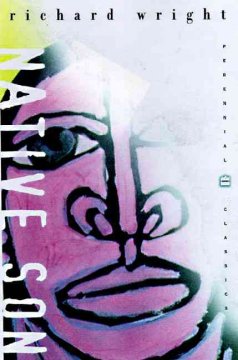
The previous week was a rather slow reading week as I was only able to complete two books. Nevertheless, I am happy with my progress. The first of these two books was Richard Wright’s Native Son, a book that is part of my 2024 Top 24 Reading List; it is the 19th book from the list that I have read. Admittedly, I barely had any iota on what the book was about. My interest grew when I learned it is part of the 1,001 Books You Must Read Before You Die list; it is the 15th book from the list I read this year. While I had little iota about the book, I am grateful for the introduction written by Arnold Rampersad. It provided an insight into what the book was about and the concerns that it was addressing. However, this did not prepare me for how gory the opening sequence was.
Set in 1930s Chicago, the novel charted the fortunes of Bigger Thomas, a poor, uneducated, twenty-year-old Black man. He and his family were residing in a cramped apartment on the South Side of the city. Despite his youth, he was cognizant that he lay at the mercy of other (“white) people. He was denied upward mobility because only low-paying jobs were available to him and those in the same station as him. He was bitter and angry but he felt powerless to change his circumstances. His mother, on the other hand, was coaxing him to take a job through the relief agency – a chauffeur for a white millionaire philanthropist named Henry Dalton. Little did he know that this would set into motion a chain of events that would lead to his incarceration; this is the crux of the novel. Personally, three moments stand out. First was the sequence detailing the death of Mary Dalton it was equally intimate and grotesque. The second was the confession between Bigger Thomas and his lawyer, Boris Max. It was a raw and honest conversation. The last was the defense argument provided by Max in court. It was harrowing but it encapsulated everything that the novel was about. I did find it predictable – at least where the story was concerned – but, nevertheless, I was gripped by the story. I was in parts torn, sympathetic, and angry about the injustices that pervade modern society. And the prejudices captured in the novel extend beyond race.

Like Richard Wright, this is my first time reading a novel by Yangsze Choo. I believe the first time I came across the Malaysian writer was with her novel The Night Tiger which was, at one point, ubiquitous; surprise, I haven’t read the book. Anyway, while searching for books to include in my 2024 Top 10 Books I Look Forward To List, I learned about her latest novel, The Fox Wife. Like My Friends, the book was a familiar presence in similar most anticipated book lists. Curious and always raring for a new adventure, I added the book to my own list, making it the sixth book from the list I read.
The Night Tiger (just the title) provided me a clue about the brand of storytelling featured in The Fox Wife. The novel is anchored on East Asian lore. The story begins in 1908, on a train heading south from Manchuria. Aboard the train a pimp and a fox, though the fox happens to be woman-shaped. She is called by many names such as huxian, “immortal, transcendent fox being” or “fox fairy”; hujing or hulijing, “fox spirit”; huyao, “fox demon”; hushen, “fox god”. She used to live a happy existence in the grasslands of Kirin with her husband Kuro, a black fox. However, their lives were shattered when their cub was killed by a local hunter. In the present, the fox is on the hunt for Bektu Nikan, a Manchurian photographer who commissioned the death of her daughter. Given the name Hu Xue’er or Snow, she takes a position as an assistant to an elderly woman running the local medicine shop. The family has their own story; a curse ensures that no eldest son lives beyond 24. The woman’s grandson is 23 and a new child is on the way. Alternating with the story of the fox was the story of Bao, a detective who was investigating the death of a woman found outside in the snow. His curiosity was piqued when he heard stories of another mysterious woman, a fox spirit. The mix of folklore and history gave the novel different layers and interesting textures.
What will you read next?


 The Pine-Scented Chronicles