
Happy Wednesday everyone! Wednesdays also mean WWW Wednesday updates. WWW Wednesday is a bookish meme hosted originally by SAM@TAKING ON A WORLD OF WORDS. Unfortunate
The mechanics for WWW Wednesday are quite simple, you just have to answer three questions:
- What are you currently reading?
- What have you finished reading?
- What will you read next?

What are you currently reading?
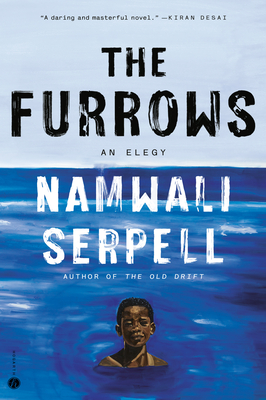
Just like that, we are already halfway done with September. Before we know it, we will already be welcoming a new year. Anyway, September was, in effect, an extension of my foray into recently published novels. It is a journey I commenced in August. This is also an opportunity for me to read books that I have been looking forward to but was not able to obtain a copy of. Among these books is my previous and current read: Maaza Mengiste’s The Shadow King, which I finished earlier today; and Namwali Serpell’s The Furrows. It is a semi-immersion into the works of African writers. I think it was through online sellers that I first came across Serpell. I kept encountering The Old Drift. In 2022, I came across The Furrows. This immediately piqued my interest. It did take time before I get to obtain a copy of the book but here I am.
The Furrows is narrated by a young adult Cassandra “Cee” Williams. She was born to a white mother and a Black father. The story, however, revolves around what happened when she was twelve. When in her care, her seven-year-old brother Wayne vanished; they were swimming in the sea when a storm intensified. Wayne’s body, however, was never recovered. This created chasms between the members of the family as they were never able to cope with Wayne’s disappearance. As a young adult, Cee constantly dreams about her brother, mixed in with her fantasies. This is the part where the story gets a little muddled. Her mother, on the other hand, was holding on to the hope of reuniting with her son. The story starts off fine but it soon peters out as the story moves forward. I am hoping that the conclusion redeems the story.
What have you finished reading?

My mini-foray into the works of African writers – or at least writers with African heritages – started with Hisham Matar’s My Friends. Before this year, I have never encountered the Libyan-American writer nor have I read any of his works. It was while searching for books to include in my 2024 Top 10 Books I Look Forward To that I came across him. His latest novel was a recurring presence in several most anticipated 2024 books lists. This naturally piqued my interest, hence, its inclusion to my own. My anticipation for the book increased tenfold after it was announced as one of the 13 books longlisted for the Booker Prize; three of the books in my 2024 Top 10 Books I Look Forward To list is part of the longlist.
My Friends was narrated by a middle-aged Libyan man named Khaled. When the novel commenced, he bid farewell to his old friend Hosam Zowa at St. Pancras Station in London. On his way home, Khaled reflected on their friendship; a third friend, Mustafa, would be introduced during Khaled’s ruminations. The main catalyst for their friendship was an event that occurred on April 17, 1984. Officials inside the Libyan embassy in London’s St James’s Square fired a machine gun into a crowd of unarmed protesters. The demonstrators convened to protest against the “dictator”, Libyan leader Muammar Gaddafi. Among those who were wounded were Khaled and Mustafa who were both students at Edinburgh University. As a result of the incident, the United Kingdom severed diplomatic ties with Libya. Meanwhile, Libya increased surveillance on its denizens abroad. Politics played a central figure in the narrative, with Matar being an outspoken critic of the regime. As the story charted the friendship of the three main characters, it also captured the landscape of contemporary Libyan history, culminating with the Arab Spring which saw the collapse of the regime. My Friends is a multilayered and well-textured story that probes into history, politics, and even literature. Overall, My Friends is a riveting read.

Like in the case of Matar, I have never encountered Algerian American writer Claire Messud until this year. Imagine my surprise when I learned that she has quite a prolific career (this is the same case with Percival Everett as well). Anyway, like Matar, her latest novel, This Strange Eventful History was churned out of my search for 2024 book releases to look forward to. Curious, I added the book to my own list. This makes it the seventh book I read from my 2024 Top 10 Books I Look Forward To list. Also, like in the case of My Friends, This Strange Eventful History was longlisted for the Booker Prize, making it imperative for me to read the book.
Messud’s ninth novel, This Strange Eventful History was inspired by her family’s history. The novel commences in Salonica (now Thessaloniki), Greece. The year was 1940 and the Nazis sweep into France. Gaston Cassar, a naval attaché to the French embassy, hears General de Gaulle make his broadcast calling on free French to join him and carry on the fight. To ensure his family’s safety amidst the brewing war, he decided to send his wife, Lucienne, and children to their native Algeria. However, the family was not as warmly received by the community as they wanted to. After all, they were French and white which equated to colonizers. As the story leaps in time, it slowly paints the portrait of the Cassars and their descendants. Their stories – the story charts the fortune of each member of the family – were juxtaposed with the contemporary history of Algeria. After meeting them during the Second World War, we follow them through Algeria’s declaration of independence. This left the Cassars basically without a homeland. This was, in a way, a foreshadowing as they soon scattered across the globe; the story moves between the United States, Canada, France, Algeria, Australia, and even Argentina. The novel had moments of brilliance but sometimes it gets a little disjointed.

Like the first two books before it, Maaza Mengiste’s The Shadow King was also nominated for the 2020 Booker Prize. It was actually through the Booker Prize that I first came across the Ethiopian-American writer. The book immediately caught my attention because I had never heard of Mengiste before. I also could not recall ever reading the work of an Ethiopian writer before or a book set in Ethiopia. There were many reasons why I wanted to read the book. Unfortunately, I was not able to obtain a copy of the book back then. It was only this year that I was able to do so. Once I had my copy, I did not hesitate to immediately read it.
In a way, The Shadow King explores the same subject as Kristin Hannah’s The Women. It opens in 1974 with a woman named Hirut sitting on the floor of a train station in Addis Ababa, holding an old metal box. The story then flashes back to the 1930s. Hirut was an orphaned young maid at the house of Kidane and Aster who knew her parents. Kidane is one of the most important officers in the Ethiopian army. It was the time leading to the Second Italo-Ethiopian War. Kidane was fond of Hirut while Aster resented her. Aster was still grieving the death of her own child and was jealous of the attention Kidane was giving Hirut. At the onset of the Second World War, Mussolini’s army invaded the country, prompting Hirut, Kidane, and Aster to retreat. With Kidane gathering forces to fight for Ethiopia, Hirut and Aster were tasked with taking care of wounded soldiers. The story also introduced Carlo Fucelli, a sadistic Italian colonel, and Ettore Navarra, an army photographer. The Italians wanted photographers to document their successes. Like The Women, The Shadow King underlined how women’s contributions and heroics are often muted by history. Overall, Mengiste weaves a lush tapestry that is riveting.
What will you read next?

 The Pine-Scented Chronicles