Confronting the Ghosts of the Past
Within the ambit of Irish literature, Colm Tóibín is quite the authority. He is one of the most widely-read Irish writers and is also one of the most recognized. He has forged a literary career that spans decades. His literary vitae covers a wide genre of literary works, including essays, plays, short stories, travelogues, literary criticisms, and poems. He also used to be a journalist and served as the Chancellor of the University of Liverpool. However, what Tóibín is most renowned for are his novels, the first of which was The South which was published in 1990. His 1999 novel The Blackwater Lightship earned him his first Booker Prize nomination; he would receive more nominations. While the Booker Prize remains elusive, his oeuvre earned him accolades across the world. In 2022, the Arts Council of Ireland selected Tóibín as the Laureate for Irish Fiction.
Perhaps the most recognized and most beloved of Tóibín’s novels is the 2009 novel, Brooklyn. A work of historical fiction inspired by a piece of gossip Tóibín overhears, the novel charted the fortunes of Eilis Lacey, a young woman in 1950s Ireland who migrated to the United States. The seemingly unassuming and unremarkable character proved to be quite the character. In an uncharted territory, she commenced a journey of self-discovery. This unfamiliar environment allowed her to gain several experiences that, in the long run, were integral in shaping who she is as a person. She started to understand herself better while also seeing greater possibilities, thus, making her yearn for the proverbial American Dream. Her remarkable growth and composure in light of the drastic changes in her life formed the backbone of the story. The book earned Tóibín various accolades, including a longlisting for the Booker Prize.
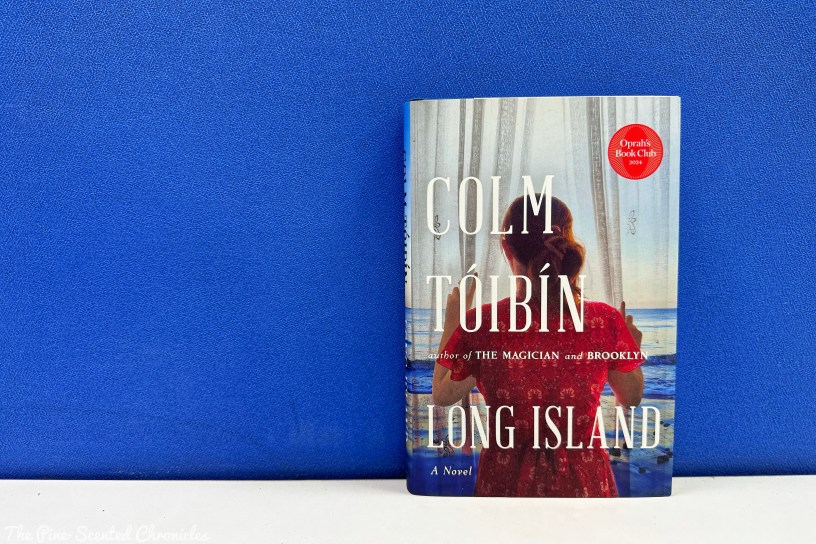
Brooklyn was a towering achievement, to say the least. It was also listed as one of the best-written works of historical fiction and of fiction in general. This work of historical fiction has been considered by many literary pundits and readers as his magnum opus. It was such a literary sensation that Tóibín broke one of his cardinal rules. In 2024, he published Long Island, the sequel to Brooklyn; Tóibín is renowned for writing standalone novels. Long Island commences in 1976, nearly two decades after the events covered in Brooklyn. The beloved heroine of Brooklyn is now in her forties and is working as an accountant. She is still married to American Italian Tony Fiorello, a plumber. The couple had two teenage children, Rosella and Larry. Along with Tony’s family, they have since moved to a close-knit Italian American community in Lindenhurst, Long Island, hence, the book’s title.
“It would be hard to explain to her how lonely he felt when he came into these rooms after closing time and how that feeling became more intense if he woke in the night or in the morning. He had not felt like this before the possibility of being with her arose. Now that it was there as something that would happen, it made his solitary state almost unbearable, at least some of the time.”
Colm Tóibín, Long Island
Moving to the island has been foretold in the book’s prequel. During their dates, Tony often regaled Eilis with his dream of starting a construction company with his brothers out on the island. They managed to pull it off and Eilis has settled into the comforts of suburban life. It was the typical quotidian Italian-American existence. Eilis, particularly her Irish values and Irishness was the subject of her husband and his extensive’ teasing. Weekends were comprised of obligatory family lunches where they feast on pasta. It was always a lively affair despite Eilis’ initial reservations. Over time, Eilis has learned to meld into the boisterous world of the Fiorellos. However, the natural flow of their life was abruptly disrupted by the sudden arrival of an Irishman at their door. Eilis had no iota about who he was. What Eilis did not expect was the revelation he brought along with him.
This revelation involves Tony and has serious consequences. It also shattered Eilis’ sense of stability, inevitably creating a rift between Eilis and Tony. The revelation threatens to expose the fault lines in their relationship and her relationship with his family. What was supposed to be a private marital affair developed into a one-sided family affair? Tony’s family wanted to keep the peace and harmony within the household. Francesca, Eilis’ mother-in-law, wanted to look past Tony’s trespass and simply move on. Eilis had a different idea. She refused Tony’s family’s plan and she was adamant about her stance. It was at this critical juncture that Eilis received a letter from her own mother in Enniscorthy, Ireland. It did not escape Eilis’ attention how her mother mentioned everyone in town except for one person. As tension mounts in her Long Island home, Eilis decides to visit Ireland. After all, her mother is approaching her eightieth birthday. Eilis was also hoping that the distance would provide her a different perspective and, hence, achieve a sense of clarity.
It was also a timely break for Eilis; the last time she was home was before she became a mother. Eilis, however, was not alone in her trip. Tagging along with her were her children. This presented an opportunity for her children to visit their mother’s hometown for the first time. It was also an opportunity for them to get to know their maternal grandmother and for their grandmother to get to know them. Returning to Enniscorthy – interestingly, this is also Tóibín’s hometown – stirred in EIlis a plethora of emotions. Her mother, however, was not willing to easily take Eilis off the hook. Reeling from the feeling of being abandoned by Eilis shortly after the death of Rose, her other daughter, the matriarch was not quick to forgive her daughter. Eilis’ mother was critical of her looks and refused to hear about her life in America. The fruit does not fall far from the tree, they say. She was as resolute as her daughter.
Nevertheless, finding herself in a familiar place evoked an overwhelming surge of nostalgia. During Eilis’ absence, several things have changed in Enniscorthy. However, there still lingered a sense of familiarity that floated to the surface because of the intricacies of memories and the intersections with familiar names and faces. The passage of time was etched on their faces. There was one memory of youth that stood out despite having gotten lost in the bedlam of life. Before she returned to America, Eilis was swept in a whirlwind romance with Jim Farrell and her return to her hometown made her revisit these memories. Jim now runs the local pub he inherited from his father. He was also in a clandestine love affair with Nancy Sheridan, Eilis’ former best friend; Eilis is already a widow. Their love affair mirrored Eilis’ own secret marriage in Brooklyn. As Eilis and Jim inevitably crossed paths, old emotions swelled to the surface.
“If she were to indicate that she was happily married and would soon be returning to her husband, that would, it now occurred to him, make things simple. He would not have to make any decisions. He would feel a dull disappointment. But he was used to that. It was what he carried upstairs to this room most nights.”
Colm Tóibín, Long Island
Before returning to Brooklyn two decades ago, Eilis was caught in a summer love affair; this was orchestrated by Nancy who married George Sheridan that same summer. Back then, Eilis did not mention her marriage to Tony to anyone; mentioning so underlined the inevitability of her return to Brooklyn. When Eilis abruptly left, Jim was naturally left devastated, confused, and heartbroken; he was planning to propose marriage to her. Jim has since moved on but Eilis’ unexpected reappearance threatens to rock the boat. Eilis’ presence also threatens to expose Jim and Nancy’s love affair, one that they have carefully kept from the inquisitive eyes of their neighbors and the public in general.
Life has its own funny way of coming back at us. Just when we thought we figured it all out, reality claps back at us. It plays with our minds and emotions. We find ourselves in quandaries and the recourse we have is to confront all of these questions head on. Often, the most jarring questions pertain to the what-ifs. Ironically, what-ifs are constants in our lives, and oftentimes, they cloud our visions during the most critical junctures of our lives. What if we stayed, what would have happened? What if we had been honest about the past and what we felt toward each other? What if we chose one over the other? As memories, emotions, and secrets swirl into a conundrum, these are just among the spate of questions that Eilis found herself grappling with in her homecoming. The loose ends of Brooklyn then turn into the crux of Long Island.
As we confront the ghosts of the past, we are prompted to navigate the thorny landscape of complex relationships, whether it be between parents and children, friends, or past flames. The confrontation of complicated emotions is predestined. This also entails coming to terms with the consequences of the difficult choices we make, the choices that keep haunting us. Eilis’ story was exacerbated by the two worlds wherein she exists. One is across the Atlantic where she is a faithful wife, a caring mother, and the quintessential urban woman. The other is idyllic and poignant. However, it is undermined by the pressures of living in a small community and, by extension, the complexities of families. Further, one side symbolizes duty, and the other stands for yearning and desire. These are stark dichotomies and at the center of these two colliding worlds is Eilis. This, in a way, makes Eilis’ journey in Ireland a journey about searching for herself.
Compared to its predecessor, Long Island is more eventful. Historical contexts prop the novel’s background. There was discourse between Eilis and her father-in-law about the Vietnam War, a reminder of the tensions of the period. However, Long Island, like Brooklyn, is not the archetypal work of historical fiction. The novel evolves into a quintessential romance where reunions and betrayals are ubiquitous, akin to its predecessor. But like in the case of its predecessor, the novel’s backbone is its characters. Tóibín astutely crafted the profiles of the novel’s main protagonists, providing the readers intimate glimpses into their thoughts and emotions. However, Tóibín creates enough distance between the readers and the characters so as not to compromise their privacy.
“She wished that Rosella and Larry were coming now and not weeks away. She wished her mother would let her talk about them. But she barely let herself think about what she wished for most — that she were not in her mother’s living room trying to write a letter, hearing her mother move with difficulty in the room upstairs, but rather at home, waking to the soft light of early summer that appeared through the curtains of her bedroom on Long Island.”
Colm Tóibín, Long Island
Tóibín’s works underscore his mastery of emotional compression. Emotions are well-budgeted, keeping the readers at the edge of their seats. The story brims with internal monologues, conversations that meander, and internal strife. However, the characters often find themselves at the intersection of whether they should express what they feel or suppress them. Secrets proliferate the story as many things are left unsaid. There is a certain silence – of the unsaid – that subtly pervades the story. We are never completely privy to the character’s thoughts and feelings. It was always partial and we are left to fill in the gaps. This, coupled with the ambiguity of the conclusion, can impair a literary purist’s experience. On the other hand, the unresolved ending prompts readers to reflect on Eilis’ life and the difficult choices she had to make. This makes a sequel not farfetched.
Long Island takes time to build but slowly unfolds as it approaches its inevitable conclusion. It is when events, critical to the characters’ lives, start to unravel. There was, however, no happily ever after as the novel ends on an inconclusive note. Nevertheless, the hallmarks of Tóibín’s storytelling and writing make the sequel to Brooklyn soar. These gaps of silence, coupled with the emotional economy, tickle the readers’ imaginations. At the same time, the novel explores subjects and themes of unfulfilled romance, the intricacies of families, and the pressures of living in small towns. The idyll of Enniscorthy, its quaintness, was an antithesis to the bedlam of urban and suburban New York. Subtly woven among these themes are the inescapable realities of migration. Eilis was caught between two starkly contrasting worlds. All of these elements, woven together into a lush tapestry by Tóibín’s skilled hands, make up for an intriguing story.
“When she asked him what he regretted most, he was at a loss. He regretted the years going by; he regretted that he had taken so long to find someone he could be happy with.”
Colm Tóibín, Long Island
Book Specs
Author: Colm Tóibín
Publisher: Scribner
Publishing Date: 2024
No. of Pages: 294
Genre: Historical, Romance, Literary
Synopsis
Eilis Lacey is Irish, married to Tony Fiorello, one of four Italian American brothers, all of whom live in neighboring houses on a cul-de-sac in Lindenhurst, Long Island, with their wives and children and Tony’s parents, a huge extended family that lives and works together. It is the spring of 1976 and Eilis, now in her forties with two teenage children, has no one to rely on in this still-new country. Though her ties to the town in Ireland where she grew up remain strong, she has not returned in decades.
One day, out of the blue, a man comes to the door asking for Eilis by name. He tells her that his wife is pregnant with Tony’s child, and that when the baby is born, he will deposit it on Eilis’s doorstep It is what Eilis does in response to this stunning news – and what she refuses to do – that makes Tóibín’s novel so extraordinarily riveting.
Long Island is about longings unfulfilled, even unrecognized. The silences in Eilis’s life are thunderous and dangerous, and there’s no one more deft than Tóibín at giving them language. This is a gorgeous story of a woman alone in a marriage and the deepest bonds she rekindles on her return to Enniscorthy, Ireland, to the place and people she left behind, and to ways of living and loving she thought she’d lost. Eilis is Tóibín’s most compelling and unforgettable character, and this novel is a masterpiece.
About the Author
To learn more about Colm Tóibín, click here.
 The Pine-Scented Chronicles