
Hello, readers! It is Monday again! As it is Monday, welcome to another #5OnMyTBR update. The rule is relatively simple. I must pick five books from my to-be-read piles that fit the week’s theme.
This week’s theme: Indie
I really can’t think of any Indie books. Instead, I will feature books about indigenous people. After all, today is also Indigenous People’s Day.

5OnMyTBR is a bookish meme hosted by E. @ Local Bee Hunter’s Nook where you chose five books from your to-be-read pile that fit that week’s theme. If you’d like more info, head over to the announcement post!

Title: House Made of Dawn
Author: N. Scott Momaday
Publisher: HarperCollins
Publishing Date: 1994
No. of Pages: 212
Synopsis: House Made of Dawn is about the struggle of a man who cannot understand or be understood, a man who is integrated with neither the traditions of his Indian heritage nor the ways of the white world. When Abel, a mixed-blood Indian who does not even know the tribe of his own father, returns to the Walatowa Pueblo reservation after serving in WWII, he feels removed from the traditions of the reservation. He drinks, kills an albino Indian who has humiliated him, and is promptly sent to prison by a court that has no understanding of his motives or his cultural identity.
After his release from prison, Abel begins a difficult emotional journey that takes him from an assembly line in Los Angeles back to the reservation – and to a reunification with the customs of his ancestors.
In 1969, House Made of Dawn became the first novel by a Native American to win the Pulitzer Prize; it is considered a classic of the Native American renaissance.

Title: The Mighty Red
Author: Louise Erdrich
Synopsis: In this stunning novel, Pulitzer Prize and National Book Award–winning author Louise Erdrich tells a story of love, natural forces, spiritual yearnings, and the tragic impact of uncontrollable circumstances on ordinary people’s lives.
History is a flood. The mighty red . . .
In Argus, North Dakota, a collection of people revolve around a fraught wedding.
Gary Geist, a terrified young man set to inherit two farms, is desperate to marry Kismet Poe, an impulsive, lapsed Goth who can’t read her future but seems to resolve his.
Hugo, a gentle red-haired, home-schooled giant, is also in love with Kismet. He’s determined to steal her and is eager to be a home wrecker.
Kismet’s mother, Crystal, hauls sugar beets for Gary’s family, and on her nightly runs, tunes into the darkness of late-night radio, sees visions of guardian angels, and worries for the future, her daughter’s and her own.
Human time, deep time, Red River time, the half-life of herbicides and pesticides, and the elegance of time represented in fracking core samples from unimaginable depths, is set against the speed of climate change, the depletion of natural resources, and the sudden economic meltdown of 2008-2009. How much does a dress cost? A used car? A package of cinnamon rolls? Can you see the shape of your soul in the everchanging clouds? Your personal salvation in the giant expanse of sky? These are the questions the people of the Red River Valley of the North wrestle with every day.
The Mighty Red is a novel of tender humor, disturbance, and hallucinatory mourning. It is about on-the-job pains and immeasurable satisfactions, a turbulent landscape, and eating the native weeds growing in your backyard. It is about ordinary people who dream, grow up, fall in love, struggle, endure tragedy, carry bitter secrets; men and women both complicated and contradictory, flawed and decent, lonely and hopeful. It is about a starkly beautiful prairie community whose members must cope with devastating consequences as powerful forces upend them. As with every book this great modern master writes, The Mighty Red is about our tattered bond with the earth, and about love in all of its absurdity and splendor.
A new novel by Louise Erdrich is a major literary event; gorgeous and heartrending, The Mighty Red is a triumph. (Source: Goodreads)

Title: Wandering Stars
Author: Tammy Orange
Synopsis: The eagerly awaited follow-up to Pulitzer Prize-finalist Tommy Orange’s breakout best seller There There —winner of the PEN/Hemingway Award, the John Leonard Prize, the American Book Award, and one of the New York Times 10 Best Books of 2018— Wandering Stars traces the legacies of the Sand Creek Massacre of 1864 and the Carlisle Indian Industrial School through to the shattering aftermath of Orvil Red Feather’s shooting in There There.
Colorado, 1864. Star, a young survivor of the Sand Creek Massacre, is brought to the Fort Marion Prison Castle, where he is forced to learn English and practice Christianity by Richard Henry Pratt, an evangelical prison guard who will go on to found the Carlisle Indian Industrial School, an institution dedicated to the eradication of Native history, culture, and identity. A generation later, Star’s son, Charles, is sent to the school, where he is brutalized by the man who was once his father’s jailer. Under Pratt’s harsh treatment, Charles clings to moments he shares with a young fellow student, Opal Viola, as the two envision a future away from the institutional violence that follows their bloodlines.
Oakland, 2018. Opal Viola Victoria Bear Shield is barely holding her family together after the shooting that nearly took the life of her nephew Orvil. From the moment he awakens in his hospital bed, Orvil begins compulsively googling school shootings on YouTube. He also becomes emotionally reliant on the prescription medications meant to ease his physical trauma. His younger brother, Lony, suffering from PTSD, is struggling to make sense of the carnage he witnessed at the shooting by secretly cutting himself and enacting blood rituals that he hopes will connect him to his Cheyenne heritage. Opal is equally adrift, experimenting with Ceremony and peyote, searching for a way to heal her wounded family.
Extending his constellation of narratives into the past and future, Tommy Orange once again delivers a story that is by turns shattering and wondrous, a book piercing in its poetry, sorrow, and rage—a masterful follow-up to his already-classic first novel, and a devastating indictment of America’s war on its own people. (Source: Goodreads)

Title: The Fast Red Road: A Plainsong
Author: Stephen Graham Jones
Synopsis: The Fast Red Road—A Plainsong is a novel which plunders, in a gleeful, two-fisted fashion, the myth and pop-culture surrounding the American Indian. It is a story fueled on pot fumes and blues, borrowing and distorting the rigid conventions of the traditional western. Indians, cowboys, and outlaws are as interchangeable as their outfits; men strike poses from Gunsmoke, and horses are traded for Trans-Ams. Pidgin, the half-blood protagonist, inhabits a world of illusion—of aliens, ghosts, telekinesis, and water-pistol violence—where television offers redemption, and “the Indian always gets it up the ass.”
Having escaped the porn factories of Utah, Pidgin heads for Clovis, NM to bury his father, Cline. But the body is stolen at the funeral, and Pidgin must recover it. With the aid of car thief Charlie Ward, he criscrosses a wasted New Mexico, straying through bars, junkyards, and rodeos, evading the cops, and tearing through barriers “Dukestyle.” “Charlie Ward slid his thin leather belt from his jeans and held it out the window, whipping the cutlass faster, faster, his dyed black hair unbraiding in the fifty mile per hour wind, and they never stopped for gas.” Along the way, Pidgin escapes a giant coyote, survives a showdown with Custer, and encounters the remnants of the Goliard Tribe—a group of radicals to which Cline belonged.
Pidgin’s search allows him to reconcile the death of his father with five hundred years of colonial myth-making, and will eventually place him in a position to rewrite history. Jones tells his tale in lean, poetic prose. He paints a bleak, fever-burnt west—a land of strip-joints, strip-malls, and all you can eat beef-fed-beef stalls, where the inhabitants speak a raw, disposable lingo. His vision is dark yet frighteningly recognizable. In the tradition of Gerald Vizenor’s Griever, The Fast Red Road—A Plainsong blazes a trail through the puppets and mirrors of myth, meeting the unexpected at every turn, and proving that the past—the texture of the road—can and must be changed. (Source: Goodreads)
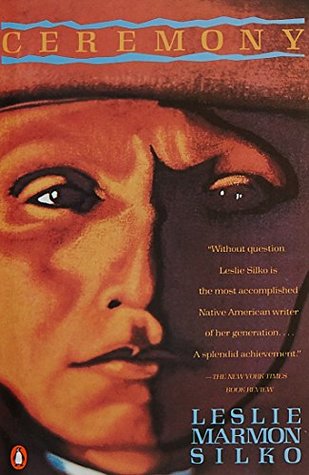
Title: Ceremony
Author: Leslie Marmono Silko
Synopsis: Tayo, a young Native American, has been a prisoner of the Japanese during World War II, and the horrors of captivity have almost eroded his will to survive. His return to the Laguna Pueblo reservation only increases his feeling of estrangement and alienation. While other returning soldiers find easy refuge in alcohol and senseless violence, Tayo searches for another kind of comfort and resolution. Tayo’s quest leads him back to the Indian past and its traditions, to beliefs about witchcraft and evil, and to the ancient stories of his people. The search itself becomes a ritual, a curative ceremony that defeats the most virulent of afflictions—despair. (Source: Goodreads)
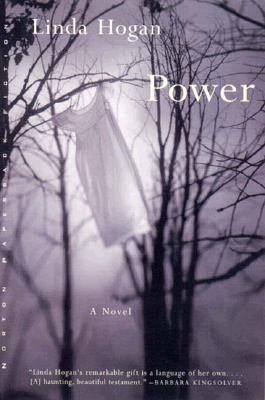
Title: Power
Author: Linda Hogan
Synopsis: When sixteen-year-old Omishto, a member of the Taiga Tribe, witnesses her Aunt Ama kill a panther-an animal considered to be a sacred ancestor of the Taiga people-she is suddenly torn between her loyalties to her Westernized mother, who wants her to reject the ways of the tribe, and to Ama and her traditional people, for whom the killing of the panther takes on grave importance. (Source: Goodreads)
 The Pine-Scented Chronicles