
Happy Wednesday everyone! Wednesdays also mean WWW Wednesday updates. WWW Wednesday is a bookish meme hosted originally by SAM@TAKING ON A WORLD OF WORDS.
The mechanics for WWW Wednesday are quite simple, you just have to answer three questions:
- What are you currently reading?
- What have you finished reading?
- What will you read next?

What are you currently reading?
Woah. Time is flying past us. We are already halfway through the tenth month of the year. In a couple of weeks, we will be welcoming a new year. As the year slowly draws to a close, I hope everyone gets to complete all their goals this year. I hope the remainder of the year will shower everyone with blessings and good news. I hope everyone gets repaid for all their hard work. I hope we will end the year on a high note. Like September, October turned into a mixed bag, reading-wise. At the start of the month, I really had no firm plan for how the month was going to be. Currently, it is a foray into the works of Nobel Prize in Literature awardees. In succession, I read the latest translated novel by Olga Tokarczuk, my 100th read for the year; Orhan Pamuk’s The Black Book which is part of my 2024 Beat the Backlist Challenge; and my seventh novel by Yasunari Kawabata, The Rainbow.
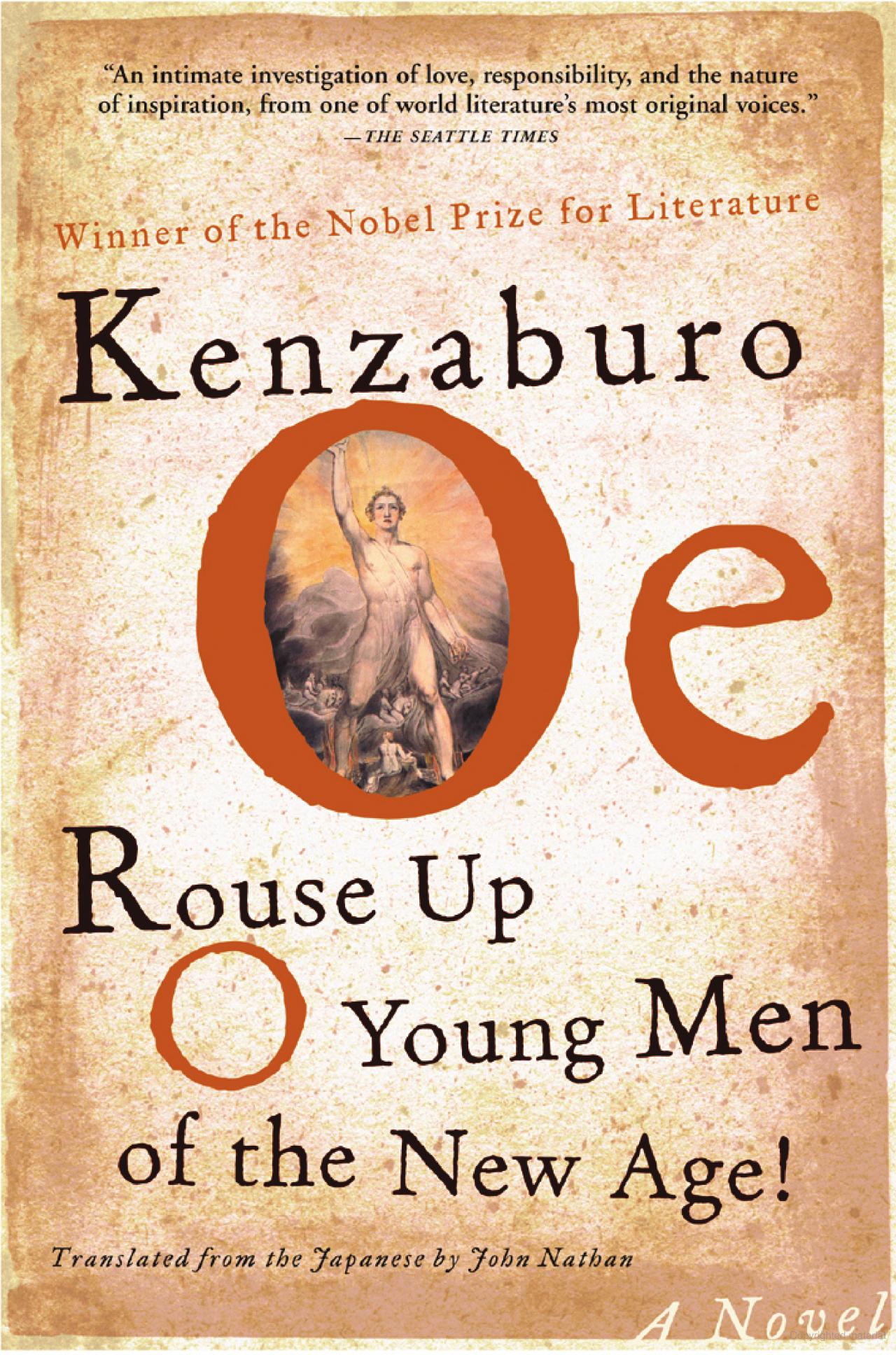
I made it three Asian Nobel Laureates in Literature in a row with Kenzaburō Ōe’s Rouse Up O Young Men of the New Age! This is my sixth novel by the 1994 Laureate in Literature. Originally published in 1983 in Japanese as 新しい人よ、眼ざめよ (Atarashii hito yo mezameyo), the novel, in a way, is thematically connected to A Personal Matter and A Quiet Life (although this was published later). Ōe again takes the role of the primary narrator, with his handicapped son Hikari – fondly called Eeyore – as the focus of his introspection. A Personal Matter was intense while Rouse Up O Young Men of the New Age! was more introspective as Ōe prepares his son to deal with the real world. Two elements stand out in the story: Hikari’s fixation with music and Blake’s poetry. It was through Blake’s poetry that Ōe viewed his son. While he initially felt that it was him preparing his son for the real world, Ōe was slowly realizing that he had as many lessons to learn from his son. I am a couple of pages away from finishing the novel and, as always, I am always fascinated by Ōe’s intimate glimpses into his interiors.
What have you finished reading?

The past weeks were rather slow in terms of reading because my time has been divided. Due to an office event, I had to walk and go out more to gain more steps; it is part of the company’s sustainability commitment. I was able to complete just two books in each of the past two weeks. It is still a good number, all things considered. As I have mentioned above, I was on a Nobel Prize in Literature reading stretch. The second of the laureates I read during this stretch – the first one was Tokarczuk – was Turkish writer Orhan Pamuk’s The Black Book. The book is also a part of my 2024 Beat the Backlist Challenge. While I have been doing well on my 2024 Top 24 Reading List, I can’t say the same for this challenge.
Originally published in 1990 in Turkish as Kara Kitap, The Black Book is set in Istanbul. At the heart of the story was lawyer Galip. One winter night, he came home to discover that his wife Rüya disappeared with just a note saying she would keep in touch. As Galip tries to find out what happened to his wife, moments of introspection provide us glimpses into their union. Galip and Rüya are cousins who first met when they were both young. Galip fell in love with Rüya but she married a left-wing activist. As fate would have it, Rüya left her husband and married Galip. We also learn that Rüya loved reading detective novels. The mystery deepened when Rüya’s older stepbrother Celâl also disappeared. Celâl was a highly-heralded columnist who was admired by many, including Galip; Galip wanted to achieve the level of success his stepbrother-in-law achieved. The novel alternates between a third-person narrator and Celâl’s voice. Some of Celâl’s columns were integrated into the novel. As can be expected from Pamuk, incisive political commentaries were subtly woven into the story; this earned Pamuk the ire of Turkish nationalists. The Black Book is quite a complicated book, both because of its premise and its structure. Nevertheless, it was a riveting read that also takes the readers across Istanbul; it was an integral character.

From one Asian Nobel Laureate in Literature to another. From Turkey, my literary journey next brought me to a very familiar literary territory – and one of my favorites – Japan. Yasunari Kawabata earned the distinction of being the Japanese first Nobel Laureate in Literature when he was awarded the highly-coveted prize in 1968. He is also one of the reasons why I have fallen in love with the lush tapestry of Japanese literature. My foray into his oeuvre started with Snow Country and now I have just read my seventh novel by Kawabata, The Rainbow. This makes Kawabata my second most-read Nobel Laureate in Literature, one book behind his countryman Kazuo Ishiguro.
The Rainbow charts the story of architect Mizuhara and his three daughters. He had his daughters with three different women. Momoko and her younger sister Asako grew up together; Momoko’s mother died, prompting Mizuhara to look after her. However, the siblings did not know about their younger sister Wakako. When the novel commenced, Asako was on her way home from Kyōto to Tōkyō. Without telling her sister and father, she traveled to The Old Capital hoping to meet her Wakako; it was for naught. On the way home, she saw a rainbow on Lake Biwa; it would be the first of many rainbows that riddled the story. The story also pans to Momoko’s love affairs. She was tormented by the memories of her former lover, a kamikaze pilot who died in the battle of Okinawa. Her lover’s untimely demise set her up for a series of unfulfilling and unsettling affairs. Both sisters are learning to navigate post-war Japan. They were trying to make sense of their lives. Meanwhile, Kawabata again fascinates with his atmospheric writing. The backdrop is integral in his stories and they project the emotions of the characters. While he has had better works, The Rainbow is nevertheless a welcome addition to a prolific career.
What will you read next?


 The Pine-Scented Chronicles