
Happy Wednesday everyone! Wednesdays also mean WWW Wednesday updates. WWW Wednesday is a bookish meme hosted originally by SAM@TAKING ON A WORLD OF WORDS.
The mechanics for WWW Wednesday are quite simple, you just have to answer three questions:
- What are you currently reading?
- What have you finished reading?
- What will you read next?

What are you currently reading?
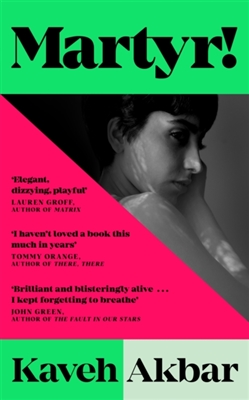
Woah. Time is flying past us. We are slowly inching toward the close of the tenth month of the year. This also means that we are a couple of weeks away from welcoming a new year. With the year drawing to a close, I hope everyone gets to complete all their goals this year. I hope the remainder of the year will shower everyone with blessings and good news. I hope everyone gets repaid for all their hard work and that we will all end the year on a high note. Reading-wise, October turned into a mixed bag. From reading works of Nobel Laureates in Literature at the start of the month, I read works shortlisted for the prestigious Booker Prize. Currently, I have taken a pause from reading Booker Prize-shortlisted books – I have already read three – and careened toward a book that is part of my ongoing reading challenges. While searching for books to include in my 2024 Top 10 Books I Look Forward To list, I encountered Kaveh Akbar. His debut novel – he was more active as a poet – Martyr! was a familiar presence in similar lists; it was a no-brainer for me to include it in my own.
After waiting for months for a copy of the book, I was finally able to obtain one. At the heart of the novel was Cyrus Shams who was studying in university when we first met him. We are immediately apprised of his personal struggles. He was an addict and an alcoholic although he has been trying to clean up his acts. His father, Ali, recently passed away while his mother Roya passed away shortly after he was born. Flashbacks transport us to his birthplace, Tehran, and the time immediately following his birth. Cyrus was also depressive and suicidal and he wanted to die as a martyr. The discourse inevitably led toward suicide bombers but it was fate that Cyrus was unwilling to be part of. These are some of the basic facts established early on in the story and I can sense that some of it are foreshadowing to what is about to happen. Perhaps I will be able to share more of my impressions on the book in this week’s First Impression Friday update.
What have you finished reading?
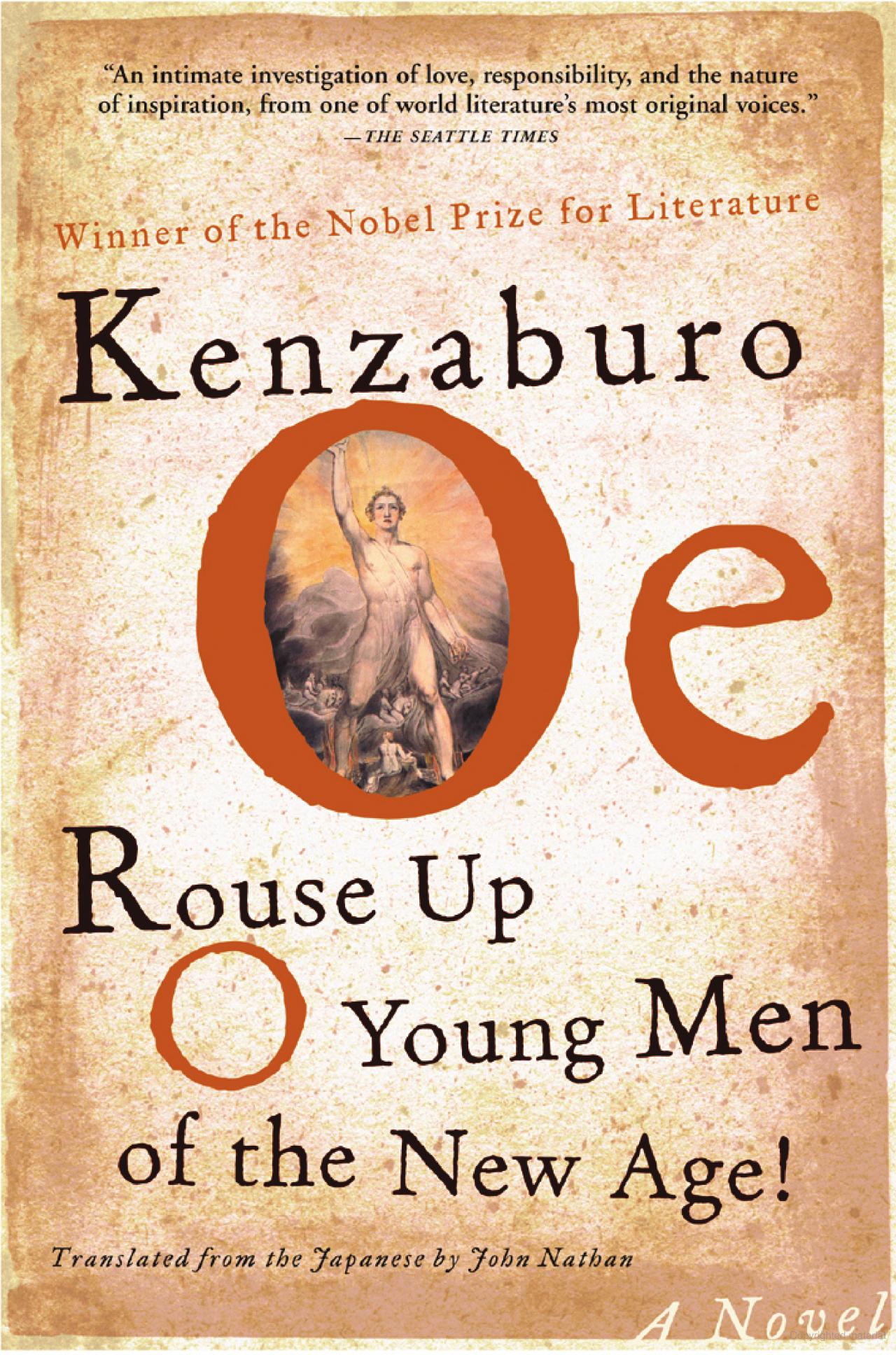
As I mentioned, I opened my October reading journey with the works of Nobel Laureates in Literature. After reading Olga Tokarczuk’s latest novel, The Empusium, I read three works by Asian Nobel Laureates in Literature in a row; the recent recognition of Han Kang, the first female Asian writer to be awarded the Prize, was a major factor for this. I started with Orhan Pamuk’s The Black Book which is part of my 2024 Beat the Backlist Challenge and concluded it with Japanese writer Kenzaburō Ōe’s Rouse Up O Young Men of the New Age! This is my sixth novel by the 1994 Laureate in Literature.
Originally published in 1983 in Japanese as 新しい人よ、眼ざめよ (Atarashii hito yo mezameyo), the novel, in a way, is thematically connected to A Personal Matter and A Quiet Life (although this was published later). Ōe again takes the role of the primary narrator, with his handicapped son Hikari – fondly called Eeyore – as the locus of his introspection; Hikari was born with autism and is developmentally disabled. While A Personal Matter was intense, Rouse Up O Young Men of the New Age! was more introspective. In this work of I-novel, we see Ōe trying to prepare his son on how to deal with the real world. He was understandably anxious but he was in for a surprise, a pleasant surprise that is. Two elements stand out in the story: Hikari’s fixation with and growing love for music and Blake’s poetry. It was through Blake’s poetry that Ōe started to try to understand and appreciate the intricacies of his son. While he initially felt that it was him preparing his son for the real world, Ōe was gradually realizing that he had as many lessons to learn from his son. There was much more to Hikari than his impairment. He had as much wisdom to offer to his father as his father with him. Hikari was a compelling character As always, I am always fascinated by Ōe’s intimate glimpses into his interiors.

From Asia, I then traveled – literary – across to Europe to continue my venture into the works shortlisted for the 2024 Booker Prize. I have already read one, Percival Everett’s James, and I am looking at reading the other five books; I just received my copies of the books and I can’t wait to read them since they are all writers who are new to me. The second book from the shortlist, and the fourth from the longlist, I read was Yael Van Der Wouden’s The Safekeep. The Dutch writer’s debut novel, it is one of three debut novels in the longlist and the only one that made the cut for the shortlist.
The Safekeep transports us to 1960s rural Netherlands, particularly to the province of Overijssel where a stately home was occupied by one woman, the twenty-seven-year-old Isabel. She had two brothers, Hendrik and Louis, who both moved away. Following their mother’s death, Isabel looked after the house like it was her own child, ensuring that it is well kept. Over time, the house became an extension of Isabel. The privacy of her isolation was disrupted by the appearance of Louis – Isa was closer to Hendrik – who brought along with him Eva, the latest of his long string of girlfriends. Leaving for a business trip, Louis left Eva in Isabel’s company. The two women were the antithesis of each other. Isa’s fixation with order was disrupted by Eva’s irreverent and chaotic nature. While Eva was pushing Isa’s buttons – the wrong ones – a palpable awakening was happening; this was palpable which made me think the story was predictable. What I was not prepared for were the secrets that were slowly unveiled, particularly when the story shifted to Eva’s point of view. The slow reveal was what made the story compelling. It is a riveting story about the lies we tell ourselves and the lies that accrue over time. Overall, The Safekeep is an impressive debut from a rising literary star.

From one Booker Prize-shortlisted book to another. My literary journey next took me across two oceans actually. From Netherlands, I find myself in Australia; I can’t say I read that many works of Australian writers. Apparently, Charlotte Wood is quite the prolific writer. Prior to Stone Yard Devotional (2023), she already published six novels and works of nonfiction. For her works, she earned accolades in her native Australia and across the world. Stone Yard Devotional’s shortlisting for the Booker Prize further underlines the strength of her oeuvre. This further piqued my interest in her works.
At the heart of Stone Yard Devotional is an unnamed narrator who, at the novel’s commencement, was visiting her parents’ grave sites for the first time in over three decades. During the visit, she noticed the nuns at the monastery performing their daily duties. The narrator, who worked at the Threatened Species Rescue Center, was full of despair. She felt useless because of an impending climate catastrophe. Crushed by futility, she left her career and husband to join the convent which is located somewhere in New South Wales. At the onset, her spirit was waning but eventually, she found herself embroiled in the activities of the monastery. The harmony in the monastery was disrupted by the news of the discovery of the bones of Sister Jenny, a nun who was murdered in Thailand years before. Tasked to bring the bones home was Helen Parry, a celebrated nun who was an environmental and human rights activist. Helen and the narrator were once schoolmates and the news of Helen Parry’s impending arrival prompted the narrator to reflect on their shared past. There is a somber tone that hovered above the story which made me sense the futility that the narrator was feeling. And yes, the story was brimming with mice to an almost allegorical level. Stone Yard Devotional is a lyrical and riveting story.
What will you read next?


 The Pine-Scented Chronicles