
Over the past few years, when I expanded my reading horizon beyond uncharted territories – at least for me – the Booker Prize has established itself as a mine of interesting and thought-provoking reads. It was germane in introducing me to some of the world’s most outstanding literary works and even bodies of work. First awarded in 1969, among its honor roll are some of the literary world’s most popular and discussed literary works, such as Salman Rushdie’s Midnight’s Children, Iris Murdoch’s The Sea, The Sea, Yann Martel’s Life of Pi, and Margaret Atwood’s The Blind Assassin. It was also awarded to the works of some Nobel Laureates in Literature such as Kazuo Ishiguro’s Remains of the Day, J.M. Coetzee’s Disgrace, V.S. Naipaul’s In a Free State, William Golding’s Rite of Passage, and Nadine Gordimer’s The Conversationist.
On November 12, the winner of the 2024 Booker Prize is going to be announced. A panel of judges chaired by Edmund Arthur Lowndes de Waal, CBE, a renowned contemporary English artist, master potter, and author. , will converge and deliberate which of the six shortlisted works will win £50,000 and join an esteemed company of Booker Prize winners. The judges have their hands full because, in terms of subject and complexity, this year’s shortlist features an eclectic selection of literary works that probe into a wide range of subjects and themes prevalent in the contemporary such as the poignancy of history and memory, the adverse impact and legacy of war and how they still resonate in the contemporary, and social commentaries. There are, of course, staple subjects such as the empowerment of women, the prevalence of politics, and the dynamics of family relationships.
Below are the seven books that were not able to make it through this year’s shortlist:
1. Wild Houses by Coln Barrett
2. Headshot by Rita Bullwinkel
3. My Friends by Hisham Matar
4. This Strange Eventful History by Claire Messud
5. Wandering Stars by Tammy Orange
6. Enlightenment by Sarah Perry
7. Playground by Richard Powers
I have read two of these seven books and was impressed by both. I was gutted when Matar’s My Friends was not included in the shortlist. I was also surprised that Powers’ Playground, although I have yet to read the book, has not made it to the shortlist. Nevertheless, before the winner is announced, I will do a quick run-through of the six shortlisted works. This is without any particular order.
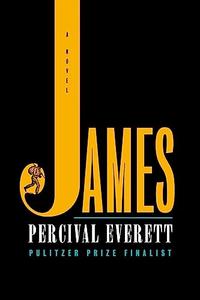
James by Percival Everett
The first book on the shortlist I read was Percival Everett’s James. Of the six writers on the shortlist, he was the only writer I have heard of before. Before James, my most recent encounter with the American writer was through his 2021 novel The Trees which was also shortlisted for the Booker Prize. It was one of the reasons for my growing interest in Everett’s oeuvre, hence, the inclusion of his latest novel to my 2024 Top 10 Books I Look Forward To List.
James is essentially a retelling of the beloved literary classic The Adventures of Huckleberry Finn by Mark Twain. Everett recharts the story but now through the perspective of Jim, the Black slave, Finn’s travel companion in the original novel. Jim prefers to be called James. In James, Evertt introduces a psychologically complex character imbued with worldly wisdom, compassion, remarkable intelligence, and an indomitable spirit that sees through the indignities of slavery. James bore witness to cruelties done on slaves but despite being shackled to the ground by slavery, he was always certain of his worth. His story resonates with strength and resilience amidst the pandemonium of racism and slavery. James is a wonderful addition to the growing list of recent retellings of literary classics; Barbara Kingsolver’s Demon Copperhead, a modern interpretation of Charles Dickens’s David Copperfield, won the Pulitzer Prize. It is not farfetched to see the American writer bagging the Prize.

The Safekeep by Yael Van Der Wouden
Of the thirteen longlisted books, three were debut novels. However, it was only Yael Van Der Wouden’s The Safekeep that made it to the shortlist. This also makes her the first Dutch writer to be shortlisted for the prestigious literary prize. It was, interestingly, one of the books in the longlist that immediately grabbed my attention. The Safekeep transports us to the 1960s Dutch countryside where a large stately home was occupied by one woman, the twenty-seven-year-old Isabel.
Isabel was the paragon of order and regimented routine. The tranquility she enjoyed in the house – her two brothers already moved away – was disrupted by Eva. Eva was her brother Louis’ latest girlfriend who he left with Isabel as he went on a business trip. Isabel was a riveting character. It was fascinating reading how the armor she built around herself was slowly cracked open and ushered in a new understanding of her identity and sexuality. The weight of history and legacies of the Second World War loomed, captured in sepia-tinted images by seemingly mundane objects. It is also a story about the lies that we tell ourselves and the beauty of finding connection despite the gloom. Debut novels winning the Booker Prize are no stranger. It has been done before and Van Der Wouden has a high chance of joining the elite list.

Stone Yard Devotional by Charlotte Wood
The third book from the shortlist I read was Charlotte Wood’s Stone Yard Devotional. Wood is quite a prolific and highly-heralded writer; it was surprising that this was the first time I heard of her. This made me look forward to reading Wood’s seventh novel. Guiding the readers across the topography of Wood’s seventh is a middle-aged anonymous female narrator. Tired and full of despair – her personal and professional lives were unraveling – she yearned for an escape. This prompted her to enlist for a convent in the Australian countryside.
However, even the convent was not safe from the tentacles of the outside world. They kept on disrupting the peace. Despite this, the narrator managed to reflect. As we immerse ourselves in her reflections, we begin to understand that her anonymity was deliberate. Her reflections are slowly becoming our own. Her yearning for an escape from the bedlam of quotidian existence mirrors our own, especially in a world that is slowly descending toward tumult and disorder. The narrator reflects on how we can adversely impact the people around us. Thus begins a quiet spiritual journey toward redemption. The novel also grapples with questions about life, existence, climate change, catastrophe, and even the past. Stone Yard Devotional is a quietly powerful and thought-provoking book.

Held by Anne Michaels
From Australia, the Booker Prize then introduced me to Canadian writer Anne Michael. Interestingly, five countries are represented in the shortlist; only the USA had more than one representative. Anne Michael’s latest novel, Held, is her third although she is more renowned as a poet. In a way, Held shares a similarity with James and The Safekeep because all three novels are works of historical fiction. However, Held veers away from conventional storytelling.
A family saga that spans 1902 to 2025, the plot weaves in and out of the past, the present, and even the future and transports the readers to various parts of the world, with most settings taking place in war zones. The novel is episodic in structure and introduces three women. Their story, however, starts with John who we first meet in the trenches of the First World War, wounded and cold. Three years later, he was back in North Yorkshire, married to Helena with who he sired a daughter named Anna. Anna became a doctor and married a Marxist hatmaker. Their daughter, Mara, is also a doctor. The family’s destiny is intertwined with warzones as Anna and Mara share a passion for serving in war zones. The novel’s various episodes were thematically linked by love, war, art, and even sciences; Marie and Pierre Curie made appearances.

Creation Lake by Rachel Kushner
The second American writer on the shortlist is Rachel Kushner with her latest novel, Creation Lake. I am not sure where I first met her but she rang a bell of familiarity. seemed like a familiar name. I just learned that her third novel, The Mars Room was also shortlisted for the Booker Prize; it won France’s Prix Médicis. In a way, Creation Lake sets itself apart from the rest of the shortlist because of its very premise. Creation Lake is a spy novel, at least on the surface. It is also the thickest of the six books on the shortlist.
Kushner’s fourth novel is written from the perspective of a female American undercover agent who we come to know as Sadie Smith, her latest alias. After getting fired from the FBI, the thirty-four-year-old has worked for shadowy, private entities. Her current task was to infiltrate a radical farming collective called Le Moulin in Guyenne, a remote region of France. The crux of the story, however, was Bruno Lacombe, the commune’s intellectual figurehead. Rejecting modernity and taking residence in a network of caves beneath his farm, Bruno advocated for pre-industrial modes of living. Sadie frowned upon Bruno’s philosophy and teachings. However, the more she got embroiled, the more she found herself drawn toward Bruno and his ideals. Creation Lake is a complex but compelling read.

Orbital by Samantha Harvey
Completing the shortlist is Samantha Harvey’s Orbital; Harvey is the only British writer on the shortlist (go figure!). She also has quite an extensive literary resume. Her debut novel The Wilderness (2009) was longlisted for the Booker Prize while her third novel The Western Wind (2018) was longlisted for the 2020 International Dublin Literary Award. This brings me to her fourth novel, Orbital. Orbital transports us to outer space, to the International Space Station which was manned by four astronauts and two cosmonauts, four men and two women.
The novel charted a day in the lives of these astronauts and cosmonauts. Harvey paints their daily routine; it is cyclical and mundane but they have gotten used to the thrum of routine. Outside, the view is captivating, except perhaps for the void. From the space station, the astronauts were provided a new vantage point from which to observe the Earth, making it ripe for introspection where science and real life intersect. They observe a typhoon looming over the Philippines and Indonesia. Climate change was one of a range of various subjects examined in the story, along with the characters’ backstories. However, I feel like the story never reached its full potential. There was a lot of promise but Harvey didn’t fully build on the foundations she established. Still, Orbital was an interesting read that provides a different perspective.
My Verdict
After reading all six books, I divided them into two major groups: the historical novels (James, Held, and The Safekeep) and the literary novels (Creation Lake, Stone Yard Devotional, and Orbital). These are also the major literary genres that have dominated the literary prize. Each book is distinct and has its merits which make each book a viable winner, although some more than others. Literary pundits already have chosen their strong contenders, their frontrunners. Nevertheless, the Booker Prize, like any other literary prize, can deviate from public opinion due to a variety of factors.
While there are strong contenders, each still has its own chance of winning. I sure don’t envy the panel of judges. Personally, I am tipping three books. The first one is James mainly on the strength of how Everett took inspiration from a beloved classic and made it completely his own, adding perspectives that were not present in the original. I am also mulling for Stone Yard Devotional. It was moving and lyrical. Further, the reflections of the main character are steeped in the moment. The tumult around the world makes us all want to escape. But reality will always set in. The last one I have in mind is Held. While the structure can be disorienting, it is a lyrical story, wonderfully written.
Thus ends my evaluation of the shortlist. How about you fellow reader? Which book caught your fancy? Which of the six do you think will win the award later today? I hope you can share your thoughts in the comment box.
 The Pine-Scented Chronicles