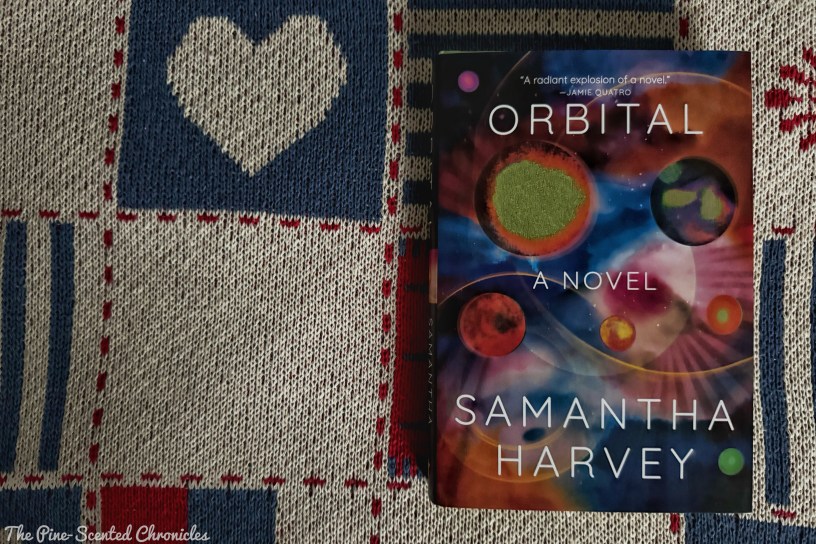
2024 Booker Prize Winner
Since time immemorial, men have been fascinated by the stars and the celestial objects that lie in worlds beyond. The seemingly black void is brimming with mystery waiting to be unlocked. This tickled our interest in outer space, the Milky Way, the Solar System, and even their simplest representations, the stars. Ever curious, exploring these worlds – reaching for the proverbial stars – has been the stuff of dreams. It is no wonder that astronomy is one of the oldest natural sciences, with origins traced to religion, myths, the cosmos, and astrological beliefs and practices that have been handed down from one generation to another. We have perpetually found ways to understand the mysteries that lie beyond. Marveling at the mystery of outer space pushed the boundaries of our innovation to find ways to get closer to the stars or at least find ways to study them.
The invention of the telescope in the 16th century was a starting point that further fueled the machinery that, centuries later, would lead to humanity making the seemingly impossible possible. On October 4, 1957, the USSR launched the first rocket to launch something into space. They launched Sputnik 1, the world’s first artificial satellite, thus, commencing what we refer to now as the Space Age. More landmark achievements ensued. On July 20, 1969, Lance Armstrong and Buzz Aldrin landed the Apollo Lunar Module Eagle on the moon. The former became the first man to step on the moon’s surface; he was shortly followed by his colleague. Over the following years, men kept pushing the boundaries of innovation, technology, and science to explore the world beyond. Space missions were launched to explore other planets, prominently Earth’s neighboring Mars, to find a planet that shares similarities with the Earth.
The advent of the Space Age has raised inquiries about other worlds. Do aliens exist? Is there another life-sustaining planet like the Earth? Is it possible to establish a colony on other planets? These boundless questions and possibilities have also inspired various facets of popular culture. Movies and television series such as Star Trek and Star Wars are cult classics that have transcended time and generations. Men’s growing fascination with outer space and its peripherals inevitably trickled into literature; galaxies, aliens, unidentified flying objects (UFOs), and spaceships, among others, are ubiquitous in science fiction. Isaac Asimov’s Foundation series (1942-1993), H.G. Wells’s The War of the Worlds (1898), Philip K. Dick’s Do Androids Dream of Electric Sheep? (1968) are prime examples. They are literary classics that also served as precursors for succeeding works of the same ilk.
And in time we come to see that not only are we on the sidelines of the universe but that it’s of a universe of sidelines, that there is no centre, just a giddy mass of waltzing things, and that perhaps the entirety of our understanding consists of an elaborate and ever-evolving knowledge of our own extraneousness, a bashing away of mankind’s ego by the instruments of scientific enquiry until it is, that ego, a shattered edifice that lets light through.
Samantha Harvey, Orbital
In her fifth and latest novel, Orbital (2023), British writer Samantha Harvey deviates from the route typically taken by writers of science fiction. No aliens or other menaces disrupt the story. It was bereft of the fast-paced adventures that are the hallmarks of the genre. In Harvey’s literary universe, outer space serves as the setting of Orbital; it is not imbued with metaphors nor does it serve as a home. Aboard the International Space Station ((ISS), the largest space station built and launched into space, are four astronauts and two cosmonauts, four men and two women. Nell, Chie, Anton, Roman, Pietro, and Shaun are of different nationalities – Japanese, Russian, British, American, and Italian – and come from different backgrounds. They were sent to the ISS for a space mission that would last nine months orbiting around the Earth. The story, however, chronicles a day in their lives.
Ironically, time was a relative concept; time floated like how they were unanchored from gravity: The mind is in a dayless freak zone, surfing earth’s hurtling horizon. Day is here, and then they see night come upon them like the shadow of a cloud racing over a wheat field. Forty-five minutes later here comes day again, stampeding across the Pacific. Nothing is what they thought it was. In a twenty-four-hour cycle, the characters witness sixteen sunrises and sunsets; the novel’s sixteen chapters also represent these. 250 kilometers above the surface of the Earth, the astronauts and cosmonauts go about their tasks. They take pictures of the Earth and the void that surrounds it. On board the ISS, they also perform experiments and collect data while their spaceship takes its natural course orbiting around the Earth. They were also tasked with ensuring that the ISS was well-maintained and was running as intended. They spend their downtime working out, lifting weights, and doing pedals and presses. They perform a variety of exercises lest their muscles atrophy.
Life in outer space is bereft of the glamor it is usually marketed with. In the spaceship, untethered from gravity, life was repetitive. The characters’ lives were regimented. Everything was set out for them. Harvey paints their daily routine vividly; while it is cyclical and mundane, the characters have gotten used to the thrum of routine. The characters remain enthusiastic about their vocation and their mission. Meanwhile, the view outside is captivating, except perhaps for the dark void beyond. The beauty of Earth from afar was vividly captured by Harvey. Below, the Earth keeps retaining on its orbit. Life was taking place as usual. From their place in the ISS, the astronauts were provided a new and unique vantage point from which to observe the Earth. This makes it ripe for introspection where science and the interiors of the characters intersect.
The novel, sans a robust plot, was a deep rumination on being human. This can also be attributed to the sense of isolation the characters feel living in an enclosed space far from their normal lives. Floating in space and amid the ennui of routine, the characters also had their personal struggles they were grappling with. Anton’s marriage was on the brink of collapse; his wife had been unwell for a long time. Chie, on the other hand, was coping with the news of her mother’s sudden demise. Nell’s brother, in Wales, was sick with the flu. The novel also provides the readers with intimate glimpses into the characters’ lives; the story is riddled with details of their lives, if only to create a semblance of plot. Somehow, it was these small graces, vestiges of their earthly existence – memories coupled with emails and communications they receive from Earth – that kept the characters anchored.
Our lives here are inexpressibly trivial and momentous at once, it seems he’s about to wake up and say. Both repetitive and unprecedented. We matter greatly and not at all. To reach some pinnacle of human achievement only to discovery that your achievements are next to nothing and that to understand this is the greatest achievement of any life, which itself is nothing, and also much more than everything. Some metal separates us from the void; death is so close. Life is everywhere, everywhere.
Samantha Harvey, Orbital
Isolation was, unsurprisingly, a subtle but prominent subject in the story. The characters’ lives were forced to occupy the limited space of a spacecraft afloat in outer space. It was not claustrophobic but one can sense the proximity of the characters. Nevertheless, their proximity allowed the characters to create a makeshift family: they are so together, and so alone, that even their thoughts, their internal mythologies, at times convene. Sometimes they dream the same dreams… Interestingly, there was a silent camaraderie among the characters despite their glaring differences. There were no rivalries or even arguments among them. They kept to their task. Their interactions, after all, were not the novel’s focus. As the story moved forward, it was palpable that Harvey’s focus was on how the characters individually relate to the planet where they came from.
As the characters meditate on their lives, various questions about life inevitably loom. Up in space, they were gaining a new perspective on life and about themselves. As an old adage goes, “Climb mountains, not so the world can see you, but so you can see the world.” The subject of perspective was subtly underscored through Diego Velázquez’s – a leading artist of the Spanish Baroque – 1656 painting Las Meninas (The Ladies-in-Waiting) on display at Madrid’s Museo del Prado. Shaun recalls a classroom discussion about the painting; he also carries with him a postcard reproduction of the painting given to him by his wife with a note saying that it reflects the labyrinth of mirrors that is human life. The painting is renowned for its elusiveness which raises the question regarding who the subject is and who the viewer is. There is an intersection of reality and illusion that perplexes the spectator. The painting was metaphorical, a meditation through which Harvey explores themes of certainty and uncertainty, and even art and life.
Yet another image, Michael Collins’ famous photograph of the 1969 moon mission with Earth in the backdrop, further underlines the subject of perspective. The characters start to understand how minuscule their existences are relative to the magnitude of the Earth. This, however, does not entail that they could not make a difference in the world. Beyond perspective, science plays a germane role in the characters’ discourses and observations. Italian Pietro, for one, reflects on how the exponential advancement in technology can adversely impact their profession. It is not a far-fetched idea that robots will be replacing human astronauts and cosmonauts. Robots, after all, have no need for hydration, nutrients, excretion, sleep. However, as Pietro mused, robots are incapable of feeling, whether fear or exultation. With their gaze unflinching, they cannot share the same feeling of awe or perhaps intimidation that a human will naturally feel seeing the Earth from above the surface.
Meanwhile, they observed how a typhoon was developing over the Pacific. It was huge and threatened to inundate both the Philippines and Indonesia. This underlines the looming threat presented by climate change. The warming of the ocean has resulted in more destructive typhoons. Recently, the Philippines marked the anniversary of the destruction of Typhoon Haiyan, the most destructive and one of the strongest typhoons that battered the country. It has been reiterated that the Philippines will bear most of the brunt of increasingly intensifying and destructive weather systems. As if to underline this point, the Philippines has been ravaged by four super typhoons – including one Category 5 super typhoon, Typhoon Man-yi (Pepito) – in the past three weeks. Even NASA acknowledged that the overlapping typhoons were not only unusual but it was also unprecedented.
Maybe one day we’ll look in the mirror and be happy with the fair-to-middling upright ape that eyes us back, and we’ll gather our breath and think: OK, we’re alone, so be it. Maybe that day is coming soon. Maybe the whole nature of things is one of precariousness, of wobbling on a pinhead of being, of decentring ourselves inch by inch as we do in life, as we come to understand that the staggering extent of our own non-extent is a tumultuous and wave-tossed offering of peace.
Samantha Harvey, Orbital
The typhoon inching closer to the Philippines prompted an astronaut to recall a time he spent there during his honeymoon. He met a fisherman who became his friend. However, the astronaut is powerless to stop the typhoon from wreaking havoc. He can only watch but still hope for the best. There were other symptoms of impending ecological collapse depicted in the story. Nell was reminded of the time she traveled to the Philippines and went deep-sea diving to see a precious, glorious coral reef. In Orbit 7, Harvey captures how the hand of politics of growing and getting, and the politics of want have adversely altered the landscape of our world. Exacerbated by human greed and corruption, these politics play a germane role in shrinking ice sheets, burning oil spills, repeating or disintegrating glaciers, blazing forests or bushes, and discolored reservoirs, among others. The signs are everywhere.
The characters also contemplate human existence and the meaning of life. There is an existentialist quality to their meditations about life. Interestingly, the novel subtly underscores the lack of choices. The characters adhere to a regimented schedule conveniently designed for them. Nevertheless, they grapple with questions about the cosmos and life reels the readers in. The story was ambitious, encompassing humanity’s proclivity for grand ambitions. But while Harvey underscores several seminal subjects, there was no real call for action nor were any solutions presented. The characters ponder on these important events, observing them. However, they seem irrelevant in the grander scheme of things. These make the story somehow ephemeral. Harvey redeems herself with the quality of her writing. Her images of the Earth were impressionable. The Earth comes alive with her writing.
The novel’s slender appearance belies the grandeur of the subjects it grappled with. Recently announced as the winner of the 2024 Booker Prize, Orbital takes the readers on a different but interesting cosmic journey. The characters reflect on a plethora of subjects and questions such as climate change, existence, and the meaning of life. Orbital is the intersection of science, philosophy, and even geography. A novel that extensively deals with perspective, Harvey, in a way, coaxes us to confront the intricacies of life and gain a different perspective: To reach some pinnacle of human achievement only to discover that your achievements are next to nothing and that to understand that is the greatest achievement of any life, which itself is nothing, and much more than everything. Some metal separates us from the void; death is so close. Life is everywhere, everywhere.
The earth, from here, is like heaven. It flows with colour. A burst of hopeful colour. When we’re on that planet we look up and think heaven is elsewhere, but here is what the astronauts and cosmonauts sometimes think: maybe all of us born to it have already died and are in an afterlife. If we must go to an improbable, hard-to-believe-in place when we die, that glassy, distant orb with its beautiful lonely light shows could well be it.
Samantha Harvey, Orbital
Book Specs
Author: Samantha Harvey
Publisher: Grove Press
Publishing Date: 2023
No. of Pages: 207
Genre: Literary
Synopsis
A slender novel of epic power, Orbital deftly snapshots one day in the lives of six women and men hurtling through space – not towards the moon or the vast unknown, but around our planet. Selected for one of the last space station missions of its kind before the program is dismantled, these astronauts and cosmonauts – from America, Russia, Italy, Britain, and Japan – have left their lives behind to travel at a speed of over seventeen thousand miles an hour as the earth reels below. We glimpse moments of their earthly lives through brief communications with family, their photos and talismans; we watch them whip up dehydrated meals, float in gravity-free sleep, and exercise in regimented routines to prevent atrophying muscles; we witness them form bonds that will stand between them and utter solitude. Most of all, we are with them as they behold and record their silent blue planet. Their experiences of sixteen sunrises and sunsets and the bright, blinking constellations of the galaxy are at once breathtakingly awesome and surprisingly intimate. So are the marks of civilization far below, encrusted on the planet on which we live.
Profound, contemplative, and gorgeous, Orbital is an eloquent meditation on space and a moving elegy to our humanity, environment, and planet.
About the Author
Samantha Harvey was born in 1975, in Kent, England. She spent most of her childhood in Ditton, Kent, near Maidstone, until her parents’ divorce. When her mother moved to Ireland, Harvey spent her teen years moving around with stints in York, Sheffield, and Japan. Harvey studied philosophy at the University of York and the University of Sheffield. She completed her Master of Arts in Creative Writing at Bath Spa University. She also earned a PhD in creative writing.
Harvey made her literary debut in 2009 with the publication of The Wilderness. It was critically received, winning the Betty Trask Prize and Awards. It was shortlisted for the Orange Prize for Fiction and longlisted for the Booker Prize. Her third novel, Dear Thief (2015), was shortlisted for the James Tait Black Memorial Prize while her fourth novel The Western Wind (2018) was longlisted for the 2020 International Dublin Literary Award. Her fifth novel, Orbital (2023) was the winner of the 2024 Booker Prize. She also published a work of nonfiction, The Shapeless Unease: A Year of Not Sleeping in 2020. Her short stories have appeared in Granta and on BBC Radio 4. She reviews for The Guardian and The New York Times. Her essays and articles have also appeared in various publications such as The New Yorker, The Telegraph, The Guardian, and TIME, among other publications.
Her radio appearances include on Radio 4’s Front Row, Open Book, A Good Read and Start the Week, and Radio 3’s Free Thinking. Harvey is a Reader on the MA in creative writing at Bath Spa University and a member of the academy for the Rathbones Folio Prize. As of 2023, she is acting as a mentor for the Rathbones Folio Mentorships. Harvey held writing fellowships at MacDowell in the US, Hawthornden in Scotland, and the Santa Maddalena Foundation in Italy.
Harvey is currently residing in Bath, UK.
 The Pine-Scented Chronicles