
Happy Wednesday everyone! Wednesdays also mean WWW Wednesday updates. WWW Wednesday is a bookish meme hosted originally by SAM@TAKING ON A WORLD OF WORDS.
The mechanics for WWW Wednesday are quite simple, you just have to answer three questions:
- What are you currently reading?
- What have you finished reading?
- What will you read next?

What are you currently reading?

Whoa. Just like that, we have already entered the second half of the last month of the year. In a matter of days, we will be welcoming a new year. As time takes its natural course and the year draws to its inevitable close, I hope the year has been kind to everyone. So far, I have been doing some catch-ups with friends and colleagues. The holiday cheer, I guess, is in the air. Anyway, I hope everyone has completed their goals or is on track to achieving them. I hope that everyone gets repaid for their hard work. I hope the remainder of the year will shower everyone with blessings and good news. More importantly, I hope everyone is doing well in body, mind, and spirit. As I approach the final stretch of the year, my focus, reading-wise, has shifted to the remaining books in my reading challenges. Thankfully, I am already done with two of my most critical reading goals, my 2024 Top 24 Reading List and 2024 Beat the Backlist Challenge list. I am now down to just my 2024 Top 10 Books I Look Forward To List although I have very little hope of completing it.
Anyway, my current read is Hiromi Kawakami’s latest translated novel, Under the Eye of the Big Bird. I first encountered the Japanese writer through her quirky novel The Nakano Thrift Shop. I was not overly impressed by the book. I guess this is the reason why I held back from reading more of her works. I did plan on giving her oeuvre another chance with People from the Neighborhood which I planned to read last year but did not push through when I learned it was a collection of short stories. I was actually excited when I learned about her latest release and even planned to read it immediately. However, I just started reading the book so I can’t offer that much impression of it although I understand that it is a work of dystopian fiction. It is set in a world where, from what I understand from the opening pages, struggled with procreation. I will be sharing more of my impressions in this week’s First Impression Friday update.
What have you finished reading?
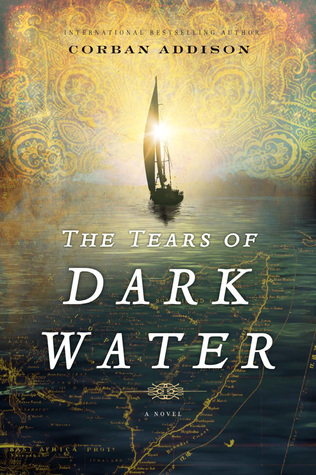
The past two weeks have been tedious. With the year-end approaching, regulatory requirements are also looming. I have been caught up in the preparation for them. Nevertheless, I try to find some time to read as many books as I can and I am glad I was able to complete three books. The first of these books was Corban Addison’s The Tears of Dark Water. It was a book I purchased about eight years ago. However, like most of my books, it was left to gather dust on my bookshelf, prompting me to include it in my 2024 Beat the Backlist Challenge. I have been meaning to read the book for some time so I am beyond ecstatic to have ticked it off from my long list of to-be-read lists. The Tears of Dark Water is the second to the last book from the list I read.
Structurally, The Tears of Dark Water can be divided into two major tiers.. The first tier takes place in the Indian Ocean where David and Quentin Parker’s sailboat was held hostage by Ismail Adan Ibrahim and his motley crew of Somali pirates. The US Navy was quick to respond. Within hours, negotiations were underway. The details were negotiations were ironed out; quick-witted Ismail was playing a game of mental chess with Paul Derrick, an acclaimed FBI negotiator. However, the deal fell through at the last minute, leaving David dead, Quentin battling for his life, and Ismail on trial in the United States for his crimes. Derrick was also left devastated as ghosts of the past floated to the surface. The unraveling of the courtroom drama forms the meat of the novel’s second tier. Defending Ismail was Megan, Paul’s sister. There is more than meets the eye as the novel takes the readers through the history of the decades-long conflict in Somalia. Somalia, in the past few decades, has established a reputation for its warring warlords and their piracy. I was on the edge of my seat reading the novel because of its several layers. Politics, history, armed conflict, romance, and even a nail-biting escape converged in this rich story. Overall, The Tears of Dark Water is a wonderfully crafted novel that I lament not having read sooner.

The last book on my 2024 Beat the Backlist Challenge list was a very familiar name, Yukio Mishima’s Thirst for Love; the highly-heralded Japanese writer is the only familiar name in the last five books from the said list I read. Interestingly, Thirst for Love is also the fifth novel by the controversial Japanese writer I read. This makes him the fifth Japanese writer who I read at least five works of, joining equally critically acclaimed writers Haruki Murakami and the three Japanese Nobel Laureates in Literature, Yasumari Kawabata, Kenzaburō Ōe, and Kazuo Ishiguro. That is quite a litany of number fives. Anyway, I am looking forward to reading Thirst for Love.
Originally published in 1950 as 愛の渇き (Ai no Kawaki), the novel is set shortly after the conclusion of the Second World War. At the heart of the novel is a young woman named Etsuko who we first met while she was navigating the alleys of Osaka as she went shopping. Originally from Tokyo, she moved to the Kansai region. Her husband Ryosuke recently passed away from typhoid; his death was a saving grace because he was a philanderer. Following her husband’s death, she received an invitation from her father-in-law Yakichi who invited her to live with him in the Kansai countryside where he was tending to his farm. Yakichi’s wife has also passed away. Ryosuke’s younger siblings, both adults and married, were also living with their father, helping tend the farm. Upon her arrival, Etsuko was given special treatment by her father-in-law. Feeling alone in uncharted territory, she eventually relented to the advances of her father-in-law; it was a relationship tacitly accepted by everyone in the household. However, it was another man in the household, Saburo the hired house help. This is, however, is no romance story. Etsuko obsessed over Saburo but he was insouciant to her advances. She interfered with his personal affairs while lusting over him. It is not a book often associated with Mishima but Thirst for Love provides glimpses into a different dimension of his oeuvre.

My three-book stretch concluded with an unfamiliar name. It was only this year that I came across Japanese writer Kiyoko Murata; yes, I am amid a mini-foray into Japanese literature because, for the first time in years, I haven’t hosted a Japanese literature month. I just learned that Murata is quite a figure in Japanese literary circles. She has won some of the most prestigious Japanese literary prizes, including the Akutagawa Prize. However, very little of her work was translated into English, hence, my unfamiliarity with her. A Woman of Pleasure was ubiquitous earlier this year. This naturally piqued my interest and it didn’t take much to convince me to obtain a copy of the book.
Originally published in 2013 as ゆうじょこう (Yūjokō), the novel is set at the turn of the 20th century. At the heart of the novel is fifteen-year-old Aoi Ichi who grew up on the rocky volcanic island Iojima off the coast of Nagasaki. The island offers little future to its citizens and Ichi is expected to grow up like her mother, a strong diver who supports her family with the fish and shellfish she catches. What she did not expect was that she was going to be sold to an exclusive brothel in Kumamoto, a regional capital in order to settle a long-standing debt by her impoverished family. There, she was trained to be a courtesan at the brothel named Shinonome, named after the brothel’s most prominent courtesan. Interestingly, Shinonome was assigned to be Ichi’s mentor. Ichi proved to be a very smart young girl. She loves to write and enjoys her lessons. Tetsuko, her teacher, was impressed with her. The novel was, in a way, her coming-of-age. Despite her situation, Murata treated Ichi and her fellow courtesans with dignity. The novel also vividly captured the changes shaping the Japanese pleasure industry. Laws were instituted to avoid trafficking and abusive contracts. Toward the last fifty pages of the book, the story transformed into a political novel as the courtesans exercised their legal rights. Overall, A Woman of Pleasure is a riveting timepiece that delves into another facet of Japanese society.
What will you read next?

 The Pine-Scented Chronicles